
We Were Here Tomorrow review
- 0 Comments

Takes some steps forward and other steps back in another solid co-op puzzle adventure experience
With four mainline games and a spin-off, you’d think Total Mayhem Games would be running short of new ideas for their co-op adventure series. But We Were Here Tomorrow puts paid to that notion with a new story, new setting, new gameplay mechanics, and new two-player challenges. The puzzles are generally easier this time around, making it well-suited for new players, and even for those expecting a bit more challenge, there’s more than enough substance here to satisfy series veterans as well.
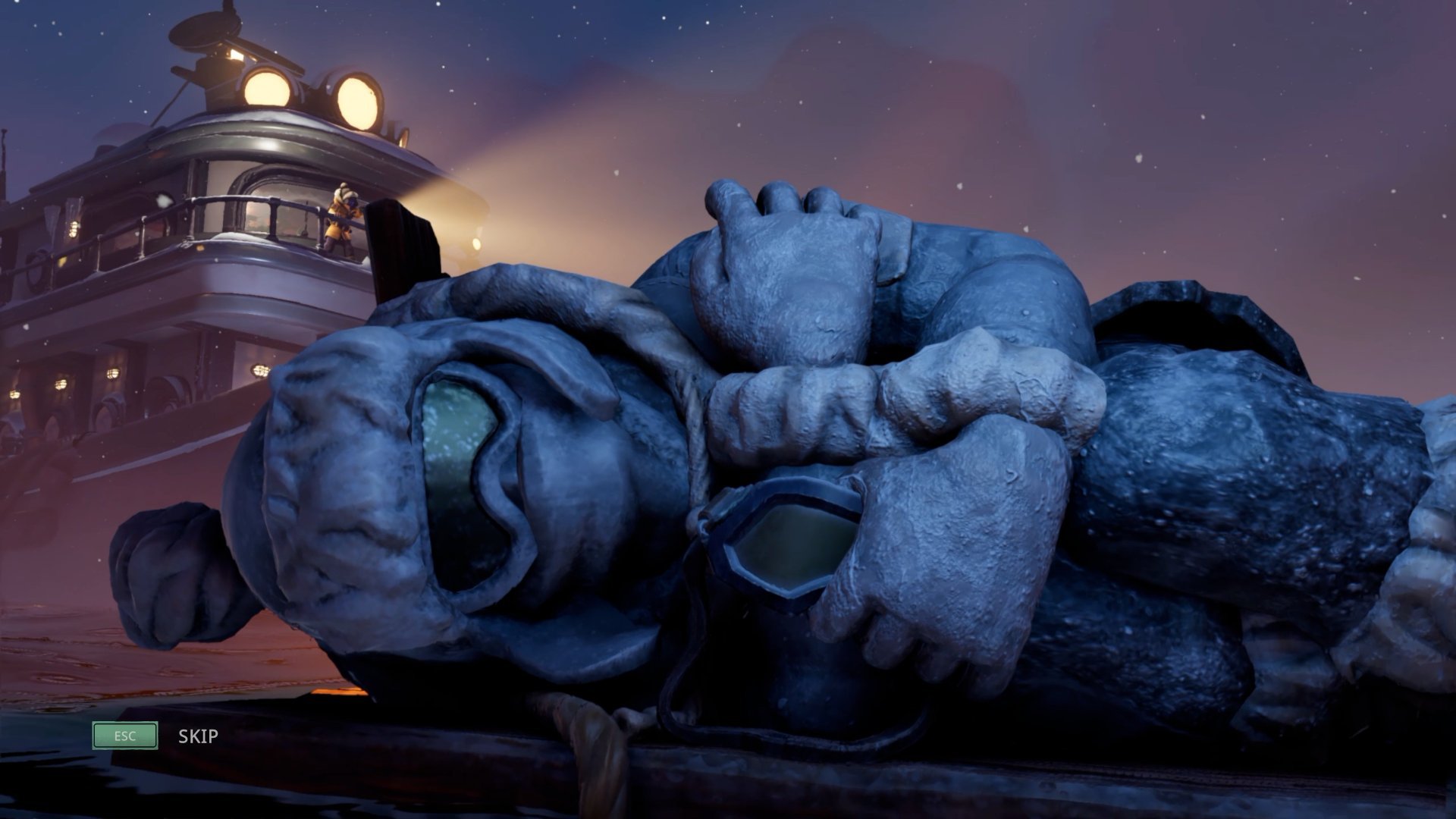
We Were Here Tomorrow starts much like the previous games in the franchise. Two Antarctic explorers, dressed in cold weather survival gear, sail to a desolate, frozen shore. There they find another similarly clad adventurer floating on a panel of wood in the ocean and clutching the goggles of a fourth, who is nowhere to be seen. After hauling the unresponsive survivor aboard, our two new heroes disembark on land and begin exploring. In short order they find a gate surrounded by what appears to be medieval masonry hidden inside a frozen cave.
Passing through this entryway leads further into the cave, which then opens onto an icy tundra. Across a great frozen plain a large stone tower is revealed with a menacing, Eye of Sauron-esque glowing red rift at its top high in the sky. Before this can be investigated, though, the ice opens up and the explorers are plunged into the freezing waters below as everything fades to black.
Five years later, you awaken in a Norĉek Industries research station. Revived from a cryogenic sleep of sorts, gone are your winter parkas, replaced by what can best be described as 80s-sci-fi-inspired general purpose survival outfits. You and your companion are greeted by Doctor Kathleen Bowe, the director and last remaining member of the research staff.
In the intervening five years, a global disaster has set in. A species of insect escaped and has been destroying oil and gas reserves worldwide. Now all of society is facing global starvation and the imminent collapse of the political order. Norĉek has been frantically investigating the very same rift the explorers found five years ago. Their hope is that energy can be syphoned from the rift to serve as an alternate clean power source for the world. Except something’s gone wrong and now the research facility is facing impending implosion. Doctor Bowe directs you on your way to help stabilize the station before you’re all destroyed.
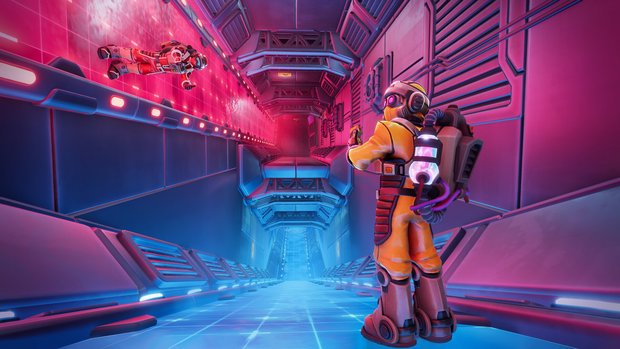
Herein lies the first noticeable change of the series. No longer is it rooted in medieval fantasy like the game’s predecessors – though there are some nods to those – but rather a distinctly science fiction world. With that comes the opportunity to introduce new puzzles and gameplay. One such early example is a laboratory room where one player can be shrunk down to only a few centimeters in height. Working with the other player, our tiny hero has to navigate over, around, and through the lab equipment that suddenly represents giant obstacles.
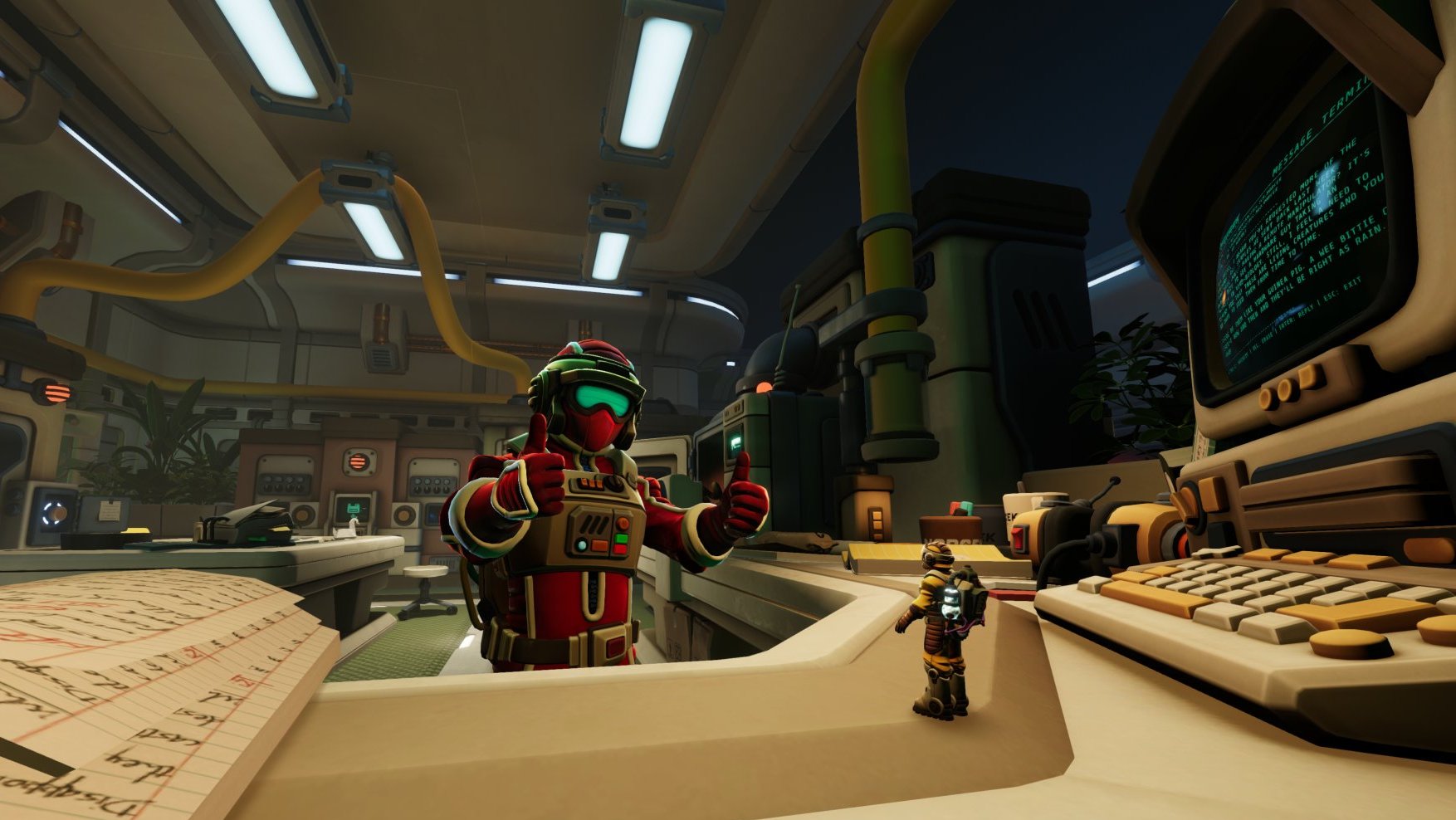
This part of the We Were Here experience remains very much intact, with both players having to co-operate, communicate and help each other along. Throughout the experience, you and your partner will trade knowledge and perform actions that allow both of you to advance. As before, you’re each equipped with a walkie-talkie (now in the form of a hi-tech communicator) with a push-to-talk button. My friend and I like to shoot the breeze a bit while playing, so we once again opted for a third-party chat application that didn’t require the constant pressing of buttons, though this isn’t a requirement.
In short order, We Were Here Tomorrow unveils its newest major addition and alteration to the gameplay: guns! Don’t worry; these aren’t the military bullet-shooting kind of weapons. These are more in the vein of the Portal gun, being used to overcome environmental obstacles. One player’s shoots out a rubbery tether. This can be used to pull distant switches or other objects, zipline up to anchor points set high on walls, or to connect receptacles that complete electrical circuits. The second gun creates cubes on the ground or platforms on walls to allow mantling to higher locations. It can also create anchor points to help the tether player ascend. The cubes this gun produces can be charged with electricity when connected to a suitable power source, and that energy can then be transported to other parts of the facility for use.
At several points the guns are taken away from you, only to be returned a little later. Weirdly, when this happens, each player is only allowed to take the gun they possessed before. So if you choose the tether gun early in the game, you are forced to take it again when the weapons are returned, instead of switching to the cube cannon. This seems like a missed opportunity to allow players to vary up the experience on the fly.
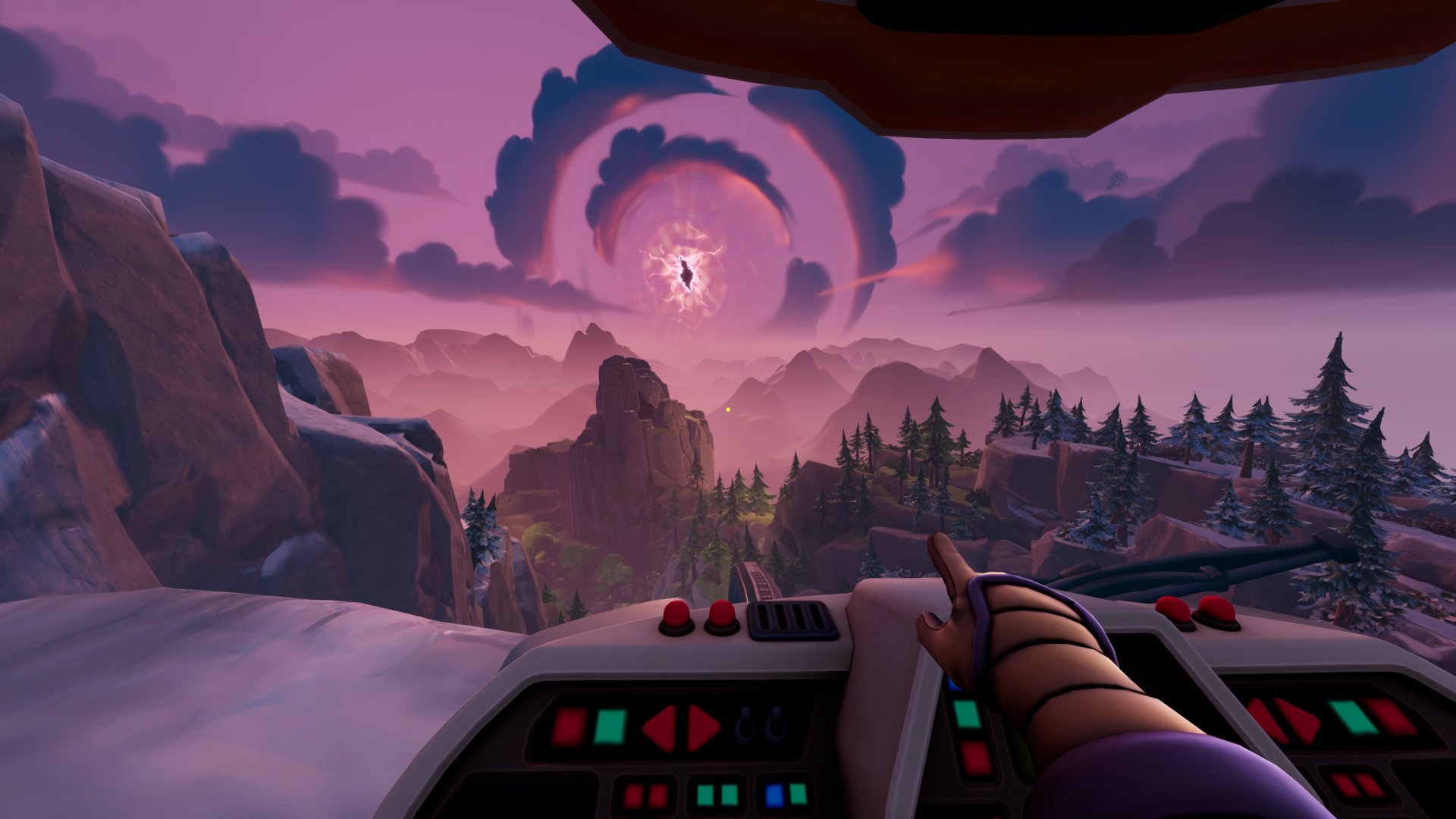
The guns provide a change of gameplay, allowing for more environmental traversal puzzles this time around. But while there are clearly intended solutions to these puzzles, the designers didn’t fully account for the perverse resourcefulness of players. There were at least two areas where my friend and I were able to completely bypass some tricky placements of platforms and grapple points. We never put the game in an unwinnable state by doing so, but we did wonder about that possibility.
Fans of these games don’t need to be concerned that the experience here is reduced entirely to the use of guns. For the most part, they tend to be a supplement to the more traditional puzzles. Series staples such as describing symbols back and forth between characters and deciphering a whole series of steps when only parts are available to each player remain a major focus here. Surprisingly, however, they’ve been made quite a bit simpler. Previous games would incorporate multiple layers of information in puzzles like these, with each person adding more and more to the understanding of what’s going on. In We Were Here Tomorrow, it’s rarely the case that one player has more than one piece of information that the other doesn’t. While this is certainly a friendlier introduction for newcomers, longtime fans may be a bit disappointed that the puzzles, in general, aren’t nearly as involved as they used to be.
We Were Here Tomorrow
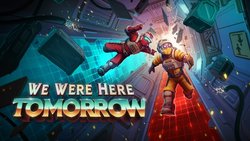
| Genre: | Mystery, Science Fiction |
|---|---|
| Presentation: | Realtime 3D |
| Theme: | Futuristic, Team-up, Technology |
| Perspective: | First-Person |
| Gameplay: | Co-op, Puzzle, Exploration |
| Control: | Direct Control |
| Game Length: | Long (more than 10 hours) |
| Difficulty: | Medium |
| Graphic Style: | Simulated realism |
Fortunately, the new science fiction setting enables the game to dabble in areas the franchise hasn’t gone before. In particular, the rift that Norĉek has been studying impacts time. One sequence sees players sent to different time periods at an archeological restoration site. There, one person can change things in the past, like the plans for where a bridge is to be built. In the future, the other player sees the bridge change positions as a result, allowing them to access new areas. Another section lets you indulge in some gardening; one player deposits seeds in the past, and in the future the other player gets a fully grown plant.
The standout of these time-manipulation puzzles comes about two-thirds of the way through. By then the rift has become hugely unstable and the protagonists are dropped into a bizarre other space where elements of past, present, and future float and collide amidst the swirling, glowing nebula gasses of eternity. As impressive as the visuals are, the puzzle is even more so for its inventiveness. In this crazy space, you have a clear objective to deal with the rift. A timed sequence of sorts, you’ll quickly find you have nowhere near enough time before the whole place explodes. However, when that explosion happens – and it will happen – time resets for you and your partner. When it does, you then see ghost versions of yourselves running around the environment doing everything you just did before the big kaboom. You’ll accumulate additional yous each time you do a run and space blows up. Your task is literally to help yourselves to do everything that needs doing in a single run.
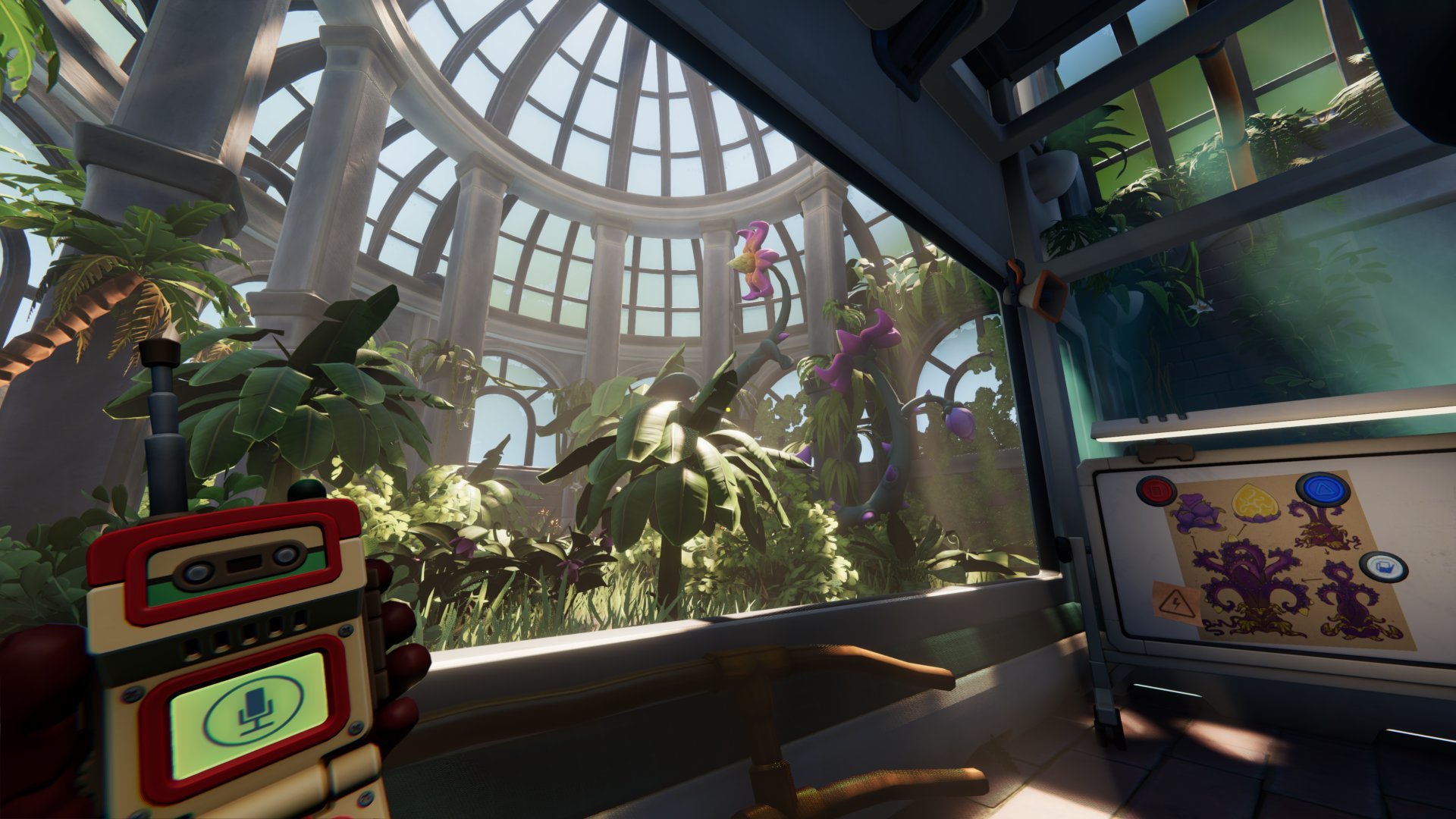
In my thirty-plus years of playing adventure games, I’ve never encountered a puzzle quite like this. Set against the fiery backdrop of the cosmos, I thought for sure this was the climax of the game. If it had been, I’m sure this would have been an ending talked about for a long time to come, as it’s an absolutely brilliant sequence. Instead, the game carries on for quite some time after that, such that it becomes just another stop in the road before moving onto sections that are comparatively more mundane.
We Were Here Tomorrow is the longest game in the series, clocking in at eighteen hours for us. Both my friend and I felt this was artificially inflated to an extent, suffering somewhat from the same problem introduced in We Were Here Forever. While there’s a nice variety of puzzles, many of them are repeated three times in succession. For example, the most tedious section sees the heroes separated between upper and lower floors. Each player has a set of labelled electrical terminals scattered across multiple rooms. Terminals are connected by cables, and by pressing buttons you can both direct the flow of electricity through the area.
The goal of this segment is to route power through a specific labelled terminal and then to a destination battery. Once a branch is chosen, it cannot be changed without pulling a master lever that resets the entire puzzle. Succeed and your reward is… to do it again. Except this time you have to route the power through two specific terminals. But no worries. Once you complete that pass, you earn… well, the chance to do it a third time, now routing power through three terminals. We easily spent more time in this electrical section than any other part of the game. Ultimately, we even had to resort to pen and paper to map out how all the terminals connected to one another in order to determine the correct path. The puzzle itself is all right, and the added challenge was welcome among the generally simplified puzzles elsewhere, but having to repeat it three times was tiresome.
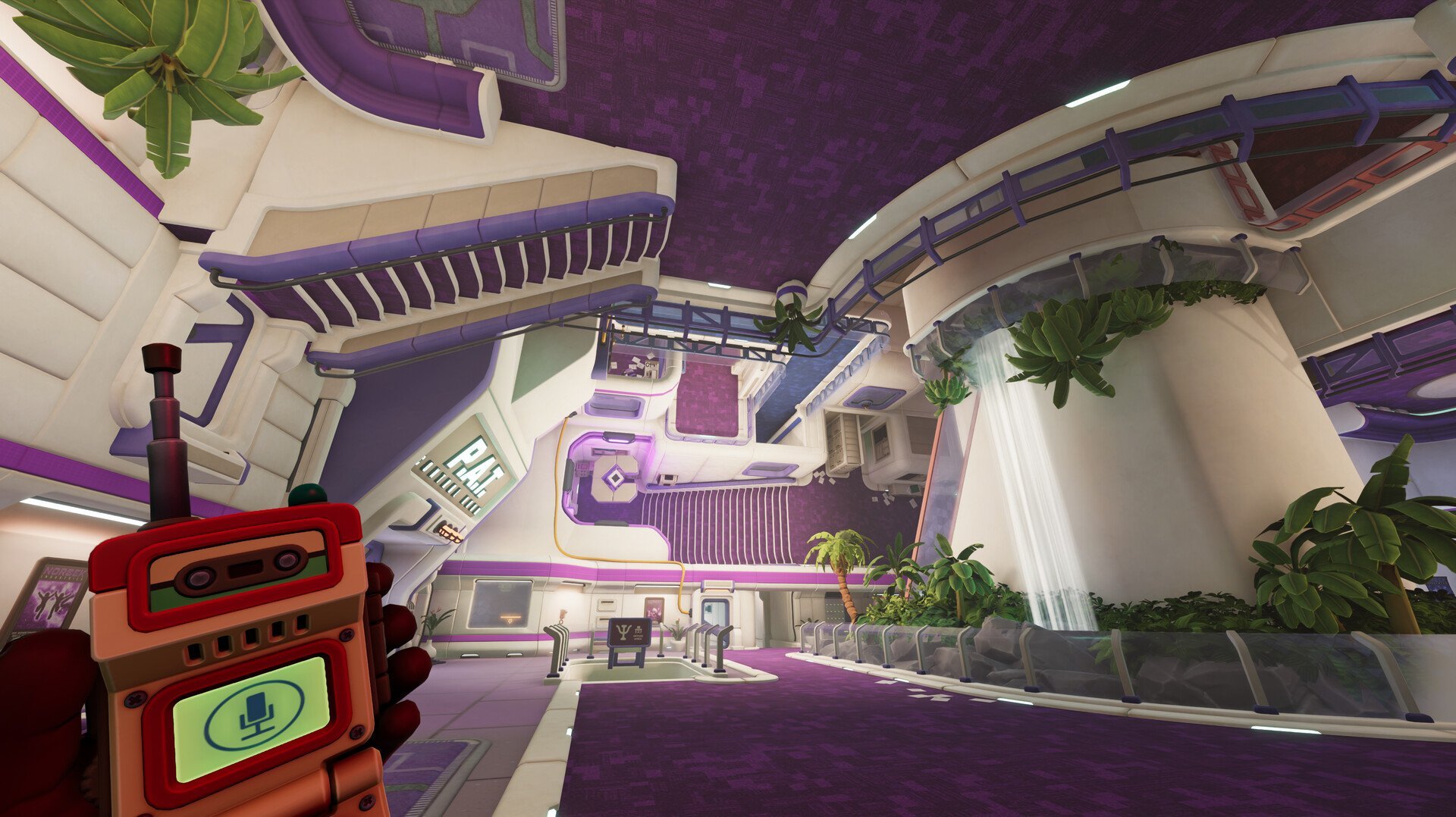
Also making a return from previous games are chambers in which gravity shifts about. With the pair of you separated again, one player will be walking along the floor from their perspective, only to look up and see the other walking on the ceiling. Or a wall. Or corkscrewing down a long tunnel. Such mechanics have been used in the series before, to vertiginous effect, and here that nausea-inducing impact is even more magnified. Previously a character’s orientation would be changed when entering a door, emerging on the floor of the new location. The effect was a seamless transition between what was, objectively, two different orientations in space. Only when looking around and realizing you were now standing on a plane that was 30, 45, 180 degrees rotated from where you used to be would it become dizzying.
However, with We Were Here Tomorrow, players will find themselves walking along a path that curves upwards or, in the most extreme case, sends them down a corkscrew. Seeing the 3D world shift about you in real time is very disorienting, and it’s best to focus on a distant point in the scene if you’re getting at all queasy. In fact, I would caution that anyone who feels even a small sense of motion sickness in first-person games should definitely stay away from this one. Or at least stock up on the Dramamine before starting, because gravity-twisting environments are involved in nearly half the game.
While moving through some of these areas might be mildly uncomfortable, there’s no denying that there are impressive views along the way, alternating between the colossal and the claustrophobic. From the Antarctic tundra with its army of penguins, to the sterile offices of the Norĉek facility full of clutter from the vanished scientists, to time-altered reality with bits of the series’ previous games peaking in, to another world populated by glowing fungi, neon corals, and giant squids, there’s no shortage of variety on offer. The level of detail in these 3D environments is higher than ever, but still maintains the familiar stylized, semi-cartoony look we’ve come to expect.
On the audio front, the main difference is the shift to sci-fi synth music, including one piece my friend called out as being eerily X-Men like. The score is almost always playing in the background, but never in a distracting way. Progression feedback is signified by a short music sting when an important part of a puzzle has been completed. (Don’t let this sound fool you into thinking your progress has been recorded, though. While it does signify advancement through the current part of the game, it does not always correlate with the game’s single autosave updating.) Other sound effects round out the environment, particularly the fun glooping sounds produced by the guns you use.
There is also a bit of voice acting, with Doctor Bowe contacting you on your communicators, prompting you to keep moving and filling in some of the backstory from when you were frozen in ice. As with the previous games, the story is largely just an excuse to justify the exploration and puzzles. However, a few other voices also provide hints to what happened at the research facility, popping up as audio recordings on cassette tape players. My friend and I were so into solving the puzzles that we didn’t pay too much attention to the narrative, though the broad strokes did seep into our consciousness. That proved fortunate as an attempt has been made to better integrate the narrative into the endgame, which is something of a departure from the traditional way these games finish.
Final Verdict
Representing the series’ sixth iteration, We Were Here Tomorrow tries a lot of new things for the first time. While the results are mixed, the good definitely does outweigh the bad. For better or worse, most puzzles are noticeably easier than before, with many being less about figuring out what to do and more about how to get to where you need to do it. There’s plenty of fun to be had with time manipulation and gun-based gameplay, and both the story and setting are original, making this a good entry point for new players. While some will doubtless bemoan the general simplification of challenges, there is a LOT of game here with many excellent co-op moments to share with a partner (so long as you each own a copy, as usual). Ultimately, although not the strongest outing in the series, it’s another solidly entertaining entry in the franchise. Assuming you can stomach its more disorienting aspects, anyway.
Hot Take
It falls a bit short of the best earlier installments, but its more-good-than-bad batch of franchise firsts ensure We Were Here Tomorrow is great for newcomers and a solid entry for long-time fans of the ongoing two-player co-op series.
Pros
- Visuals have improved from earlier games
- Tether gun and cube cannon add new navigation options
- Time-loop puzzle is especially clever and unique
- Story is a great jumping-on point for first-time players
- Playing with a partner is just as fun as it’s always been
Cons
- Some repetitious puzzles outstay their welcome
- Most challenges are noticeably easier than in previous games
- Gravity-shifting locations can be nausea-inducing
Richard and his co-op partner played We Were Here Tomorrow on PC using review codes provided by the game's publisher.

- Advertisement
- Help support AGH by advertising with us





0 Comments
Want to join the discussion? Leave a comment as guest, sign in or register in our forums.
Leave a comment