
The Green Light review
- 0 Comments
Short psychological horror game offers atmospheric scares but doesn’t shine as brightly as it could
How much can one person hate their job?
Lynn Benson was an inspector at Ritchie Bros., one of the world’s largest auctioneers of trucks and heavy equipment. In August 2012, weary and disgruntled after a particularly long, strenuous shift the previous day, he waited for the offices in Houston, Texas to close for the day. Then he took the keys to a D-6 bulldozer and drove it straight into the building, shattering windows, breaking water mains, snapping ceiling beams and destroying office equipment. No one was hurt, but the damage he caused was estimated at 1.5 million dollars. Benson was arrested on the spot, and charged with felony criminal mischief, a crime punishable by several years of imprisonment and a hefty fine.
The Green Light, a psychological horror game by indie developer Waleedzo, narrates the fictional story of a similarly unhappy worker. Fred, the protagonist, is an employee of a nameless company. A broke college graduate and struggling artist, he feels stuck in a mundane desk job he hates, supervised by an abusive boss he loathes. Fred finds his life monotonous, depressing and boring. It is hinted that he suffers from some mental illness too, though this is never fully disclosed. Over the course of about two hours, the game merges smooth, player-friendly mechanics with a dark, surreal atmosphere. The narrative unfortunately lacks much depth and the ending is ambiguous and anticlimactic, but otherwise it’s a fairly enjoyable experience while it lasts.
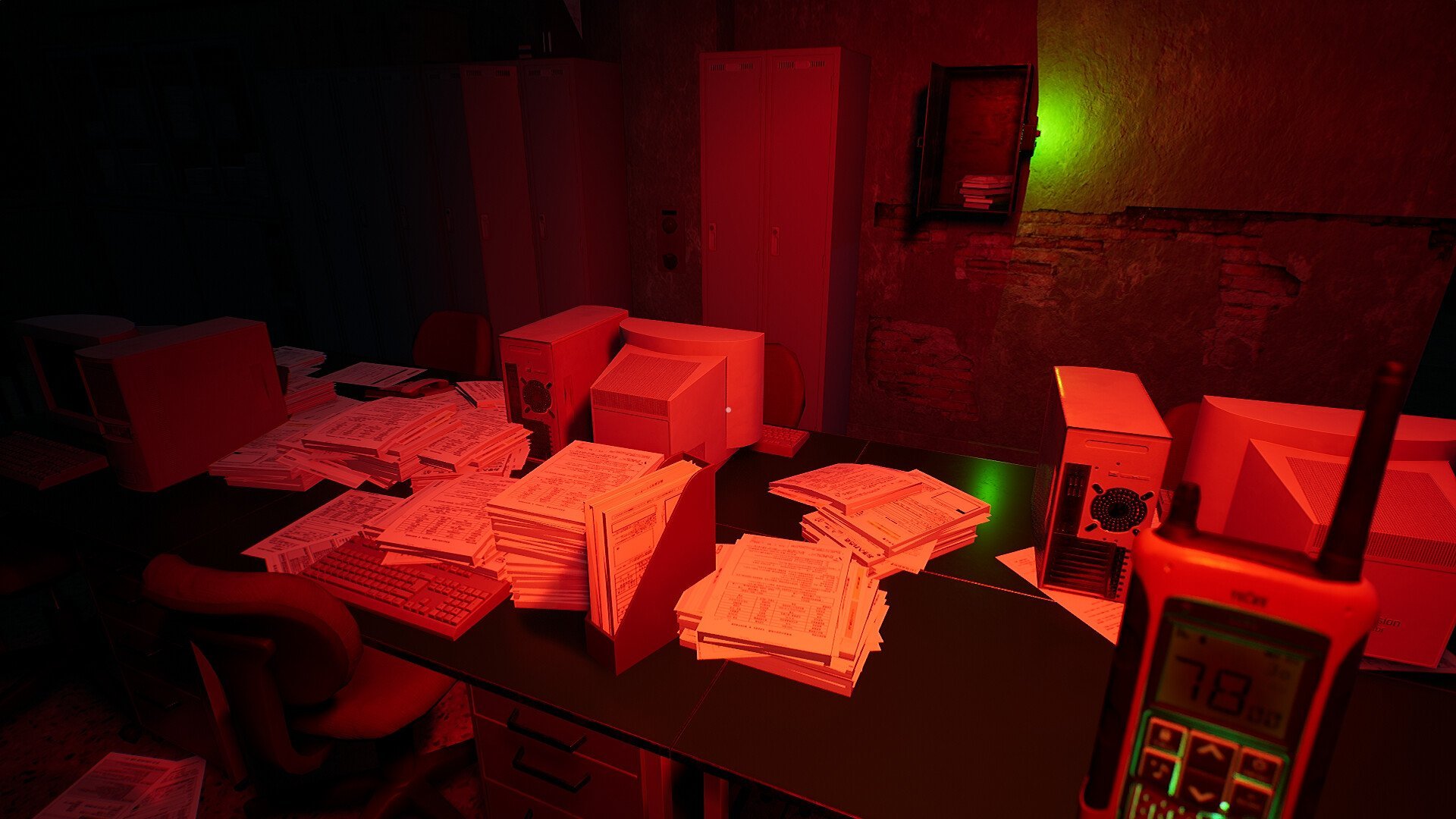
One night, while staying late to catch up on his piling work, Fred experiences a power outage. As he tries to fix the electricity and resume working, a mysterious voice, referred to as “Radio Guy,” comes through a walkie-talkie found on one of the desks. The voice tells Fred to stop wasting his life at this crappy job and make his way to a lighthouse that shines a green beacon, where he will finally find the freedom and peace of mind he’s been looking for.
As you guide Fred in leaving his former life behind and heading towards your destination, you’ll traverse a strange, nightmarish world where reality and hallucinations begin to blur, and the voice’s connection to you becomes increasingly unsettling. You are clearly not the first person to make your way to the lighthouse. A guy named Kip did this before you, and left some notes behind to be read by future travellers. His fate is not revealed until the end, but can de deduced from his notes.
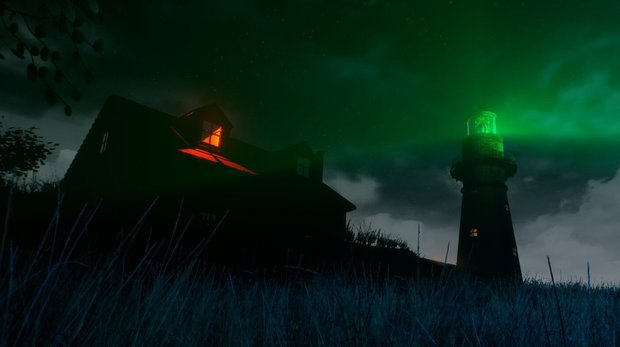
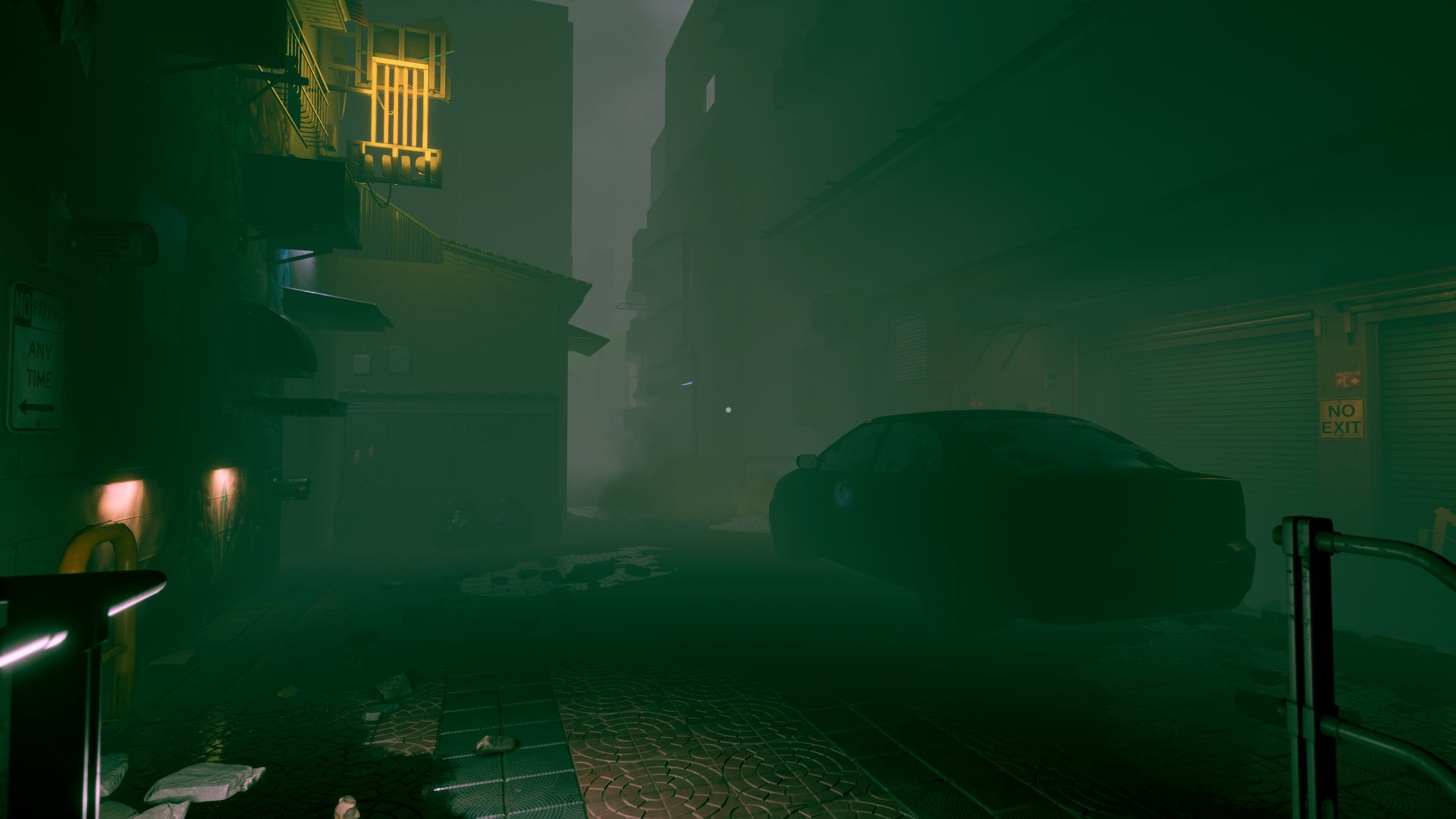
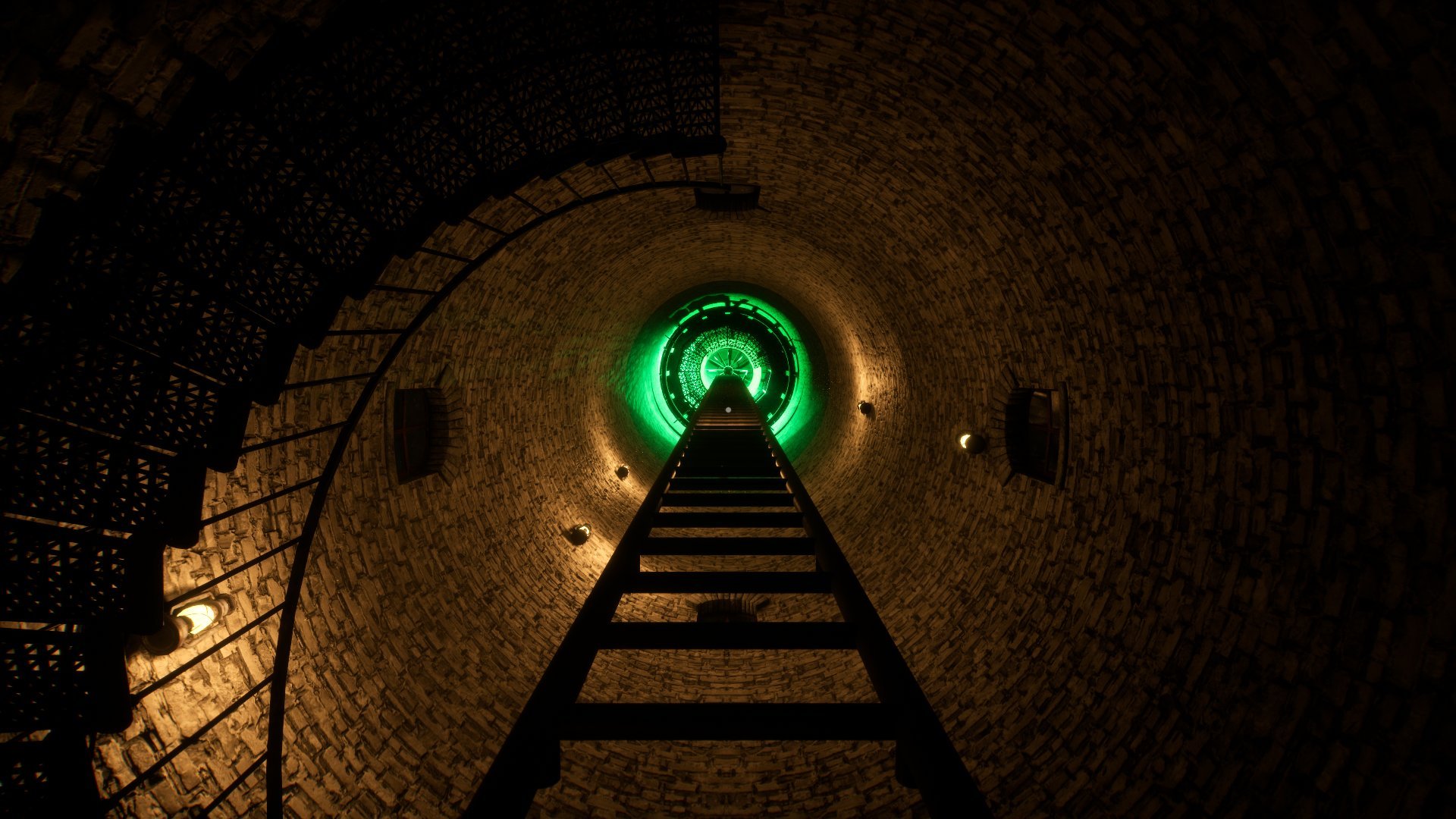
The Green Light is presented from a first-person perspective with realistic 3D graphics. Movement is smooth, controlled by either keyboard-mouse combination (with the WASD scheme) or a gamepad. The office is the first of four main areas you’ll explore before venturing out into the city, followed by a beach house and its surroundings, and the lighthouse itself. These areas imbue the experience with a nice sense of movement, of progressing from the confined, almost jail-like office space to the vastness of the area around the lighthouse with its refreshing open air and underlying promise of peace of mind. It also creates the impression that you're gradually getting closer to something important, to the essential key to the mystery.
There are puzzles along the way that actually feel like real puzzles, like pressing paintings to open doors, shutting off valves in the correct sequence, deciphering the meaning behind a strange video cassette, finding a code to a safe, and one that requires you to adjust a series of switches on and off in the correct order to open a mystery door. Most tasks, though, are of the simple fetch variety, like finding a tool to break open a lock, locating a fuel tank for a boat, or replacing burnt fuses with new ones scattered around. More varied obstacles would have spiced things up a bit and made the overall experience more challenging.
Progress is very linear, with your course pre-determined. You are free to move around but cannot explore much of each location, like entering stores along a city street, or sailing to a remote island instead of heading straight for the lighthouse, which happens automatically when the time is right. Navigation is elegantly directed by organic barriers such as fences, crates, permanently locked doors, and in one case, a haystack. Once completed, you cannot return to a location you have previously explored. This system prevents a lot of unnecessary backtracking, but some players might feel it makes the game too easy.
The Green Light

| Genre: | Horror |
|---|---|
| Presentation: | Realtime 3D |
| Theme: | Psychological |
| Perspective: | First-Person |
| Graphic Style: | Photorealism |
| Gameplay: | Walking simulator |
| Control: | Direct Control |
The main objective at each setting is broken down into several smaller quests. For example, escaping the city means finding a mode of working transportation, and after making your way to the beach house, reaching the lighthouse involves tasks such as opening a lock and gaining access to a hitherto secret door. These tasks are displayed by pressing TAB, with an audio cue sounding whenever there is a new one. The game does not allow you to proceed to the next destination before you have fulfilled everything you need to do at your current one.
The Green Light’s narrative is just as straightforward. Except for one point, where you can choose between retrieving Radio Guy’s car keys from a safe with or without also stealing his money, there are no choices to make. Even this one decision doesn’t seem to affect the narrative, or the ending, in a significant way.
But Fred clearly has a lot on his mind, and on your journey you will encounter some unsettling scenes. Early on, surreal details invade mundane spaces, like blood dripping from a ceiling, and a hallway with shifting, looping pieces of… something. Elsewhere a towering pile of human waste blocks a street, surrounded by similar rotating pieces. Later on, you’ll navigate a claustrophobic tunnel whose walls are covered with red bubbles and dense black undergrowth, swarming with black moths and crawling red worms.
Especially during the game’s finale, there are several creepy creatures, along with an occasional jump scare. The creatures are static, ominous-looking entities, appearing only for a second. They include a black figure standing under streaming water, a strange face watching you from behind a grille door, and a demon-like monster lurking behind your back. They do not chase you or harm you in any way; they simply appear and disappear in the blink of an eye. Jump scares are often triggered by your movement, like climbing a ladder or opening a door. Some really made me catch my breath, especially one involving a creepy mannequin.
There are only three characters in the game: Fred, his nasty boss Rafael, and Radio Guy. None of them is seen, only heard (as Fred you don’t even get to look at yourself in a mirror). The voice acting is very good, each man sounding human and relatable. For example, Fred’s boss is extremely unpleasant when we first hear him, bombarding Fred with a barrage of insults and degrading remarks. Later when he learns that his employee has really quit his job, he’s calmer, humbler, almost pleading with Fred to return. Radio Guy, who remotely accompanies you throughout most of the journey, sometimes berates Fred for being stuck in his listless life, but on other occasions encourages him, compliments or even praises him for his actions.
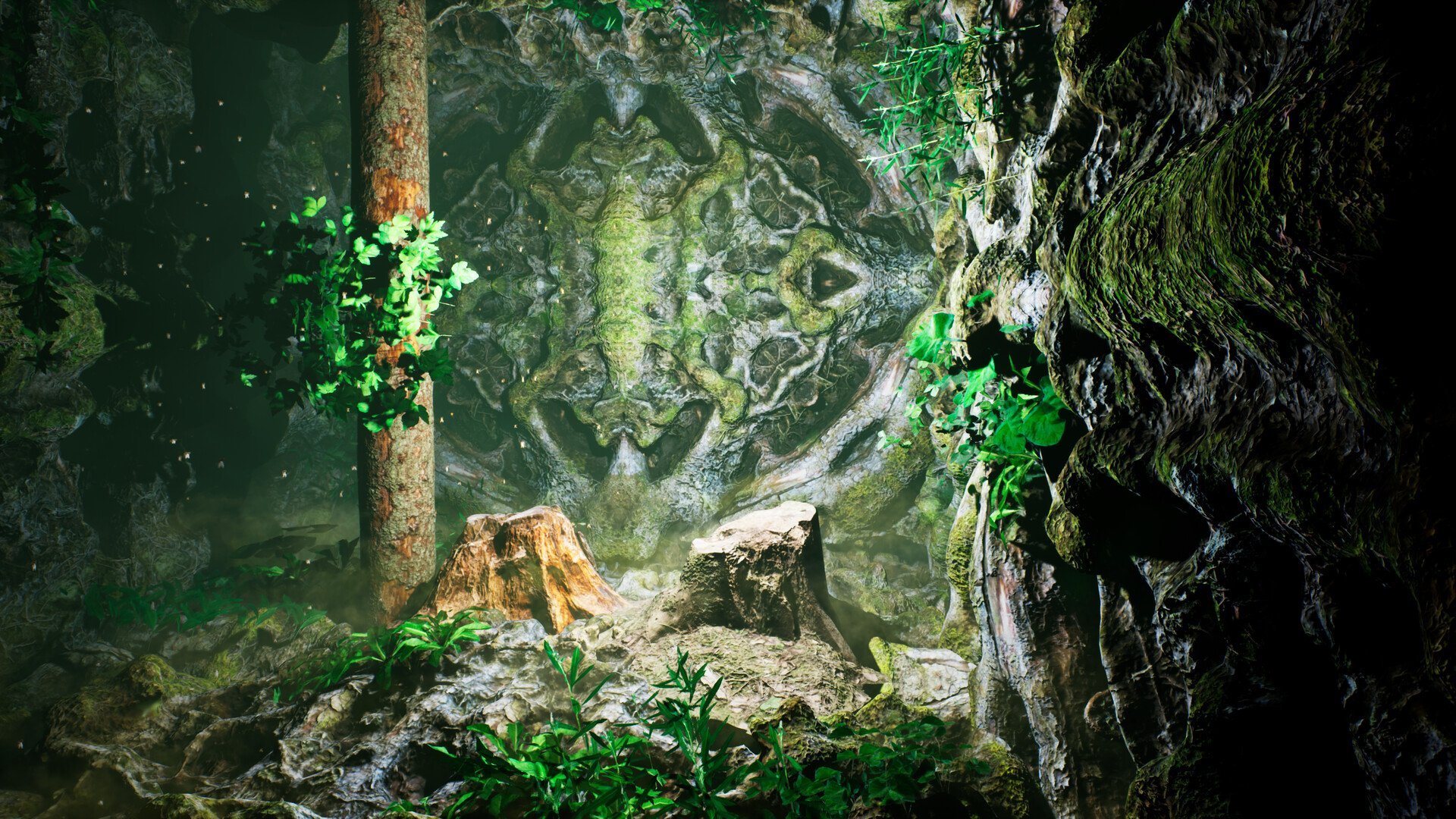
The action is complemented by a multilayered abstract soundtrack that is equally impressive. What I really liked about the music is that whenever and wherever you are, you’ll hear an underlying, sometimes almost inaudible layer of mysterious, disembodied grunts, hisses, wails and distorted speech. It makes you feel as if there are always some supernatural entities around you, but you cannot see them. Or... maybe they all hide inside Fred’s head, along with all the macabre environmental distortions? This is left unanswered, but either way, the score and visual design are delightfully eerie, adding a creepy vibe to the game.
When you finally reach the lighthouse, it feels like the kind of destination you'd expect a mystery to build toward, where all the questions will be answered, or at least most of them. Alas, this is where The Green Light leaves much to be desired. The story up to this point is quite simple, maybe even simplistic: Fred hates his life. Fred wants his freedom. Fred goes to a lighthouse. But just when you think you are about to delve deeper and explore his turbulent soul and learn about his backstory, there is a short, static cutscene as if Fred simply stands and ponders, then the credits roll.
There can be something satisfying about a story that only gradually reveals its secrets, encouraging you to pay attention to details and piece together the bigger picture. However, keeping players curious and rewarding that curiosity are two different things. While a mystery can afford to be vague for a while, its various elements eventually need to come together. When that doesn't happen, it starts to lose some of its appeal as it does here. Its premise is intriguing, but as the game progresses toward what should be a dramatic conclusion, the gap between expectations and payoff becomes noticeable.
There are just too many questions left unanswered. For example, the identity of Radio Guy, or how two seemingly unrelated characters whose names you encounter only once throughout the game are relevant to the tale. Who lives in the beach house? What is their story, and how is it connected to Fred’s? And of course, where is the thin line between what is real and what is not? Without addressing any of these issues, The Green Light feels as if there is a deeper, more personal but unreachable narrative hidden somewhere under the surface.
Some questions don’t need answering, however. The game is not set in any specific city or country. Fred and Rafael's last names, as well as Radio Guy's real name, are never revealed. We are not told what company Fred works for, either. Yet instead of creating unwanted confusion, all of this contributes to the game's universal appeal. After all, is there any worker, anywhere in the world, who hasn't dreamed at least once of leaving everything behind and living the life they truly desire?
Final Verdict
Overall, The Green Light is a reasonably enjoyable but somewhat uneven horror experience. The linear gameplay feels limited, and the narrative fails to provide a satisfying conclusion. Still, its relatable hook is sure to pull people in and fans of psychological horror and strange, unsettling stories will appreciate its vaguely Lovecraftian yet distinctively surreal atmosphere. It’s very short and doesn't quite live up to its potential, but its creepy imagery, handful of jump scares and intriguing premise make it worth checking out.
Hot Take
The Green Light is a short, simple but richly atmospheric horror experience whose story is never fully illuminated.
Pros
- Intriguing premise with darkly surreal elements
- Good voice acting
- Eerie soundtrack adds to the overall atmosphere
- Protagonist’s despair is universally relatable
Cons
- Story could have been much meatier
- Lacks puzzle variety
- Denouement leaves loose plot threads
Eran played The Green Light on PC using a review code provided by the game's publisher.

- Advertisement
- Help support AGH by advertising with us





0 Comments
Want to join the discussion? Leave a comment as guest, sign in or register in our forums.
Leave a comment