
Imago Season review
- 0 Comments

Cheerful sci-fi narrative RPG entertains while it lasts, with only a few minor issues to bug anyone
In Imago Season, you wake up amnesiac in a cave. As you begin to explore the nearby city, you learn that all its adult citizens, while human, have visually apparent insect components. You can even, over the course of the game, undergo “metamorphosis” yourself. In fact, this is a key game system. Unlike conventional RPGs, the way to improve your character here is not through earning XP and buying skills; instead, it’s by accumulating “morphosis” points and spending them in the lab to gain insect parts yourself to enhance your skills.
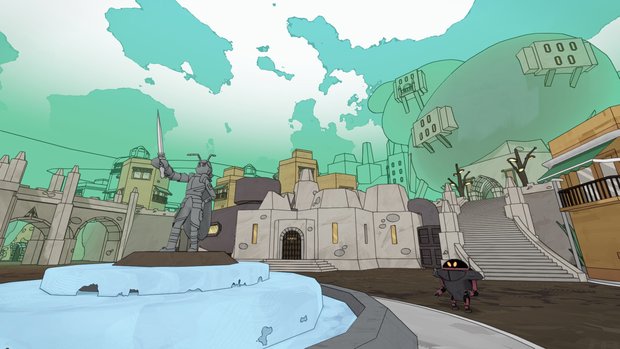
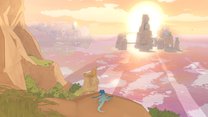
It’s a fairly light game: no combat, with exploration of the 3D city, conversations with characters you encounter, and the occasional RPG roll against character stats being the main elements of gameplay. Navigation is with WASD and interaction via mouseclicks; controllers are also supported, but I played with mouse-and-keyboard and found navigation smooth and responsive. It’s a fairly short experience (3-4 hours), with cartoony graphics that are low-poly but attractively pastel, and narrative is at its core. On the whole, it’s a diverting few hours in an unusual setting.
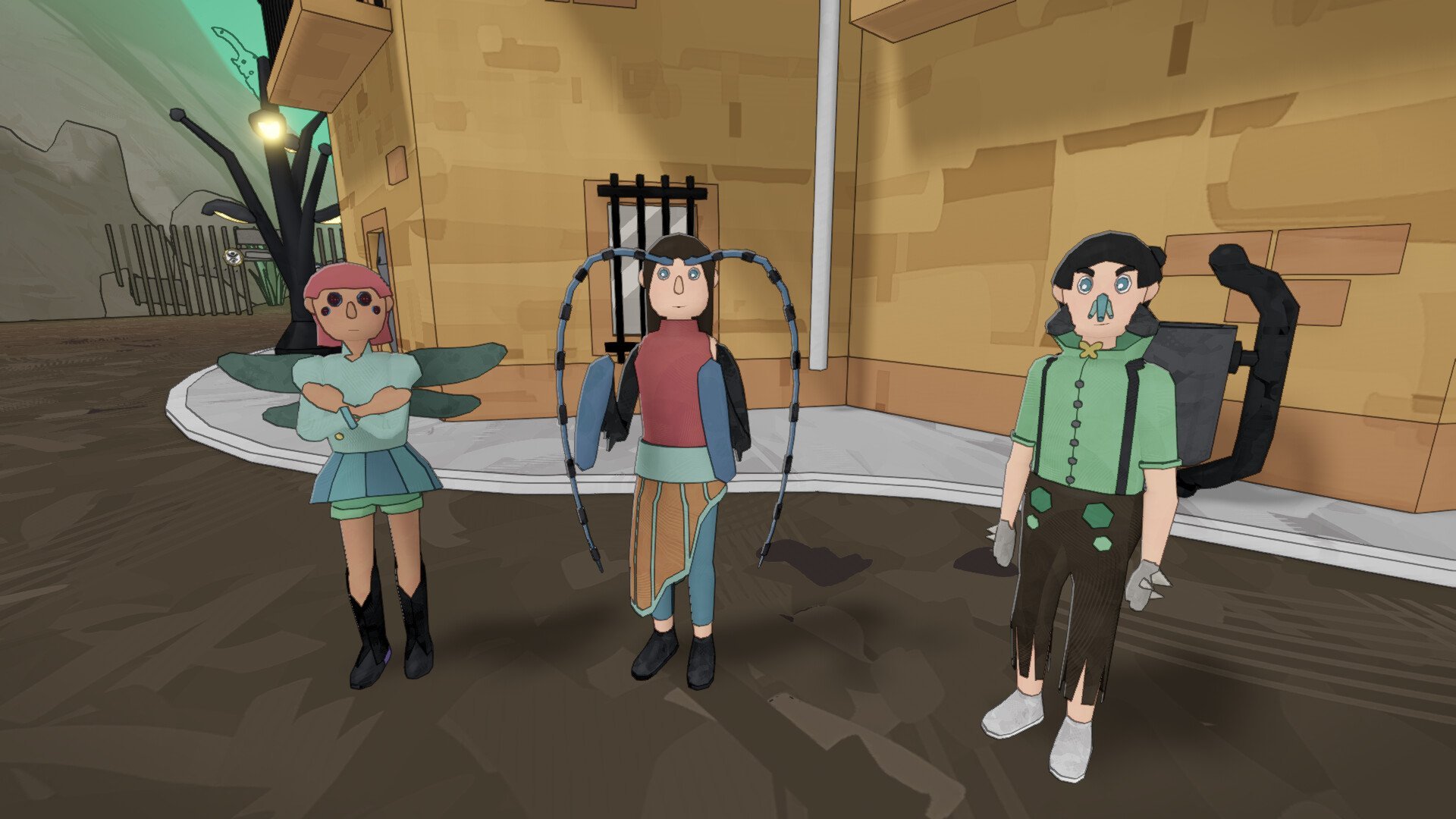
Imago Season takes place in the city of Tempura, which has recently been “freed” by the robotic Liberated Coalescence Army from the Union Universalis, a sort of alien empire. In your travels, you learn there’s an underground working to restore Union control, as well as a “humans first” faction that opposes both the Coalescence and the Union, and strives for Tempuran autonomy. Your actions and choices determine which of the three factions succeeds (meaning also: three endgames).
The character stats are unusual: “Escalating a situation,” “Diverting attention from yourself,” “Putting up with something,” “Buying your way in,” and “Catching a curveball.” Each has a max value of 6, and you start with values from 1 to 3 for each. At times, a dialog option or obstacle in the city will allow you to use one stat to unlock options; sometimes you have a choice of two stats. The mechanic is simple: the game tells you the difficulty level and your likely chance of success; when you make an attempt, there’s a D6 die roll to which your stat is added, and if the sum is greater than the difficulty, you succeed.
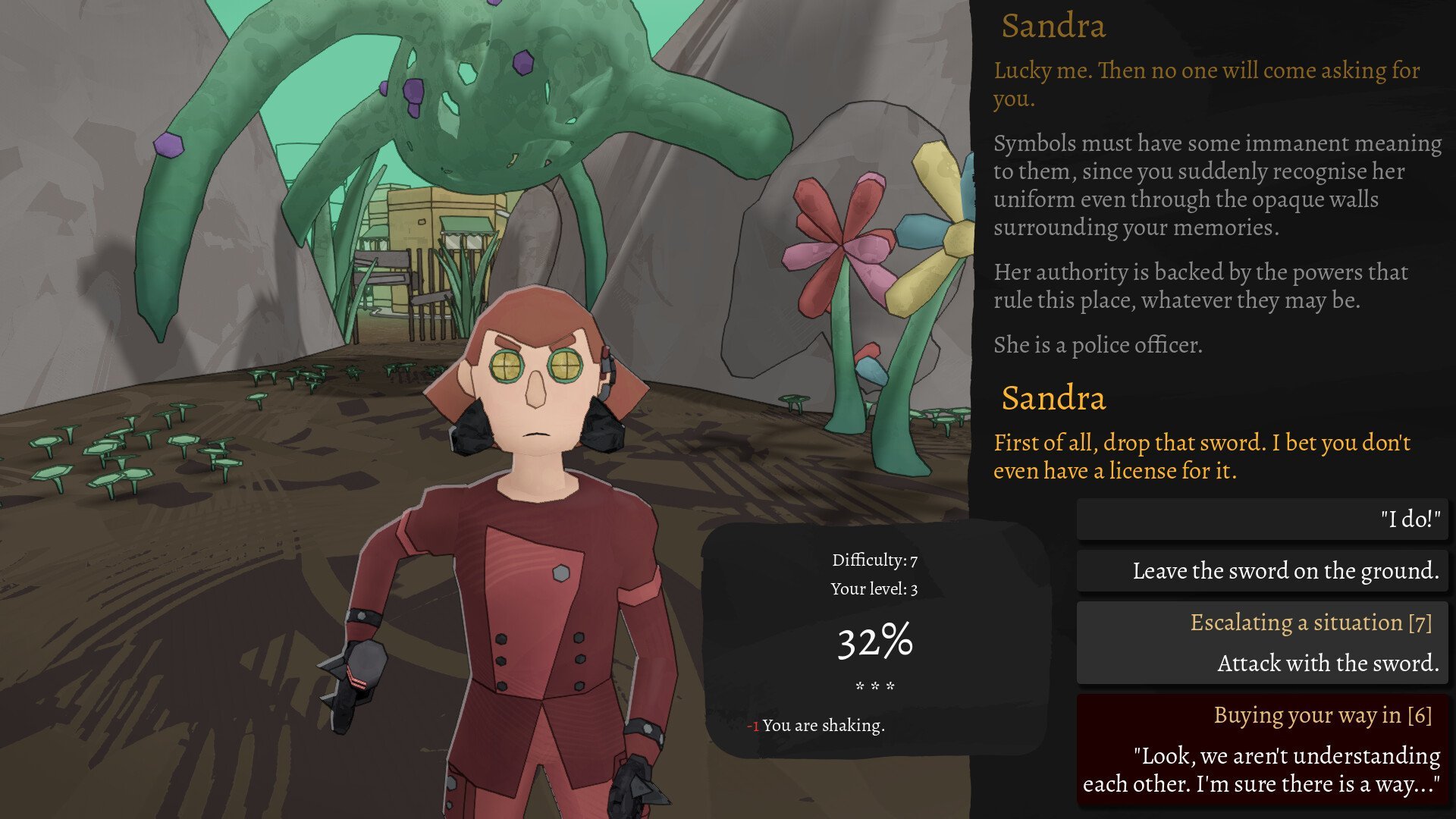
Failure is never a blocker; sometimes an attempt can be made only once, but setbacks typically just mean missing some story element. More often, failure invites you to return once you either have improved your stat or obtained an inventory item that gives you bonus points in making a second attempt – a gameplay incentive to encourage further exploration.
Throughout Imago Season, you discover red “credichips” and green “morphosis points.” Credichips can be used to purchase items from various vendors – sometimes tools to improve your chances of success in a stat roll, but also sometimes clothing or other cosmetics.
Imago Season

| Genre: | Drama, Mystery, Science Fiction |
|---|---|
| Presentation: | Realtime 3D |
| Theme: | Other worlds/dimensions, Political, Psychological, Amnesia, Memories |
| Perspective: | First-Person |
| Gameplay: | RPG, Choices matter, Narrative |
| Control: | Direct Control |
| Game Length: | Short (1-5 hours) |
| Difficulty: | Low |
| Graphic Style: | Low poly |
Morphosis points can be used to transform yourself, adding visible insect parts to your avatar and also improving stats. To do so, you go to the Mutation Center to splice insect DNA into your genes. A priori, I was kind of squicked out about this idea, and assumed there would be an uncomfortable level of body horror to the game, but in practice, it’s not that bad. People have compound eyes or chitinous limbs; whatever, we’re all different. It helps that the graphics are clean, colorful, and flat-colored, so mandibles on a character look kind of… normal, not repulsive.
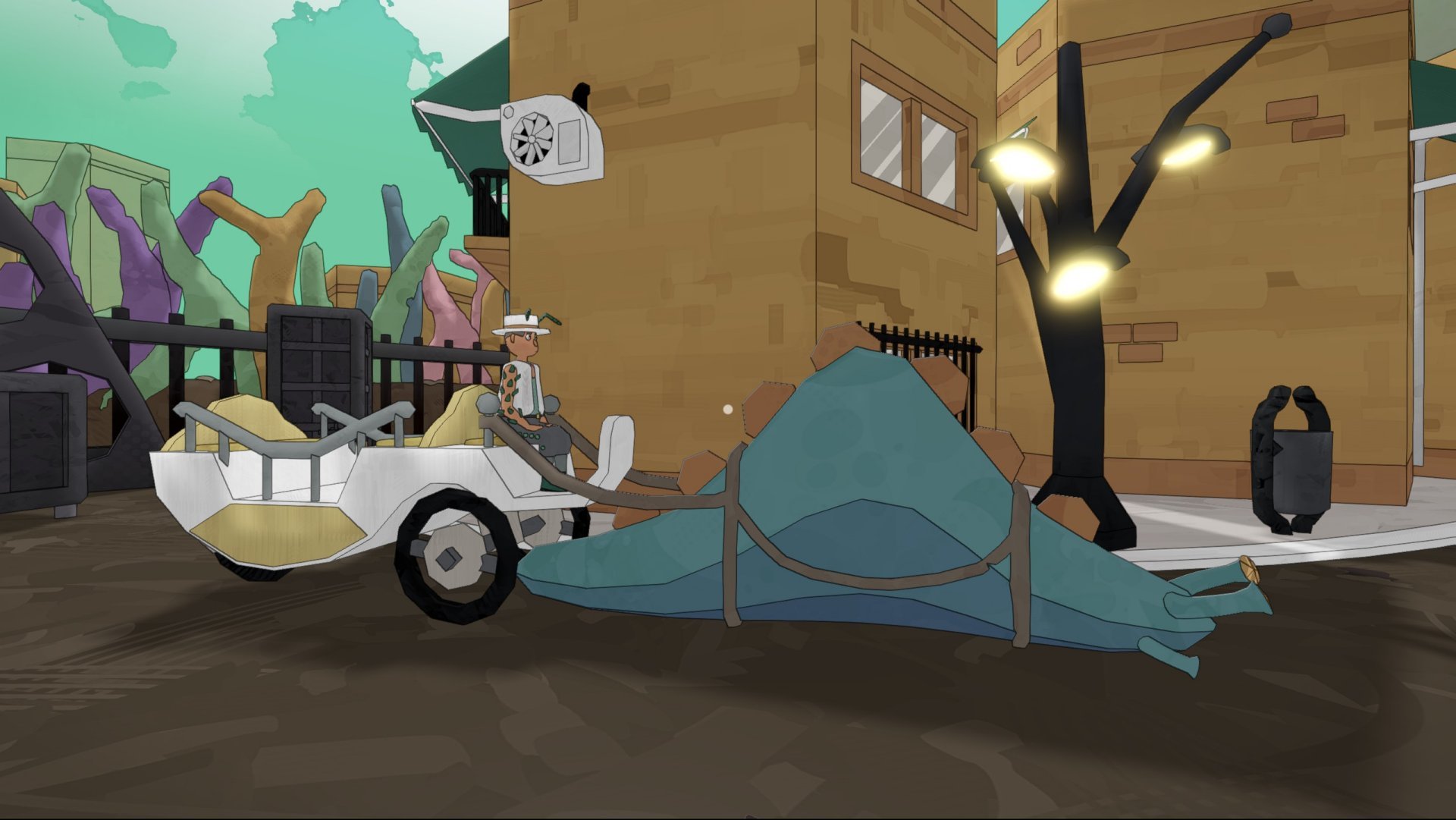
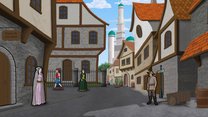
Tempura is fairly small, including the Mutation Center, Police Station, City Hall, a cathedral, shops and homes, and caves beneath the city. Sometimes a task or roll is needed to unlock certain areas. There is a quick-travel system (a snail-pulled taxi), but while backtracking is often required, I rarely used it because traveling on foot is not overly onerous. The game does, however, lack a minimap, which is occasionally frustrating. (Where was that building I need to go to next?)
Imago Season has a quest log that allows you to view progress on tasks assigned you by NPCs. For example, early on the police ask you to help them by infiltrating the Unionist resistance and report back. Finding the resistance reveals important elements of the backstory and may inform which faction you ultimately support, but you can decide not to report back – or to snitch on the resistance. Elsewhere you encounter a robot holding a box, who tells you that they are trying to find an ambassador of the Union (enemies of the Coalescence), and that scattered diary pages across the city are needed to locate him, enlisting your help. Similarly, when you visit the cathedral, the priestess tells you that tonight is a festival day for Our Lady of the Split Carapace, and asks you to find two people to attend the service. This gives you another conversational gambit when you talk to other characters.
The quest log is, unfortunately, often vague about what you need to do to progress, and the lack of a minimap is a problem here. I found myself brute-forcing things at times by visiting everything in the city to figure out where I was supposed to be. Also frustrating is that buildings are not labelled, so I found myself thinking things like, “Oh, the Mutation Center; that’s a building with a bug knocker, but so is the pub. Was that on the upper or lower level?” So yeah, more to-ing and fro-ing than I would have liked.
The writing – carried on almost exclusively in dialog – is smart, often sassy, with characters frequently arguing with each other. The story is quirky; insect-human hybrids are not exactly a common science fiction trope, and gradually uncovering the backstory of Tempura’s conquest and political factions is a big draw throughout the game. Choices can lead to small outcomes in side quests, but except for your big decision at the end (which faction to support), they don’t have much impact along the way.
There is no voice acting, but there are perfectly acceptable stings for game actions. The music is by JHawk and is unobtrusively instrumental; pleasant enough but nothing to write home about.
Final Verdict
Imago Season is a fairly short game, but over its brief duration introduces a somewhat strange world in which humans mutate themselves with insect DNA as a matter of course, and in which you have to make political choices about the future of the city in which you live. Don’t expect a traditional adventure game with any real puzzles to solve, but it’s cheerful, low-risk fun while it lasts. Looking at the credits after completing, my jaw kind of dropped that such a small team was able to deliver a narrative experience this good. It’s quite well written, and if you have an interest in story-first games, it’s most likely worth your time.
Hot take
With its quirky world populated by humans with insect features and a backstory of three competing political factions to learn about and either assist or quash, Imago Season is a modest but impressive narrative-first game, especially so given its small team.
Pros
- Interesting political choices for the player
- Well-scripted quests to pursue
- Surprisingly deep world lore to uncover
- “Advance by mutation” is an interesting alternative to conventional RPG upgrade systems
Cons
- No minimap or other quest pointers sometimes makes it hard to figure out what to do next
- Lack of building labels often results in a return to previously explored places
Greg played Imago Season using a review code provided by the game's publisher.

- Advertisement
- Help support AGH by advertising with us





0 Comments
Want to join the discussion? Leave a comment as guest, sign in or register in our forums.
Leave a comment