
Heir of the Dog review
- 0 Comments

Canine-themed point-and-click adventure is a fetching new game from the creator of Lucy Dreaming
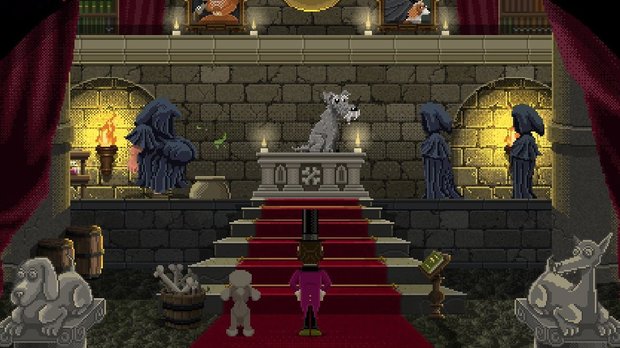
When Tall Story Games created 2021’s Hair of the Dog, the short tale of a Victorian Londoner who cooks up a mysterious formula in his uncle’s laboratory that transforms him into a hirsute beast each night, it was a free bite-sized, hour-long love letter to classic point-and-clickery that ended on a bit of a cliffhanger for its hapless hero. Now five years and one impressive commercial detour later, the Lucy Dreaming developer has released Heir of the Dog, a fully fleshed-out and much-expanded version of the original that takes that initial premise and extends it oh so much further. Featuring oodles of ridiculous situations, hilariously memorable characters, and heaps of genuinely funny writing, the game successfully marries much of what we love about the genre’s classics with entertaining puzzle design for a doggone good time, and no bones about it.
While it would be easy to think of Heir of the Dog as a sequel to its predecessor, the earlier prototype has been fully recreated and integrated here, now serving as a de facto intro section to the game proper. Players take on the role of Cummerbund Bandersnatch, a posh Victorian Londoner who one day finds his uncle missing, with only his newly developed “good time” chemical formula left behind as a clue. Thinking to recreate it in order to track down his lost relative, Cummerbund instead finds that the mixture has the unfortunate effect of turning him into a hairy, muscled beast between the hours of 8pm and 8am, unable to converse with his fellow Londoners while still the same upper-class twit (the developer’s own words, not ours!) on the inside.
Alternating between animalistic and human form, with each having specific advantages and drawbacks, you have to scour your uncle’s lab, its surrounding neighborhood streets, and the nearby park for ingredients needed to mix an antidote and get yourself out of this predicament. Instead of curing you of your ailment (perhaps due to some classic corner-cutting if the exact item can’t be found), ingesting the anti-monster formula instead has the surprising effect of advancing your transformation even further, fully morphing you into a dog (albeit one wearing a stylish top hat and still able to carry out a posh Victorian interior monologue).
This is where Heir of the Dog leaves behind its freeware source material and forges into uncharted territory. What follows is a far meatier adventure than I’d anticipated that embraces the ridiculous and gets plenty of comedic mileage out of it. I was at first not entirely on board with the game’s storytelling attempts – there wasn’t a whole lot of forward momentum beyond “find that uncle!” for the first few hours – but gradually I was more and more drawn in by its ability to make me embrace and care for its assorted cast of characters and the dastardly plot it eventually pulls the curtain back on as bonds between our principal actors (two- and four-legged) are forged.
The much larger conspiracy involves London’s dog population, which is being ruthlessly snatched from the city’s streets, and it’s up to you to discover who is behind this scheme and how to stop them. By then you’ll have spent enough time in dog form to have a personal stake in the affair, not least due to having made friends with a couple of canine cohorts along the way, particularly the lovely poodle Sally, who seems quite taken with her Bandy (as she calls you, at least as long as you remain in puppy form). The game’s grand finale even sees you plan and execute a pet prison break with the help of your furry compatriots, switching control between each of the four members of the group (the Muscle, the Lookout, the Inside Man, and the Getaway) on the fly in a memorable and satisfying climactic section.
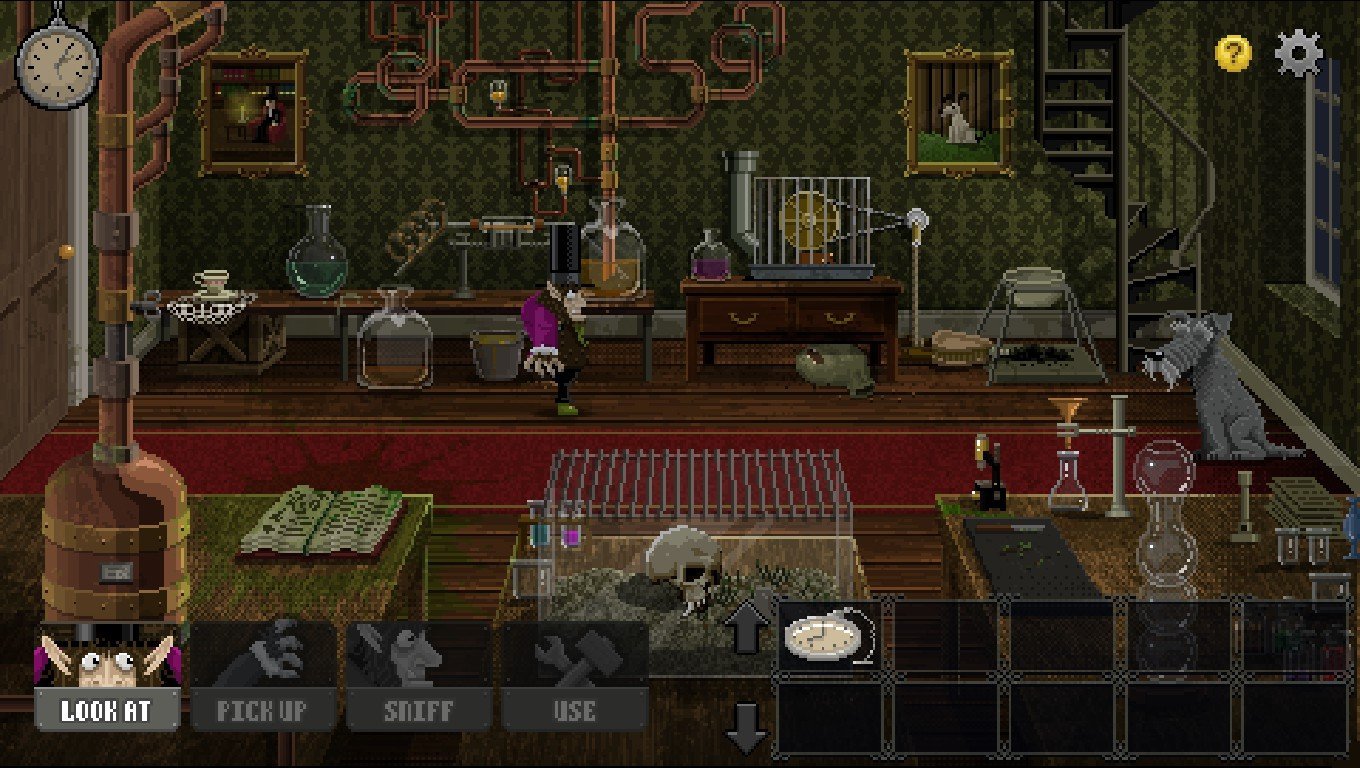
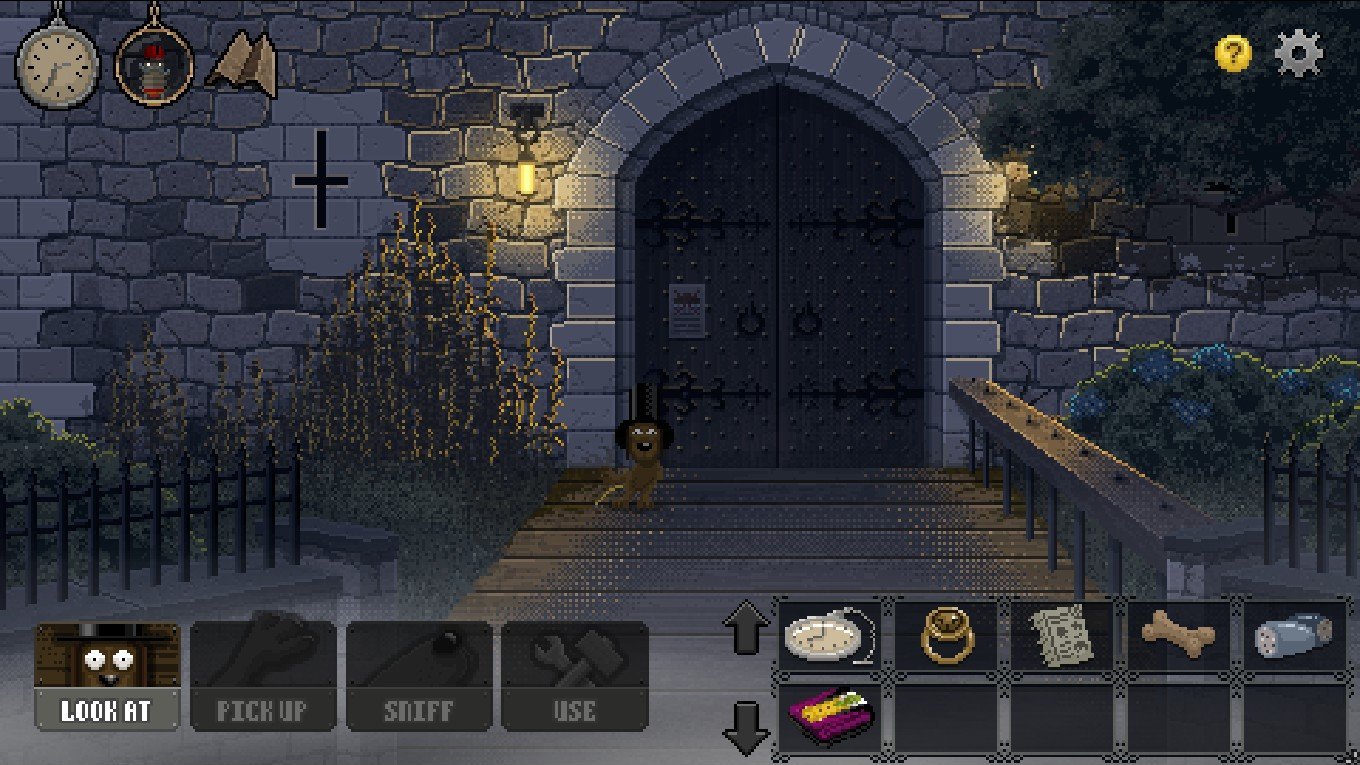
It’s important to note that you’re almost never locked into one form (unless a particular puzzle requires it or it wouldn’t make sense for the narrative to allow you to change back). To switch between Cummerbund’s human and other forms, you can simply click on his pocket watch in the inventory, which then triggers time to pass (from night to day or vice versa) and the change to occur. It is generally understood that any passers-by during this interval don’t take notice of it, or indeed wonder why a man is just standing in place on the sidewalk for hours on end. However, there are specific locations, such as when attending the mayor of London’s fundraising soiree, where it would simply be too conspicuous to trigger a transformation, so the game won’t let you.
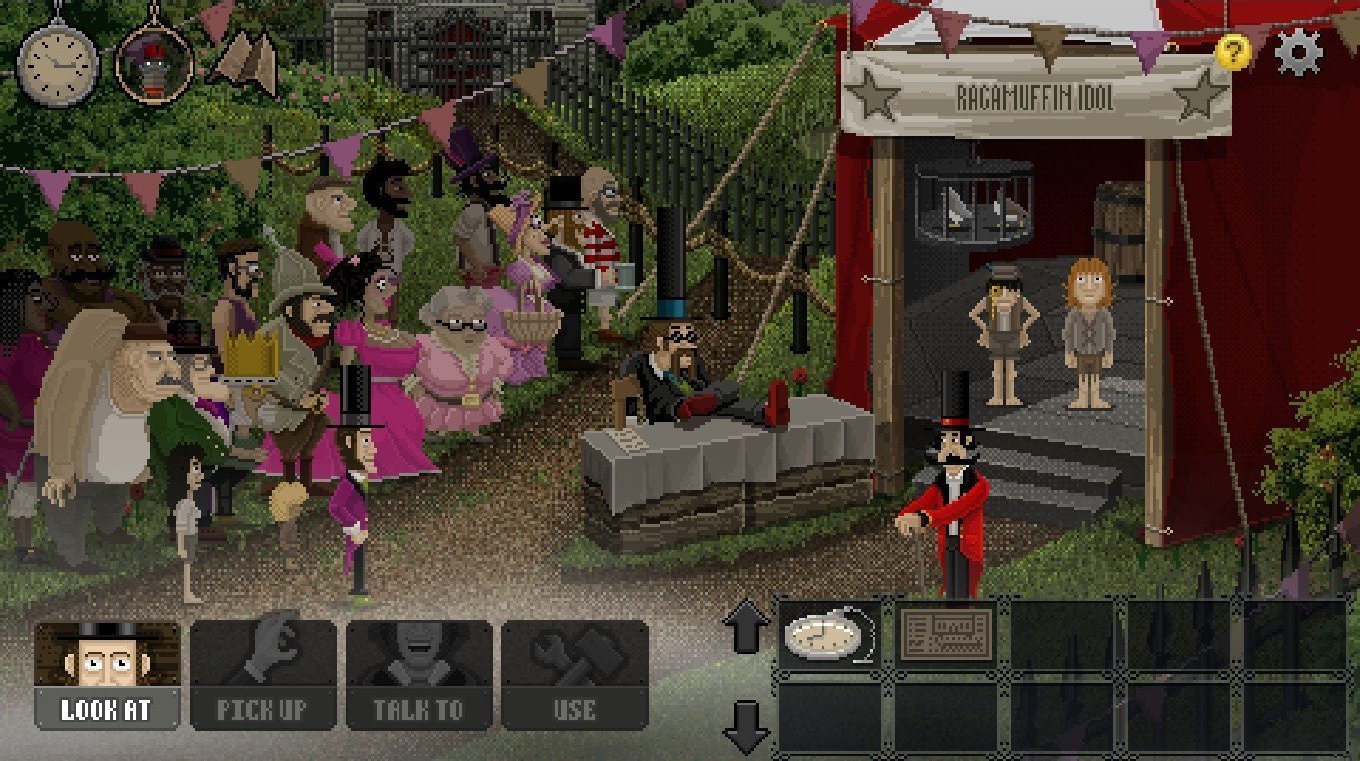
Since the metamorphosis only comes on at night and leaves Cummerbund a human during the daytime, you have to regularly think about how your surroundings may also change between time shifts. Essentially, all areas in Heir of the Dog exist in two states, with some apparent differences when switching from one to the other. In Cummerbund’s neighborhood, for instance, certain businesses will only be open during the day, while other, unique interactions are possible only at night. The mayor’s mansion is tightly locked after sundown, but it’s the only time he retires to his chambers, so you’ll need to find a way to get in anyway if you want the full run of his house. This makes for a very effective way to force you to think laterally without adding entirely new locations.
Of course, the most important variable is Cummerbund himself. In his human form, he can initiate conversations with other humans and generally move about as normal. His transformed selves trade in the power of speech for an improved sniffer (which is utilized in a couple of simple tracking sequences). The beast also has unusual strength, while as Bandy you’ll occasionally be forced to answer the irresistible call of nature. (Yep, marking your territory isn’t just an amusing Easter egg but actually required a time or two.) It isn’t until the game’s home stretch that all three forms – man, monster, and dog – become available to freely switch between, and without the passage of time complicating things.
Heir of the Dog
| Genre: | Comedy, Mystery |
|---|---|
| Presentation: | 2D or 2.5D |
| Theme: | Conspiracy, Monsters |
| Perspective: | Third-Person |
| Graphic Style: | Pixel art |
| Gameplay: | Puzzle, Quest |
| Control: | Point-and-click |
| Game Length: | Long (more than 10 hours) |
| Difficulty: | Medium |
The action is controlled the same way for all three, with standard pointing and clicking, with four action icons (Look At, Pick Up, etc) available on-screen next to your inventory window, along with form-exclusive icons automatically swapping out as you shapeshift.
Ninety percent of the game’s brainteasers are traditional inventory-based puzzles, though you’ll never carry around an overwhelming assortment of items. I think only once did I have to use the scroll buttons to cycle through to find something I needed. The challenge is usually quite manageable; it was rare that a puzzle had me stuck for a long period of time. There were a couple of instances when I was forced to comb through every available location in hopes of stumbling upon a way forward, but generally the game doesn’t favor blind luck. Over the course of the substantial twelve to fifteen-hour campaign, there were several head-scratchers that felt all the more satisfying once I’d approached them from different angles and had that all-important “Eureka!” moment.
Unfortunately, there is one particular puzzle sequence early on that’s memorable for all the wrong reasons. To be granted access to the dog pound, you have to gain the trust of a pair of dog catchers. This requires answering several questions about in-game dog breeds, including dietary preferences, background history, and using a made-up measurement system to solve a bona fide mathematics conversion problem. These questions are randomized, so leaving to find the answers won’t work, as the questions will change upon your return. You’ll probably have stumbled upon the information at some point, but since there is no in-game notebook that keeps track of this info, you really need to write down all dog facts yourself. It resembles piracy protection questions of classic-era games, but entirely unnecessary considering there’s zero need for it anymore.
A few “try everything but the kitchen sink” instances are inevitable, as Heir of the Dog has no hint system (though a hotspot highlighter is available). What it does offer is a task list that you can consult at any time to remind you of what objectives you should devote your gray cells to solving. If you’re wondering why the local gang of street urchins just isn’t being cooperative, the task list may provide a hint that one of them still hasn’t taken a liking to you yet. Or for those times when you’re brewing up a potion, your task list will include a helpful list of the ingredients you first need to gather. It never actually points you in the right direction (or any direction at all), but it’s better than nothing on the off chance that you do become hopelessly stuck.
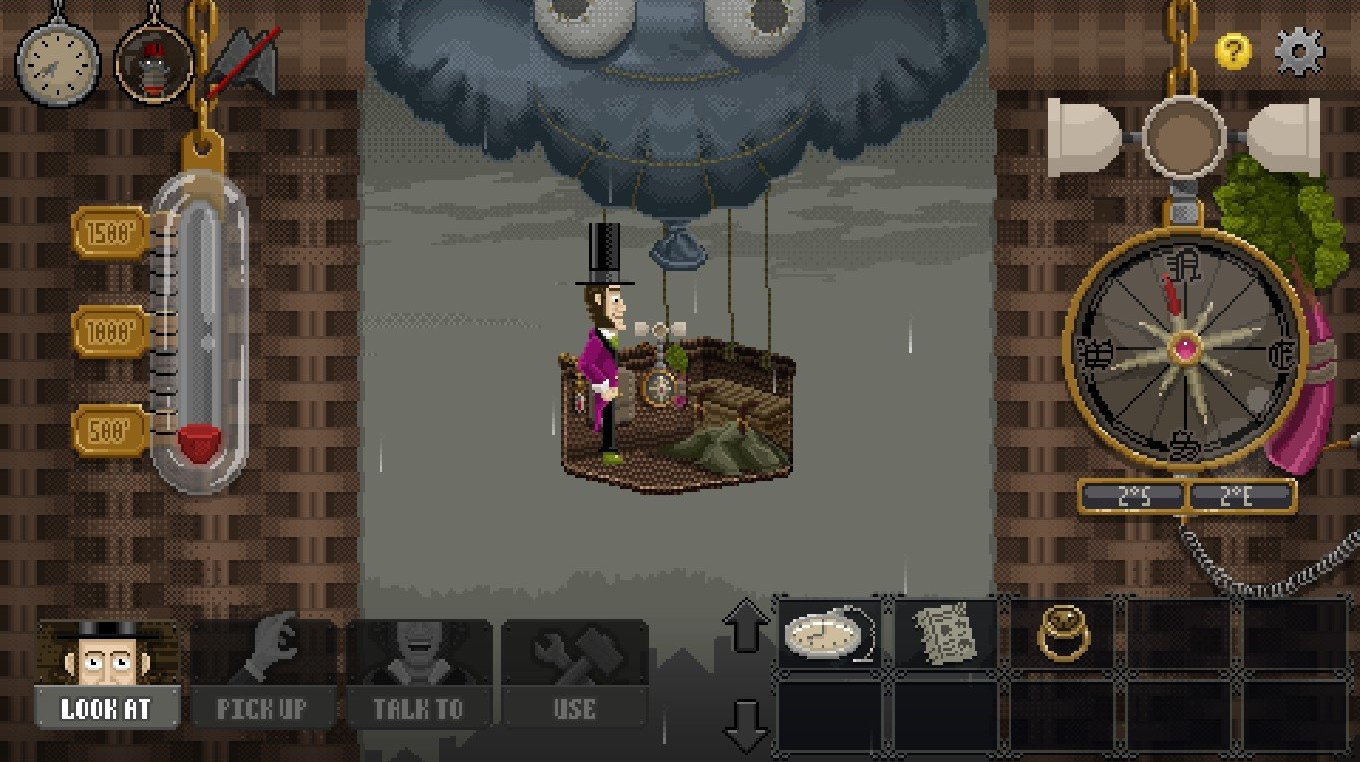
Even the few times I ran into roadblocks weren’t particularly frustrating, and they were the type of conundrums I enjoyed chewing on after stepping away for a while. The game also throws a bit of puzzle variety at you. At one point you’ll use wind current maps to navigate a hot air balloon through what can best be described as a maze done right, and a little later you’re tasked with digging for treasure in the bed of the Thames during low tide after perusing a tome of cryptic clues about its location. It all adds up to a diverse and enjoyable puzzle experience from start to finish.
No less pleasing is the game’s high-quality voice work. Every character is fully voiced, with no weak or even middling performances out of the bunch. The various Londoners Cummerbund runs into exhibit many unique verbal quirks and are often quite funny to boot. There’s the suspiciously well-spoken street urchin (and a cohort of his who can utter nothing but silly, made-up insults to express his thoughts), as well as the haughty newspaper mogul Bilious Fogg, who affects a high-pitched trill every time he opens his mouth (and whose fiancée is especially averse to dogs). There are so many amusing British stereotypes lampooned by the voice cast, like the mayor having the most quintessentially snooty British whinge that only a born-and-bred Englishman could ever hope to achieve. Cummerbund himself receives an impressive voice-over, brought to life by lead designer Tom Hardwidge himself.
The music is less impactful on the whole, though it does suit the game’s tone. The Victorian London setting rings true with a score that feels at home in the old-timey, days-gone-by location, with light-hearted tracks to underline the comedic atmosphere featuring heavy use of accordion to lend an irreverent, even silly air.
As you’d expect, the graphics have received a considerable overhaul when compared to their 2021 freeware counterpart. While still sticking with a distinctly retro pixel art style, Heir of the Dog’s visuals are quite a bit more advanced than its previous iteration’s. Particularly noteworthy are the many details that have been worked into each scene, sometimes for comic effect, other times purely for character, yet without ever cluttering up the screen. Some of the more off-the-beaten-track locations include the Tower of London (well, the outside of it anyway), and in the East End there’s a secretive group that hosts competitive eel-tugging championships that you’ll not only need to infiltrate but also win. And that’s before running afoul of spooky robed individuals who appear to be members of some sort of underground cult.
Nevertheless, the choice of period location means it’s a stretch to call this game “pretty.” Sure, there are some pops of color here and there, but much of the palette features grays and browns, which certainly suits its drab setting but doesn’t make for many breathtaking vistas. There’s even a large-scale puzzle revolving around a particularly dense wall of fog that you have to discover a way through to make it to London’s East End. The graphics themselves, however, are crisp, clean, and easily readable, with plenty of animations accompanying the action. There is one character who walks with a painstakingly animated limp, dragging a bloodied leg behind him. Initially this is a source for some dry humor during Cummerbund’s repartee with the man, but later it’s precisely this animation that turns out to have much more meaning than just a throwaway joke.
Final Verdict
Other than its few pacing stumbles and that one odd, randomized puzzle, Heir of the Dog is a great time from start to finish. I found myself scratching my head just as often as I was laughing out loud – a hard feat to reliably pull off. As outlandish as the premise of a shape-changing Londoner uncovering a conspiracy aimed at the city’s dog population is, the humor is surprisingly grounded, and just as well-written as the game’s more dramatic beats, and I genuinely found myself caring for the well-being of Cummerbund’s canine crew by the end. Its setting may not be the prettiest around, but the game succeeds where it counts most: a lengthy, engaging experience guided by fun, clever puzzles and a charming cast of characters.
Hot Take
Heir of the Dog is proof that you can teach an old dog new tricks, taking a short freeware release and building it out into a wonderfully entertaining full-fledged adventure with plenty of tender meat on the bone.
Pros
- Takes the prototype’s silly premise and expands it into a genuinely funny, intriguing narrative
- Outstanding voice work all around
- Puzzles are varied and hit the sweet spot of challenge vs frustration
- Crisp, detailed retro pixel art
Cons
- Occasional progress trigger might be a little hard to locate
- Randomized anti-piracy-style questions create unnecessary busywork
Pascal played Heir of the Dog on PC using a review code provided by the game's publisher.

- Advertisement
- Help support AGH by advertising with us







0 Comments
Want to join the discussion? Leave a comment as guest, sign in or register in our forums.
Leave a comment