
Endacopia review
- 1 Comment

Absurdist masterpiece features an abundance of laughs, love, and the occasional terrifying shriek
It’s hard to pin down where to even begin describing a game like Endacopia. At its core, it’s a point-and-click adventure, but along the way you’re thrown into a number of non-adventurey scenarios like outlandish mini-games and occasional bombastic boss fights. A red and black warning screen correctly states that “Some parts of this game may be considered disturbing.” But it’s not just a horror title either, as I was laughing out loud through many parts of the game with ludicrous jokes thrown into a plethora of absurd situations. It’s presented in 2D, except when it’s 3D. And I’ve barely begun to scratch the surface of its many contradictions. Developer Andyland’s uncompromising vision, smart puzzle design, and memorable characters make Endacopia an experience unlike anything else I have ever played. And I loved every single moment of it.
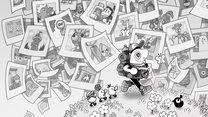
The game stars Mellow, a short kid with disembodied hands and feet and a baseball cap on top of his perfectly spherical head, who finds himself trapped inside a strange house with no obvious exit. Wandering the halls is a terrifying yet slightly goofy-looking yellow lizard creature with glasses named Henry, who has brought Mellow here for reasons unknown and tends to hit him on the head with a baseball bat whenever he finds the boy. In exploring the house, Mellow eventually meets a large red tongue-like thing that lives in the toilet and offers to take him on an adventure. With no other options, Mellow accepts and is sucked into the toilet, plummeting down a long chasm where he bangs against a wayward pipe and loses his eyes, hands, and mouth somewhere in the darkness. Now Mellow finds himself in an even stranger world in which he has to recover his senses and figure out how to escape.
In the simplest sense, Endacopia is a point-and-click adventure where you guide Mellow through odd scenarios across a variety of surreal locations. You move Mellow around with the WASD keys, but the cursor is controlled by the mouse, with left-clicks performing actions and right-clicks changing what actions you perform. While there is no direct indication of hotspots, pretty much anything in the background that isn’t part of a wall or the floor can be interacted with – even if the only result is Mellow jumping for a light fixture he can’t reach or talking with an inanimate object for comedic effect. With all his senses intact, Mellow’s abilities are denoted by icons next to the cursor: you can “Observe” objects and receive Mellow’s insight or gain additional information, “Speak” to characters, or “Interact” with things in the environment or items you’ve collected. Mellow’s inventory can be accessed by clicking on the young protagonist with the “Interact” function enabled, from which items can be selected for use in solving puzzles.
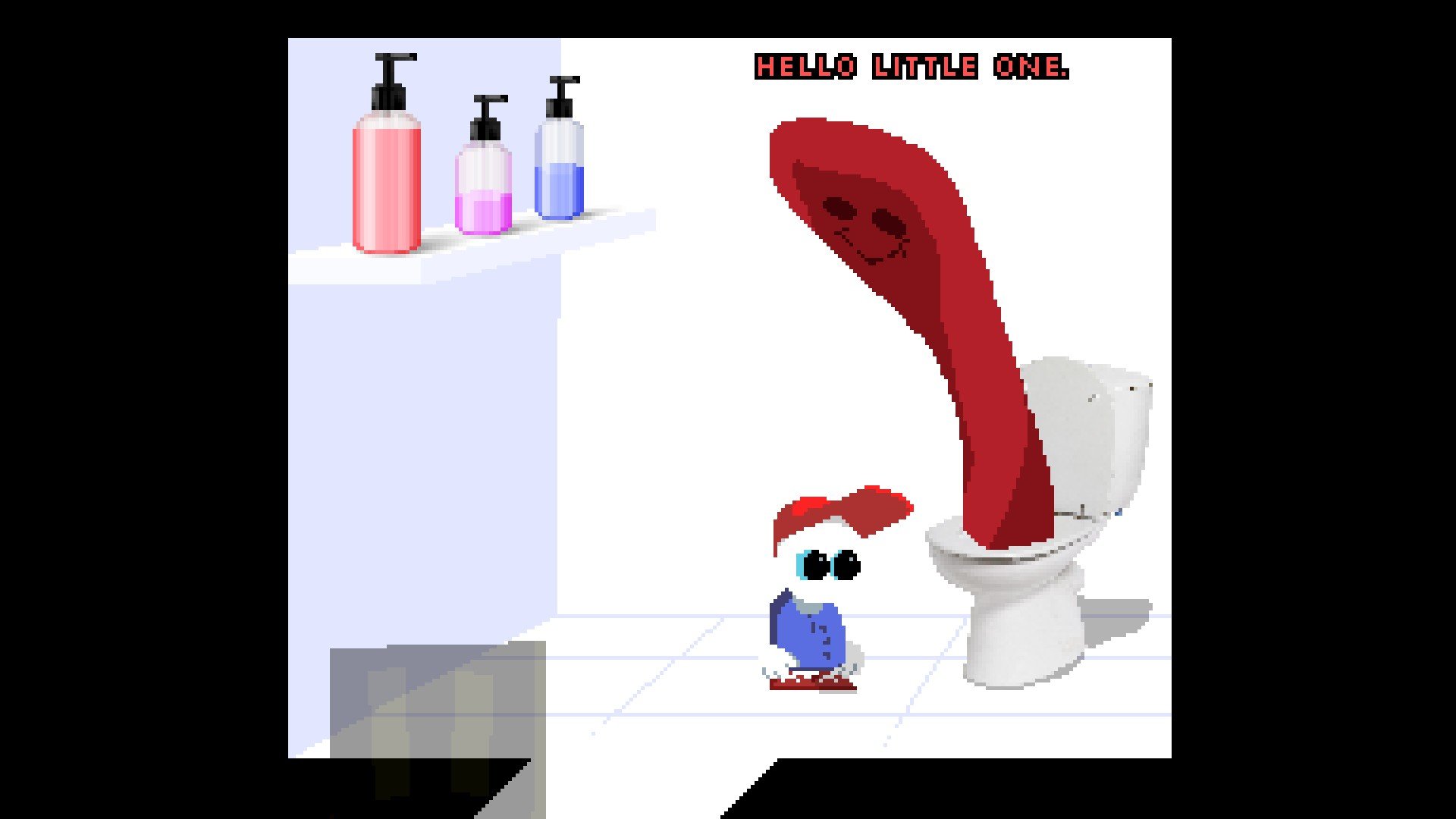
That’s all well and good for when Mellow has all of his appendages and orifices attached, but as you quickly find yourself eye, mouth, and hand-less, the game immediately turns the typical adventure formula on its head – you need to regain your missing body parts to do any of these things before you can progress further. As the player, you still have the ability to move Mellow around without them, but you can only solve puzzles that require walking over buttons or pushing into switches until you help Mellow regain his other senses.
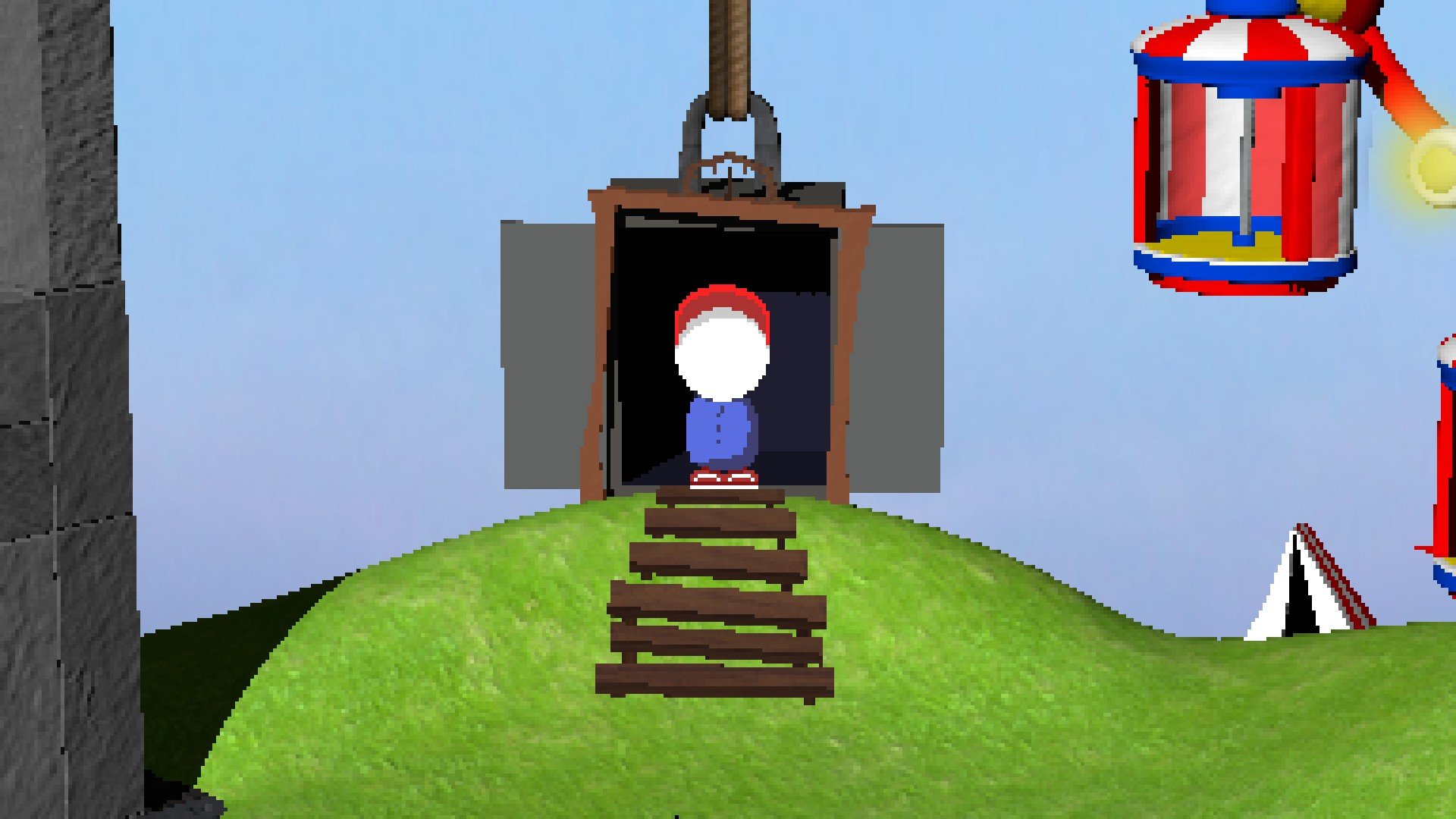
When you first emerge at the bottom of the toilet-pipe chasm, you’re in an open green grassland with three doors accessible: a wooden arch with a clock depicting night and day on it, a Ferris wheel with gondolas cycling around and around, and a large concrete building that stretches up seemingly infinitely, with an automatic doorway that slides aside when you approach it. Each of these doors leads to a different world, and they can be explored (and revisited) in any order you wish.
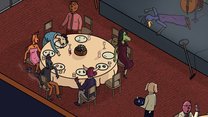
Each contains one of Mellow’s lost senses and features a unique aesthetic with its own theme. Misery Town is a circus filled with midway activities populated by clowns, carnival-goers, and fools. Timesville is a cheery place full of cutesy anthropomorphic animal residents, in which every time you enter a building the time of day moves forward slightly. (Oh, and there’s a serial killer stalking the town at night.) An office building is a massive complex filled with robots designed to maximize the efficiency of organic workers scrambling around doing… something? Outside of putting yourself back together, achieving the central goal of each world involves talking with the colorful characters and helping solve their various problems.
While there is no way to “Observe” items in your inventory once acquired, they’re all visually detailed enough to show what it is you’re looking at. Some items will pop out automatically when clicked on, like the metal detector or telescope. Other items you’ll have to use in specific situations, but I never found myself having to rack my brain to figure out where to use something (there are only so many uses for a plunger.) It’s no cakewalk, by any means, but most of the difficulty comes from the more action-oriented sequences. (More on those later.)
Inventory puzzles comprise many of the challenges you’ll face in Endacopia, but each area includes its own spin on how it must be tackled. Everything in the office realm is based off of a capitalist credit system, from entering certain doors to buying knick knacks and even gambling at oversized roulette wheels or competing in dice-based game shows. There are tons of ways to gain credits, and even though some rely on chance (e.g. playing slots), you can also take a job at a call center and give people helpful (or unhelpful) advice over the phone while choosing from various responses.
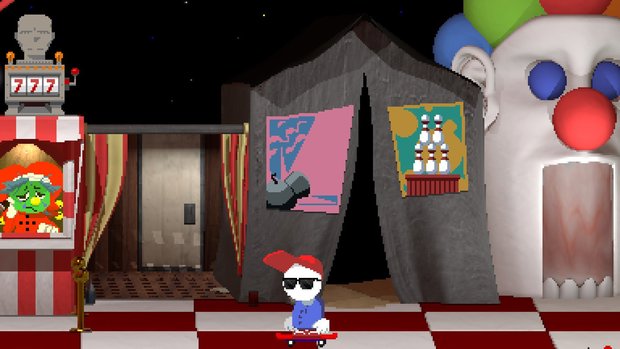
Timesville utilizes its constantly changing time of day to determine when certain doors open or when particular interactions are available, while at night you have to constantly be on the lookout for a massive shadowy figure who will chase you across town until you retreat into a building. (If it catches you, Mellow will meet a swift end.) Misery Town has less of a global effect governing its puzzles than the other two areas, but it makes up for it with a plethora of carnival-themed activities like a ball-throwing dunk tank and a checkerboard funhouse where mimes switch out the locations of invisible walls as you wander through to the other side.
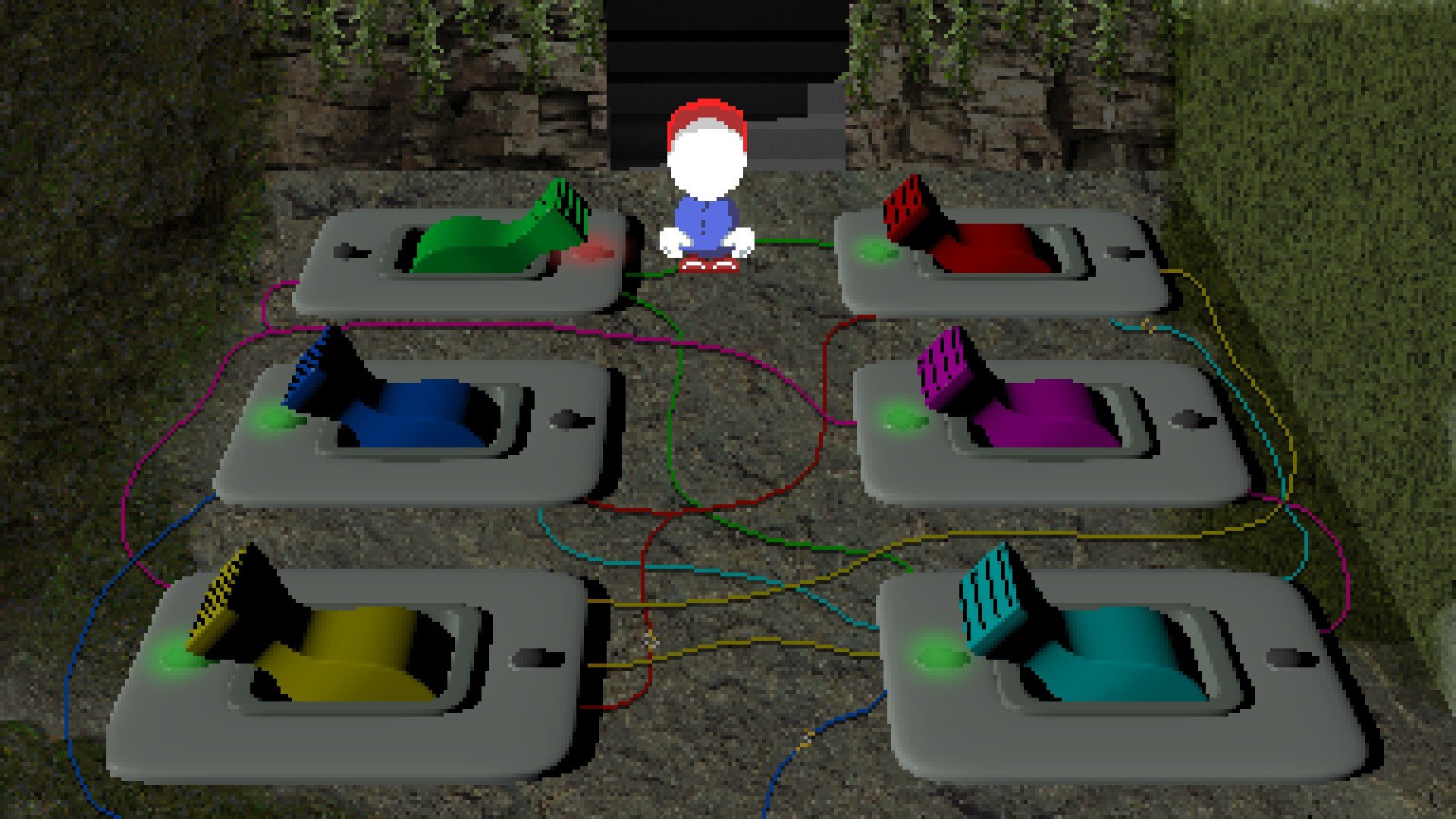
Death is a common occurrence in Endacopia, but thankfully it is only a minor setback that sees Mellow respawn either at the entrance to that area or somewhere close by. (He’ll usually make a comment about how weird a dream that was when he died horribly.) Every death Mellow suffers has a unique cutscene that shows our poor little friend getting brutally murdered (or worse) – and it’s awesome. It feels like a fun callback to some of the old Sierra deaths, but without the need to make three or more save files.
The three areas also have mini-games that fit with the theme and vibe of each. In Misery Town, you’ll control a toy train as you hop over obstacles and avoid crashing into walls that impede your path, and play a game of whack-a-mole, except the moles are clowns that need to be smacked on the noggin in a particular order. In Timesville, you’ll go fishing for ocean dwellers to fill back up the town’s barren aquarium, and you’ll sneak past spotlights from a top-down view in a sudden shift to a borderline stealth espionage sequence. In the office you’ll face off against gamblers risking it all in a high(ish) stakes dice game, and pick up a phone to talk a desperate client through the process of hiding a dead body (that you may or may not have been the cause of in the first place.)
Most of these mini-games are played with the same WASD and mouse controls, but some like the train sequence also add a space bar input to jump. I’m not usually someone who’s a fan of mini-games in what are otherwise primarily point-and-click adventures, but I enjoyed the various activities on offer here. They’re all pretty short (typically less than a minute or two) and offer just enough engagement for them to be entertaining but not too difficult.
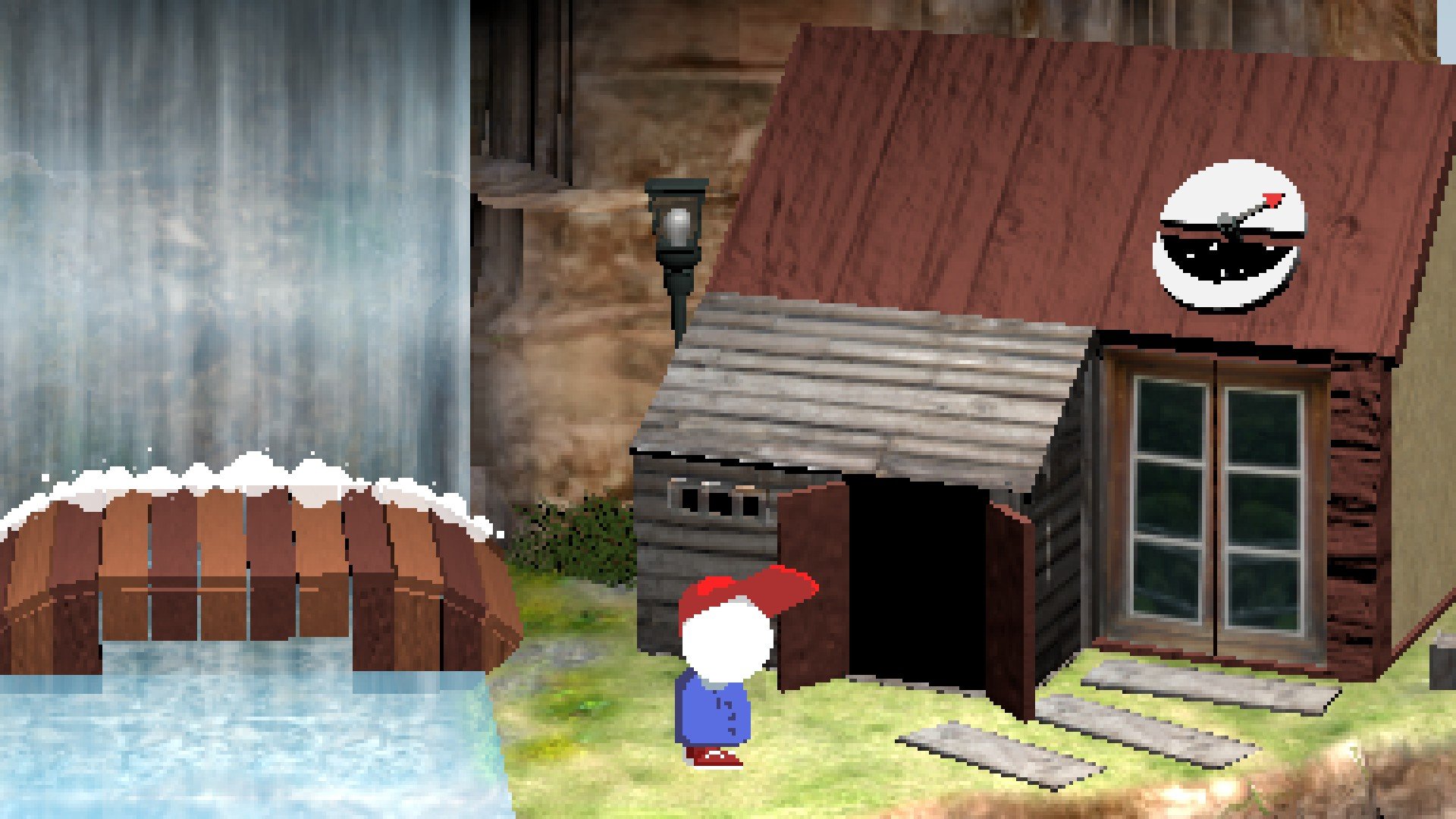
Once Mellow is fully assembled again, you have the option to go back to any area to continue exploring with your full range of abilities. You are not required to complete a section before going back to any of the others – if you wanted, you could progress through 99% of Misery Town before deciding you want to start going through the office before finishing. I was incredibly impressed with the amount of player freedom here, and I spent a lot of time going back and forth between the worlds at my leisure to explore for new secrets during my roughly ten-hour playthrough. Once I was done exploring and solving puzzles, I arrived at that other classic adventure gaming staple: the Nintendo Punch-Out!! style boss battles.
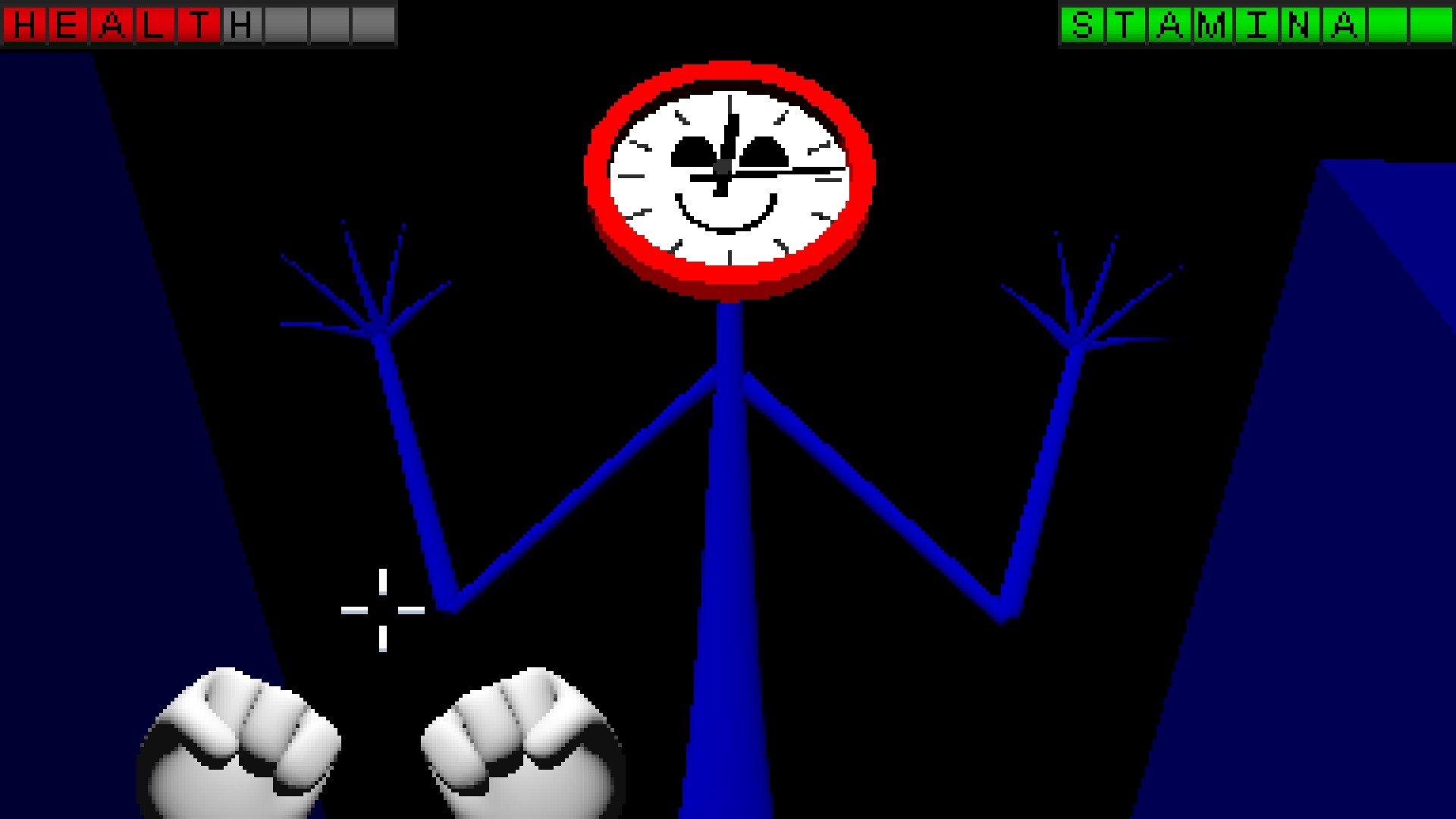
What, you don’t remember duking it out with LeChuck before landing a TKO at the end of The Secret of Monkey Island? Okay, so maybe there aren’t boxing matches in most adventure games, but that makes it all the more wild that they’re here in Endacopia. At the end of each area (including the prologue before Mellow is sent down into the toilet,) once you’ve completed everything needed to progress you will find yourself face to face with a massive character wanting to throw down. Once a battle starts, you’ll be sent into a first-person view screen with Mellow positioned across from the boss character with only the boy’s fists visible at the bottom of the screen. At the top are health and stamina bars – the former denoting how many hits until Mellow meets his maker, and the latter determining how many punches Mellow can dish out.
Endacopia
| Genre: | Comedy, Horror |
|---|---|
| Presentation: | 2D or 2.5D |
| Theme: | Escape, Psychological, Surreal |
| Perspective: | Third-Person |
| Graphic Style: | Pixel art |
| Gameplay: | Puzzle, Quest, Minigames |
| Control: | Point-and-click |
| Game Length: | Long (more than 10 hours) |
| Action: | Combat |
| Difficulty: | Medium |
The controls for these fights are simple: Mellow’s fists follow your cursor on-screen, and left-clicks throw punches while right-clicks put up your guard. Bosses can launch attacks to the left, center, or right, relative to Mellow’s fists, and in order to avoid damage you have to defend yourself in the same direction the attack is coming from. Even if you’re actively guarding, if your fists are on the left side of the screen and an attack from the boss is hurtling from the right, then you’ll take damage as if you hadn’t protected yourself at all.
You can’t throw punches wildly back either; each boss has its own attack pattern and weaknesses, with their vulnerable spot changing depending on the fight. Most of the challenge in these fights is figuring out what you need to do to start damaging the boss back – a kind of puzzle to solve in its own right. Some have pretty involved patterns to unravel, and even after you know what you’re supposed to do, that doesn’t mean it’s easy. Some of the boss fights in Endacopia can be surprisingly difficult. Personally I found them to be a lot of fun, but I can see players who are averse to action sequences getting frustrated with these boxing bouts in the middle of their adventure gaming.
The good news is, apparently there are ways to skip every boss battle and finish the game through alternative puzzle solutions. I didn’t learn this until completing my playthrough, and I still have not found these workarounds myself. But just knowing it’s an option is intriguing and further adds to the freedom that permeates the entire experience. That said, I expect most players to fight all of the required bosses (there are also secret bosses) their first time through, at the very least.
After each boss of the three areas is defeated (or bypassed), Mellow is transported back to the strange house where he started, where the tongue-thing states that you need to do something for it before it will send you back down, such as finding a map of the house. Each section aboveground shows the interiors of the house from a different perspective, and each time you gain more insight into what this place looks like. One quest had me diving into a dark cave leading to an unusual journal entry about some kind of sleeping deity, while another took me behind a wall to face a monstrous horror.
These sections are more linear than the open areas below, but they offer fascinating glimpses into the greater backstory behind what’s going on and provide hints about Mellow’s past and what the lizard Henry has to do with it all. I started Endacopia thinking I’d be enjoying a weird story about a bunch of bizarre inhabitants of a world I didn’t fully understand, which I got, but I also found myself becoming incredibly invested in the mysterious undercurrent that kept popping up as I went. And even more than this fascinating background lore, I found myself loving the characters that populated this world.
Most characters speak with text above their heads, accompanied by gibberish sounds. Some dialogue sections are fully voiced, but these are mainly played for comedic gags or musical numbers. Early on, Mellow meets a talking signpost named Tip, who is literally a scribbled face drawn onto a sentient signpost (who also happens to be able to teleport through the ground anywhere in the underground world.) Tip acts as a hint system you can summon by using the “Talk” function on Mellow, but is also so much more than that. Tip is sassy and will berate Mellow for asking dumb questions, but over the course of the game, Mellow and Tip form a friendship beyond the necessity of trying to find a way out of this place.
Another standout is a strange mechanical creature called the Surgeon, who sings a song with fully voiced lyrics whenever you ask him what he’s doing in the various places you find him throughout the game. The lovestruck mime and clueless jester in Misery Town, the overworked monkey mayor of Timesville, the interview-giving elevator robot in the office… I could go on and on about all the amazing characters I grew attached to here, but part of the fun is going through and meeting them all yourself. And that’s not to mention Mellow himself, who is a treat to experience as the player character with his childlike questioning and unwavering optimism in the face of everything this world throws his way.
The soundtrack by composer Packtion is stunning, with tunes ranging from happy-go-lucky infomercial music to horribly unsettling electronic soundscapes straight out of a nightmare. A personal favorite of mine is the collection of fully vocalized tracks about clowns who suffered various misfortunes playing over a slideshow in a circus tent.
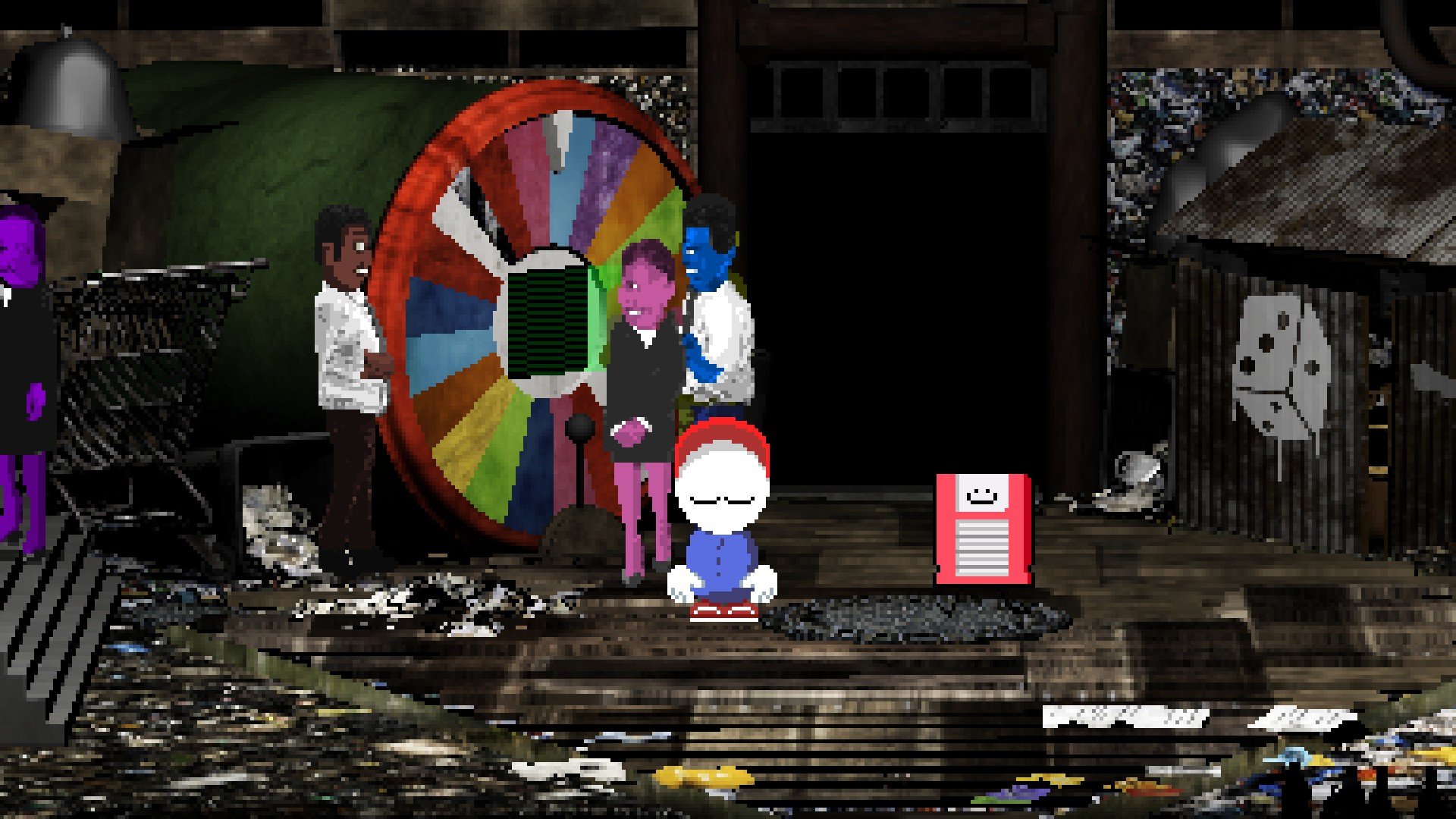
Yet another impressive element is how absolutely breathtaking the animation is. Rather than sticking with one style, Endacopia switches between pixelized 2D cartoons and retro 3D animation designed to look like something out of the mid-90s. Some characters are always depicted in one style or the other, but Mellow switches between both. Most of the time you’ll control him as a 2D cartoon character, but in cutscenes and many mini-games the little guy appears in full 3D. Usually after collecting a new item, a short cinematic plays of Mellow picking it up and looking directly at the camera, which had me bursting out laughing every time. Each item has a unique animation when being used for a puzzle, and the denizens of this strange world all have their own way of gesturing during dialogue. Some characters are even presented in 3D but with 2D animated mouths pasted on.
Backgrounds too are a blend of pre-rendered 3D and 2D artwork. Various parts of the environment can be clicked on to be rewarded with a silly animation, such as kazoos popping out of a light socket or a giant man’s head gazing out from a planter balcony outside an apartment building. Miraculously, even with all of these optional elements present, I never found myself pixel hunting for necessary items. Anything that can be picked up is clearly presented and stands out.
At a heavily telegraphed point in the game, there is a choice Mellow has to make that will affect the way the finale plays out. I anticipated this decision would determine which of two possible options I’d be given. So imagine my surprise when I discovered three possible outcomes instead. There’s even an additional special bonus sequence unlocked after reaching all three.
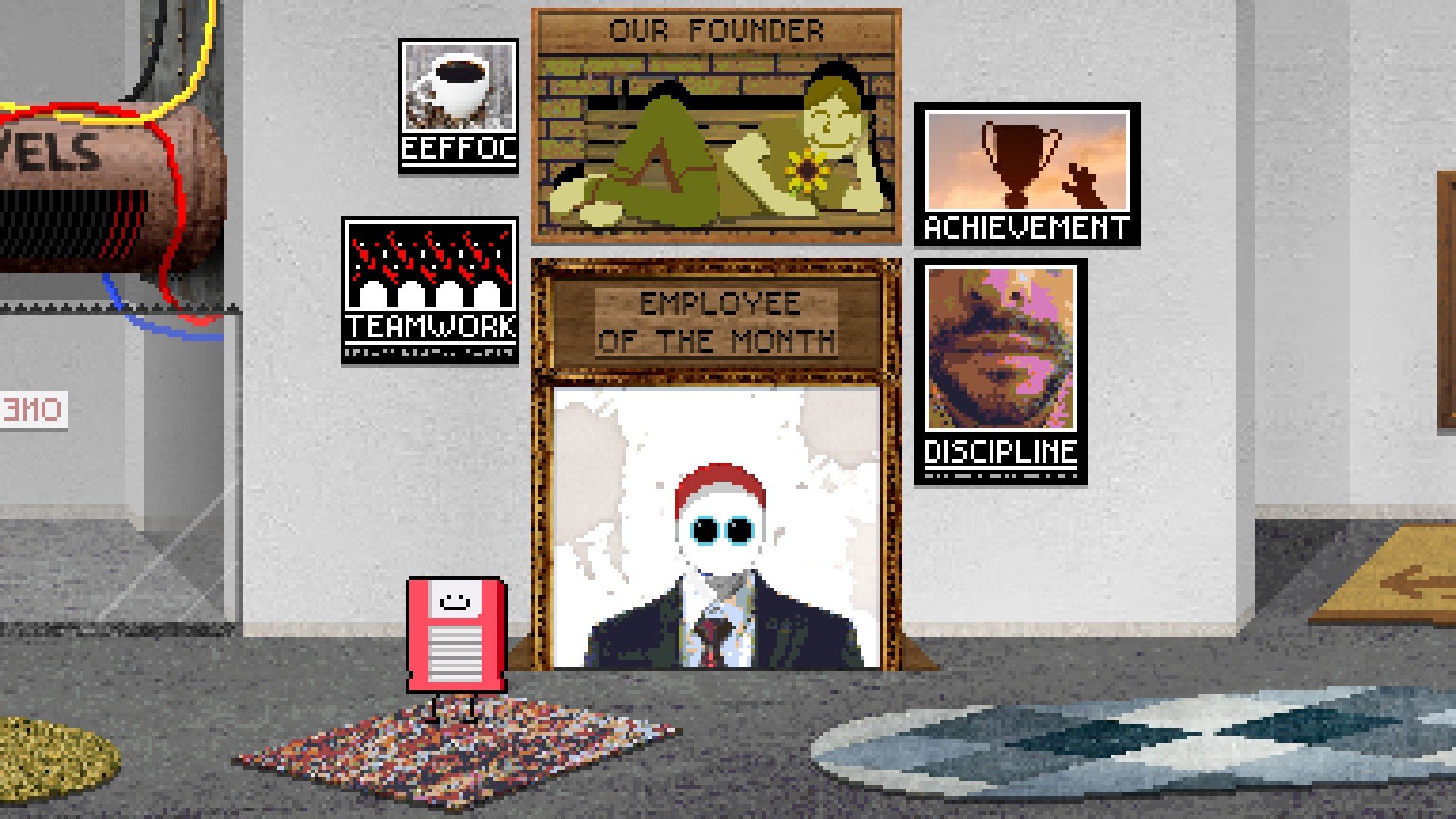
Unfortunately, there is only one save file in the game at any given time, so if you wish to go back and uncover the other endings or secrets you might have missed, the only option is to start a new game from the beginning. The title screen shows which endings you have already completed to narrow down which are still available to be discovered, but I would love to see the option for multiple save files in the future. To record your progress, you will find a sentient red floppy disk hopping around at various places in the world that you can click on.
I was choking up a bit during the conclusion of my playthrough, which surprised me from a game listed at least partially as a psychological horror title. There are indeed some terrifying sections, particularly in Timesville with its stalking serial killer, and the game does have some unsettling imagery throughout. But there’s a very special vibe to the world of Endacopia that’s hard to describe; while it’s definitely bizarre and dreamlike, it’s also genuinely heartfelt. So even with horrible monsters and nightmare fuel (and occasional jump scares) potentially waiting around every corner, I felt at ease just wandering around experiencing this world through Mellow’s silly eyes (after he reattached them, that is). I also found myself wanting to help its characters out of tough situations and spread happiness along the way.
Final Verdict
Endacopia is many things. It is a beautifully quirky work of animated art filled with memorable characters and fantastic dialogue. It is a wonderfully designed adventure game with puzzles that feel rewarding but never cross into the realm of frustration, and even some action sequences that might be difficult for players can be bypassed if you look hard enough. The numerous secrets, multiple endings, and underlying mystery kept me glued to my seat. And I’m still humming some of the tunes from an incredible soundtrack to myself. It’s both funny and a terrifying horror story about being a kid trapped in a dangerous situation you don’t understand. And also, surprisingly, it’s a story about friendship in which that same kid bonds with people of every shape and size to seek a way out of that dark place together. It’s all of these things and more. In a word, Endacopia is a masterpiece.
Hot take
Endacopia is an adventure game marvel filled with loveable weirdos and strange scenarios that marches to the beat of its own drum in every regard and triumphantly excels because of it.
Pros
- Jaw-dropping 2D/3D animation
- Superb music with a range of styles
- Diverse locations with a rich variety of characters
- Well-designed puzzles can be largely tackled in any order
- Built-in hint system
- Fascinating story that deftly blends horror, comedy, and heart
- Numerous secrets and multiple endings to find
Cons
- Boss fights can be tough, even after sussing out attack patterns
- Only one save file
Sam played Endacopia on PC using a review code provided by the game's publisher.

- Advertisement
- Help support AGH by advertising with us


1 Comment
Want to join the discussion? Leave a comment as guest, sign in or register in our forums.
I JUST DONT GET IT :/
Reply
Leave a comment