
Once Upon a Puppet review
- 0 Comments

Stage-based puzzle-platforming production deserves props for keeping most things things well in hand
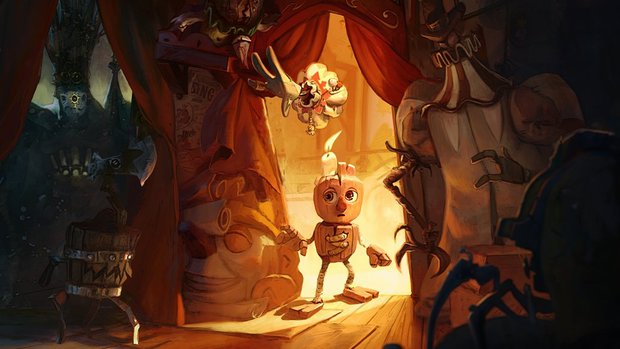
Puppeteering is hard. I had a small marionette as a child, and I can’t remember a time when its strings weren’t tangled beyond salvation, forcing the wooden actor into a permanent Karate Kid stance. They take a lot to maintain, and a lot to control. Yet when you see a professional work, it’s like magic; a synthesis between puppeteer and prop into a single, spellbinding performance. Once Upon a Puppet attempts to transfer the complexities of puppeteering into two analog sticks and a couple of buttons (or keyboard and mouse, if not recommended). While it looks charming and it engages with its premise in smart ways, a few knots do form along the way. Thankfully, they mostly straighten out by game’s end, making for a pleasant puzzle-platforming fantasy adventure overall.
Once Upon a Puppet begins with Nieve, a stagehand and royal weaver to the king of a theatre world, falling down a pit. Having been unable to meet the king’s unrealistic expectations, she has been banished along with her “Spellbound Spool” into the Understage – a vast expanse of semi-functional machinery mounted to splintered floorboards and broken sets, filled with the remains of other royal servants and their discarded projects.
Nieve’s not only going to need her magical spool to reclaim her title and position above, she’s going to need some help – specifically, a pair of legs. See, Nieve is just a floating hand, nothing more than a striped glove. She can work magic with thread, but navigation is challenging for her. After some slow crawling through the dark junkyard of the Understage, Nieve spots her spool. Fatefully, however, someone else has seen the glowing spool as well, and the two begin a tug of war over the item.
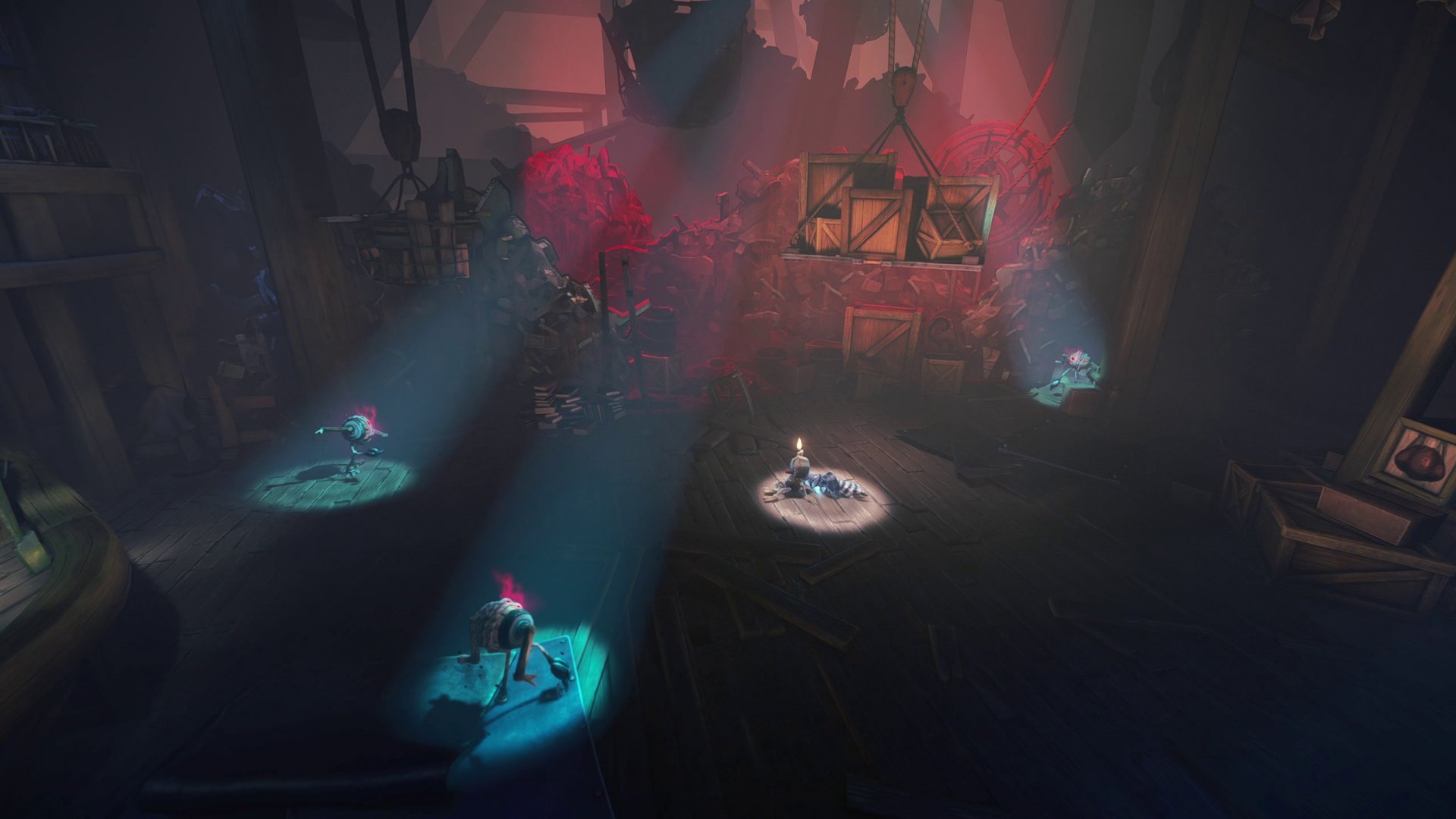
Drev (puppet, actor, and resident of the Understage) tries to play ‘finders keepers’ with the spool. Nieve refuses to give in, and as they fight, the pair are suddenly surrounded by a group of decrepit robots. Just as the machines are about to strike, Nieve and Drev become entangled in the string, and the resulting magical force blasts the robots to smithereens. Safe, but now tied together, the protagonists make peace, and Drev believes they might be able to find someone in his home of Haven Hamlet who can cut the threads.
Passing by many puppet citizens in need of assistance, as well as those just looking to chat, Drev introduces Nieve to the other exiles who have been cast out by the king as they make their way to meet the mayor. Nieve slowly comes to realize how terrible the situation is up in the kingdom, and how those who now live in the darkness below have come to make the best of things.
The mayor informs the pair that unfortunately he cannot help them. Instead he asks for their aid in finding the Oracle, someone who may have insight into the plague of disappearances in town. The protagonists then leave via airship to the Crossroads, a dangerous land where the Oracle is said to reside. On their way through the Crossroads, Nieve and Drev begin finding petrified citizens, seemingly turned to stone by some supernatural force. Shadows begin to play in the background as well, hinting that someone, or something, may be following them.
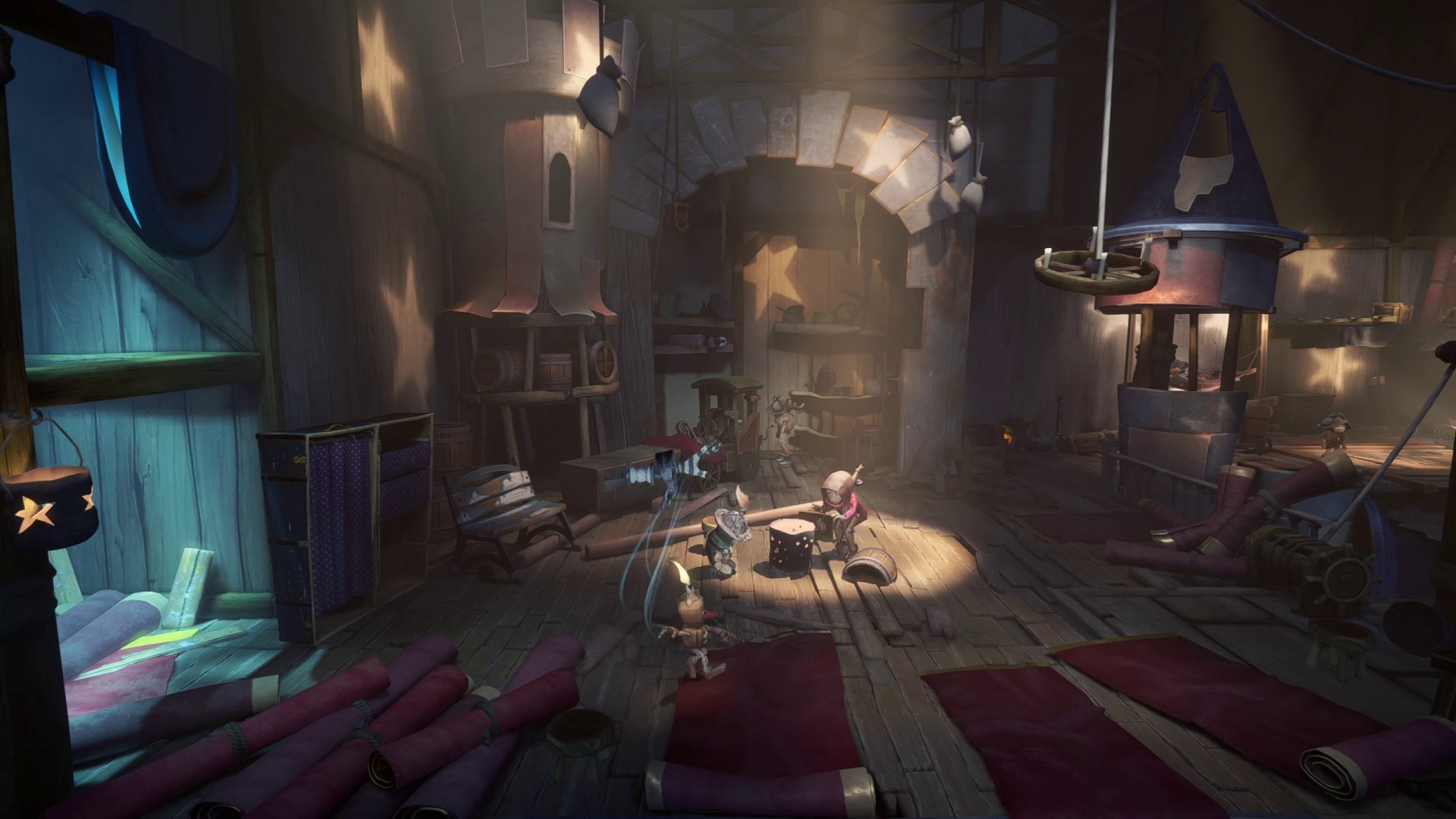
When Nieve and Drev reach their goal, the Oracle reveals more about the kingdom’s history via stage props. These play out puppet shows of the king’s past, revealing what led him to his current state of depression, and how the Shadow King, a mysterious villain menacing the Understage, factors into it all.
Most of the story is told through voiceless dialogue boxes, though 2D cinematics unfolding on a puppet stage are sometimes used, as are cutscenes rendered using the in-game engine. However, environmental storytelling is also a key factor. As you would expect of any good stage performance, there are props, backdrops, and costume changes involved. When the Oracle sends Nieve and Drev on a quest to restore several lost memories, Drev will wear the costume of either the king or the prince, acting out stories from their past while working to rearrange stages. This triggers plays that reveal important moments in the royal family’s history.
Nieve and Drev's budding friendship unfolds over the course of their journey, and the pair quickly learn to work in tandem to survive the mysterious foes roaming the Understage and navigate or assemble the various stages they encounter. Stopping at Drev’s house, for example, reveals his wardrobe and the failed attempts to make costumes for his acting career. Nieve weaves him one (the first of several) on a nearby sewing machine, and they begin to rely on one another’s unique strengths.
Upon first gaining control of Nieve, your movement ability is rather limited. You can grab hold of objects like levers (connoted by both blue handles and control icons that spawn when approached), and move along the ground so long as there aren’t any tall ledges that would require a jump. Nieve is almost helpless in her initial state, so thankfully this solo segment is quite short.
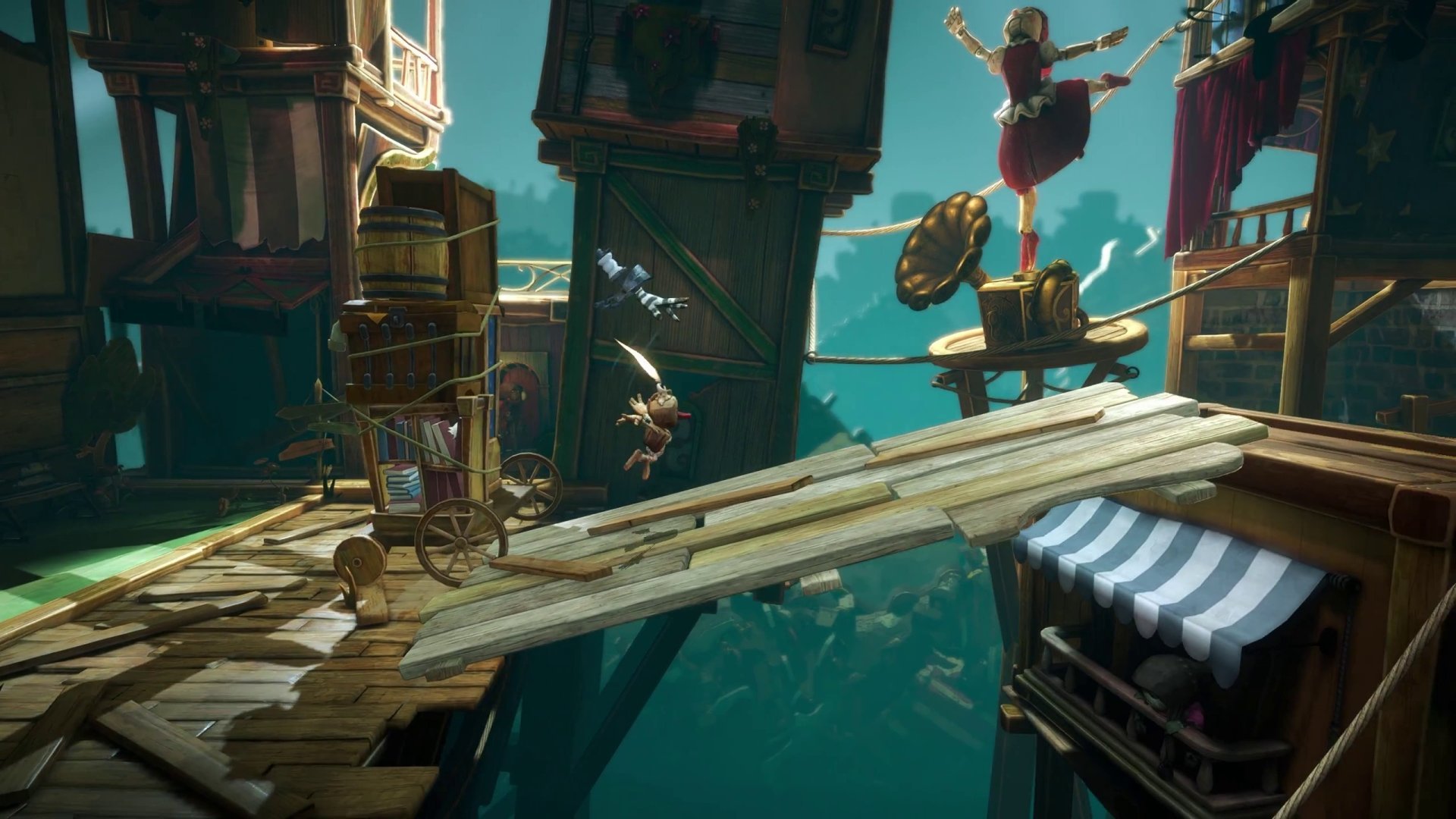
When Nieve inadvertently becomes Drev’s puppeteer, their abilities merge as a proper marionette pairing, with Nieve floating above Drev holding his strings. In this state, Nieve is able to reach high handles, while Drev can jump, run, and grab onto lower handles. Most handles or levers require only Drev or Nieve to use them, but some heavier objects demand (or are sped up by) having both characters grab hold and move them, should the option present itself.
The conjoined protagonists also find additional thread types in their travels. These are critical to progress, with certain paths blocked to funnel players towards more spools in order to gain new powers before moving on. Some of the new abilities include double jumping and floating, while high-tension string allows Nieve to grab hold of a handle while Drev backs away before slingshotting himself forward to cross large gaps, for example. The way you use the gamepad triggers and sticks (left for Drev and right for Nieve) to move the pair in tandem (or opposition) to create tension is a genuinely fun idea, with the emphasis on physics-based platforming and interaction.
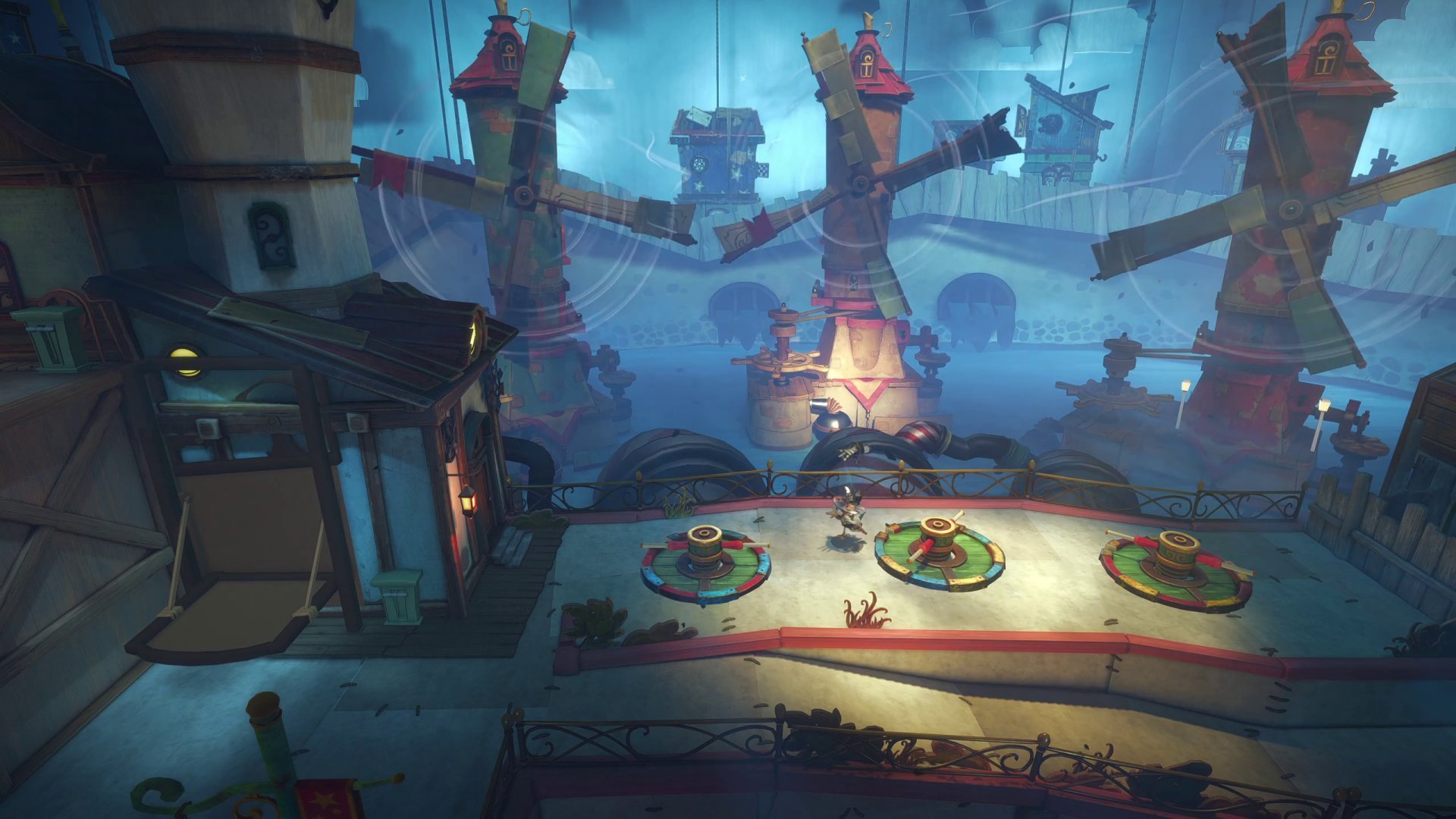
The action in Once Upon a Puppet takes place on a fully 3D plane. Though the camera only pans and zooms as though it were a 2D platformer, most areas have enough stage space to give you a full range of movement forwards, backwards, and side to side. Unfortunately, the camera can be unreliable, sometimes moving ahead of you before you’ve reached an area, or getting stuck on a wall or piece of architecture in the foreground, leaving you blind.
It can also be quite hard to judge gaps or the alignment of platforms in this setting, because the 3D space is deceptive. I missed numerous landings simply because I thought two platforms were lined up. The timing of your actions is relatively generous, and checkpoints are frequent, so death isn’t usually that punitive, but it certainly left me rolling my eyes on more than one occasion.
Once Upon a Puppet

| Genre: | Fantasy |
|---|---|
| Presentation: | 2D or 2.5D |
| Theme: | Escape, Team-up |
| Perspective: | Third-Person |
| Gameplay: | Puzzle-platformer |
| Control: | Direct Control |
| Game Length: | Medium (5-10 hours) |
| Action: | Combat, Platforming, Stealth, Chase |
| Difficulty: | Low |
| Graphic Style: | Simulated realism |
Platforming challenges include chase sequences and avoiding hazards being dropped from the realm above, as well as regular ol’ platform hopping. Avoiding falling obstacles can be frustrating, despite being telegraphed by light or shadow. I often fell for these traps the first time around and only progressed through memorization rather than reaction.
During the lost memory sequences where he assumes the role of the king or prince, Drev will obtain mobile props such as a bow and arrow used to shoot targets in a forest environment (which essentially act as switches), an ice pick for exploring frozen caves, and a spotlight for combating the Shadow King’s forces (more on that shortly). These items are mostly well utilized for their short sequences, like the one in which you ride a raft down the river while shooting targets with the bow, or climbing ice walls prone to collapse with the ice pick. After these scenarios the items are rarely used, with only a couple of forced sequences back in Haven Hamlet, but at least they add some variety.
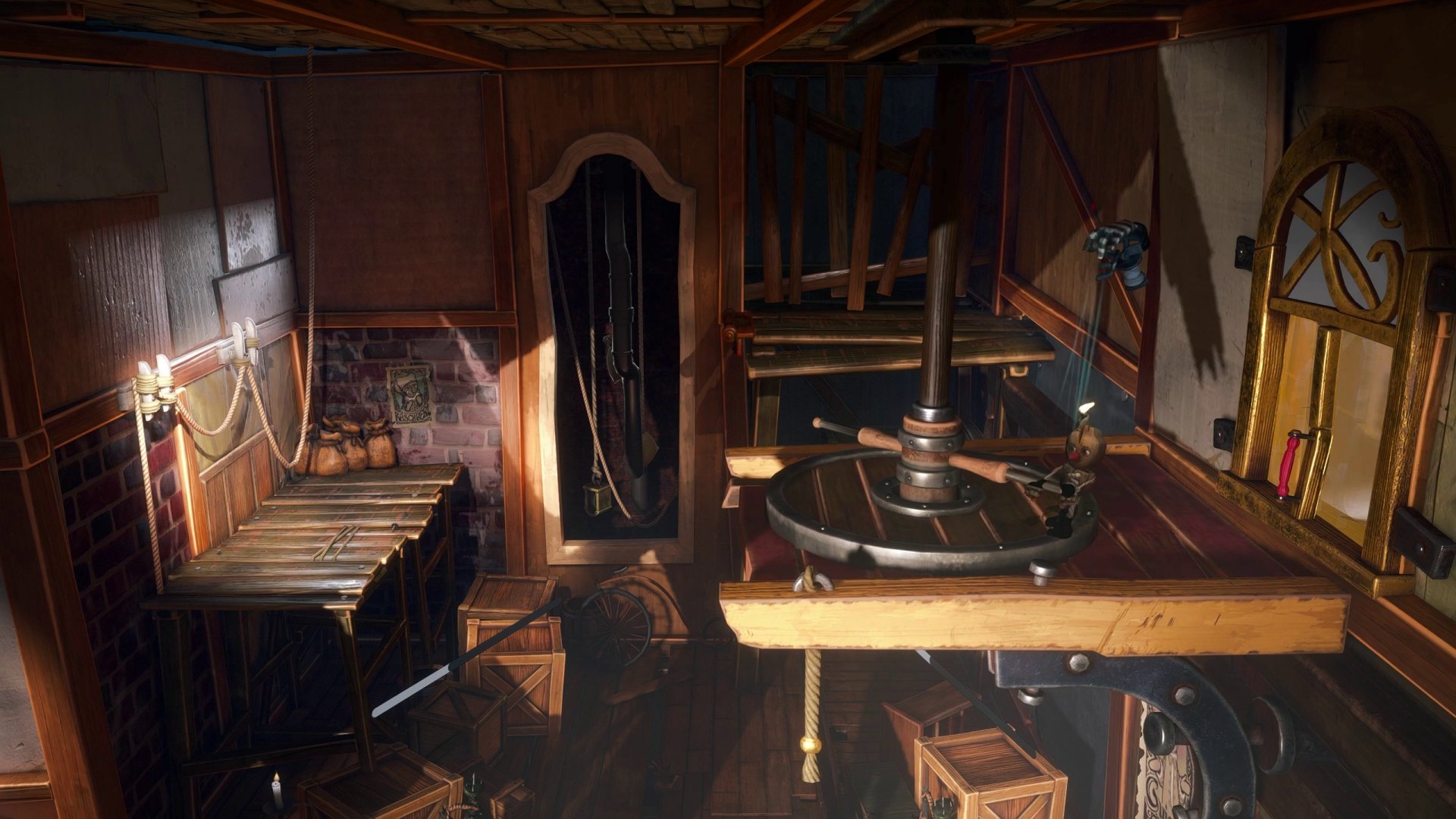
Though most puzzles in Once Upon a Puppet boil down to pushing a box to a tall ledge as a step to reach the next area, or activating a machine through a lever, the best come in the lost memory scenes. Here you will need to essentially rearrange a stage by placing wooden statues of actors on their respective markers, reassemble broken or moved props, and finally set the lighting. Once completed, a spotlight appears for Drev to take centre stage and act out the scene, revealing more of the story.
Though the markers for each item and actor are laid out in chalk on the floor, getting to them may require platforming and fancy footwork to avoid stage fright – black tar that instantly kills anyone who steps in it. Light dispels stage fright, meaning you’ll need to reach the appropriate lever in order to control the stage lights and dispel the tar to move objects freely. These sequences feel the most “puppety” (if that’s a word), and really embrace the game’s setting and theme of putting on a show.
They aren’t without annoyance, though. While setting items in place often prompts Drev or Nieve to comment or give a hint as to what to place next, sometimes these triggers fail to occur. I had to reload my checkpoint several times because a character was not recognized as being on their mark or the light wouldn’t activate. I also encountered several other glitches, like text dialogue getting stuck on-screen, obstructing the play area, only disappearing after a reload.
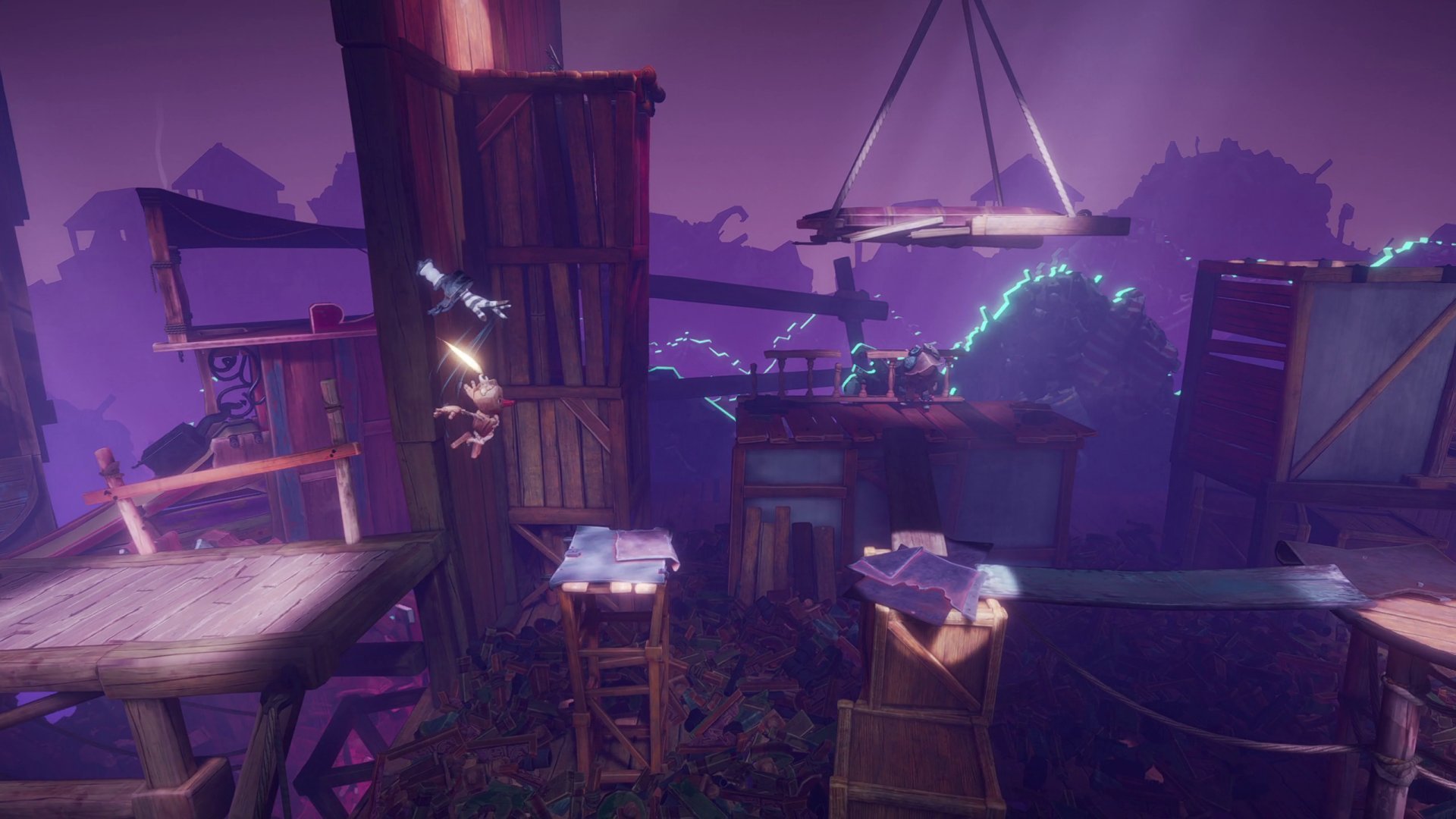
While the decrepit robots seen at the start reappear throughout the campaign, all Nieve and Drev can do to cope with these machines is to run past them. They cannot jump but one swipe from them will kill Drev, so you have no choice but to avoid these baddies by hopping to tall platforms. Late in the game, however, players obtain the portable stage light. Once you have this, the robots (and the stage fright) can be fried to a crisp with a prolonged shine in a kind of “combat.”
These scenarios are thoughtful, making you think about spacing as you sidestep around the robots while blasting them with light. (This slows them down as they burn and eventually disappear, but they can still grab hold of you if you’re too close.) I found one combat sequence in the docks area particularly frustrating, however, as the camera didn’t show that the way out was at the base of the screen. Instead I spent an inordinate amount of time exploring the multi-level dock until coming to a dead end, all while the creatures continued to spawn.
Even later in the game, Once Upon a Puppet introduces yet another new mechanic when Drev and Nieve get separated. Drev is able to sneak by holding the right trigger, and keeping your distance from the robots will usually get you through in one piece, though some of the stealth sequences quickly turn to chase sequences with little warning as to why, again prompting restarts until I had memorized whether the game intended for me to run or sneak.
Occasionally Nieve and Drev will find mounted stage glasses in the environments. These binoculars provide a close-up look at their destination, and may reveal a bit of story content, but are otherwise just for show. Most NPCs can be spoken to, but any with exclamation marks over their heads have a side quest available. Again, these mostly just pad out the story with a few extra lines of dialogue, but are nevertheless worth doing to learn about everyday life in the Understage, and for the fact they may reward you with a collectible.
The game has several collectibles in the form of objects like paintings and brushes – personal possessions of those banished by the king – scattered throughout the world. These are very well hidden, and often require solving a mini puzzle off the beaten track, like finding a door disguised as a wall to a secret room. Stained glass shards are the more prevalent collectible, and completing a full set (one full stained glass window for each level) will reveal a piece of artwork, unveiling more history about the kingdom. While some of these shards are hidden in plain sight, finding all of them will take quite a bit of scouring.
Once a shard or item is collected, it is added to your inventory and removed from the environment, even if you die and have to restart a sequence. Or should be. I did encounter one sequence (the aforementioned dock combat) where I collected a shard, died, and when I respawned it was in the environment once again. I tried to pick it up a second time but Drev refused, and after checking I saw that it was in fact still in my inventory as well.
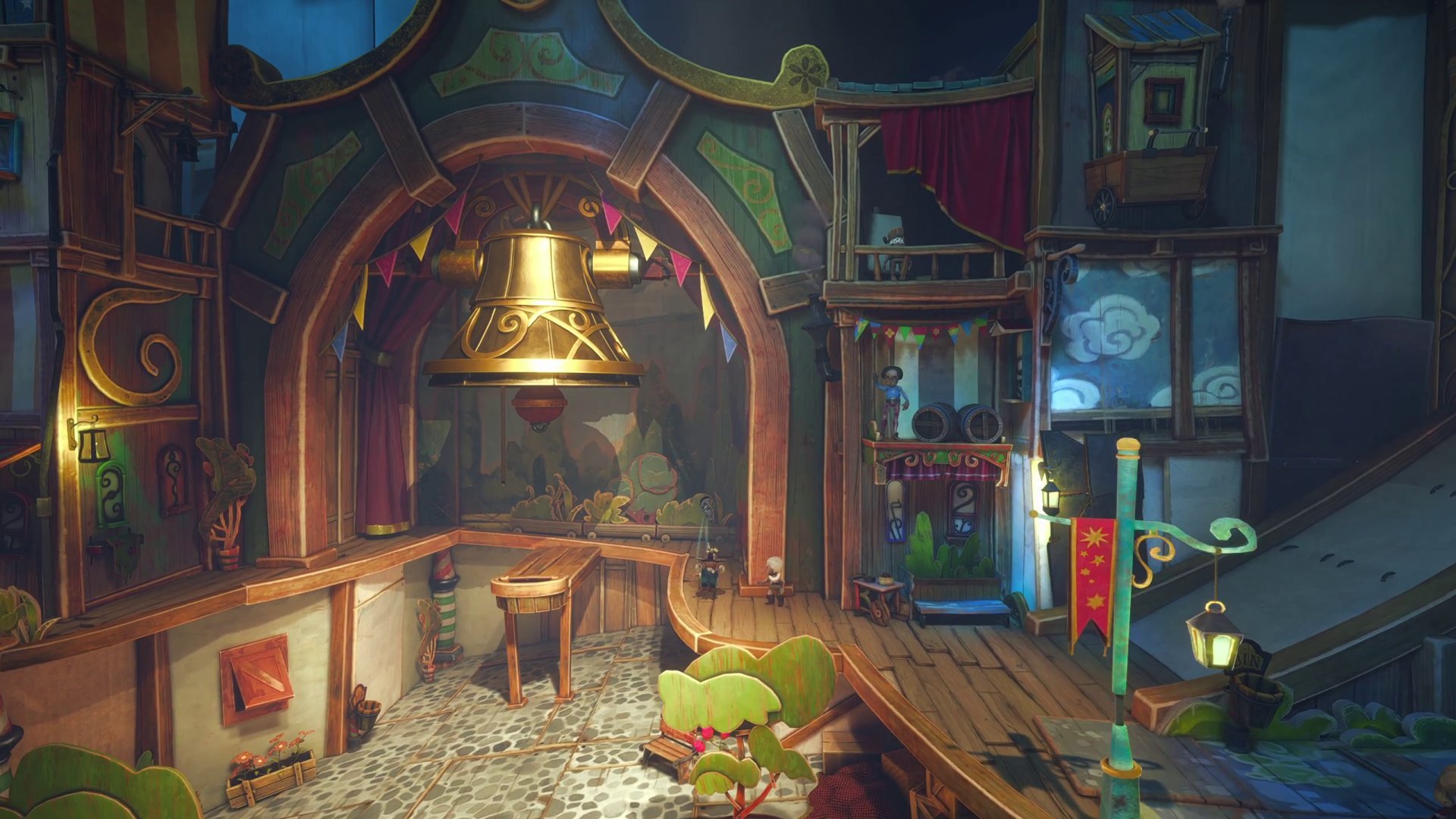
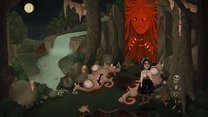
Throughout your journey, the environments in Once Upon a Puppet are a visual feast. The way they have been constructed as stages, with the player's perspective set as someone in the audience, makes the game feel like a genuine stage production. Each and every object, from the discarded props of the Understage to the bushes and trees of Haven Hamlet, are individually crafted pieces. Lights bleed through cracks from the floors above, making every screen feel like part of a bigger theatre and spurring one’s imagination to wonder just how big the wider world is. Load times only happen between the main chapters, meaning most stages lead seamlessly between one another, adding to this sense of scale. Though invisible walls are common, exploration always feels encouraged, even if some paths just result in dead ends.
Though Nieve gently floats overhead for most of the game, Drev’s animations can sometimes look stilted, but this may have been intentional as it kind of adds to his puppet nature. The weight and impact of everything in the game, whether interactive or not, make the levels a delight to explore. Some objects are fully 3D constructions, while other details, like leaves or clouds, are 2D boards used as stage backdrops. Texture detail is good too. Water effects look fantastic, as does the lighting. The Shadow King in particular sometimes casts his long shadow on a wall to taunt Nieve and Drev, and the way stage lights are used to simulate sunlight is gorgeous, as if pulling back the curtain to this wonderful puppet world.
Music is mostly reserved, though the gentle, melancholic piano tunes do a good job of underscoring the dark fairy tale setting. The elderly Oracle is one of the game’s few voiced characters, whose narration comes into play when a lost memory sequence activates. Some puppet shows are pantomimes, of course, but since this one isn’t, voice acting for Nieve and Drev would have been a nice addition.
Final Verdict
Once Upon a Puppet smartly engages with its premise of being a digital marionette show. The story is well told and the ultimate grand reveal is a suitable climax that ends in a fitting manner. Some mechanics are underutilized, and some make appearances too little too late in the game’s 5-6 hour campaign, but the pacing and distribution of puzzle solving, narration, and platforming mostly works. There are lots of collectibles to find and secrets to unlock, and the world is so beautiful to behold that it’s worthy of another trip for anything you missed. A variety of glitches still need to be addressed in order to become the seamless experience it aspires to be, but even as is, this is a charming puzzle-platformer that any fan of a good fairy tale will enjoy curling up with.
Hot take
Once Upon a Puppet is an often delightful, sometimes frustrating, digital puzzle-platforming puppet show that engages with its premise in smart ways. The world built here is truly something to behold, and with just a little more rehearsal, this would have been a must-see performance.
Pros
- Incredible attention to detail in the theatre-based graphic design
- (Mostly) enjoyable platforming
- Charming fairy tale story
- Setting stages makes perfect use of the puppet show premise
Cons
- Numerous glitches, graphical and technical
- Camera doesn’t always frame the action well
- Only part of the cast is voiced
- Some mechanics show up very late and are underutilized
Drew played Once Upon a Puppet on PC using a review code provided by the game's publisher.

- Advertisement
- Help support AGH by advertising with us






0 Comments
Want to join the discussion? Leave a comment as guest, sign in or register in our forums.
Leave a comment