
Paranormasight: The Seven Mysteries of Honjo review
- 0 Comments

It's you who decides whose number is up in Square Enix’s compelling urban legend adventure
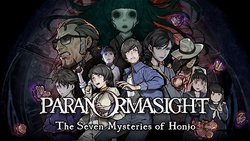
Folktales and urban myths usually form around a kernel of truth, no matter how outlandish the final version. A story grows in the telling; the details change from person to person, and what lasts has less to do with what’s been said than how people felt about it. As John Ford’s newspaperman famously proclaimed, when a legend becomes fact, you print the legend. The developers at Square Enix clearly agree, if Paranormasight: The Seven Mysteries of Honjo is anything to go by. It’s about the ways fiction can first eclipse the truth and then replace it entirely, and the ripple effects that continue long after the bare facts are forgotten.
Paranormasight’s protagonists are all searching feverishly for something they aren’t certain exists; they’re not even sure they’d recognize it if they found it, though the mere act of seeking it threatens their very souls. You as the player will have to separate what you think you know from what’s actually in front of you if you want to help these people save themselves. Along the way you’ll experience not just a riveting mystery story but a thoughtful investigation into the division between reality and perception, legend and history, desire and need—even humor and horror. Wryly funny in one moment, darkly unsettling the next, it’s both relentless and playfully subversive in its efforts to make you reconsider what’s real and what’s fiction. It’s a dense, winding narrative full of memorable characters and deftly woven plot strands; it can be a lot to take in at times, but once you’re hooked, you’ll have trouble getting free again.
The game begins as a mysterious man on a dark stage welcomes you, the player, to your program for the evening, and introduces himself as the Storyteller, your host. He cuts a memorable figure, dressed handsomely in trench coat, fedora, gloves, and ascot over a crisp kimono, topped off with flowing white locks and an Okina mask from Japanese Noh tradition. After asking your name and posing a few philosophical questions he says will be relevant to what comes next, he steps aside to let you focus on the story he’s presenting. Don’t worry, though: he’ll be there waiting for you, just off-stage, if ever you need him.
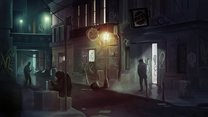
With that, via the cathode-ray screen of a boxy, wood-paneled TV that the Storyteller produces, you’re transported to the 1980s, and specifically to the Honjo district of Japan’s Sumida City. Here you learn that a local scholar has recently made a rather thrilling discovery while perusing what had seemed an unremarkable archive of old documents: a record of the titular Seven Mysteries, a historical cycle of urban legends about curses tied to Honjo landmarks. According to the rediscovered record, the reward for any person who manages to plumb the curses’ secrets is the fabled Rite of Resurrection, which grants the bearer the power to return the dead to life.
Interest in folklore and the supernatural has been enjoying a resurgence of late in Sumida, so the story of the Seven Mysteries of Honjo quickly becomes a popular topic of conversation for curious locals. Is the Rite of Resurrection real, they wonder? If so, and solving the Mysteries reveals the Rite’s secret, who or what keeps that secret? On top of all that, where did the stories actually come from? Even the name raises more questions than answers: it’s believed there are nine Mysteries, not seven, but somehow the latter number is what stuck in the public imagination. (“It just rolls off the tongue easier!” as one occult enthusiast proclaims.)
It’s all idle speculation and harmless, spooky fun, for the most part, until one dark night when the truth reveals itself to a handful of unsuspecting locals. The so-called Seven Mysteries are very real, it turns out, and an anonymous but frightfully powerful occultist has performed a ritual called the Feast of Shadows. This increases the spirit energy in a given area, in order to awaken the Mysteries and their curses, allowing the truth of the Rite of Resurrection to be uncovered. Once the Feast is in effect, each curse will imprint itself on whichever person happens to be in the right place at the right time (or the wrong one, as the case may be), regardless of whether they’d been searching for the Rite or not.
The curses bestow talismans called “curse-stones” upon their bearers, which grant the ability to instantly take a human life once certain conditions are met. A person with the Curse of the Whispering Canal, for instance, can kill someone who turns and walks away from them, while the Curse of the Haunting Clappers lets its bearer incinerate anyone carrying materials to start a fire on their person. Only by finding and killing all of their fellow curse-bearers can one hope to unlock the Rite of Resurrection, gaining ultimate power over life and death. You’ll accompany several curse-bearers throughout Paranormasight, each of them hunter and hunted…and with the ability to switch characters at will, you’d better get used to thinking both ways.
Much depends, of course, on who is actually granted a curse-stone in the first place, and what kind of person they are. A psychopath with a curse-stone is much more dangerous than someone who abhorred violence to begin with. That said, one effect of the stones is that they want to be used, exerting a psychic influence over their bearers to persuade them toward that end. It takes a clear head and a strong moral compass to resist it. This means that when the game begins, there will be nine people walking around with lethal powers who, even at their best, will be struggling against an urge to murder anyone who stands in their way.
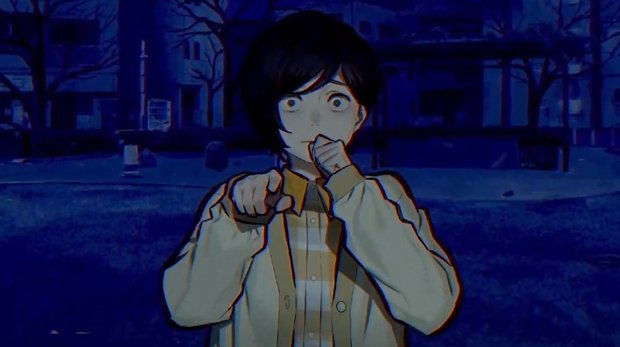
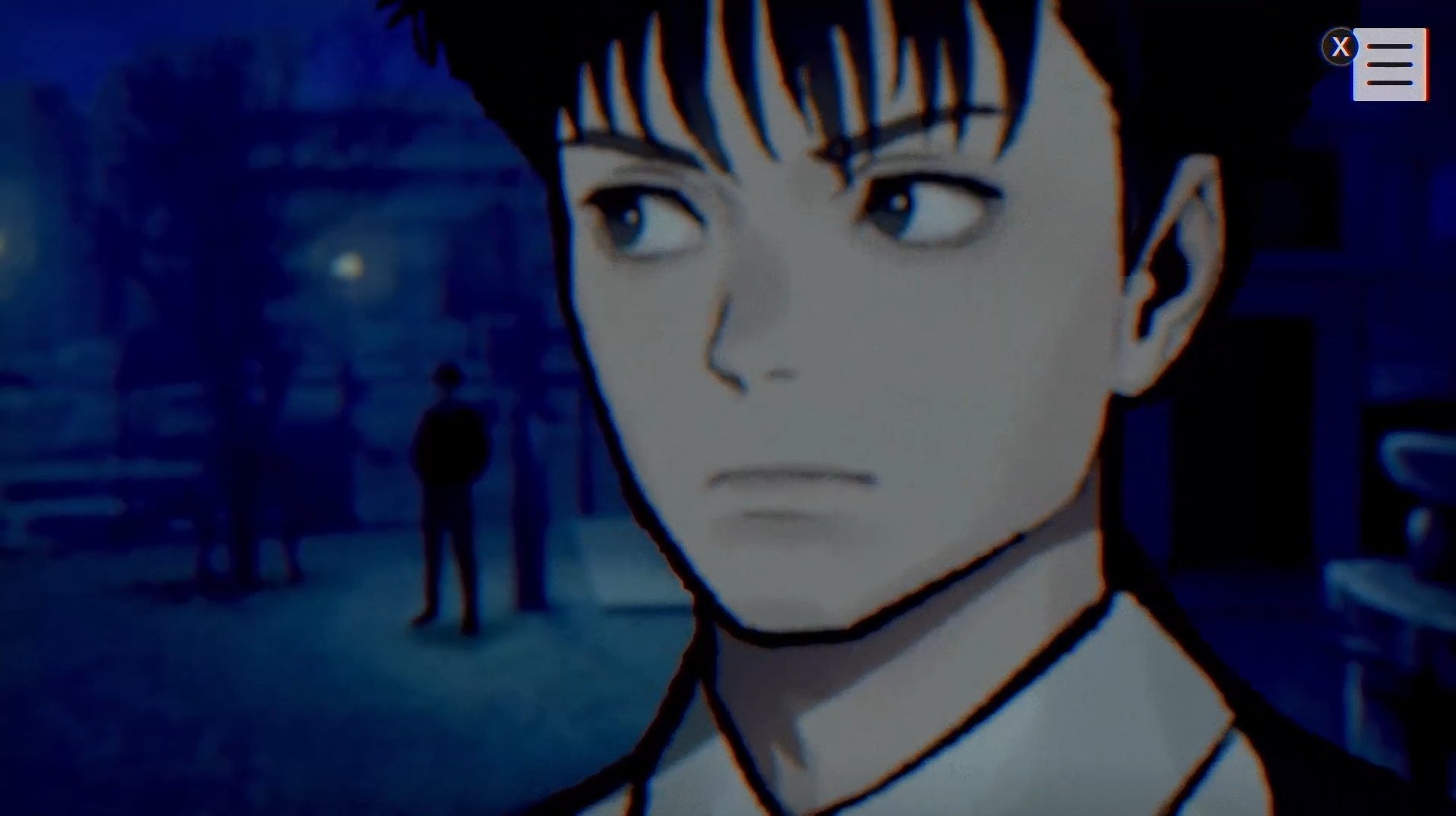
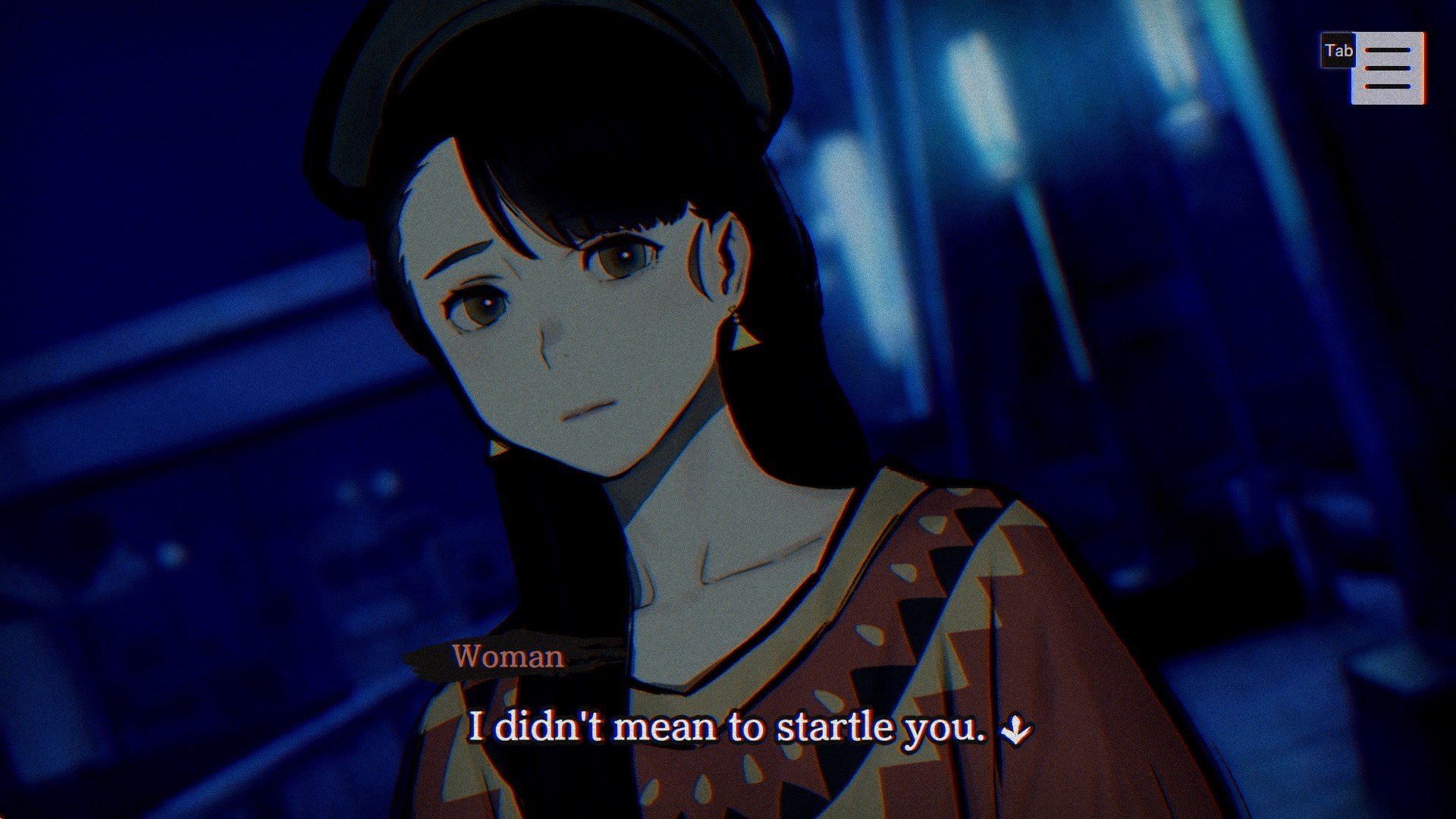
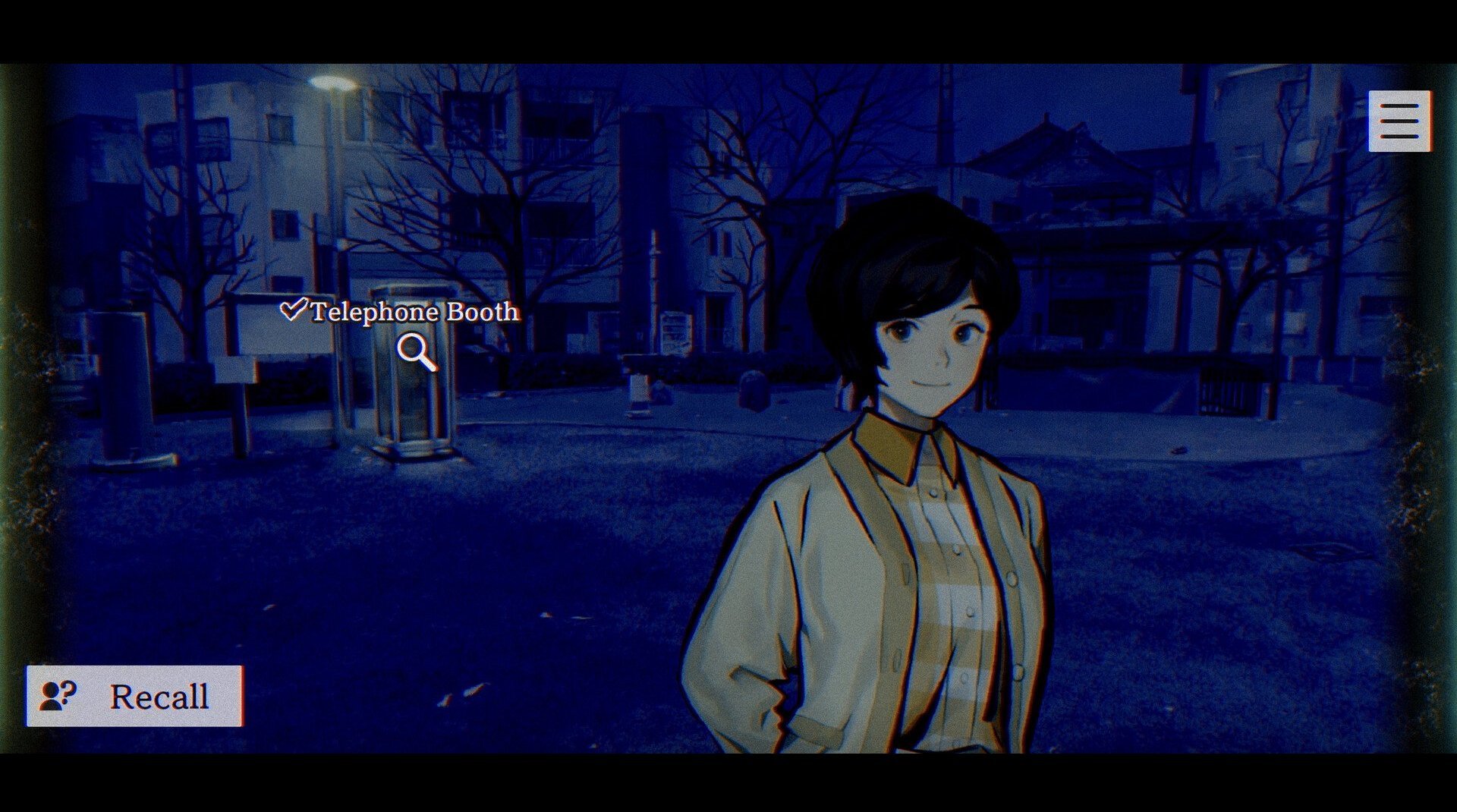
Each of the four characters you join as the Feast of Shadows begins has their own reason for pursuing the Rite of Resurrection. Housewife Harue Shigima, devastated by the unsolved murder of her young son, dreams of reuniting with him…but only after she’s found his killer and unleashed her curse on him. High-schooler Yakko Sakazaki seeks to save her friend Michiyo, who died in an apparent suicide. Police detective Tetsuo Tsutsumi, who has dealt with the supernatural before, simply wants to gather all the curse-stones and hide them away before they fall into the wrong hands; he has no interest in the Rite for its own sake, and wouldn’t trust it if he had it. Shogo Okiie, an unambitious young office worker, had only just learned about the Rite and the Mysteries when he found his curse-stone, and he starts out mostly just trying to keep up.
All four start out with the same disadvantage as their fellow curse-bearers: none know who any of the others are, nor what their curses entail. It’s thus exceptionally dangerous for any of them to interact with people they don’t know and trust—and in a bustling urban center like Sumida, that covers just about everyone. Even if one or two curse-bearers are forthcoming about their status, most won’t be, and there are far more suspects than there are curses. As far as any curse-bearer knows, anything they do might inadvertently fulfill another curse-stone’s conditions, and anyone they meet could be holding one. Survival will require caution, cunning, and a cool head; at the same time, they’ll have to know what they’re prepared to do with an opportunity to unleash their curse.
Gameplay-wise, Paranormasight presents itself at first as a straightforward visual novel, with prompts to select dialogue choices and make basic decisions about where a character goes or what they do next. You can play with either a mouse or a gamepad, choosing options by clicking or pressing a button. There are also first-person segments where you use the mouse or joystick to turn and examine your current location in a 360° range, selecting occasional hotspots for closer examination, which will often lead to further decision prompts.
Paranormasight: The Seven Mysteries of Honjo
| Genre: | Horror, Mystery |
|---|---|
| Presentation: | Realtime 3D |
| Theme: | Cultural, Myth/Folklore |
| Perspective: | First-Person |
| Graphic Style: | Stylized |
| Gameplay: | Investigative, Survival, Visual novel |
| Control: | Direct Control, Point-and-click |
| Game Length: | Long (more than 10 hours) |
| Difficulty: | Low |
Sometimes you’ll have to press the “Think” button to get your character to put two and two together about something; other times it just lets you hear their musings on whatever’s going on. Occasionally you’ll pick up items, which the game will prompt you to use when possible; you can keep track of these in the “Objects” tab. When your character has multiple locations to explore around Honjo, a “Move” tab lets you access the map to choose where to go. (And yes, if the conditions to use your character’s curse are met, you’ll get a button to unleash it…if you want to.)
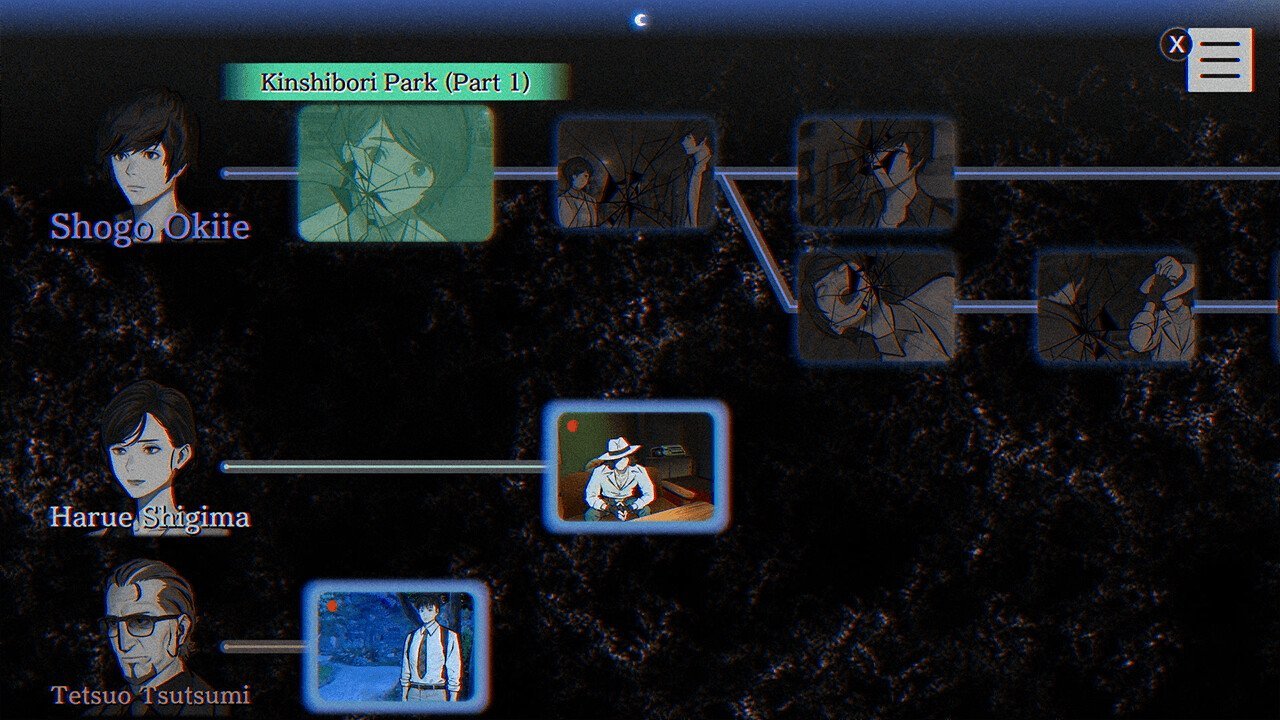
A menu screen called the Story Chart helps you track your progress through the game. This displays a map of the player characters’ narratives, set side by side on separate tracks that let you visualize where each person is on the game’s three-day timeline. The story proceeds in chapters corresponding to hours of the day, with the chapters for multiple characters available at the same time. You’re usually free to choose what order you play them in, though if you find yourself stuck as one character, it might mean you haven’t advanced another’s storyline far enough. You can also go back and replay completed chapters if you’d like. It’s possible (and even easy) for your character to die in certain scenarios, so expect some repetition and re-dos (albeit with the option to fast-forward dialogue you’ve already seen).
The Storyteller reassures you after your first death, letting you know you can try as many times as you like and that there’s no shame in making a wrong choice. Even so, it’s in dying that you might start to suspect there’s more going on than the game is telling you. There will come a sequence in which trying again doesn’t seem to help. No matter what you choose, your character ends up dead, and nothing will prevent that outcome. Have you done something wrong? Is this the kind of game where you can lock yourself into a dead-end situation without knowing it? How far back on the timeline do you need to go to correct it?
It’s at this point that you may notice the game nudging you, gently, to take stock of what you’ve been told and reconsider your assumptions about what works, and what’s possible. Subtle hints in dialogue, an earlier cue or prompt that felt “off” somehow, a comment that didn’t quite jibe with what seemed to be going on.… In the moment you might have dismissed them, but there’s a method to all of it, and when the penny finally drops, the game opens up into something more surprising, complex, and devious than it initially seemed. Like the Storyteller, I’m being intentionally vague here—I wouldn’t want to rob you of the thrill that comes of solving it yourself—but Paranormasight, after all, is a game about assumptions, biases, and the ways perception often stands in the way of the truth. It’s more than happy to use all of that against you as you play, and getting to the end is as much a matter of confronting your own preconceptions as it is making the right choices for your characters.
Moments like this crop up in multiple places, with design elements that gleefully play on what you may think you understand in order to throw you off the scent. Each one of these is a delight to solve, and they all tie back into the larger story in a satisfying way, but their inclusion turns out to be a bit of a double-edged sword. Once you realize the kind of tricks Paranormasight has up its sleeve, you see, you’ll come to expect and even hope for them around every corner, anticipating that the whole game will be a battle of wits against your own notions of what’s normal. That’s not really the case, though; delightful as these subversive flourishes are, they make up only a fraction of a game that’s otherwise, at its core, a more-or-less conventionally structured visual novel.
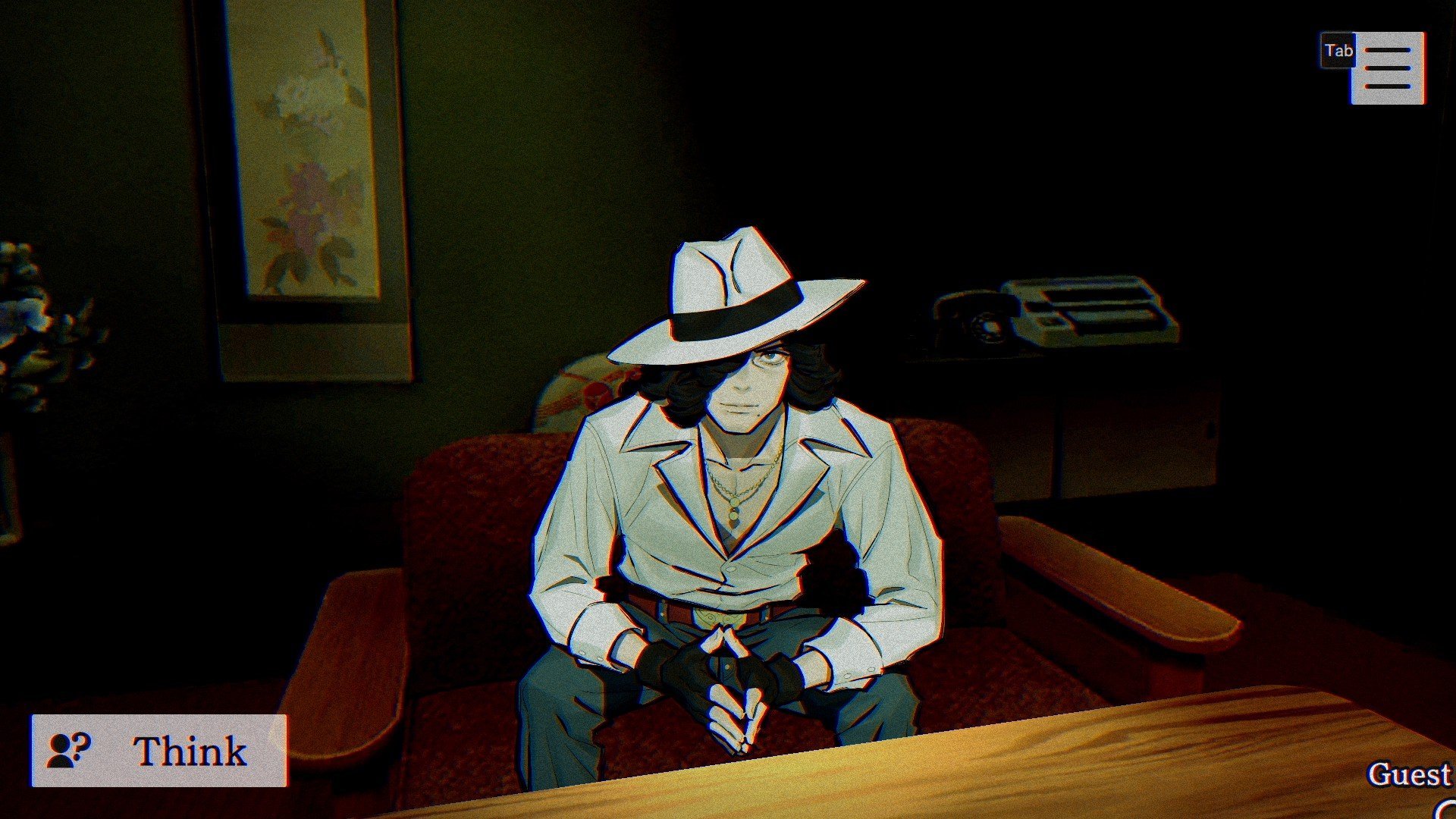
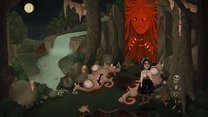
This is more a grumble than a complaint, however, because the visual novel in question is still very good. It’s lovely to look at, firstly, with static artwork that nonetheless allows the characters to be fabulously expressive. And while the score leans heavily on the same few orchestral tracks, they’re all catchy and well-suited to the moods they’re meant to evoke. More importantly, the game tells a cracking supernatural mystery story, paced out expertly so as to both keep you guessing what might happen next and to all but ensure that you’ll keep playing to find out. The writing strikes a nimble balance between tension, pathos, and comic relief, with a translation from Japanese to English that appeared entirely seamless to my eyes. Lighthearted moments between friends, like Yakko and her more serious classmate Mio, give way naturally to heavy conversations about regret and responsibility before again shifting, suddenly but effectively, into gooseflesh-inducing sequences of supernatural peril.
The supernatural thriller elements are no doubt the game’s main draw, but Paranormasight is often at its strongest during the quiet stretches when characters simply sit for a while and share their thoughts. While the protagonists all seem at first to fit well-trodden archetypes—the grizzled cop, the grieving mother, the intrepid teenage investigator—the game takes pains to portray them instead as complex and multi-dimensional, full of qualms, contradictions, and conflicting desires.
It’s not her sorrow that seems to define Harue, for instance, but the bone-deep exhaustion that’s followed on from it; her eyes are heavy, her frame is thin and fragile, and her smile, when it comes, is wan. You can sense, though the dialogue is unvoiced, that she speaks softly and with great effort. The aging and seemingly hard-bitten Tetsuo wears his apparent world-weariness as a mask; he cares deeply about people and invests nothing less than his full self into each case he works, though he’s become estranged from his wife and daughter as a result.
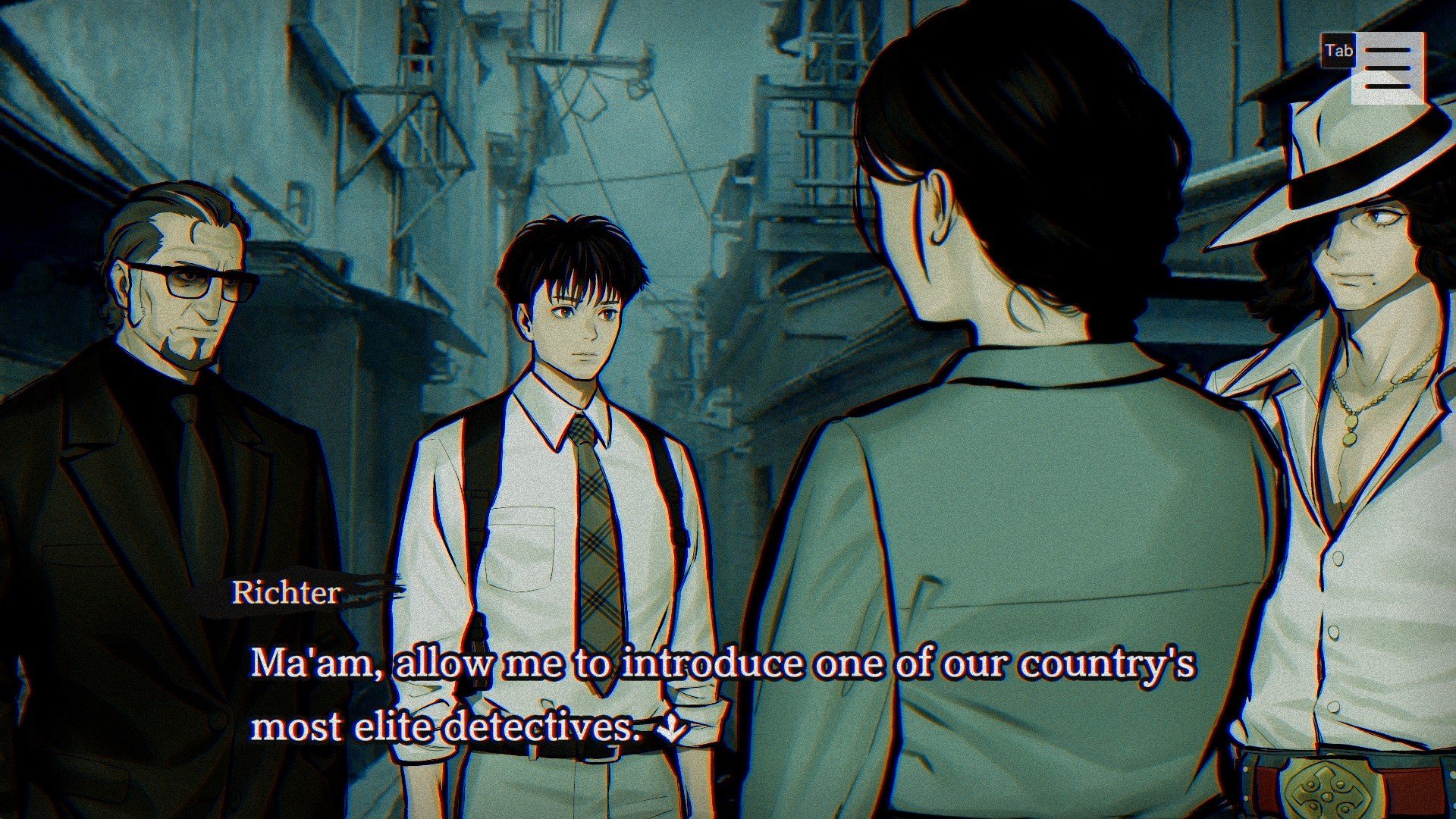
Characters who at first seem ridiculous or over-the-top eventually display hidden depths. Richter Kai, the flamboyant P.I. whom Harue has retained to solve her son’s murder, is prone to striking dramatic poses and dresses in a style best described as “disco cowboy.” Behind his theatrics, however, he’s a patient, thoughtful man, and in the game’s heavier moments proves to be one of its moral centers. Jun Erio, Tetsuo’s excitable partner, is perpetually giddy with youthful exuberance and refuses to be serious even when he might be in danger. He nonetheless idolizes Tetsuo, whose career inspired him to join the force in the first place, and wants desperately to do the right thing. Even characters who died before we could meet them, like Yakko’s friend Michiyo or Hajime, a classmate of Jun’s from the police academy, come across as sharply drawn and many-layered, exerting a weight on the narrative through their absence.
With such a variety of characters, curses, and storylines to keep track of—and there are plenty I haven’t mentioned!—you’ll be glad of the extensive information database the game provides for you to refer back to. This contains character profiles, entries on local history, and details about the Seven Mysteries, updating whenever you learn something new. You can access it with a button-press whenever you need, pausing the game regardless of what’s happening. This proves especially useful both in moments when you’re trying to form a theory about some aspect of the plot, and in long dialogue sequences littered with proper nouns.
Even so, by the time you reach the story’s third day there is so much going on, with so many new discoveries, twists, and revelations coming in each chapter, that it can become overwhelming. Much as I enjoyed the story and wanted to learn what came next, there were times I found myself hoping it was almost over just to have a moment to breathe. Having to comb through your notes to once again refresh your memory on which curse was tied to which location because of which historical event, and to whom that’s most relevant now, can make the ten-plus hours it takes to finish the game feel much longer.
There are multiple “bad endings” to find, though they barely even pretend to be “true” finales; as soon as their hilariously sped-up credit sequences finish rolling you’ll find yourself right back on the Story Chart, with the Storyteller encouraging you to find a better way forward. That said, finding the real, honest-to-goodness end of the game requires a bit of unintuitive, un-signposted timeline-searching once you’ve played through a specific bad ending. While it’s clear that you need to go back and find something hidden in an earlier chapter, the game won’t give you any help figuring out which one; this can lead to some frustrating re-dos of already-completed sequences before you finally figure out what part of what day the scant clues point toward.
Final Verdict
And yet, despite an endgame that sometimes seems in no hurry to actually end, when the final-final credits roll it’s on a conclusion that skillfully and unexpectedly ties up all the disparate strands of the tale Paranormasight: The Seven Mysteries of Honjo has been telling from its very first moments. It leaves every design choice along the way feeling not only justified but necessary for telling this particular story the way it deserved, regardless of whether you appreciated them in the moment. After so much time asking us to consider the things we don’t see, the knowledge we lose track of, and the expectations that cloud our vision of reality, it ends in perhaps the most surprising way possible by satisfying our curiosity.
Hot take
Paranormasight: The Seven Mysteries of Honjo manages to be spooky, poignant, funny, clever, and suspenseful all at once, and plays with expectations in ways that will both challenge your assumptions and make you question, over and over again, how much you really know about anything.
Pros
- Engaging supernatural mystery story full of unpredictable twists and turns
- Vividly drawn characters you’ll come to care about
- Clever and surprising moments that make you re-examine what you think you know
- So well-written, with such expressive character art, that you hardly miss voice acting and animation
Cons
- Subversive design moments are so full of promise that it’s disappointing there aren’t more of them
- A lot to keep track of, with a true ending that will surely require some irritating do-overs
Will played his own copy of Paranormasight: The Seven Mysteries of Honjo on PC.

- Advertisement
- Help support AGH by advertising with us




0 Comments
Want to join the discussion? Leave a comment as guest, sign in or register in our forums.
Leave a comment