
Directive 8020 review
- 0 Comments

Rip-roaring new Dark Pictures horror game has a familiar formula but takes us to a whole new space
It’s been quite a while since Supermassive Games first began its journey down The Dark Pictures Anthology road. Beginning with 2019’s Man of Medan, the studio managed to put out four installments in as many years, with a few ups and downs along the way. Now, after a four-year hiatus (during which the developer by no means sat on its laurels), the series returns, kicking off its second “season” with the sci-fi body horror game Directive 8020. Marking a departure from its predecessors’ terrestrial setting and shared connective tissue, this game continues many of the series’ established design staples but also manages to tread some new ground. Though the added gameplay element doesn’t quite manage to stay fresh throughout, the engaging and highly reactive storytelling and fantastic narrative twist more than make up for it, resulting in what is, to date, my favorite entry in the franchise.
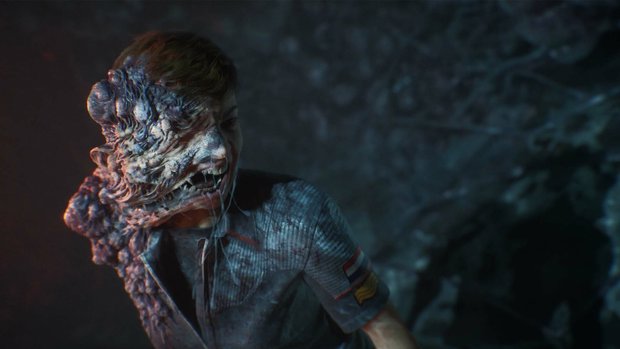
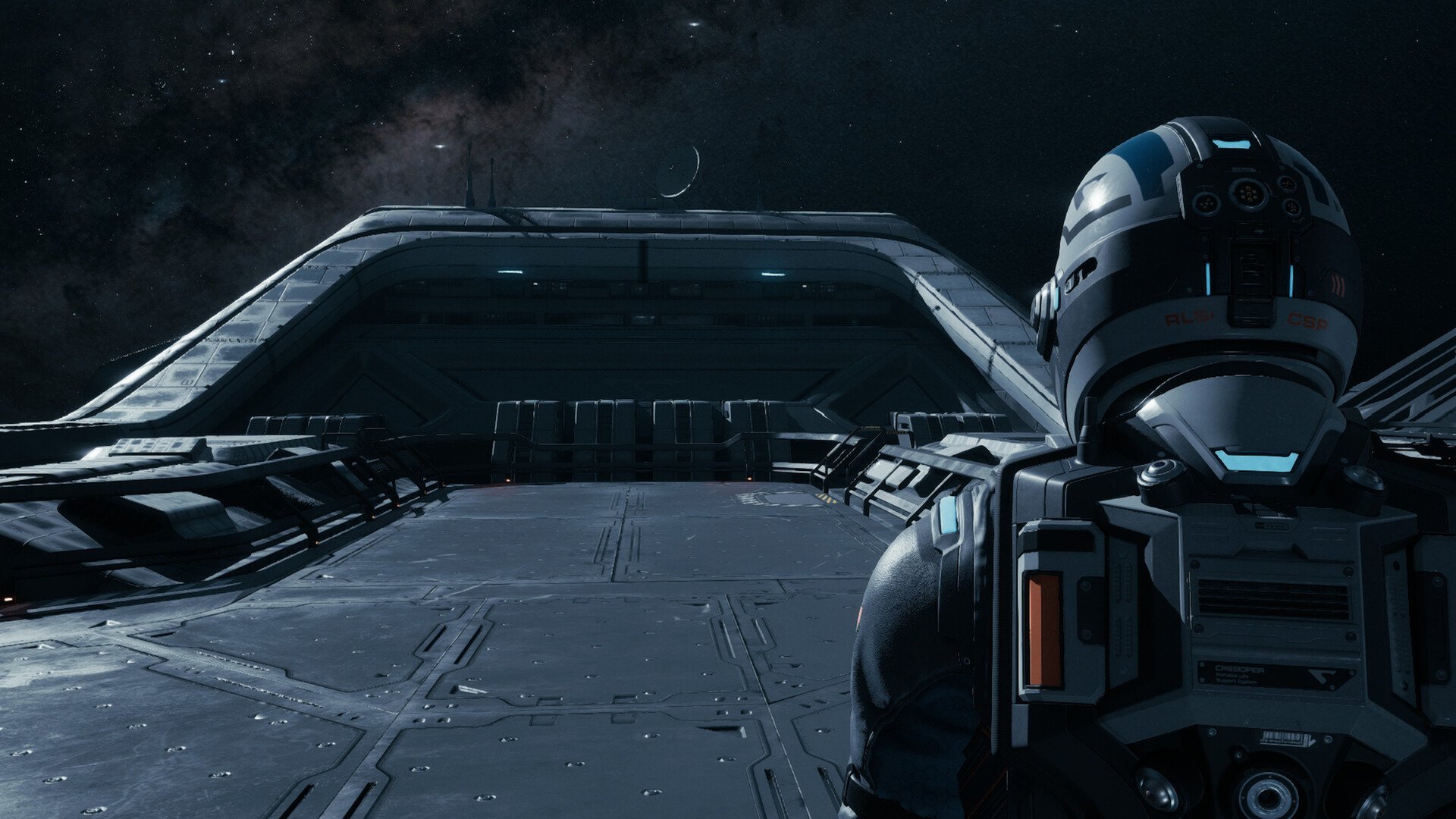
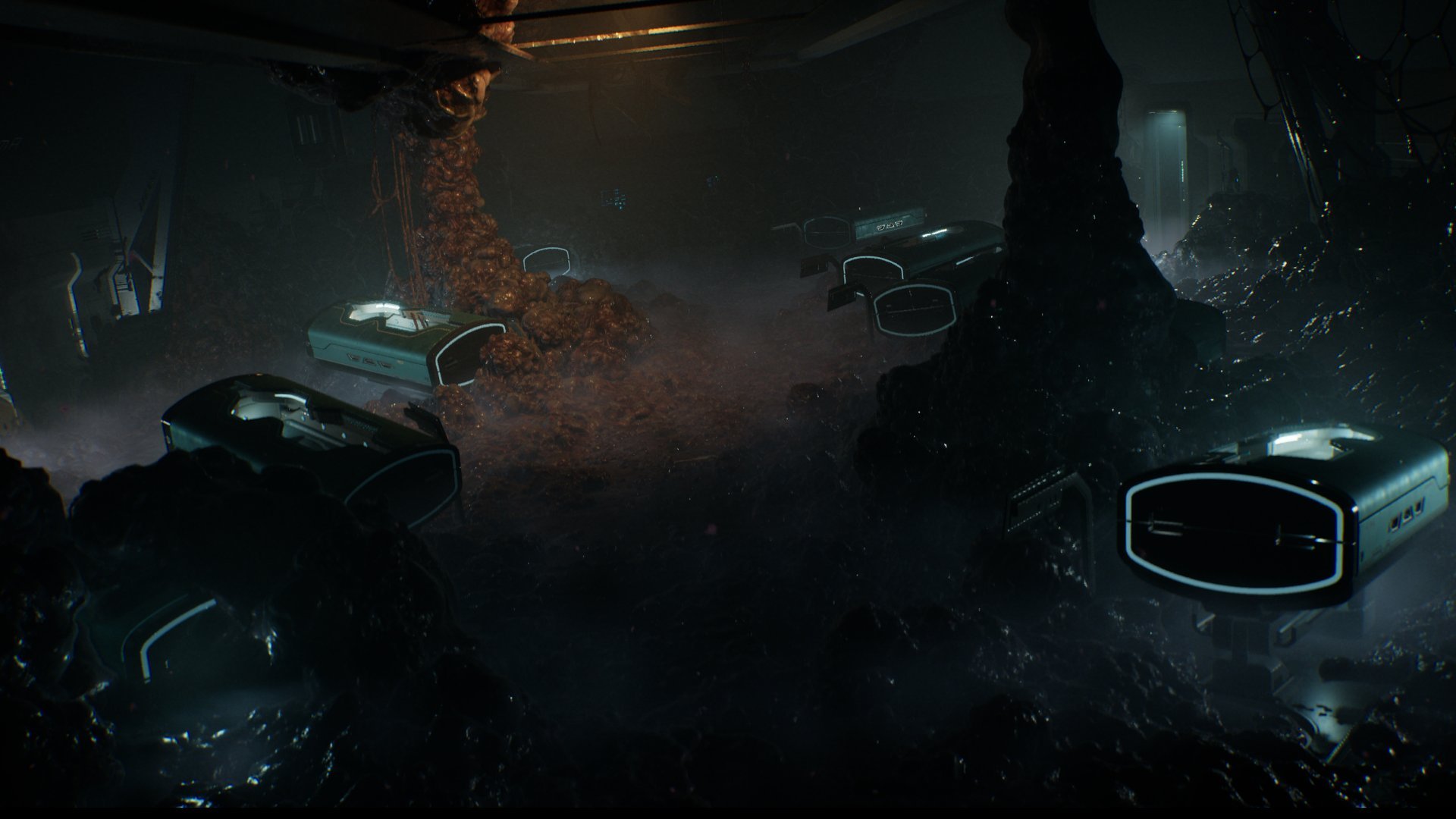
Directive 8020 takes us far into the future, one in which Earth is dying and its population must look to the stars for survival. Enter the Corinth corporation, which has stepped in and financed a pair of ships to travel to the distant Tau Ceti f to begin colonizing the life-friendly planet. We find ourselves aboard the first of these ships, the Cassiopeia, whose job it is to scan Tau Ceti f and gather data for the main force traveling six months behind. But when a small meteor hits the ship and penetrates the hull, it leaves…something behind. As it turns out, even big things can come in small packages, and the alien invader deposited aboard soon proves to be a formidable foe with the ability to perfectly imitate any life form even as it systematically spreads throughout the ship to multiply itself and kill anything it encounters.
While the game first introduces only two of the Cassiopeia’s crew – sleep technicians Carter and Simms, who have been each other’s only company for the past four years, watching over their crewmates in stasis during the voyage – it isn’t long before we get to meet the rest of the ship’s ten-person skeleton crew. This limits the cast to a manageable number that’s easy to get to know and stay abreast of while also offering plenty of opportunity for interesting interactions among them, not to mention a wide variety of dangerous situations that can spell doom for any crew member at any time.
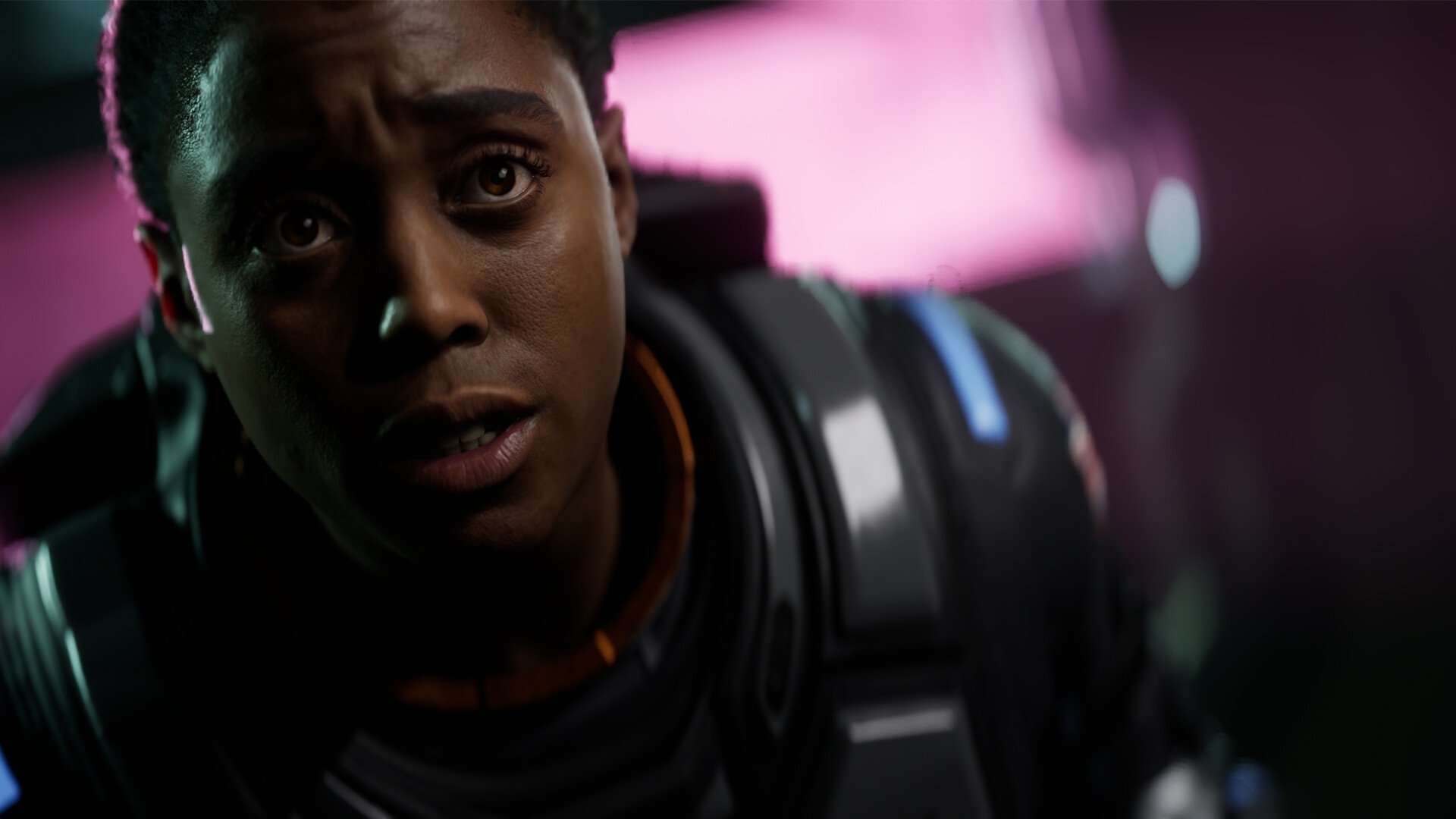
Headlining the motion-captured cast this time around is Lashana Lynch, whom players will recognize from such movies as Captain Marvel and No Time to Die. Lynch portrays Brianna Young, the Cassiopeia’s pilot and third in her chain of command. Rounding out the crew, as is customary for Supermassive’s games, are plenty of – quite literally – returning faces from past titles, their digital scans here serving as all-new characters brought to life by different actors. I’ve always been impressed by the graphical fidelity in these games, particularly when it comes to how photorealistic its characters tend to look, and Directive 8020 is no exception. If anything, the bar keeps being raised, though there is still at least a trace of the uncanny valley that rears its oh-so-slightly-off head every now and then.
After the first chapter where we control sleep technician Carter, five other protagonists are playable at different times, with control switching from one to the next frequently throughout the game’s runtime. In addition to Brianna Young, the ship’s captain Stafford and his second-in-command Eisele are among the player-controlled characters, as are the medic Cooper and engineer Cernan, who, smartly, aren’t even introduced until chapter three, keeping you from ever being overwhelmed with too many new characters to keep track of.
The actors’ performances are generally quite good across the board, with characters given a wide range of personalities that are brought to life with believable varying degrees of intensity. Young, for instance, is impassioned and confident in her abilities, but is also saddled with the shadow of her legendary late father looming over her, threatening to overwhelm her self-assurance as pressure begins to mount. Josef Cernan, the engineer, is a stoic philosopher who views the world as one big mechanism and tends to see the best in others, which is reflected in him often being the calm voice of reason.
My favorite is Samantha Cooper, a marine combat medic and sole survivor of a battlefield tragedy with monumental casualties, an experience that now informs her dual role of keeping the crew safe and sound while also being the de facto muscle due to her combat training. The only character I had a hard time coming to grips with is Williams, the CEO of the Corinth corporation who is also along on the trip and often wields his financial status as a way to exert his dominance over the group. While this certainly fits with the whole “face of a soulless corporation” bad guy angle, I’m unsure if his portrayal was purposely off-kilter or just a bit too wooden for my taste.
Adding a degree of roleplaying, every time you make a choice on behalf of a playable character, it slightly adjusts their personality traits. Each protagonist has two possible “Destinies” that will unlock special story paths for them and have a variety of worthwhile payoffs later on if you manage to increase the corresponding character trait enough. If, for instance, Young responds in accordance with her “Loyal” trait enough, she will eventually have access to the otherwise unavailable “Hero” path (provided she survives long enough to reach it). On the other hand, a wholly separate path will open up to her if she behaves in a “Serious” manner, or none at all if you tend to waver between the two.
While I played the game solo, multiplayer also makes a return in Directive 8020. This gives you the ability to assign specific characters to up to five couch co-op buddies, with individualized difficulty settings for each to boot. A Round Robin option also exists, where you simply pass the controller from person to person regardless of who’s on-screen.
While acting performances are certainly front and center, there were many times throughout my playthrough where the score impressed me as well. Given the deep space setting, particularly early on when you still feel safe and can marvel at the beautiful expanse of the cosmos, gorgeous music cues that are evocative of Jerry Goldsmith’s work on Alien really give a sense of endless mystery and infinite loneliness stretching in all directions. Eventually, of course, the biomatter hits the ventilation fan as tension ratchets up, which is when I found myself thankful for the contemporary indie pop and hip hop tracks that cap off each of the game’s eight chapters, acting as a decompressor before plunging into the next harrowing part of the tale.
Music cues aren’t the only way that Directive 8020 pays homage to some of sci-fi-horror’s greats. There is a scene seemingly lifted right from one of the Alien films where the crew plans to flush an impostor out of the ship’s vent system. This involves you actually crawling through the ducts, sealing hatches as you go and driving any potential threat ahead of you, all with dialog and cinematography lifted right out of its motion picture inspiration. Similarly, a later scene revolves around crew members having to prove, one by one, whether they are still human or a copy. The whole thing is incredibly reminiscent of that famous scene from John Carpenter’s The Thing, complete with nerve-shredding tension and violence born of paranoia.
Directive 8020

| Genre: | Horror, Science Fiction, Thriller |
|---|---|
| Presentation: | Realtime 3D |
| Theme: | Other worlds/dimensions, Aliens |
| Perspective: | Third-Person |
| Graphic Style: | Photorealism |
| Gameplay: | Stealth, Survival, Choices matter |
| Control: | Direct Control |
| Game Length: | Medium (5-10 hours) |
| Action: | Quick Time Events, Stealth |
| Difficulty: | Low |
This tension is certainly well warranted. Things start (potentially) going south very early on. Even during the game’s first chapter it is possible for characters to bite the dust. The real horror hasn’t even started yet, but poor decisions and reaction time can already cost lives if you’re not careful. And that’s just the beginning. Most chapters from then on begin with flash-forwards, where we see crew members get into life-threatening situations that we won’t see fully play out and get to resolve until later. By the time you reach the final chapters and the body horror has fully unfolded, the potential fatalities come fast and furious as things quickly escalate from bad to worse.
At its core, Directive 8020 is broken into four distinct styles of gameplay, which it frequently switches between. The most innocuous of these, particularly abundant early on, are the familiar exploration sections where you’re allowed to roam small sections of the Cassiopeia, like medbays and loading docks, but also more memorable locales like the ship’s reactor core and its hydroponics deck. Enemies are generally not encountered during these segments, and you can afford to fully take in the environment. Though the game isn’t heavy on puzzles, you may come across the odd crew locker or computer terminal that will require a numerical password. There are also plenty of documents and video diary entries to collect for a bit of additional background lore, if you’re so inclined.

In contrast to these relaxed exploration scenes are the new stealth segments whenever you’ve run afoul of a patrolling enemy intent on stopping your progress. To proceed, you’ll need to duck behind cover and use your scanner to reveal the enemy’s position, so you can stay in their blind spot and slink towards safety. You’ll even be able to use your environmental scanner to trigger loud distractions, but beware of stepping on any broken glass as it’ll give your position away instantly, with a screaming monstrosity immediately bearing down on you.
There’s no out-and-out combat system if you are discovered, though crew members are able to use a wedge tool meant for overriding locked doors but also a useful defensive option. Even a gun may be an option, depending on the choices you make. Regardless, there’s no agency involved in actually using armaments. If you get caught by a monster while armed, you’ll use your weapon; if not, your character will either be seriously injured (which may bite them in the butt somewhere down the line) or killed outright. If all else fails, running like mad is always an acceptable strategy for survival.
At some point, the cracks in this stealth gameplay system unfortunately begin to show. Enemies aren’t overly observant while patrolling and will often fail to find you as long as you’re behind cover. As you advance through the area, they will also inexplicably alter their patrol path, always making sure that they remain in your way without inadvertently flushing you out of hiding in the process. It’s clear that the enemies’ AI instructs them when they should adjust their path to artificially extend the threat. For me, this realization hit around the time I was becoming a little tired of the numerous sneaking parts, blunting the edge and turning what was initially a tense gameplay gimmick into a far more tedious task.
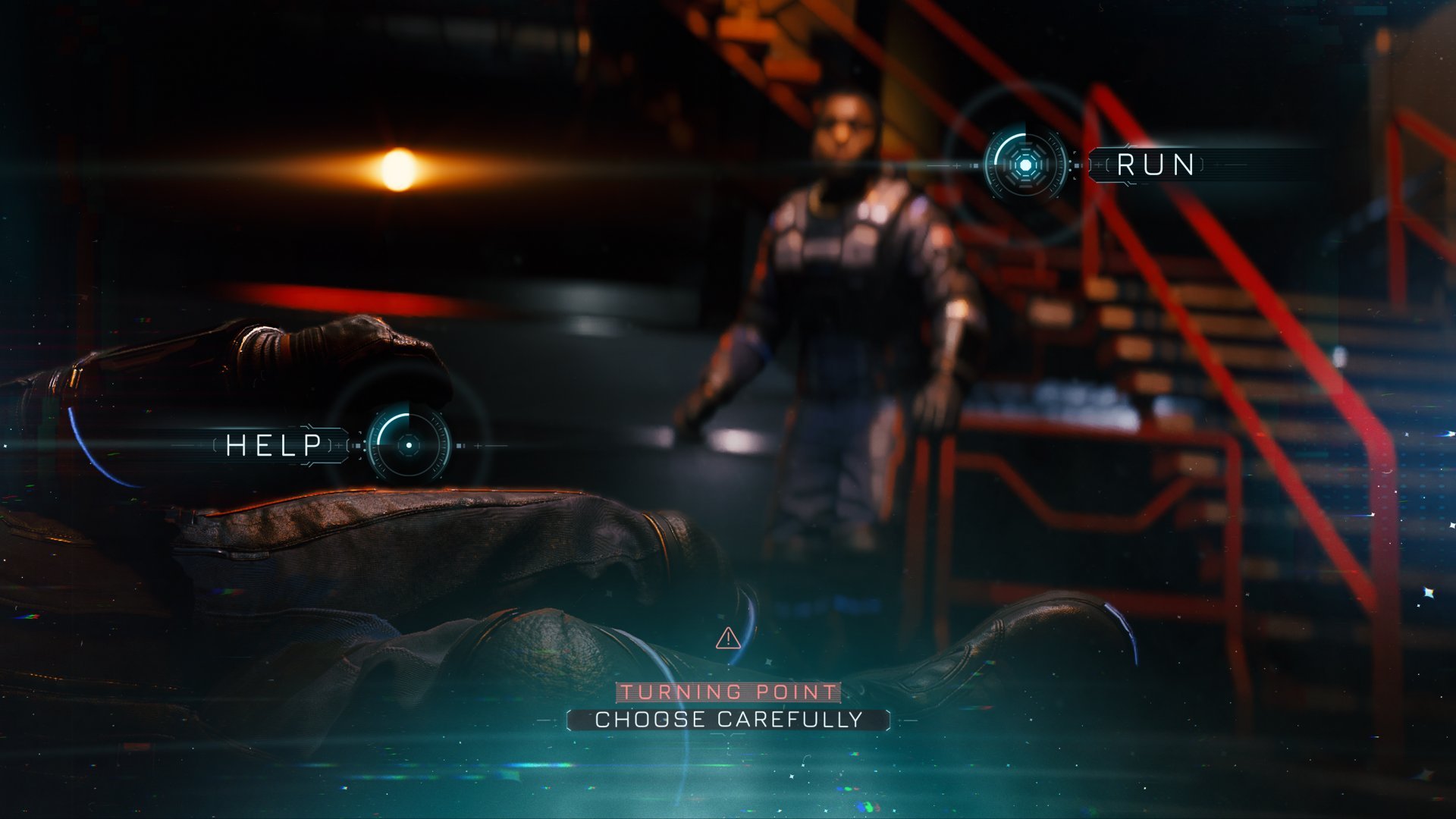
The final two gameplay elements are lighter on interactivity, but in typical Supermassive fashion are all the more instrumental when it comes to the unfolding narrative. Peppered throughout the game are moments where you’ll make important decisions, called turning points, which will impact the flow of the story in major ways, often opening up or closing off entire branches for good. It’s not always as simple as “make a choice, see what happens” either; a particular ripple may not be felt for a long time after its pebble has been irrevocably cast.
Separate from these binary decision moments, but equally impactful, are the Quick Time Event sequences that tend to pop up during high-octane set pieces or moments of extreme stress. These offer far less of a gray area than their choice-based counterparts – failure to press the right button within the allotted time will immediately result in an unpleasant, often lethal, consequence. Of course, as befits a sci-fi horror game, crew demises can be quite graphic, depicting some delightfully gross and grotesque imagery and body mutilation.
While QTEs can occur at any time, they become far more numerous the closer you get to the end, with the final chapter throwing them at you left and right. If you want your characters to be left standing when the credits roll, you’ll have to earn the privilege. There is at least one party-wipe scenario where the entire crew can die due to a couple of unfortunate decisions, resulting in a bona fide game over, but outside of this, it’s important to remember that fatalities are to be expected and the story will carry on with or without them.
Should you want to alter somebody’s fate or just see how else things could have gone down, a rewind feature allows you to return to any scene and pick up the thread from there. This is done using a flowchart that tracks your progress (and all potential derivatives) for each chapter. More than that, it’s also a handy tool that lets you see which characters were injured or deceased at any time and even tracks collectibles, if you want to go for that 100%. The flowchart is quite impressive in its labyrinthine scope, as the narrative truly accounts for a ton of variables.
If you do go back in time to make changes, it’s just as easy to jump forward again to any scene you’ve already played. However, events don’t simply flow forward along the new timeline but must be played through in their entirety in order to actually register. This means that altering one choice requires replaying all following decisions that flow from it as well. Otherwise, future scenes already experienced will stay locked to their original status, dead crew members and all. With that in mind, the flowchart makes revisiting important decision branches easy enough but not particularly efficient, since there’s no way to skip dialogue or cinematics to quickly catch back up. That makes going for an optimal survivor run, for example, still as time-intensive a feat as ever.
Of course, you can just opt for the Survivor mode that locks the rewind feature entirely until the game has been completed, forcing you to live with your decisions and their outcomes, whatever they may be. This, in my opinion, is the ideal way to play these games, since planning from the outset to just undo any negative events makes the struggle feel more than a little hollow. Knowing I had played a large role in each of my survivors (human or not) making it to the end was satisfying, and I quite enjoyed the bleak tone that my less-than-ideal ending saddled me with.
Final Verdict
Directive 8020 is exactly the kind of entry that was needed to prove that Supermassive is steering its anthology series in the right direction. Outside of the new stealth sections, there’s little that shakes up the established formula, so Dark Pictures fans will feel right at home here while newcomers can easily jump right in. Either way, there is plenty of content for those who want not only a beefy first playthrough but repeat campaigns as well. The new stealth segments do wear out their welcome too early, but the rest of the game’s eight- or nine-hour runtime is good, scary fun, and any missteps are made up for with an excellent narrative twist that stayed with me long after the story had wrapped up. The series’ relaunch may have been a few years in the making, but Directive 8020 ignites its boosters at all the right times to make for a successful sophomore season take-off.
Hot take
Directive 8020 rockets Supermassive’s horror anthology into the stars with a homage to Ridley Scott, John Carpenter, and all things body horror, while delivering a stellar narrative twist that’s out of this world.
Pros
- Tons of built-in agency and variables to shape your own destiny with
- Detailed flowchart and granular rewind feature
- Great performances by a talented cast
- Soundtrack is by turns beautiful, haunting, and catchily anachronistic
- One heck of a late-game twist!
Cons
- Stealth segments become too numerous and predictable
- Replaying for different outcomes still eats up a lot of time
Pascal played Directive 8020 on PlayStation 5 using a review code provided by the game's publisher.

- Advertisement
- Help support AGH by advertising with us








0 Comments
Want to join the discussion? Leave a comment as guest, sign in or register in our forums.
Leave a comment