
Road to Empress I review
- 0 Comments

Killer production values abound in this compelling FMV tale of seventh-century Imperial Chinese court intrigue
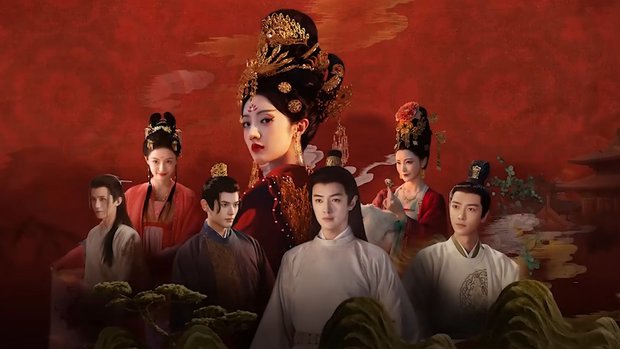
There is a subgenre of adventure games I will always rush to play, and that is FMV (full motion video) games. As technology improves, many exceptional titles showcase how the blend between video game and movie can elevate a narrative and delight an audience. Road to Empress I, developed and produced by independent Chinese company New One Studio (The Invisible Guardian), makes a very impressive and polished entry into this competitive space. It’s a dramatic and intriguing (and loosely historical) live-action retelling of the story of Wu Zetian, China’s only female emperor, and does so with an extremely high-quality production, beautiful sets, and a fascinating plot full of intrigue and cutthroat treason that is sure to excite any FMV fan.
There’s a little sprinkle of silliness throughout some of the actions available in this game, which only adds to its charm, and Road to Empress I had me at times laughing, crying and angry for the main character. (Not necessarily in that order!) There might be a few frustrations with the game’s unexpectedly linear path, and with reportedly 110(!) ways to die/get a bad ending, players may encounter some ‘death-loop’ fatigue before the right path is chosen. Some of the plot moves at such a breakneck speed involving so many characters that you really need to have your wits about you to keep up with it, and there is a slightly suspicious ‘shop’ feature to purchase items with real money to get on a leaderboard (yet have no bearing on the game at all), which took a bit of the shine away. Overall, however, this is a beautiful, captivating and immersive experience, and I was hooked from the start.
With absolutely no introduction beyond a quick word about Wu Zetian and a ‘choices matter’ mechanic, it is straight into the game. One important thing to note here is that although Road to Empress I is inspired by Wu Zetian and includes many references and explicit mentions of documented events that transpired in her life, her name in this game is Wu Yuanzhao, a fictionalised younger version of the real-life emperor. The story begins on her first day at the Taiji Palace in 637 AD as a fifth-rank cairen. A cairen was a member of the emperor’s chosen concubinage; young women of wealthy or noble families who were chosen for their intelligence, talents or beauty to entertain or perform duties for the higher-ranking officials. The rank Wu Yuanzhao enters at age 14(!) represents a fairly low status within the court, and with everyone desperately seeking to improve their and their families’ standing in the dynasty through any means necessary, you can already begin to imagine how this might go for the young cairen.
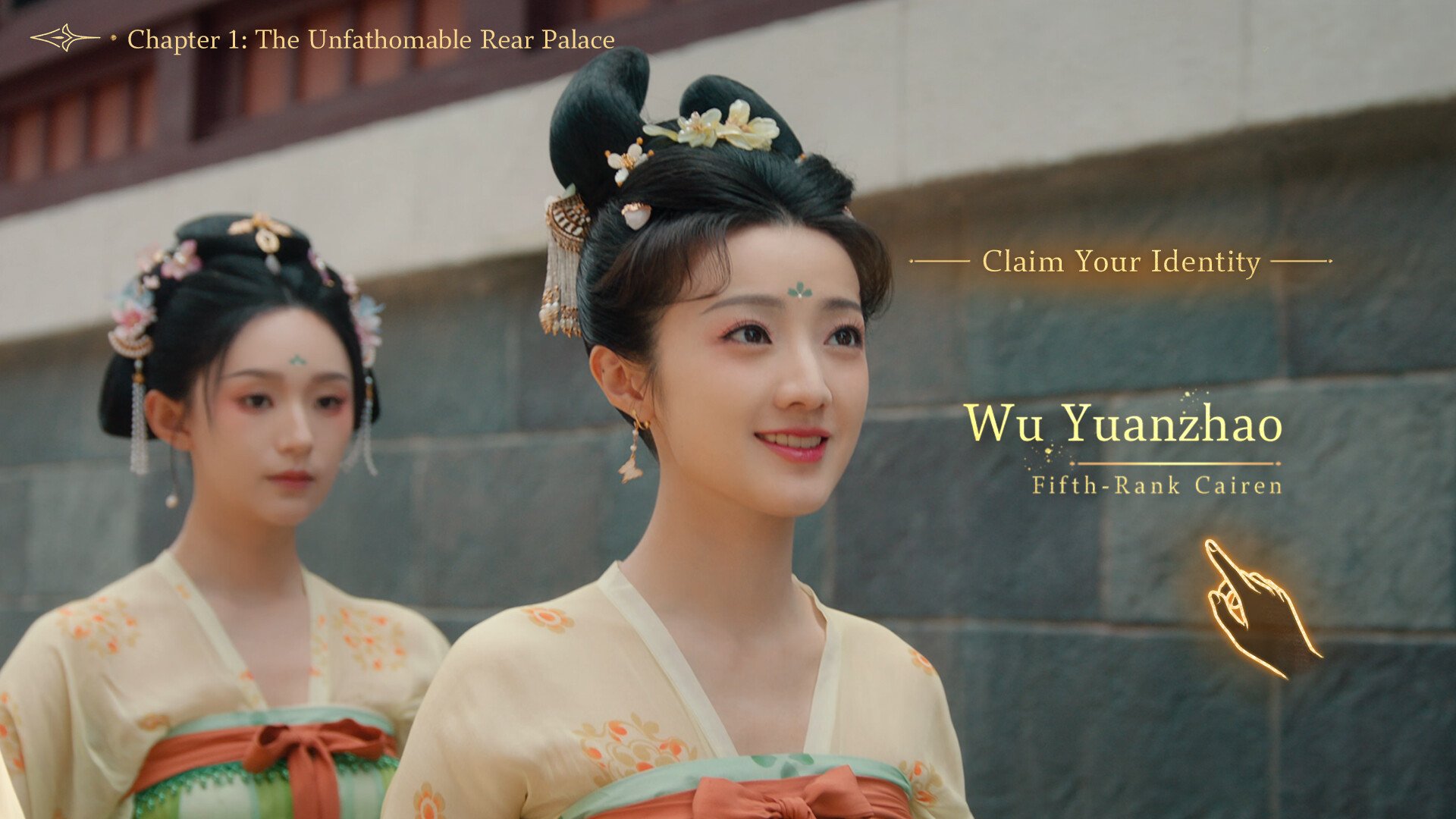
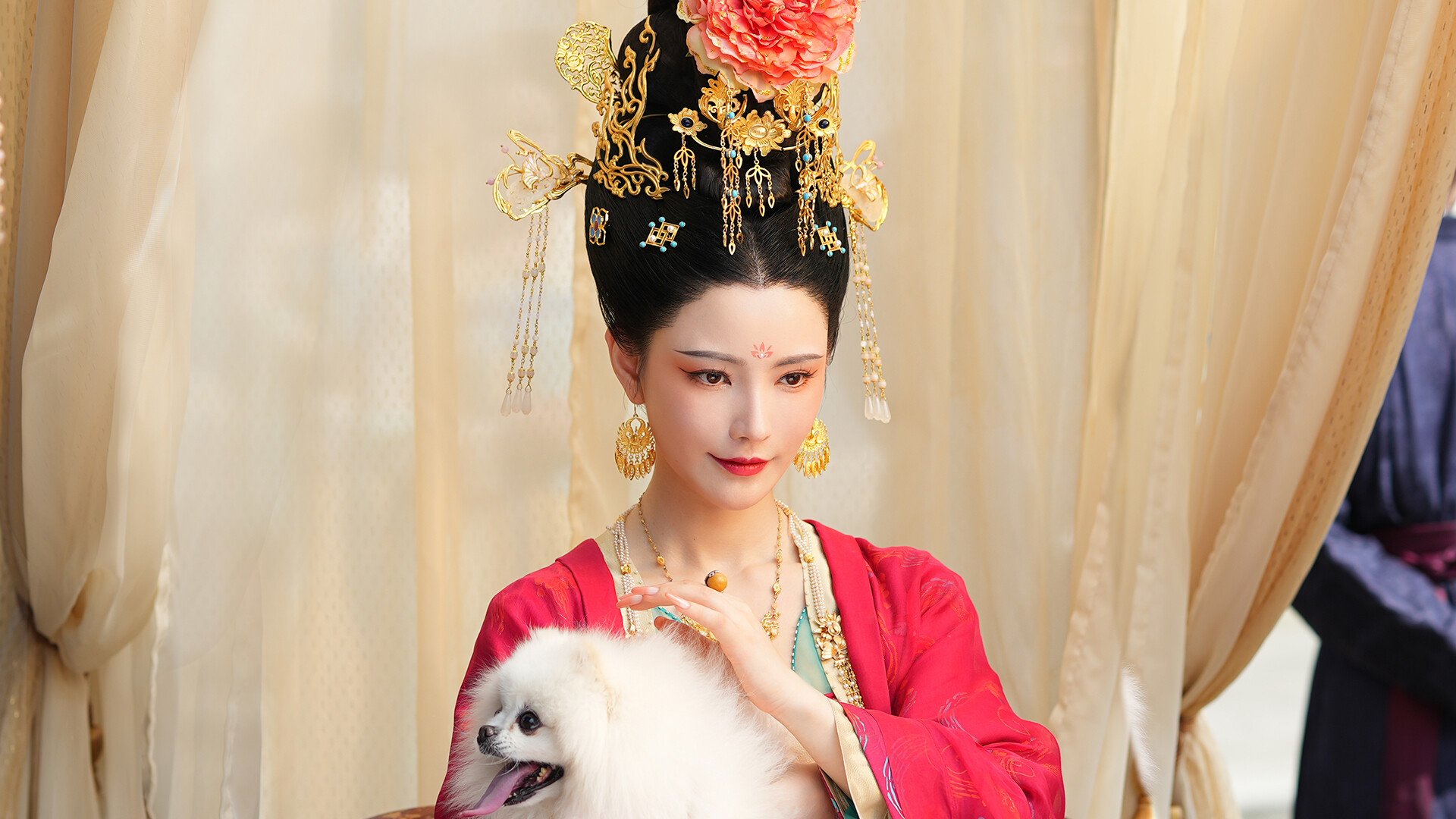
While waiting in formation with her group of other young entrants, Wu Yuanzhao’s sleeve is pulled by the young woman behind her. What luck! It is one of her old friends, Liu Xi, who professes the need for support in this unfamiliar and intimidating environment. Liu Xi attempts to give Wu Yuanzhao a beautiful hairpin as a gift, but in the tussle of ‘you take it!’ and ‘I couldn’t possibly!’ the pin clatters to the ground. When the head of Emperor Taizong’s four main consorts is called, a dramatic slow camera pan reveals the beautiful but rather cruel-looking ‘Consort Wei of Preciousness’ carried on a palanquin, complete with a very cute dog called Yunnie. Consort Wei notices the hairpin and calls out Wu Yuanzhao to tell her who it belongs to.
This is your first, and rather eye-opening, taste of choice-based branching narrative, with three different options to pick from. One is ‘Claim it’s yours to win her favour,’ while another is ‘Say it fell from one of the sisters up ahead,’ and the last is ‘Say it belongs to Liu Xi.’ I won’t spoil what the correct choice is here, but two of these answers lead to Wu Yuanzhao being taken away and branded with the red-hot hairpin as punishment (and ending the game), and those two answers aren’t immediately obvious as wrong, especially if you’re someone who always goes for a paragon style of play in games, like me.
Each ending screen gives a short summary of your choice, and why it wasn’t the smartest, offering a short voiced conversational snippet of other characters discussing the action taken. This is all very helpful when trying again the next time, as Road to Empress I starts to train you in the hidden rules of the Imperial court. ‘No more Mr Nice Guy’ is basically a requirement here, so Wu Yuanzhao must be exceptionally cunning, suspicious of everyone, and ruthless if she is to see the next day, let alone experience a rise to power.
This felt very fun and fresh to me, and I relished the opportunity to be ‘bad,’ but I sometimes caught myself before choosing to ask, ‘Could this be the end?’ Expect to die a lot, because on more than a few occasions, what seems like the right decision will contain an impossible-to-ascertain-at-first-glance flaw in the plan, leaving Wu Yuanzhao scuppered once more. I died 32 times, which, on the face of it, seems substantial. As I played more of the game, though, I could begin to see the plans of the court coming a mile off, and I became wise to their plots and schemes.
As fun as it is (and it is!) to experience another death, one of the frustrations is that the narrative stops whenever you make a choice the game deems incorrect, even if it does not result in dying. The story is very linear, and your decisions either let you continue or stop you in your tracks, with no alternate branches that will let you progress. This doesn’t necessarily detract from the narrative, as the whole point of Road to Empress I is to retell – albeit loosely and with artistic license, to say the least – the rise of the only female emperor in China. However, the fact that the game is dramatised rather than strictly following historical record lends itself to allowing more breathing room. But this game holds firm that you can have your laughs at the endings but there will be no deviation from the prescribed plot.
That being said, the game does take note of your initial choices and puts them into a personality assessment of sorts. This can be accessed at the end of a chapter and presents you with a full ‘trait sketch’ at the very end. It consists of a mind map of various descriptors like ‘deep thinker,’ ‘clear on right or wrong,’ ‘peacemaker pro,’ and ‘truth seeker,’ reflecting how you have shaped Wu Yuanzhao. I thought this was a fun touch, but my own trait sketch was completely chaotic as I started the game more as me, but after learning what was less likely to get me killed, ended by being much more ruthless and hardened to all the skullduggery.

Alongside the young and impressionable Wu Yuanzhao is a rather large cast of characters, including the reigning emperor, his three sons and one daughter and their guards and advisors, the emperor’s four main consorts (of which one is Wu Yuanzhao’s aunt) and their guards, the dozen or so other fifth-rank cairens that entered at the same time along with their assistants, plus myriad other background characters and even a dog. They will either help Wu Yuanzhao on her journey, or more often than not, throw a rather large spoke in the wheel in order to advance their own rise to power. More than once I had to remind myself just who was who by checking the provided character bios, as the plot moves rapidly, sometimes really throwing me off. This also makes Road to Empress I feel rushed at points, occasionally with long periods of time apparently passing in between some scenes.
Two of the princes are slowly introduced as potential love interests, although the Wu Zetian scholars among us will already know who becomes the victor. But even knowing the final outcome, I found myself swooning and giddy as relationship dynamics unveiled themselves – and conversely, when certain characters revealed themselves to be somewhat treacherous, my eyes narrowed and my fists balled and I became determined to take them down. Suffice to say, the narrative, despite the hurried pace, is very strong and packs an impressive amount of detail into sixteen chapters and eight or so hours of playtime.
Road to Empress I
| Genre: | Drama |
|---|---|
| Presentation: | Full motion video |
| Theme: | Cultural, Historical, Political, Romance |
| Perspective: | First-Person |
| Graphic Style: | Live action |
| Gameplay: | Interactive movie, Choices matter |
| Control: | Point-and-click |
| Game Length: | Medium (5-10 hours) |
| Action: | Quick Time Events |
| Difficulty: | Low |
Visually, the production is flawless. Shot in high-definition 4K, the team spared no expense in creating the most beautiful and engaging method of storytelling. The game was filmed at Hengdian World Studios, China’s biggest film set of replica palaces and buildings, and the attention to detail is second to none. The costume design is absolutely gorgeous, with historical Tang dynasty-inspired outfits and set dressings really selling the saga. I found myself drawn to the elegance of the costuming and hairstyling in particular, which were magnificent and had me feeling rather envious of the sheer elegance on display.
Road to Empress I is all live-action, with bonus videos available at the end of each chapter. These provide extra information to flesh out the world a little more or show a scene from a different character’s point of view. They aren’t necessary to understand what is going on in the grand scheme of things, and they can be skipped entirely, but I loved this part of the game. After a particular chapter with a romantic scene between Wu Yuanzhao and one of the princes, I couldn’t wait to see if there was a video based on his perspective, and I was excited to discover that there was! Another bonus is a full-blown five-minute extra movie / music video expanding on an especially heartbreaking plot point that really turned up the melodrama to 11, and I devoured it.
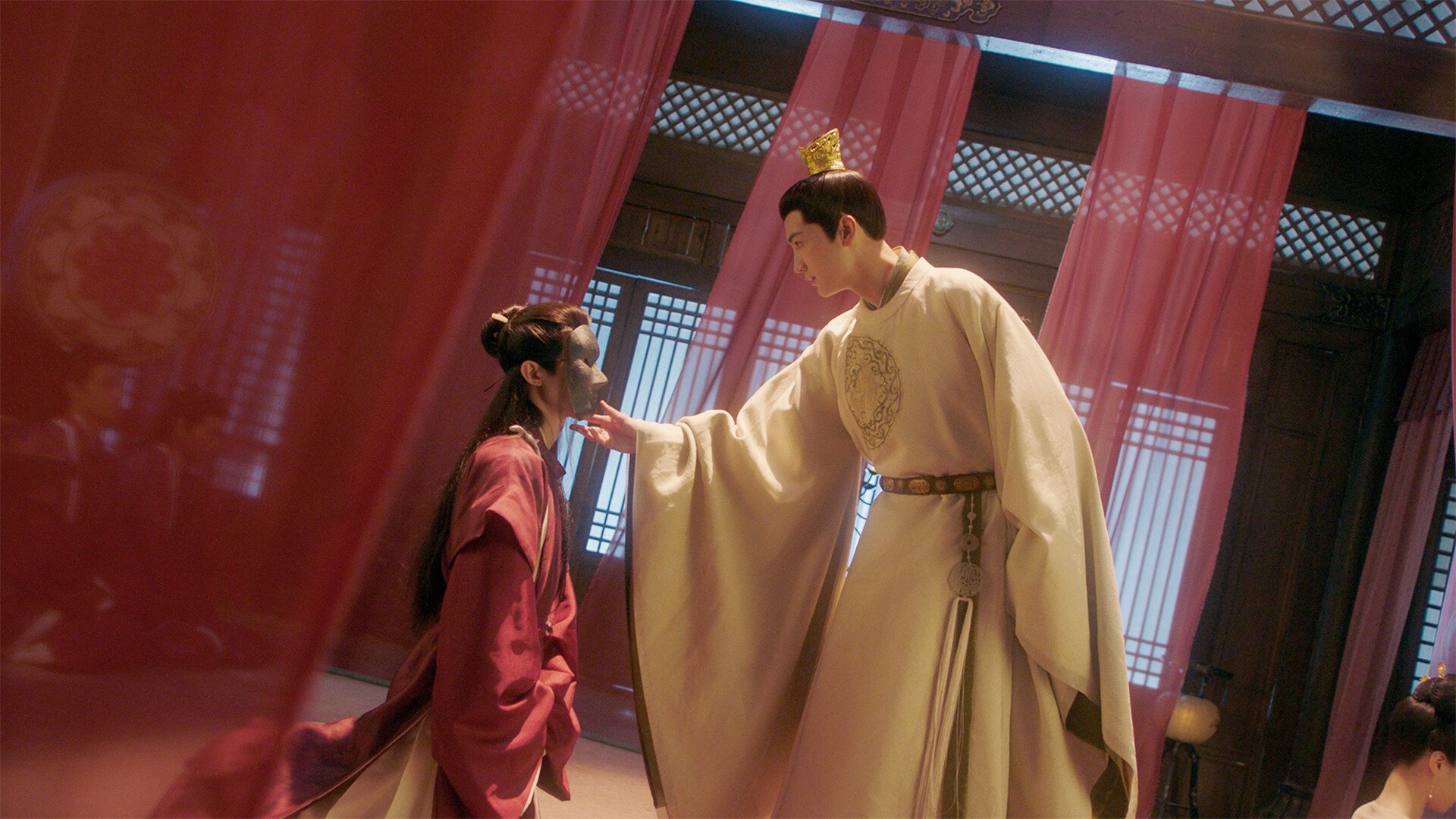
There's a real mixture of colour palettes here, initially utilising soft pastels and warm lighting in the earlier stages, but with dramatic pops of primary colours on costumes and hair pieces. The palace, despite the moral ugliness within, feels fresh, bright, and hopeful, reflecting Wu Yuanzhao’s first steps into cairen life. The backgrounds are resplendent with huge gold wall decorations, candlelit bronze drapes and rich plums and reds of the soft furnishings. As the story progresses, and the cracks in the façade start to show, the visual presentation turns moodier. Everything starts to feel darker; the once-vibrant hues are more muted, the skies are grey, the backgrounds are desaturated, and even the once majestic inner palace feels dulled.
On a fun ‘once you see it you can’t unsee it’ note, however, some of the earlier chapters were clearly filmed in colder temperatures, as many of the actors are breathing out condensation when talking. This doesn’t take anything away from the game but does seem a little at odds with the pleasant spring weather the Imperial court was supposed to be enjoying.
Road to Empress I’s cast is packed with professionals, with Wu Yuanzhao portrayed by established Chinese actor Huang Yi, and many other roles filled by popular Chinese drama performers. The dialogue is entirely in Mandarin but has clear and accurate subtitles in English and seven other languages. My only real hang-up was that the audio was rerecorded and added in post-production via automated dialogue replacement (ADR), which is understandable but feels slightly artificial. On occasion, the sound editing resulted in the actor’s lines not quite matching the on-screen circumstances, such as the explosive anger shown by Emperor Taizong coming across a little flat, possibly because the voice wasn’t echoing off the walls or floors as expected. In other moments, the audio isn’t properly lip synced so the dialogue is ‘off.’
There are no such concerns with the music, however, which has been carefully curated to support the story. As one of the strongest parts of the experience, the soundtrack is beautiful, with sweeping, dramatic traditional Chinese melodies and delicate emotional ambiance. Music plays a big part in one of the subplots of the game, so we’re treated to a traditional instrument (the guqin) more than once and it is mesmerising. Other traditional cultural instruments – the pipa, the zither and the erhu – are heavily featured in the score, and I sometimes stayed in place much longer than necessary to hear the track looped again.
One particular arrangement that comes at the end of every chapter is loud, triumphant and celebratory, which I always looked forward to and hummed along with, although after one specific harrowing chapter it seemed very out of place. Not everything is so dramatic, though, as the music in many of the live-action scenes is much gentler. In more pensive scenes, you have to really strain to hear the accompaniment as the subtlety is dialled down even further.
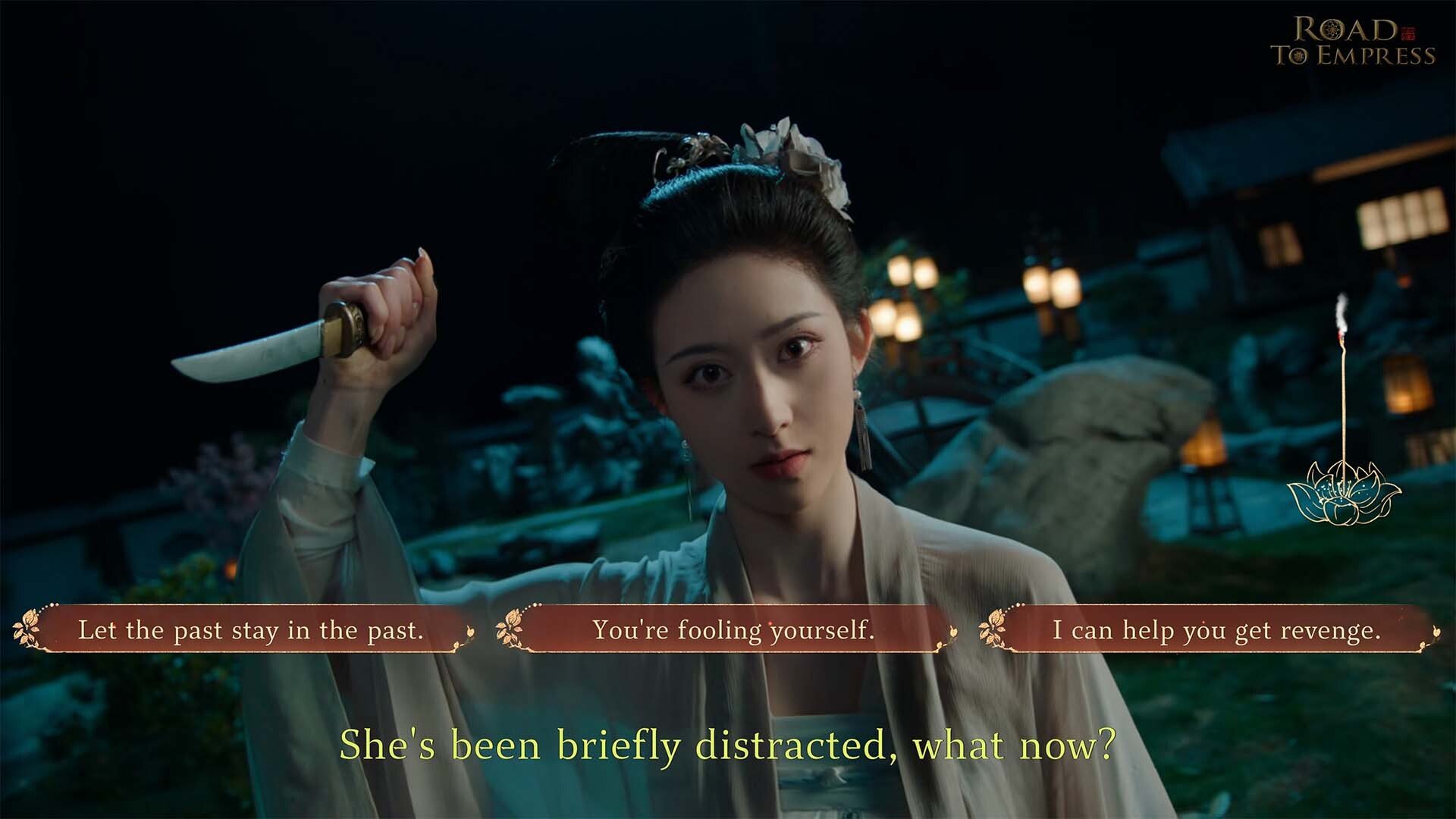
As an interactive movie, Road to Empress I is very easy to play, with clear boxes and a maximum of four choices displayed at the bottom of the screen. Some dialogue choices are timed while others are not. The game also includes everyone’s favourite: quick time events. These QTEs are few and far between but occur in rather random places and feel chaotic, with failure resulting in another death. Not to worry, though, as the game will automatically place you back at the start of the QTE to try again, just as it will take you back to the point of a fateful decision that ends with Wu Yuanzhao’s demise.
There are various menus to access: one helps you keep track of exactly who is who with character bios that unlock as you progress; another keeps you abreast of the paths you’ve taken. ‘Collectibles’ here aren’t physical items you pick up but rather bonus videos and added information that can be unlocked by getting certain endings or performing particular actions. Some of these endings appear incredibly difficult to achieve and would require multiple playthroughs. In terms of overall performance, I had several crashes when playing on the Steam Deck, but for the most part the game worked very well.
The other menu option leads you to some ‘Leadership’ boards, split between daily, weekly and monthly. This is where I started to feel a small twinge of concern, as I could see these were microtransactions. Some in-game currency can be earned along the way, and there is no obligation to spend more outside of that, as none of it affects the game at all. However, microtransactions do exist that entice players to buy flowers or eggs. The purpose of the leaderboards is to show which characters are popular with the audience, denoted by how many flowers they have received, or unpopular, based on how many eggs they have received. Top gifters get their names on the board alongside the characters, and Road to Empress I has a large following internationally, with many fanfictions springing up and people writing fervently in support of their misunderstood favourites, so it’s not hard to see how this could be a lucrative money-making tactic.
Another thing to note is that the game is rated 13+ due to its mature themes and use of violence (though never explicitly depicted), and the age limit is taken seriously, requiring a log-in account to be made first. Unfortunately for me, I clicked the wrong button and identified myself as under 13 and then had to add a parent’s email (also me!) before I could start playing.
Final Verdict
Road to Empress I has been compared favourably to some of the more high-quality Chinese dramas (Cdramas), with its elaborate costuming, melodramatic set pieces, intense emotional scenes, and intricate political intrigue. I can see why, but it’s surprisingly educational as well. I went in knowing basically nothing about Imperial Chinese history, music or culture, and came out feeling like I could pass a round or two at a pub quiz (so long as the questions were about China’s only female emperor). The extremely polished production is among the best FMV presentations I have seen, and the soundtrack is truly enchanting. A few crashes, a bit of mismatched ADR and the presence of microtransactions do slightly dull the shine, and the quickly shattered illusion of choice (despite multi-branching being heavily marketed) could be disappointing for some players. Ultimately, though, with lots of hidden extras, bonus videos and achievement hunting, this game is huge fun, and I’m looking forward to continuing Wu Yuanzhao’s impressive journey when Road to Empress II hopefully releases soon.
Hot take
If you love live-action melodrama, the seventh-century Imperial Chinese court intrigue of Road to Empress I is the game for you. Embrace the chaos of 110 endings and marvel at the production value, but don’t get too comfortable – the plot moves as fast as the poison.
Pros
- Incredibly polished high-quality production value
- Beautiful culturally traditional soundtrack
- Engaging, immersive narrative loosely based on a true story
- The costumes!
Cons
- No real tangible multi-branching plot
- Some post-production voice-overs fall flat
Victoria played Road to Empress I on Steam Deck using a review code provided by the game's publisher.

- Advertisement
- Help support AGH by advertising with us






0 Comments
Want to join the discussion? Leave a comment as guest, sign in or register in our forums.
Leave a comment