
Letters of War review
- 0 Comments

A valiant effort for younger gamers but can't fully deliver on its promise of varied WWII-themed gameplay
I have always had an interest in the two World Wars since reading Michael Foreman’s illustrated book War Game as a young child. Learning about them was a huge part of my British childhood schooling, and when the opportunity arose to do a class presentation I shuffled up to the front of the class, clutching my grandfather’s precious medals (acquired during his time in the RAF in WWII), ready to regale my peers with my knowledge.
Letters of War is described by developer Wood Cabin Games as a ‘spiritual successor’ to the popular Ubisoft WWI puzzle adventure game Valiant Hearts: The Great War. There are certainly some similarities, with its side-scrolling presentation, emotional story about the people involved in the war, charming 2D artwork and a variety of cinematic gameplay elements, but that’s largely where the comparison ends. Not only does it focus on a different conflict, but Letters of War is burdened with repetitive sequences and lacklustre dialogue while being very much geared towards a younger audience with a more sanitised and ‘soft touch’ version of the horrors of war.
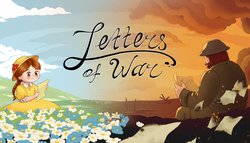
This is a story about courage and resilience, love and hope – and interestingly, it is based on real events and memories. The game begins with a short opening cinematic revealing what the ‘letters of war’ are in this context. With Britain at war with Germany, the letters here are the ones being sent between a little girl in England and a father who is separated from her by his service in the war.
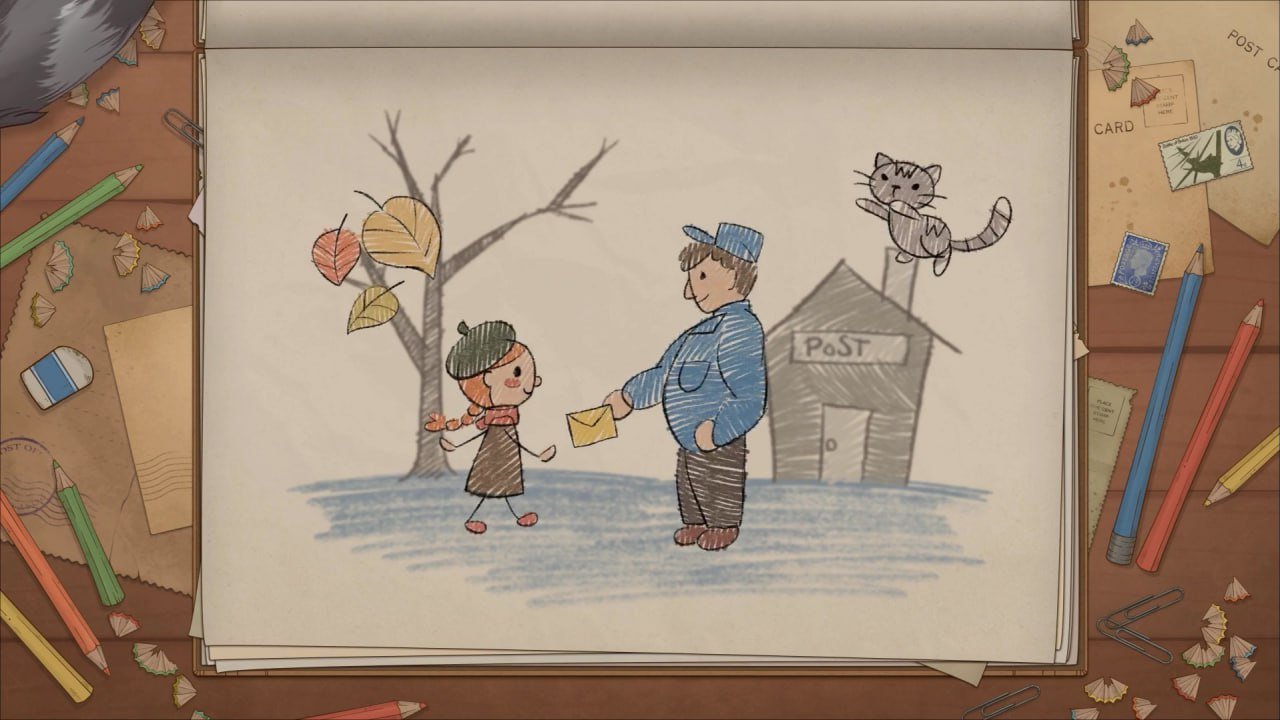
The little girl’s name is Rosie, who wakes up to find a note left for her by her mother, Catherine. Rosie is one of the two playable characters that will be switched between throughout the game. The note is added to a journal that can be accessed via an on-screen icon. It instructs Rosie to come to the kitchen to help with the preparation of breakfast. When Rosie passes the wardrobe, an interact button prompts her to change clothes, which inexplicably adds another entry in the journal. This time it is a fairly robust history lesson about the start of WWII, the blitzkrieg and the ‘Phoney War.’ The information is easy to read and understand, but it feels jarring to be presented apropos of nothing.
One of the journal’s tabs is for ‘collections,’ which includes the notes you pick up, while another tab is for ‘notes’ (on the face of it that seems confusing), which is the history lesson portion of the game. I actually looked forward to learning more about WWII as these bite-sized pop-ups appeared throughout the game. For example, when Rosie tries to interact with a pigeon that has been injured, the journal entry explains the significance and importance of ‘pigeon post.’ In certain places the notes are more directly related to the current scene, such as a segment detailing the Normandy landings, and specific Allied offensives that took place in Sicily in 1943. The quick loading screens also have interesting English/British facts to read like ‘The World’s First Public Railway Opened in Britain’ and ‘Big Ben is not a tower, but a bell.’
Revealed in cutscenes, the letters of war sent at the end of each chapter are voiced, but the in-game notes and collections are not, which I feel misses a trick here. The letter from Catherine in the beginning and the notes around the history of the conflict would have been more impactful with a solemn voice-over. The collection notes are also shown in the journal by order of oldest first, which made it time-consuming to get to the newest ones, especially by the end of the game when I was scrolling down quite a long list.
The other playable character is Liam, Rosie’s father. Liam is a friendly sort of chap, with a big red beard and kind face, who before the war filled his days making birdhouses for the plentiful wildlife around his family’s idyllic woodland domicile. Liam’s wife Catherine is very sweet, calm and loving, and there’s also a cat with the patriotic name of Chamberlain. The interactions between family members early on are overly positive and saccharine, but they are no strangers to war. Liam’s elder brother went off to WWI and sadly never returned, and as it turns out, Liam has already done a stint in the Army during the opening stages of the second conflict. Confusingly, it is never stated exactly when in the WWII timeline the story opens, so this was something I put together myself based on a healthy dose of assumption and vague conversation.
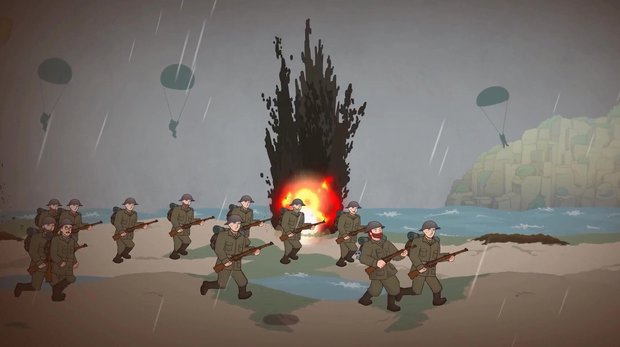
Letters of War starts off slowly: a picture-perfect family, with Rosie pottering around doing a couple of very simple fetch quests, petting the cat, and accompanying her father to the woods. So far, so wholesome, so much so that I almost forgot I was playing a game with ‘war’ in the title. Just then, the horrifyingly familiar wail of the air-raid siren begins to blare and I began to panic as Liam scoops up Rosie and Chamberlain and races back to the house. Here you take control of Liam, who must time his run carefully to manoeuvre past the bombs dropping in front of him. This isn’t easy, as the screen automatically pushes Liam on, so he can only marginally speed up or slow down. This action segment is quite long, and I died many times as I got to grips with it, which frustratingly sent me all the way back to the beginning of the sequence. Continually seeing Liam and his defenceless dependents blasted through the air as I made a mistake was beginning to take its toll, so I felt relieved when they finally reached the relative safety of the house.
After this surprise attack, Liam has a change of heart. No longer is he content to live out his days quietly; instead he will return to the front line and fight again out of duty to his country, and to protect his loved ones. Catherine isn’t pleased, delivering an impassioned speech about how much the war(s) have already taken from them, but ultimately comes round to Liam’s way of thinking. One of Rosie’s next tasks is to make a talisman for Liam for good luck. This is a very short but incredibly sweet moment, and your chosen shape and colour can be seen on Liam’s backpack throughout the game.
Liam departs by train, meeting Noah, a bookseller from the same town who becomes his brother in arms and accompanies Liam on some of his missions. As Liam has been to war previously, he becomes a mentor for the anxious and inexperienced Noah. At the recruitment centre, Liam is given training in the form of an assault course for the various offensives he will be a part of. This consists of throwing grenades, clipping wire fences, kicking things and punching dummies. Despite the officer barking orders and telling Liam to hurry up, this has no timer or fail state, which was handy for me because the grenade throwing part was tedious. It requires a particular angle but the grenade doesn’t explode on impact if it bounces off the target, and it took a good dozen tries for me to correctly guess the trajectory (which was basically to throw it higher and hope for the best).
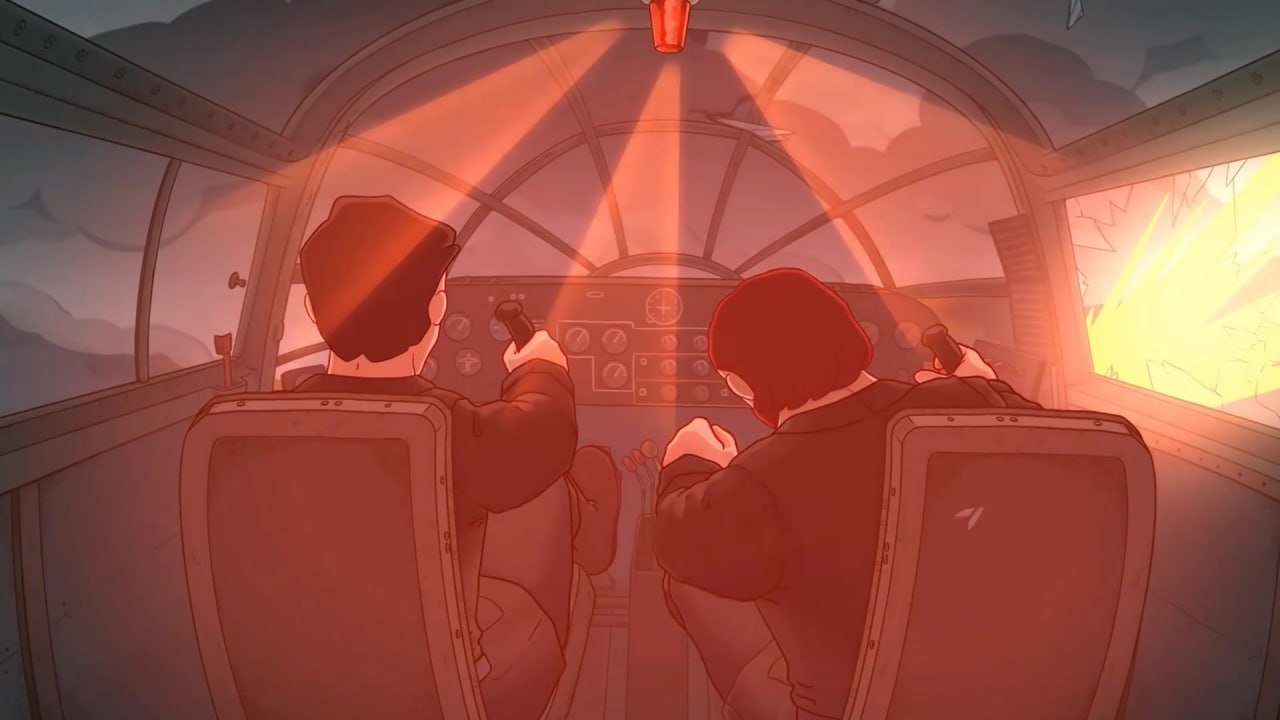
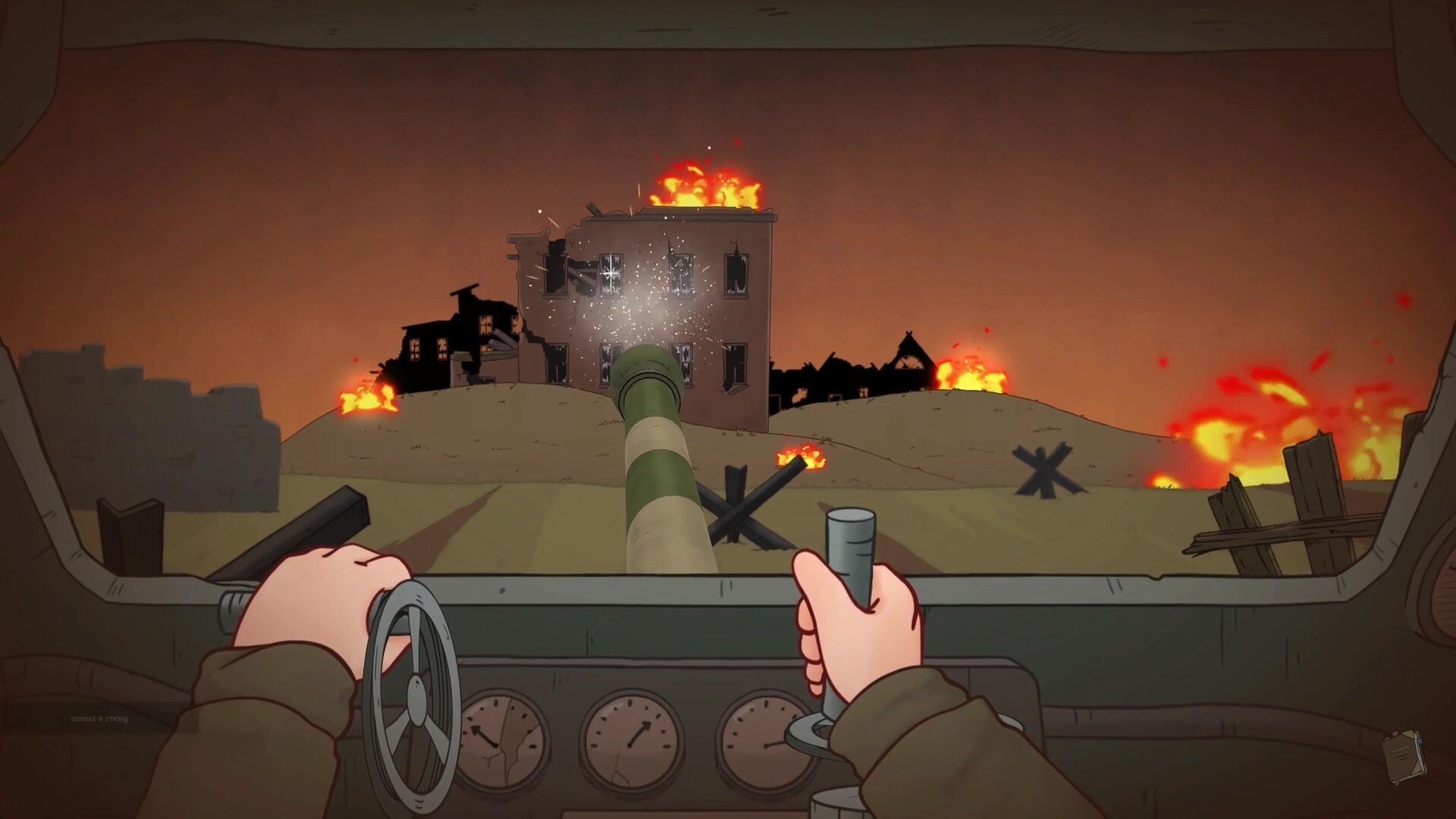
Liam’s story is the main focus here, with Rosie’s parts coming in after more serious levels, possibly as a bit of light relief. Unfortunately, Liam’s parts are very repetitive, with the same actions repeated in every single level at a new location, either alone or with his platoon. There are a couple of added set pieces, like dodging a searchlight, commandeering an armoured unit for a tank battle, engaging in an aerial dogfight and navigating a snowstorm. There are also a couple of timing challenges – press a button when a moving marker arrives in the highlighted zone – and a very simple ‘make a coffee’ task – grind the beans, add the water type of thing – which were gratefully received as something fresh. But for the most part Liam’s segments play out exactly the same, which had me quite bored and wishing for something different. The difficulty balance feels off too. Some of the activities are extremely simple, like the timing and cooking ones, while others, like shooting at tanks, require significantly more precision and speed. There is an on-screen hint icon showing the current objective, but this really isn’t needed as the game is extremely linear.
Letters of War
| Genre: | Drama |
|---|---|
| Presentation: | 2D or 2.5D, Side-scroller |
| Perspective: | Third-Person |
| Graphic Style: | Illustrated realism |
| Gameplay: | Puzzle, Quest, Minigames |
| Control: | Direct Control |
| Game Length: | Short (1-5 hours) |
| Action: | Combat, Rhythm, Timed events |
| Difficulty: | Low |
| Theme: | Family, War |
Rosie’s parts are mostly extremely simple fetch quests – collecting breakfast items, grabbing supplies for a task, pumping the well for water – but there is the occasional different sequence, like colouring a picture. But again, all very basic. In fact, there are only two or three actual ‘puzzles’ in Letters of War, one of which requires Liam to remember a sequence of numbers to enter as a combination to a door, the others falling into the category of ‘move an item to proceed.’
With Letters of War seemingly being designed for a younger audience, even the harsher parts are very watered down, such as when Liam is captured and imprisoned as a prisoner of war. The level taking place in the POW camp is the game’s attempt at touching on internment and concentration camps (the journal note gives a brief but appropriate description of the horrors of places like Auschwitz). Here the characters are all noticeably thinner, with tired and drawn faces. However, there is no depiction of death, abuse or other distress in this section.
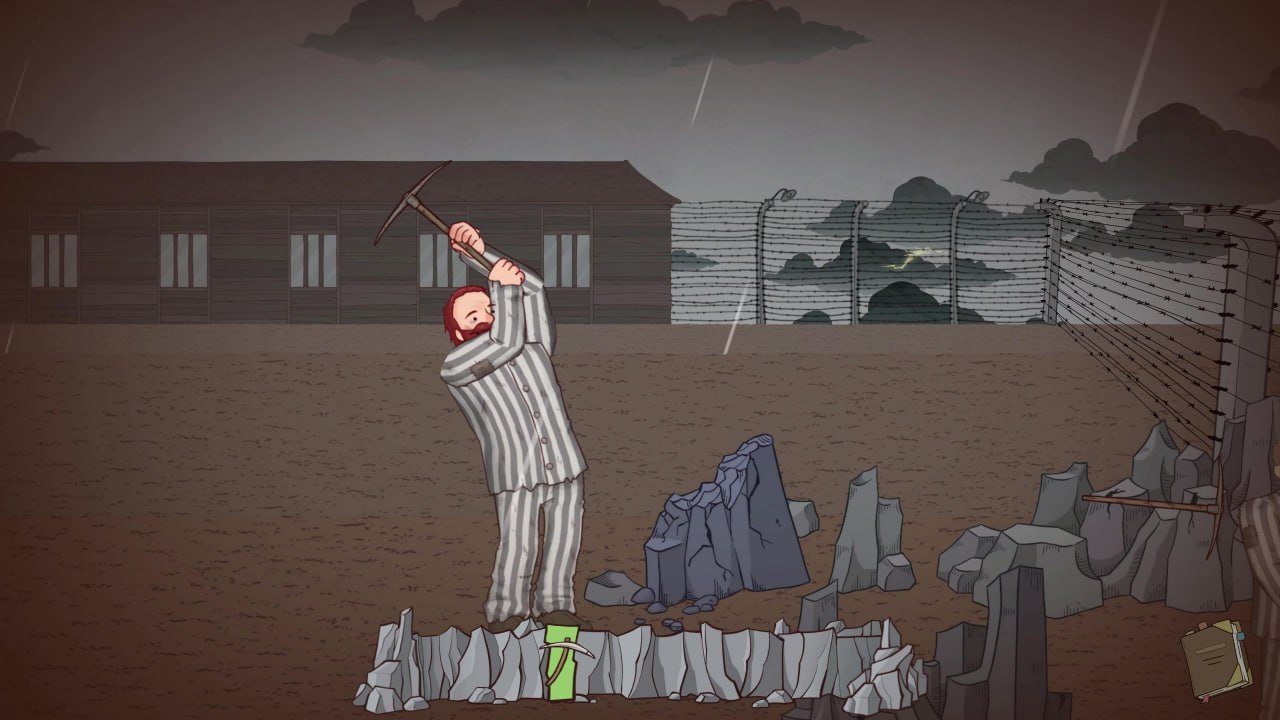
The artwork is very polished and attractive, with clean, hand-drawn ‘picture book’ 2D landscapes and characters featuring a simple colour palette. Rosie’s home and surroundings are bright, warm, and cheerful, with Liam’s war scenes grey and muted by contrast. A couple of details stood out to me, such as the partial covering of deceased soldiers under the snow in a certain Liam level, and a makeshift graveyard in another. These felt impactful in a way that I wasn’t expecting.
Navigation here is also basic. Every level is side-scrolling and so mainly utilises the left and right controls and an action button to pick things up or manipulate them. On a few occasions additional controls are needed, like when aiming and throwing grenades, but for the most part left, right and action are all that’s required. Character animation is slow but fluid, mostly utilising up-and-down arm movements to show motion. The artists also put work into the backgrounds to make them feel more immersive, with bombs going off in the distance, and lots of (admittedly similar) non-interactive characters populating some scenes.
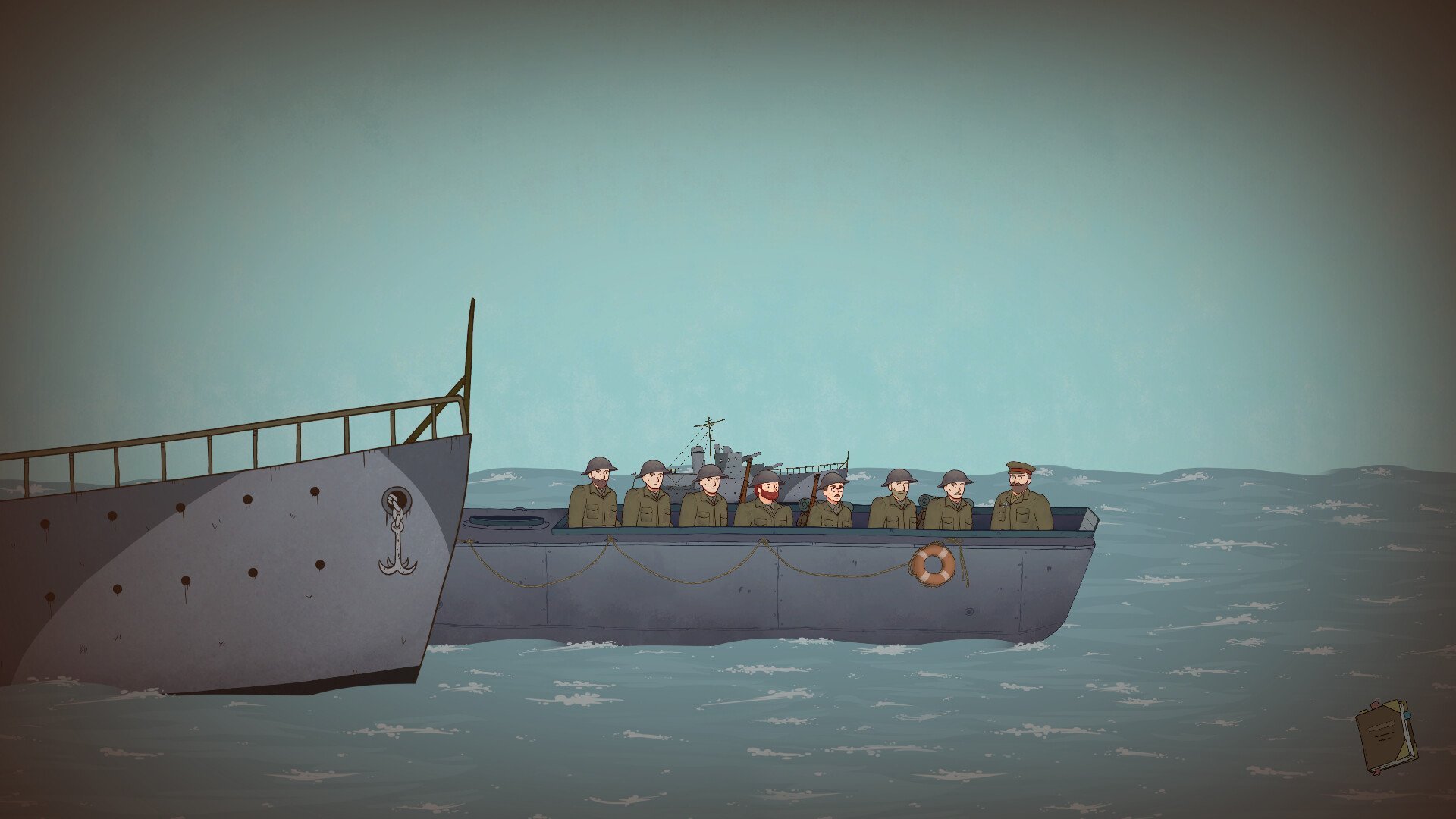
Musically, Letters of War implements a pleasant, hopeful and delicate violin-led score in the ‘Rosie at home’ parts and a more dramatic, serious composition in Liam’s war scenarios, complete with the whistling of bombs, the cracking of rifle fire overhead, and the ominous drone of a landing craft transporting platoons to shore. The music is fairly unobtrusive across the board, while the sound effects are much louder. This could have been for dramatic impact, but the mixing in general is a little off. For example, when you access the journal, a quite loud piano piece gave me a jolt every time I opened it, and some dialogue is noticeably quieter than the background score or sound effects.
The voice acting is a bit hit and miss. For the most part the three family members are done well, their lines delivered clearly and slowly, with full subtitles shown on-screen. Liam’s role is performed with a calm, well-spoken confidence, but rather than feeling authentic to the northeast of England, Rosie and Catherine’s ‘proper’ Received Pronunciation sounds like it belongs on a children’s TV show like Peppa Pig. Still, their acting managed to elicit a wry smile from me (as a Yorkshirewoman with a strong accent). Where the wheels start to wobble a bit is when meeting other characters, such as Noah, who sounds stilted with an unnatural flow and unusual emphasis – although as a plus point here, he has more of a regional accent. The commanders of Liam’s platoon also sound a bit off, with some lines wooden and stiff, and Liam’s American friend Arthur sounds suspiciously like an English person doing an American accent. To its credit, Letters of War does make an effort to include German voices and language, which is a nice touch.
Unfortunately, mention must be made of the heavy-handed writing in this game. There is much talk of heroes, and sacrifice, and things that wouldn’t be out of place in a traditional children’s storybook about brave princes and terrible dragons. Liam is portrayed as a sort of Superman: the selfless, humble war veteran who can’t stand by and watch his country be attacked; the man (with his permanent positive attitude and warm smile) who heads out into dangerous enemy territory without a qualm to deliver messages, the brave leader who orchestrates and commandeers the escape from a POW camp. Liam himself delivers poignant soliloquies throughout the game about faith and hope, and he acts as a wise guru, which feels cloying and clichéd.
Another thing that really caught me off guard was how pro-British this game was. Every character Liam encounters speaks with such reverence not only about Liam but also the British Army. During an Allied invasion in Italy, Liam single-handedly takes out a sniper’s nest with a grenade and then climbs the structure to plant a Union Jack while ‘God Save The King’ plays in the background. Elsewhere, after a daring aerial escape, Liam’s American compatriot (who is arguably the only reason Liam was able to escape in the first place) turns to Liam and says, ‘You know what, you Brits never cease to amaze me!’ and continues to extol the virtues of British people’s dedication and courage.
At first, as a British person myself, I was enjoying this rush of patriotism, but by the end the near constant praise of a nation and its people felt uncomfortable. It is left to Catherine toward the end of the game to deliver a slightly more balanced approach when explaining war to her young daughter. I’m assuming this is meant to serve as a teachable moment, but I found myself experiencing more than a twinge of concern when listening to lines such as ‘usually wars are started for the sake of meaningless beliefs and interests’ and ‘at war there are no good and bad people,’ which felt shallow and overly reductive. That being said, right before the credits roll, a narrator gives players the very real toll of WWII, with 85 million people who lost their lives due to the conflict, which really brought me back down to earth with a thump.
Letters of War took me just under three hours to complete on a Steam Deck, and for the most part worked very well (despite the instructions being for a keyboard). Even with a significant update that addressed many players’ early concerns, however, I encountered a bug at the very start of the game. Rosie stopped functioning, and the walk/run animation halted entirely, forcing me to restart. There are no manual save points, only an autosave, so fortunately I didn’t experience this problem again. I did come across a different bug in a minefield, which meant that after I made a mistake and was caught in a blast, the autosave put me back to the point of blowing up, rather than before Liam tackled the bomb, meaning I had to restart the entire level.
Some of the on-screen instructions could be clearer, too. For example, when Liam crosses a log, the pop-up shows that the left and right buttons must be used to maintain his balance. After an embarrassing number of tries, I worked out that it must be tapped left and right, rather than holding the direction buttons and reacting immediately to Liam’s leaning. There are some lingering dialogue issues as well, as some text can be skipped through but some can’t.
Final Verdict
There are certainly things to enjoy in Letters of War, with its charming artwork and meaningful historical settings. It’s a shame, then, that it misses the mark when it comes to level design with repetitive gameplay, an unbalanced difficulty level and fairly clumsy storytelling. From an adult perspective, I went in prepared for a gut punch like that of Valiant Hearts, which never really came. Instead, this game is very much geared to younger players, with a gentler approach to war. Despite its very real-world themes of sadness and strife, the general feeling here is family-friendly and the distressing parts are rarely more than surface-level, so less likely to cause sleepless nights. As a gameplay experience it’s unlikely to wow anyone regardless of age, but with the right expectations going in, it perhaps best serves as a useful educational tool for parents and teachers of enquiring minds.
Hot take
Despite its obvious surface similarities, don’t go into Letters of War expecting an emotion-wrecking Valiant Hearts-like experience, but rather a simple hero story and WWII history lesson wrapped up in unfortunately repetitive gameplay.
Pros
- Comprehensive historical facts sprinkled throughout
- Polished and attractive comic book style
- Family-friendly approach suitable to younger players
Cons
- Repetitive gameplay sequences
- Superficial dialogue
- Uneven voice acting
Vicky played Letters of War on PC using a review code provided by the game's publisher.

- Advertisement
- Help support AGH by advertising with us

0 Comments
Want to join the discussion? Leave a comment as guest, sign in or register in our forums.
Leave a comment