
The Posthumous Investigation review
- 0 Comments

Plenty to keep digging up in this compelling film-noir time-looping murder mystery in 1930s Rio
Imagine this: You are a private detective. One morning you wake up, check the mail and find a letter from the most important man in the city asking you to investigate his very own death. You go outside and indeed, there is his body in a nearby alley. The police are already there, blocking the nosy crowds. What do you do?
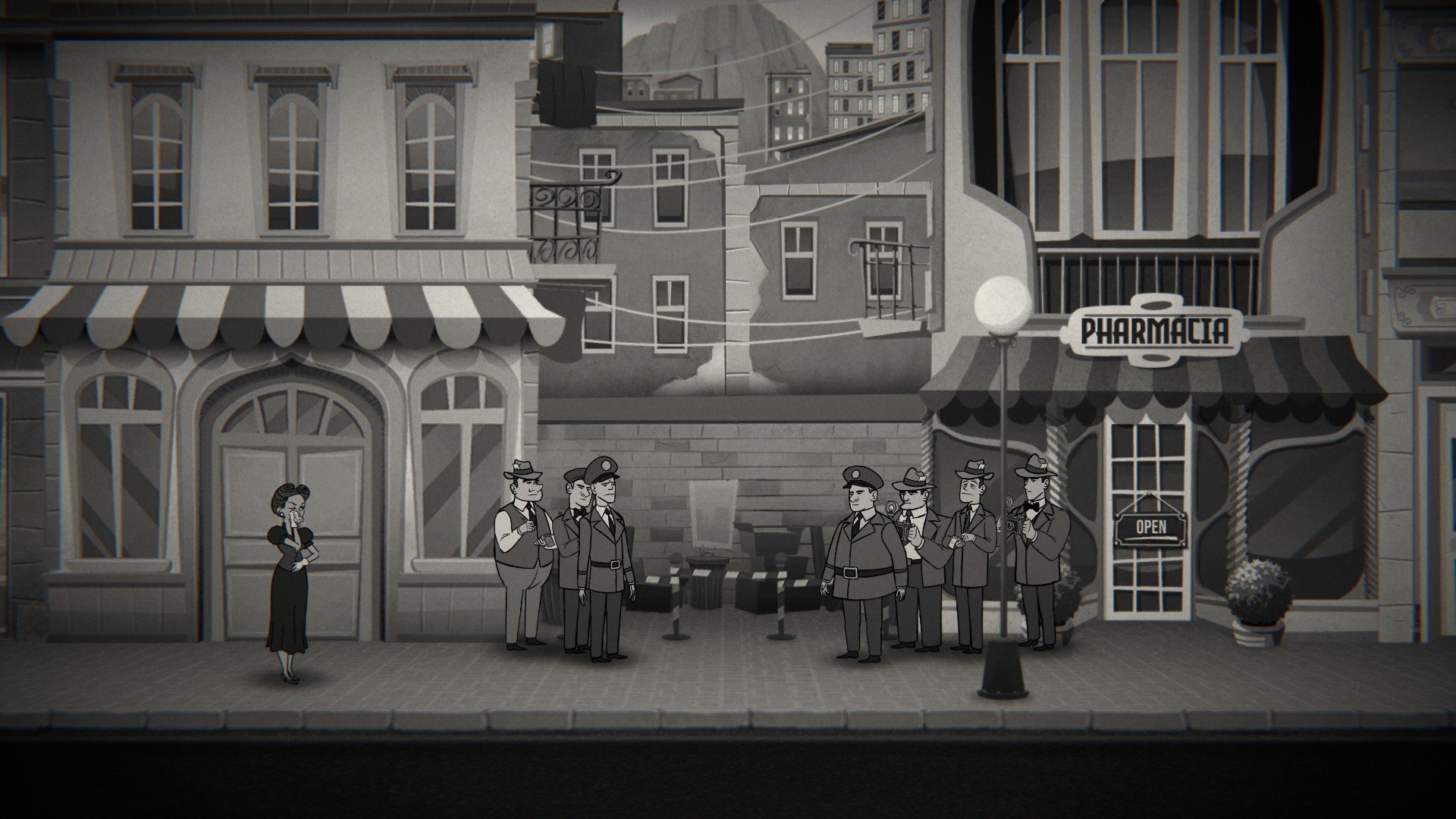
Your answer is important, because in The Posthumous Investigation, you are completely free in how you want to go about solving this mystery. There is a catch, though. The murder takes place in Rio de Janeiro, a vibrant city with many locations and people, each with their own agenda. Time is always flowing, and that paperboy you saw outside your office in the morning might no longer be there to ask him questions in the afternoon. That doesn’t have to be an issue, however, because every time the clock strikes midnight, you are transported back in time to that exact same morning, when the body of Brás Cubas has just been discovered.
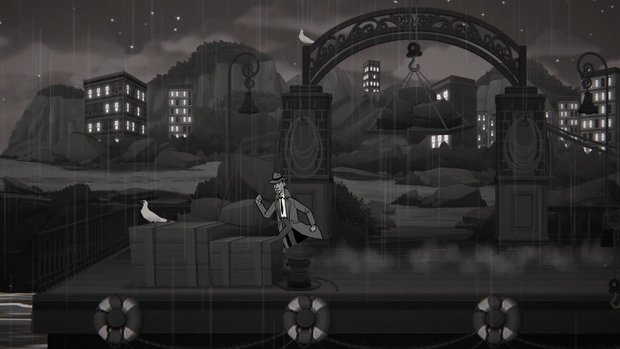
Inspired by the oeuvre of 19th century Brazilian author Machado de Assis, developer Mother Gaia Studio has taken a version of those characters and brought them to 1937 for a detective mystery that rivals the works of Agatha Christie and Sir Arthur Conan Doyle. Each run through this well-designed time-looping game opens up more intriguing avenues of interrogation, and traversing this stylish, jazz-infused, side-scrolling film-noir version of Rio to hunt down the next lead is very addictive.
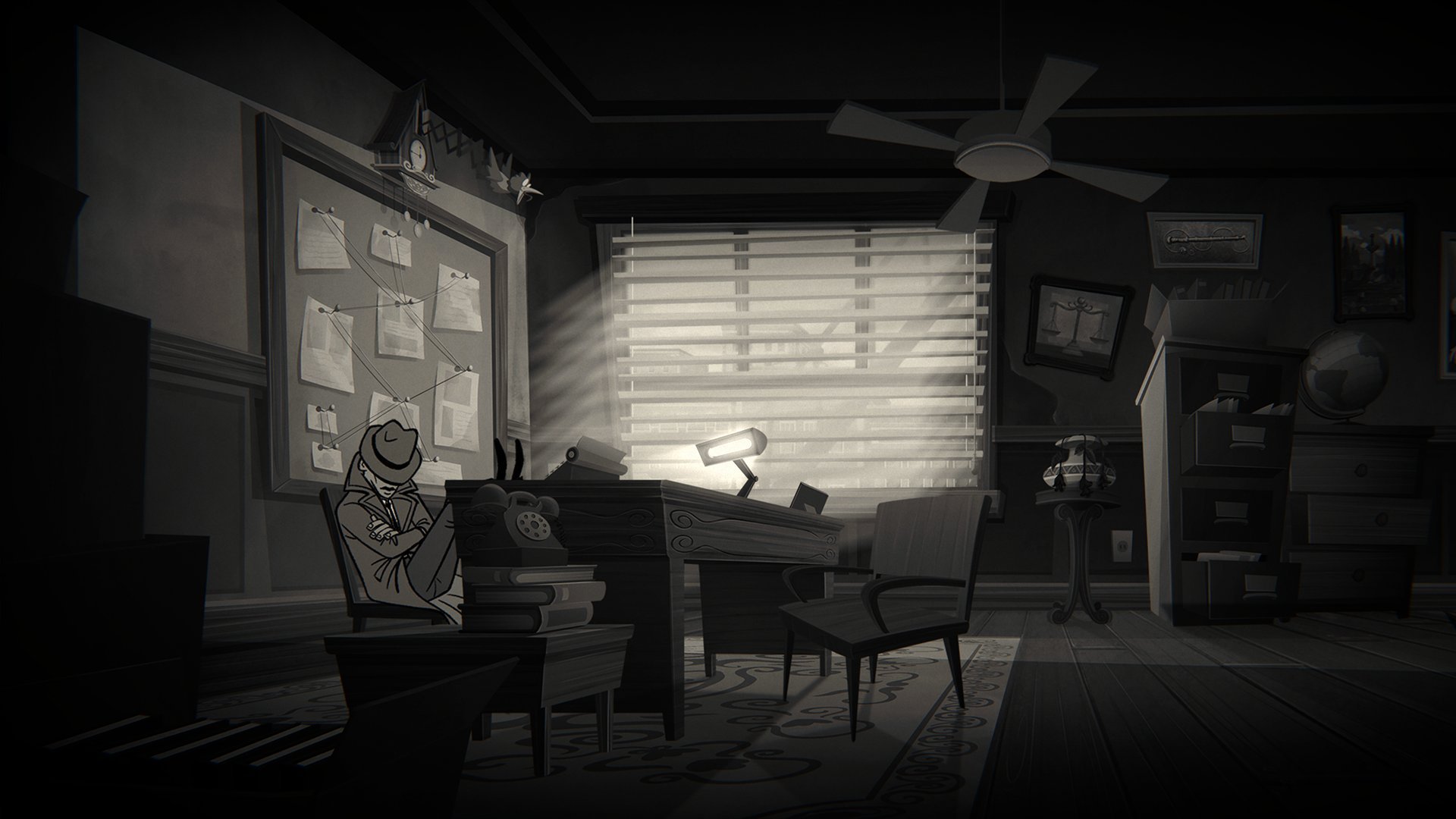
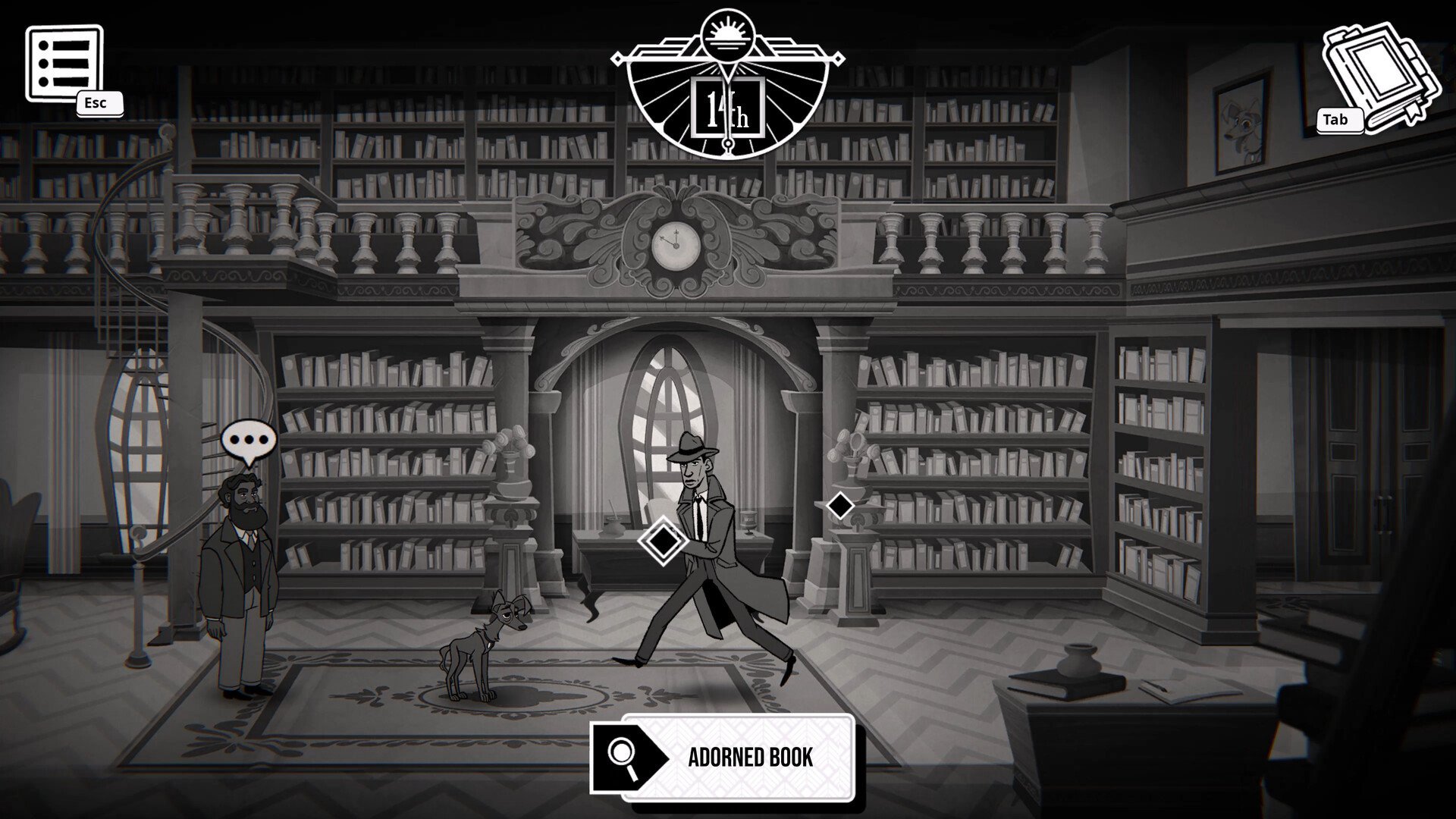
You play as an unnamed detective, awoken in his downtown office, and you only have fifteen hours to track down your suspects and interrogate them before time resets itself. You can play with a controller or – as I did – the mouse/keyboard combo. You move the detective with the arrow keys, but interacting with the environment is completely mouse controlled. When you get close enough to a hotspot, a black diamond shape will appear. Click on this and the detective will comment on it, pick it up if possible, or there might be a pop-up of available actions, like pulling it down or leaving it hanging, such as with a poster on a wall. Communication works similarly with non-playable characters: once you engage them in conversation, you can either ask them questions, show them an item, or leave.
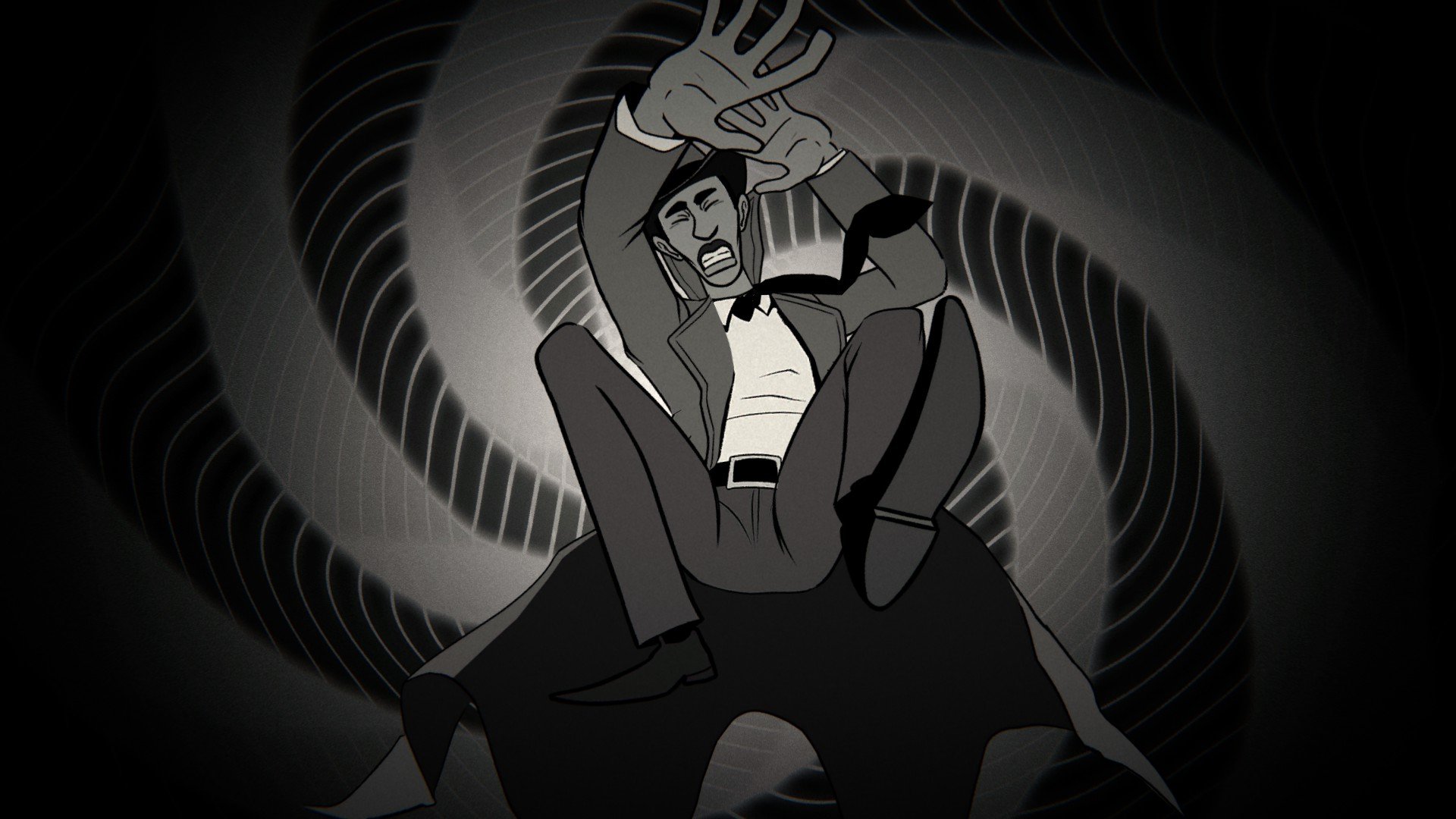
There are many leads to follow, many clues to find, mysteries to unravel, and truths to uncover. But no worries if you miss something; as a time-loop game, after each day has come to an end and you have analysed your progress, you get to start over to perhaps follow up on other roads of inquiry. At midnight, the detective will seem to faint and fall into a vortex of some kind. This is followed by a view of the murdered Brás Cubas, sitting in an armchair waiting for your return, a deduction board on the wall behind him, and a door leading to the next morning. Or, well, the same morning.
In this room, which is a type of limbo, you can decide to add important pieces of information to the board, or listen to Brás philosophising, or skip it all and immediately head through the door. Sometimes leaving is the only option, since Brás won’t always have something to say, and not every loop will deliver juicy bits. That’s the main gameplay objective of The Posthumous Investigation, after all: finding out how you can get your suspects to spill the beans on each other.
When you restart the day, you retain all information you have gathered, though you lose your inventory items. You do keep an overview of all items to be found around Rio in your notebook; first shown as black outlines, then filled in completely once you have picked them up again. Accessed through an icon in the top right corner of the screen – which shows an exclamation mark with every new entry – this journal also contains a list of all suspects, displaying any information you might have found out about them. If there is still something left to discover, those entries will show question marks, indicating there are more things to pursue concerning that particular character.
The notebook also keeps a list of all clues you have found. Separate from inventory items, these clues can’t be used anywhere; you can only discuss them with the suspects to further confront them about things they were hiding or even completely lying about. Each clue is accompanied by a row of empty slots, indicating the number of possible suspects you can ask about it, but it’s up to you to figure out who they are and thus progress your investigation. Not everybody will have something to say about your evidence; in that case, the clues won’t even show up in the list of topics, which I think is much better than forcing a generic “I don’t know anything about that” reply. The slots will be filled with the faces of the correct suspects, and when all are occupied, you know you have discovered everything there is to find about that particular clue.
Unlocking all information about a particular suspect will automatically trigger a confrontation the next time you talk to them. The detective will grill them using statements previously collected from others – the player just has to click through this dialogue – and finally they will admit their true feelings concerning Brás Cubas (though none will actually confess to killing him). You do get a flashback of their latest interaction with the deceased, which will be added to a timeline of his last day alive that you need to assemble to successfully identify the murderer.
Such a confrontation will also prematurely end the day, leading you to assess your findings with Brás in limbo, putting the last pieces of the puzzle on his deduction board and rounding out the investigation into that particular suspect. After this analysis, Brás will automatically send you back through the door into the next loop.
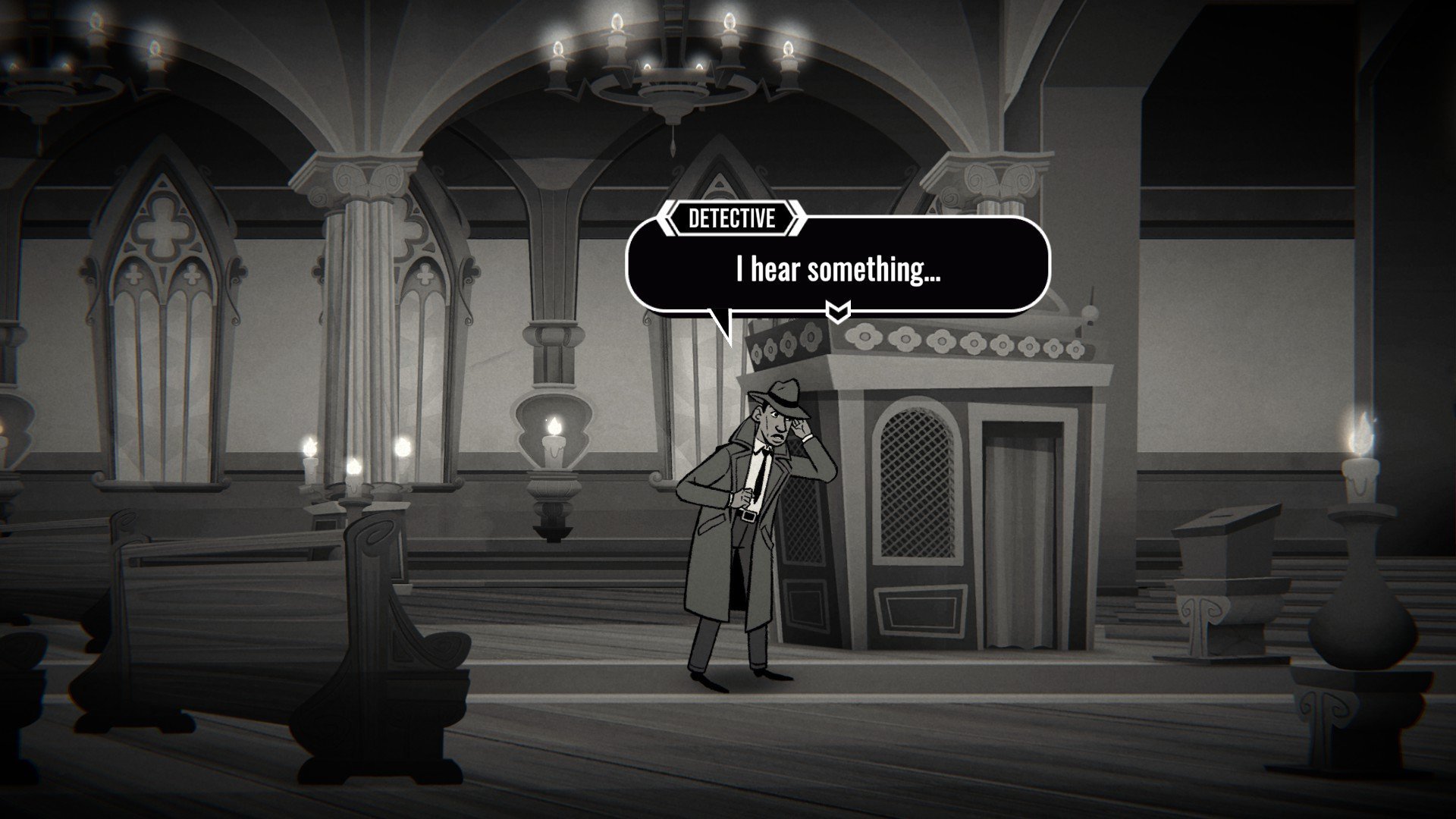
Not counting a handful of extras, like the cops blocking an alley, a messenger boy, a bouncer, some strikers, dock workers, and the proprietor of a café, there are fourteen suspects you can interrogate, each of whom can be linked to Brás Cubas. There’s his sister, brother-in-law, business partner, the local priest, his biggest political rival, and several more. Most likely you will see some of these characters pass by on the street or even get in or out of cars or their homes. They will be a bit more visually detailed, making them stand out among the throngs of other people walking up and down the sidewalks, but you can’t talk to them while they are on the move. Part of the fun is actually discovering along the way who exactly they are and what their relationship is to the victim.
The Posthumous Investigation

| Genre: | Mystery |
|---|---|
| Presentation: | 2D or 2.5D |
| Theme: | Noir, Time travel |
| Perspective: | Third-Person |
| Graphic Style: | Stylized |
| Gameplay: | Investigative |
| Control: | Point-and-click |
| Game Length: | Long (more than 10 hours) |
| Difficulty: | Low |
Each character has their own schedule for the day. They will constantly move around Rio and even interact with each other. A second part of the overall narrative puzzle is figuring out where they are at every given time of day, and who they meet. You can then eavesdrop on their private conversations and gain more information that way, like when one of them is in the confessional with the priest. It’s also possible to manipulate them by finding and offering them items of importance to make them more agreeable in helping your case. For instance, Sabina, the sister of Brás Cubas, has lost the key to the family mansion. If you find it for her in the morning, you can go talk to her at the mansion in the evening; otherwise she will still be there but refuse to talk to you. However, you could also use that key yourself to gain entry to the mansion and search for possible clues there – though you might need help from another character first to point you in the direction of any hiding places.
All 2D characters and backgrounds are hand-painted in hi-res black and white. There’s a graphic novel feel to the aesthetic; not Frank Miller’s Sin City but more cartoonish. You start off downtown, which houses your office, a café, a church, a nightclub, and a pharmacy. As you talk to people, they might refer you to other neighborhoods, like the harbor, the villa district, and the industrial block. Each location has taxi stands you can use, but travelling also costs time.
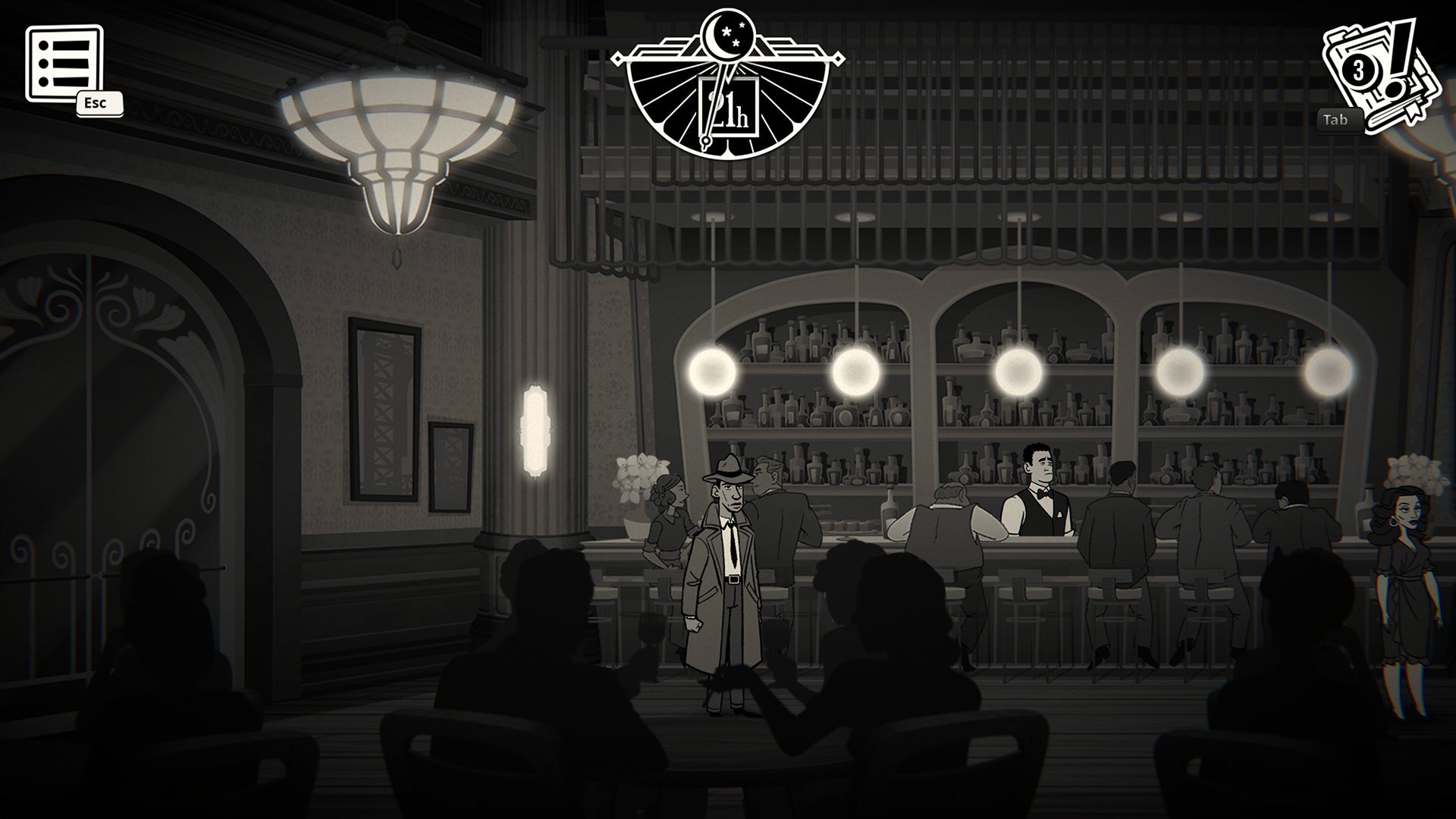
Time is constantly moving forward, even if you stand still and do absolutely nothing. There’s a clock at the top of the screen that displays the current hour, and a moving dial will slowly tick from left to right towards the next hour. Each hour is divided into twelve slots, and it takes about 30 real-time seconds to advance from one hour to the next. It works a bit differently during conversations, to take into account individual players’ reading speeds. The clock isn’t displayed then, but it will pop up to show it has moved a couple of slots with each topic explored that delivered some valuable information. You can’t always ask a suspect about all topics, though, since they have their own schedule and will often break off the conversation because they need to be somewhere else.
While playing, I was continually faced with so many possible actions that I always felt like I was running out of time. With so many suspects to track down, I would often start the day with the intent of following up on one of them, when suddenly I would stumble upon another one, finding myself distracted from my initial goal. When that happens – and it can happen a lot! – it’s up to you to decide whether to keep your focus, or allow yourself to be sidetracked. In the end, you will have to follow up on everything, anyway, so you can really develop your own investigative style, leading to a very organic gameplay narrative.
While it sounds like there’s a lot happening in The Posthumous Investigation, I never really lost track of the available paths to follow, even when crisscrossing my way through all the different plotlines. I found it a perfectly manageable mystery, and easy to pick up again after leaving it for a while. Which I did occasionally, since living through the same loop several times in a row, even as addictive as it is with so many things to do to make each run fairly unique, can inevitably get tiresome after a while. There is some repetition here and there, particularly in getting back your lost inventory items, and the first couple of lines of each conversation you have to click through over and over again.
The game thankfully does automatically skip certain processes by offering shortcuts. There are some puzzles where you have to perform specific tasks to gain access to locations or people, such as convincing the head of the workers’ union you’re on their side. After you have done it the first time, however, during subsequent loops you will have new dialogue options to immediately get past those obstacles. You have to click through these each subsequent time you visit, but at least they’re heavily streamlined from when you meet these people for the very first time. Still, it would have been better if you could just knock on someone’s door and immediately start the interrogation instead of always seeing those same introductory dialogue lines, then being allowed inside and still having to walk up to the character again to manually start the conversation.
The further you progress, of course, the less there is to discover. Or you might wish to completely follow up on each lead before tackling the next one (though some leads are intertwined somewhat). In that case, there’s the option to fast-forward time, which is very handy if you’re waiting at a specific location for one of your suspects to show up there. It’s a double-edged sword, though, because holding down that hotkey, there’s a risk of overshooting your target, and you might lose some precious time that way.
Rio’s streets are filled with jazz music befitting the era, basically playing on a continuous loop. The dominant instruments change depending on the location, but most prominent are the piano, guitar, sax, and of course the double bass, which is often simply being rhythmically plucked Angelo Badalamenti style. (The main menu track took me all the way back to Twin Peaks.) When you find an interesting item or clue, you hear a rewarding jazzy jingle to get you excited for more.
The characters have lots to say but aren’t voiced; they will only sigh, grunt or laugh depending on their emotional reactions. During conversation, they will also take on different stances conveying their feelings: grinning widely when amused, snarling when upset, even brandishing their fists when they get really angry. Outside of conversation are plenty of regular sound effects providing a suitable ambience. Your footsteps, doors opening, cars driving by, the general hustle and bustle of city life, the chatter of other customers when you enter the café, seagulls cawing in the harbor – everything has been done to make this version of Rio as alive as possible.
You can’t die in The Posthumous Investigation, but it is possible to say or do the wrong thing and get knocked out or even locked up, which immediately ends your current run. You can’t really fail in achieving your objectives, either. If you do make a mistake, the day will eventually start over anyway and you can try again. This is one time-loop game that’s not about finding the perfect run from start to finish, but simply about discovering everything that’s hidden, and that makes it far more accessible. There’s no special talent needed, no resource or time management to master. The only real requirement coming into play is perhaps the memorization of daily events. The in-game notebook is very handy for checking out your case files, but it doesn’t include the daily schedules of the suspects. But because you learn everything step by step, I found it quite easy to retain that information without even a personal notebook to keep track of things.
The game only has an autosave function, but in this type of time-loop game, I really didn’t miss manual saves. There is absolutely no reason to reload and try things again, since the game automatically does that for you by resetting after the day has ended. Checkpoints are triggered by changing locations and finishing a conversation, so even if you have to quit mid-run, you won’t have to repeat your last steps.
While there are some occasional typos in the English text, I enjoyed the writing. It’s obvious the developers are lovers of literature and have taken great measures to give their story the feel and quality of a mystery novel. This isn’t a deduction game, however. All suspects and clues are linked together by Brás Cubas himself in the limbo overview scenes. That might make the investigation a bit too passive for some. Actually being able to pin clues on the board and connect them with strings yourself could have made for a fun bit of extra gameplay. After all, these bits are mainly long monologues by the victim explaining every action and motive of the suspects.
Still, The Posthumous Investigation offers a lot more than simply clicking through the story. You really have to think about how to access certain areas and get people to open up to you. There are a couple of small mini-games in which you have to pick the right flowers, or force open a warehouse door with a crowbar, timing your strikes just so, but no great dexterity is required. There’s also a part where you have to follow a messenger to find out who the recipient is, and there’s a gambling character you need to manipulate into placing a particular bet. The long blocks of dialogue might have been even better had they been voiced as well, but fans of crime and mystery novels will surely love reading the gradually revealed secrets of Rio de Janeiro’s elite.
When all secrets have been revealed, you return one last time to limbo to identify your murderer of choice to Brás Cubas. There’s something peculiar going on here, though, since any suspect you choose will trigger their own ending showing them standing over his body. After all, each of them definitely has a clear motive to kill him. You can even reload the last save and go pick someone else. But which one is the true ending? In my opinion, there is an obvious one that rules above all others, a more elaborate cutscene that even has a voice-over for Brás. However, when returning to limbo, Brás still comments that he hopes you are satisfied with your choice as he thanks you for your help, so in that regard it still feels slightly ambiguous.
Final Verdict
Time-loop games aren’t usually my thing. Too much repetition, too much trial and error, too much effort needed to change that one detail in order to get the perfect outcome. Not so in The Posthumous Investigation. This mystery lets you hunt for lots of information, and with fourteen murder suspects, every run keeps offering something new. I found it amazing how very unique every single loop still felt, even after more than 40 of them, totaling almost twelve hours of sleuthing. Yes, there is still some repetition, particularly towards the end, and even with some shortcuts after having done things for the first time, there’s still room for improvement in that regard. But with such compelling writing, it’s a joy to read through the dialogues and uncover all the suspects’ connections to the murder victim. Add in the beautiful noir-steeped monochrome setting of Rio de Janeiro in the 1930s and the era-appropriate jazzy soundtrack that perfectly tie together a great investigation game, and I loved it all to death.
Hot take
No frustrating time-loop antics in the wonderfully designed The Posthumous Investigation, just a deep but fast-paced unraveling of who might have killed Rio de Janeiro’s most influential resident.
Pros
- Total freedom in deciding which leads to follow
- Stylish film-noir graphics accompanied by a jazzy soundtrack
- Manageable time-loop system with new discoveries each run
- A murder mystery worthy of the literary greats
Cons
- Passive reconstruction could have used some actual deduction-style gameplay
- Even the shortcuts leave a bit too much repetition of dialogue
Johnny played The Posthumous Investigation on PC using a review code provided by the game’s publisher.

- Advertisement
- Help support AGH by advertising with us







0 Comments
Want to join the discussion? Leave a comment as guest, sign in or register in our forums.
Leave a comment