
Of Bird and Cage review
- 0 Comments

Unique interactive heavy metal album never gets off the ground
Essentially an interactive two-hour rock-slash-metal opera saddled with various game mechanics, Capricia Productions’ Of Bird and Cage is surely one of the most unique adventures I’ve ever experienced, and likely ever will. It’s a project that really deserves to be talked about with fellow gamers. As someone who enjoys musicals, loves hard rock and metal, and has an absurd appreciation for the hammy theatrics of Meat Loaf, I think I’m the exact demographic this game targets. So it’s too bad I’m not ever likely to recommend it to anyone, since apart from an incredibly cool premise, it offers very little to redeem its astonishingly underwhelming gameplay, painful design choices, and questionable narrative.
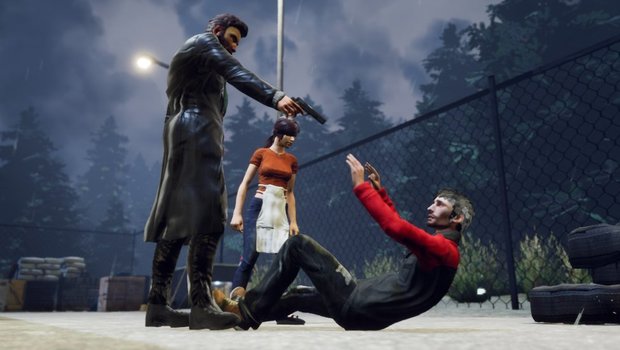
Gitta has the kind of life you wouldn’t wish for your worst enemy. When she was young, her drunk and abusive father would terrorize her and her mother. Now that she’s in her twenties, Gitta has a dead-end job as a waitress in a local diner and is hoping to find her big break as a singer by way of open-mic nights in seedy bars. To deal with her bleak past and bleaker present, she has become addicted to the designer drug GSVB, and regularly lets herself be taken advantage of to score her next fix. To top it off, all the men in Gitta’s life – and I mean everyone, from her deadbeat dad to her dealer, her supplier, her boss at the diner, and even the leather-daddy at the local bar – mistreat and subjugate her. No matter who they are or how they know her, all of them seem to be in some unspoken competition for who can be the biggest scumbag, and it doesn’t take long for it to reach melodramatic comic-book-villain-of-the-week heights.
This gives the game some legs to stand on through its first act. Initially told as a series of flashbacks, we’re introduced to various characters and how each of them mistreats Gitta, setting up her motivation for claiming revenge later down the line. For example, the prologue sees Gitta as a young child, playing in her room with her mother when her enraged father suddenly enters with violence on his mind. Events in this game are timed to coincide with its music, meaning that you are given a finite amount of time to accomplish (or not) whatever is required. As the scene unfolds, an on-screen meter keeps track of the song’s duration; when the song ends, the scene does as well. On a first playthrough, players will almost certainly fail to accomplish many of their objectives, and the game accounts for this through a number of possible endings. Those who want to complete all tasks will probably have to replay individual scenes (easily accessible from the level select menu) multiple times.
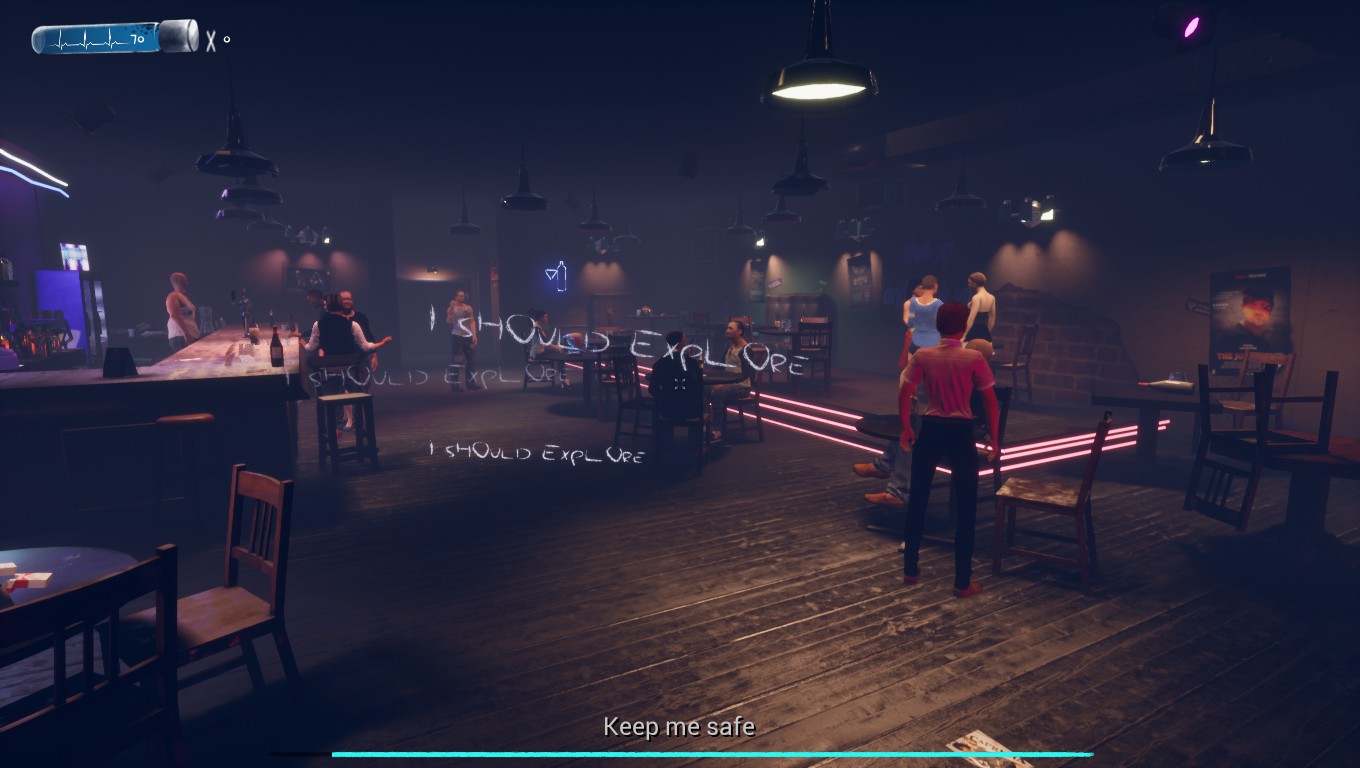
On one hand, this timed approach is a novel idea that could lead to some interesting narrative implications. We’ve seen self-contained timed segments in games before, but to have the entire experience (minus an early tutorial level) be subject to a constant countdown is a bold choice. On the other hand, ennui sets in almost immediately once you realize that your success or failure with individual tasks doesn’t truly matter much one way or another. Something happens (or it doesn’t) and the story moves on to the next scripted event either way, the only variable being which distant ending you unlock once the entire musical has reached its conclusion.
It's nice, at least, that the soundtrack of this interactive rock album is so decidedly in the driver’s seat. It features a roster of contributing musicians from all throughout the music world, perhaps not household names but associated with the likes of Guns N’ Roses, Evanescence, and Epica. The first half of the game features some lighter fare, with more melodic and groovy tracks riding the line of what you would expect to hear in a project billed as “metal.” While heavier stuff occasionally mixes in at this stage, there are also moments that hint at operatic influences and, in one out-of-the-blue instance, I was reminded of Peter and the Wolf.
Though the musical styles vary during these formative sections, all the tracks are well-orchestrated and performed, with high audio quality throughout. The choice to bring so many established musicians on board really pays off, particularly in the casting of Kobra Paige, lead singer of Canadian hard rock band Kobra and the Lotus, as Gitta, who is featured on the lion’s share of tracks. One such track (an immediate earworm and my personal favorite) is the power ballad “Break You,” which literally sees Gitta and Bres, the man who kidnaps her during the game’s first act, duetting with each other through opposing sides of her cell’s locked door. It’s campy and wonderfully theatrical, and a clear highlight that closes out the first act with the kind of song I wouldn’t mind hearing on a regular basis, with a moody groove and pulse-pounding staccato chords during its climax.
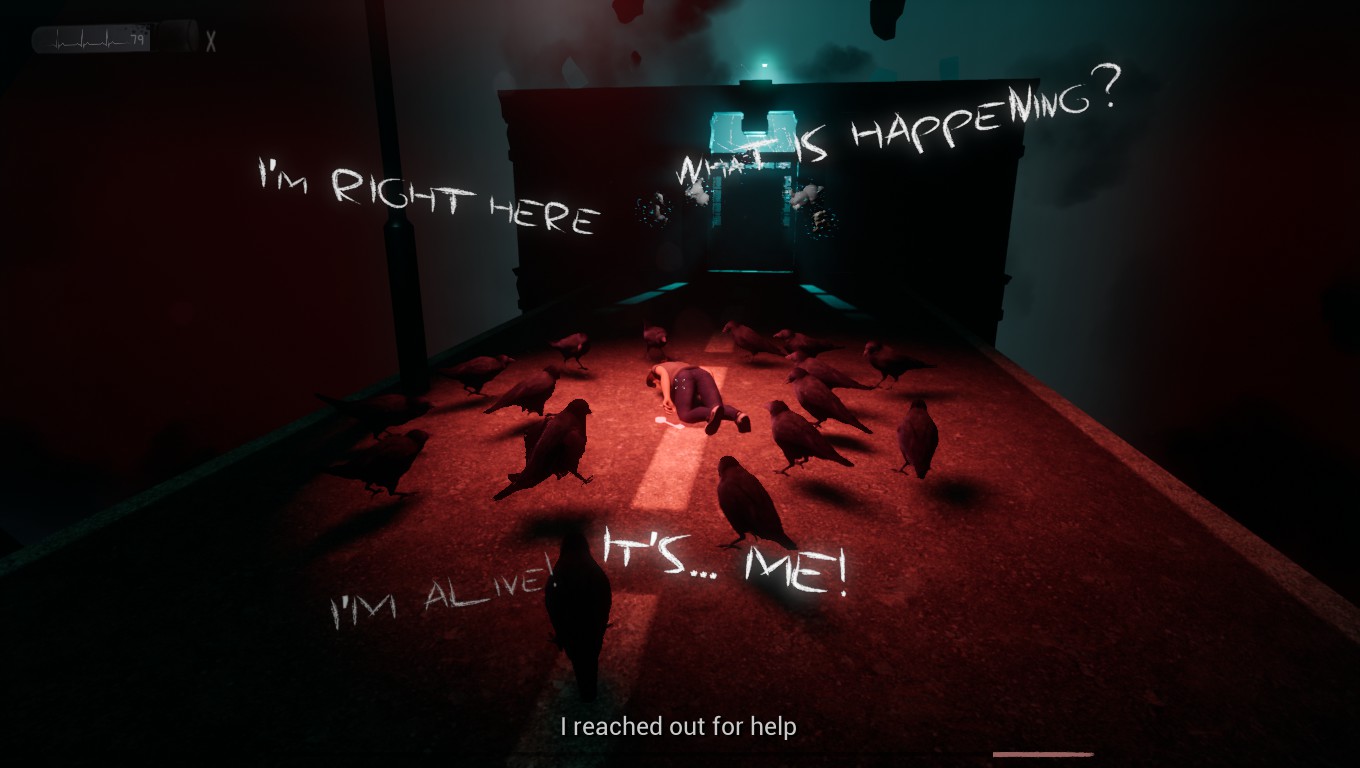
In contrast to this early variety of musical styles, the tracks soon become far more one-note, and not necessarily for the better. As the story moves past the second and into its third and final act, the narrative takes an odd turn, evolving from a hard-nosed drama into a Bonnie and Clyde (or perhaps a more appropriate comparison, Natural Born Killers) tale of violence and revenge. The music follows suit (or vice versa) as the game ramps up to a finale that features one scream-and-thrash-filled confrontation of Gitta with her various demons after another.
The trouble is that it doesn’t feel earned: Gitta’s sudden bond with Bres after he violently abducts her doesn’t so much recall Beauty and the Beast, which the game cites as an influence, but rather an awkward and uncomfortable relationship change in two people that were, moments earlier, trying to kill each other. It may be a bumbling attempt at a love story, or a sudden onset of Stockholm syndrome, but either way it’s a bewildering tonal shift in the drama up to that point. Any revelations or tension – and by extension, all accompanying music – are missing the necessary emotional pathos to make them ring true. As a result, my focus was drawn far too much toward getting through the messy narrative to allow me to savor any musical qualities on display from that point onward.
Still, Of Bird and Cage is an ambitious rock opera with some noteworthy musical qualities, making it a game worth checking out, right? Well, unfortunately the mere fact that it is a game is what proves to be its undoing. To give the player enough things to do as the soundtrack and drama unfold, the developers appear to have desperately stuffed the experience full of mediocre and plain bad game mechanics, mini-games, and scavenger hunts, all while having to adhere to the constant music-based time constraints.
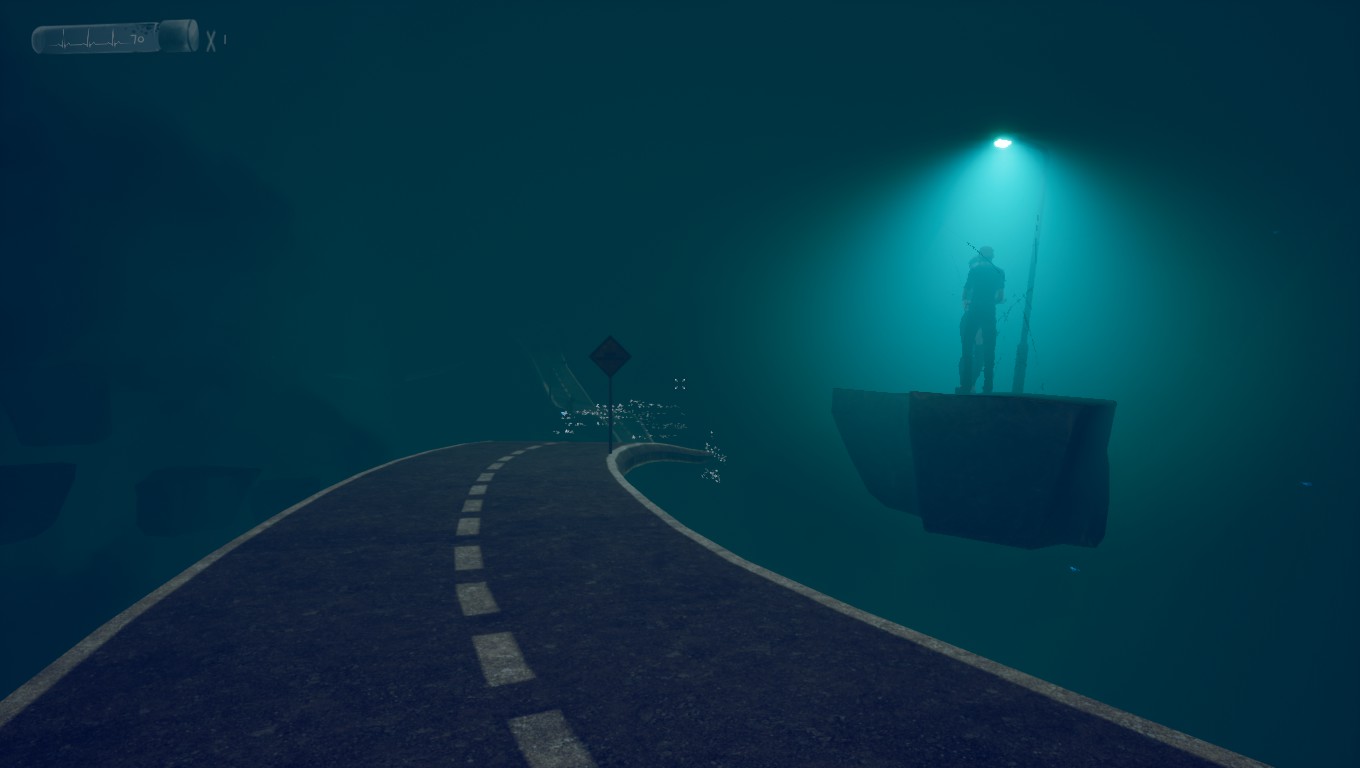
Whether being forced to navigate a dark maze, engage in fist fights and first-person shooting sections, or rush to collect random objects to build booby traps with an inbound police force bearing down on you, there’s rarely that much-needed moment of peace to just sit back and enjoy the music. Worse yet, due to the always-pressing time limit and poor controls, it’s a crapshoot whether you can even accomplish whatever the game wants you to. Scouring an environment for arbitrary objects not only distracts you from the music, but is more than likely going to require several replays to memorize the level layout and get everything done in the allotted time. Elsewhere, it may not be clear how to accomplish a task (“Distract the boss” is far too vague when a timer has just about reached its limit) and timed QTE events – not exactly fun by nature – become far too punishing when multiple inputs are required simultaneously and in different frequencies.
More often than not, each track is accompanied by frenzied and frustrated flailing as you try to fulfill your task, then run out of time and continue the game with yet another objective failed. Rather than being the glue that binds the whole experience together, the gameplay ends up actively undermining what might have otherwise appealed to players, with the once-stressful timer at the bottom of the screen actually morphing into a twisted sort of lifeline indicating when a scene will mercifully end to let you progress to the next anger-inducing bit of gameplay.
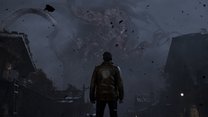
One unnecessary mechanic that rears its ugly head almost from the first stage and continues until the end credits is manifested by Gitta’s drug addiction. As Gitta’s (and your own) stress increases, her need for the next fix grows greater, which plays out in-game by the screen becoming greyed-out and harder to discern, the environment shaking, and people and objects around Gitta seemingly bursting into spontaneous flames. Only injecting the drugs sometimes found around the game world (a bad idea if ever there was one) or locating pictures of birds offers Gitta any momentary relief from her symptoms. It’s just another example of a concept that probably sounded intriguing for story purposes but adds little, if anything, in the gameplay department besides exasperated annoyance.
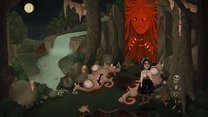
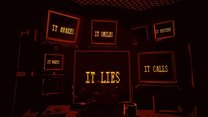
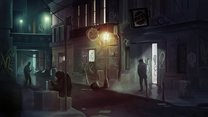
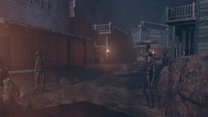
When Of Bird and Cage isn’t driving you up the wall with its gameplay missteps, it’s assaulting you from a different angle with its visuals. I’m by no means a graphics snob, but little of what the game displays is pleasant to look at, and much of it is downright ugly. The game goes for a realistic style, but barely manages to clear the bar set by titles released twenty years ago. There are only a couple of (uninteresting) areas to explore, like a bar, warehouse, and Gitta’s trailer, and most of them make repeat appearances over the game’s two-to-three-hour runtime.
Character models, too, fall short of the mark, and exhibit early PlayStation 2-era looks and animation quality. It’s also weirdly off-putting that each person has exactly one set of clothes; Gitta is dressed in the same diner apron whether reporting for work, hitting up a local club, or getting out of bed after a drug-fueled binger. Still, I can at least appreciate the subtle animated touches when characters emote to the lyrical content of a song, or the way some environmental objects like flames or electrical lights will pulse and flicker in time to the more intense musical cues, adding a music-video-esque feel.
Final Verdict
I try to look for some redeeming quality in even the most disappointing games, but Of Bird and Cage has well and truly bested me in this regard. No matter how you approach it, all roads lead to the simple conclusion that it’s just not fun to play; not the first time through and certainly not for any repeat sessions to try for better outcomes and different endings. An interactive rock album is a great concept, and some of the music is decent – even good when the gameplay allows you to focus on it – but I’m the kind of person who needs more than a single, cursory exposure to a musical project to appreciate it fully. And that’s simply not going to happen here. When the best thing about a game is the soundtrack that would be far easier to enjoy without, you know, the actual game getting in the way, the writing on the wall is clear: Of Bird and Cage is a unique experiment that went badly out of tune somewhere along the way.
Hot take
As a playable rock/metal album, Of Bird and Cage promises Meat Loaf of the finest musical and dramatic quality but dishes up an unappetizing serving of melodious but messy gruel instead.
Pros
- An interactive metal album is a great concept
- Well-executed music that even includes an earworm or two
Cons
- Gameplay is sloppy and unintuitive with frustrating controls
- Bland environments populated by unlikeable characters
- Song-length time limits fit thematically but only serve to further exasperate
- Uncomfortably messy narrative that detracts rather than adds to the music that is forced to carry it
Pascal played Of Bird and Cage on PC using a review code provided by the game's publisher.

- Advertisement
- Help support AGH by advertising with us


0 Comments
Want to join the discussion? Leave a comment as guest, sign in or register in our forums.
Leave a comment