
Mind Diver review

- 0 Comments

Memorable love story behind this stylish sci-fi psychological deduction puzzler is one for the ages
Mind Diver made quite the advertising splash when Lucas Pope (the developer of Return of the Obra Dinn) played the demo and gushed about everything from the art to the movement, mystery, and deduction mechanics. Now that it’s finished, the first title by Danish developer Indoor Sunglasses doesn’t quite deliver the high highs that Obra Dinn managed, but indeed it impresses on just about every other front to create an experience that I won’t soon forget.
Lina Kukanovă went to the Copenhagen police after her boyfriend, Sebastian Klausen, disappeared suddenly the night before. She rambled to them about a party and human experimentation, but was referred to your organization after her memory disintegrated to the point that she couldn’t even remember coming to the station. You are a “mind diver,” a member of a startup company who uses state-of-the-art technology to enter someone’s subconscious to try to recover memories. This is the first time your skills are being used to help a police investigation.
You learn about the case via “the Operator,” a woman who calmly provides you intel and advice through your headset. She sets you free to dive into Lina’s mind, which you do quite literally in a first-person, fully 3D environment. Using the mouse/keyboard or a gamepad, you can seamlessly swim through Lina’s subconscious until you reach your destination. Sometimes this looks like an oceanic environment, with static, permeable projections of Lina and her boyfriend. Other times you swim through a dark portal with flashing tendrils that approximate the neurons of the brain.
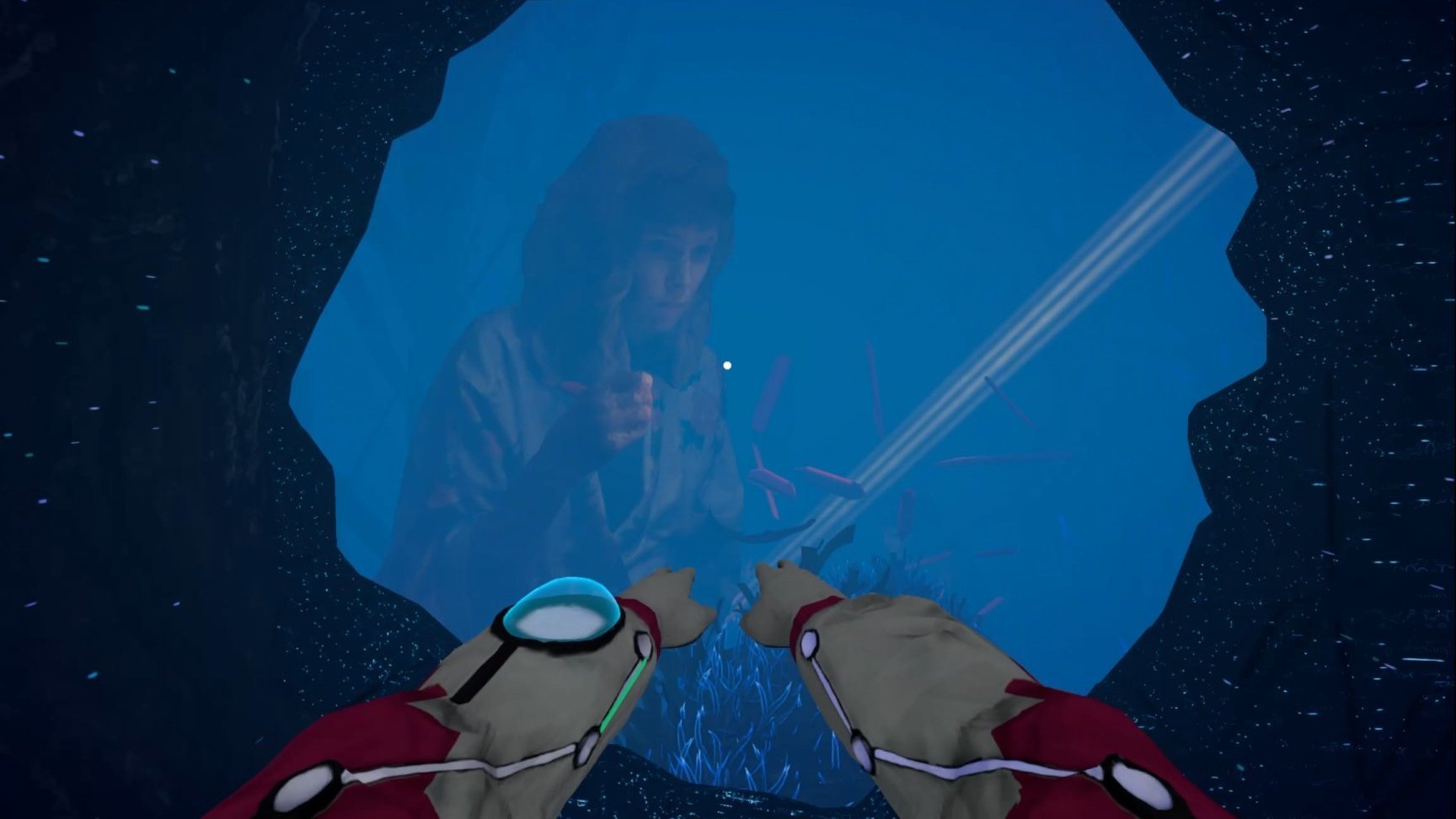
The first place you’ll arrive in Lina’s memory is outside the aforementioned party, right before she went inside. Once there, gravity returns to normal as you walk around a fixed moment in time. The static tableau looks a bit blocky and a bit blurry, like a dreamlike environment that isn’t quite fully formed. There are people mingling outside near a row of bicycles, and front and center are Lina and Sebastian. The Operator will act as a tutorial, guiding you through the game’s basic mechanics and uploading initial data to your gun-like “tool” that you can easily point at relevant details. Anything highlighted in pink indicates there is an auditory echo associated with it. If you right-click on the bicycles, you will hear a brief conversation between Lina and Sebastian as they arrive outside the party. In this scene, there are only a handful of memories to access.
Each location also has memory “holes,” which are indicated by opaque black orbs. For example, Lina is kneeling on the ground and appears to be holding something, though whatever she is holding is represented by a memory hole. Your job is to find that memory and restore it. If you right-click on Lina (who is glowing pink) she will comment about a pair of headphones. As you walk around the scene, you will come across a pair of headphones. They are not glowing pink (nor highlighted in any way), but you can left-click to “store” them in your tool. You will even see a miniature image of the headphones inside it. Now if you return to the memory hole, you can insert the headphones into the scene, causing them to glow pink so you can listen to the conversation that occurred at the time Lina grabbed them. You can carry only one item at a time, so if you try to insert the wrong item into a memory hole (or if you pick up a second item), it will return to its original spot.
There is one other memory hole in this early scene. It becomes clear that Sebastian bumped into one of his friends, who is mentally impaired, and argued with him—a little in English but mostly in Danish (which Lina, hailing from Slovakia, doesn’t understand). In this case, the memory hole that will complete this scene requires storing and then inserting an actual person. Once all the memories have been restored, the Operator congratulates you, informing you that now that you’ve healed Lina’s mind, you can stimulate her brain and swim to another scene—in this case, the party itself.
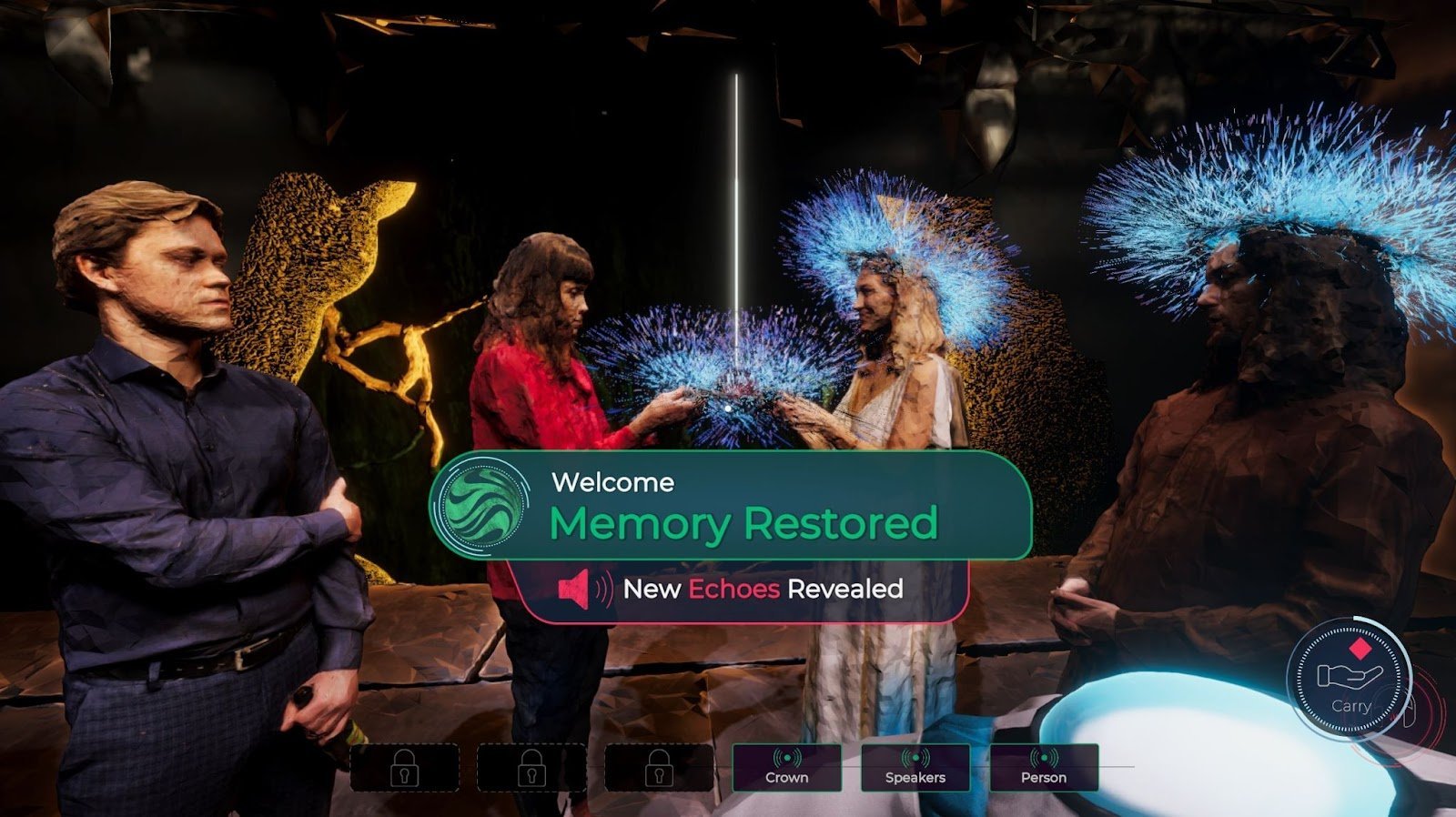
Not surprisingly, you will soon run into people Sebastian knows who introduced him to these mysterious headphones. Everyone is unnaturally excited about this technology but is cagey with Lina about what it does, which admittedly makes things feel like an after-school special about drugs. But Sebastian assures her she can trust him. As you progress deeper into the club, you will learn more about what twisted things happened that fateful night that led to Sebastian’s disappearance and Lina’s failing brain.
Delightfully, however, the majority of your time will be spent in regions of Lina’s memory dating back much earlier in her life. Following a brief look into the day after the party (right before the desperate rush to the police station), you will see Lina, shortly after she moved to Copenhagen, cover a protest as a photojournalist. Sebastian’s bicycle repair shop is nearby, and you bear witness to their meet-cute that eventually spawns a deeply loving relationship. You will spend a considerable amount of time in the past, getting to know these star-crossed lovers through the natural ups and downs of their lives.
Mind Diver

| Genre: | Mystery, Science Fiction |
|---|---|
| Presentation: | Realtime 3D |
| Theme: | Psychological, Romance, Missing persons, Memories |
| Perspective: | First-Person |
| Graphic Style: | Stylized, Low poly |
| Gameplay: | Puzzle, Exploration |
| Control: | Direct Control |
| Game Length: | Short (1-5 hours) |
| Difficulty: | Low |
On the flip side, the science fiction story unfolding in the more immediate past is less compelling. Lina eventually learns what the headphones do, the reason for the impairment of Sebastian’s friend, and how Sebastian’s involvement with this club and its founders are impacting him and the relationship. But even within its own established rules, the plot stretches credibility at times. And its exploration into how technology can expose the worst parts of humanity is predictable and less compelling than your average episode of Black Mirror.
Along the way, as you alternate between the distant and more recent past, you will continue to restore memories. However, things get more complicated the further you progress. Not every puzzle will be as simple as finding headphones after hearing someone talking about them. Deduction is often required, namely picking up on subtle lines of dialogue and environment clues in order to figure out each solution. Scenes will have additional memory holes, many more potential objects to place in them (including plenty of red herrings), and you will often need to take items from one related location to another (via swimming) to fill in the gaps in Lina’s memory. At times you may be juggling four scenes at once, with several memory holes and dozens of potential objects. Blissfully, you can press a button to highlight all potential memories.
An extensive menu system is also at your disposal. You can access your current mission, brief dossiers on your subjects, all memory echoes you have found, as well as logs of everything the Operator has told you. There’s also a general tip sheet on the best ways to explore a scene.
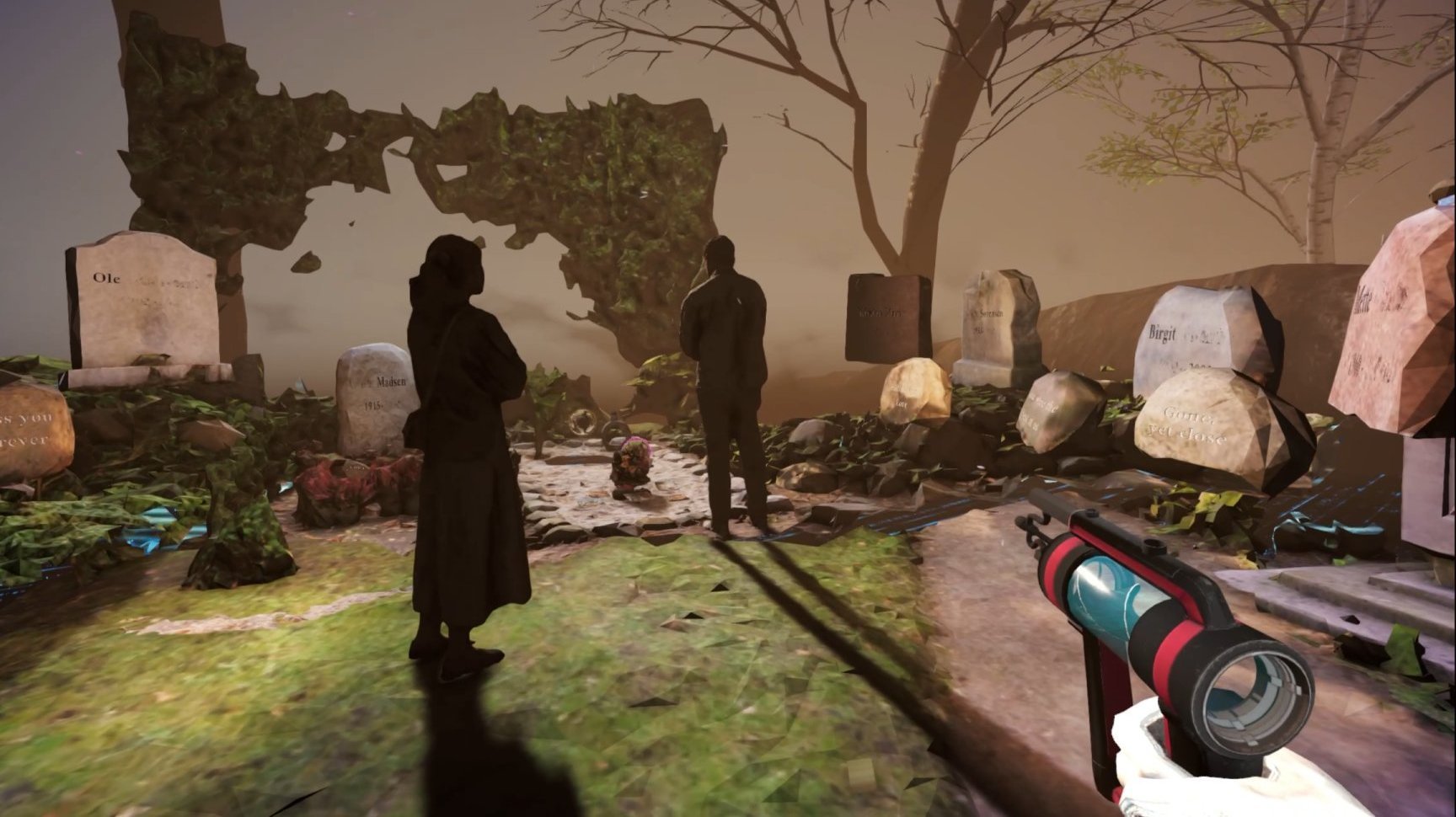
The graphics are quite the trip throughout. Nearly everything you see—whether it’s the crowded nightclub, a carnival, or a graveyard—comes from 3D scans of real people, real objects, and real locations around Copenhagen. Then a technique called photogrammetry was used, which takes multiple overlapping photos to create a 3D image, only here the developers intentionally downscaled it to a low-poly look with imperfect angles and features to give the game its dreamlike aesthetic.
I also quite enjoyed the original unobtrusive soundtrack, which features somber instrumentals that succeed at evoking feelings of both hope and melancholy when the scene calls for it. However, the audio highlight of Mind Diver is the voice acting. Erika Havasi and Sebastian Alstrup (who in real life hail from the same countries their characters do, replete with thick but understandable accents) are phenomenal in their roles, delivering performances that are equal parts tender, amusing, and heartbreaking.
The writers’ authentic portrayal of intimate dialogue buoys the performances. I truly believed these characters not only fell in love, but existed in a real-world relationship, simultaneously messy and beautiful. There are many secondary characters (also voiced well) who help frame the relationship as well, including mutual friends, medical professionals, and especially Sebastian’s mother, who is incredibly dear to him. Admittedly, the central game mechanic was wearing on me slightly by the game’s end, and the final puzzle uses what I feel is a bit of unfortunate moon logic. But I was so sad to say goodbye to Lina and Sebastian.
Jumping (or rather swimming?) back and forth between Lina’s old memories and the memories of the fateful party, you will slowly learn not only what happened to Sebastian, but how his life story and his relationship with Lina led him to this moment. The final scene is simply a slightly more complex exercise in filling memory holes until your job is done and the story concludes, and I’m happy to say that the emotionally powerful ending left me feeling that the couple’s tale ended exactly how it needed to.
Final Verdict
At a crisp four or so hours, Mind Diver shouldn’t take long for those who enjoy deduction-based adventure games. While the puzzles do require some use of the ol’ noggin, those looking for a more hardcore challenge may be disappointed. Yet I have no reservations about giving the game a full-throated recommendation for the story alone, enhanced by the complementary ease of play, cool graphics, believable voice acting and pleasant soundtrack. While the science fiction aspects don’t tread new ground, the love story resonates deeply and is well worth the price of admission.
Hot take
As a deduction-based sci-fi mystery Mind Diver is only moderately compelling, but the true reward is the brilliantly acted fragmented love story, which ranks right up with the best of the genre.
Pros
- Incredibly moving and realistic love story
- Phenomenal voice acting sells every emotional beat
- Deduction-based puzzles are generally satisfying and provide good pacing
- Impressive photogrammetry creates an appealing dreamlike aesthetic
Cons
- Puzzle mechanic can feel repetitive
- Science-fiction plot is derivative
Beau played Mind Diver on PC using a review code provided by the game's publisher.

- Advertisement
- Help support AGH by advertising with us








0 Comments
Want to join the discussion? Leave a comment as guest, sign in or register in our forums.
Leave a comment