
Inner Voice review
- 0 Comments

It’s jump scares, not puzzle challenge, that might leave you talking to yourself in this haunting horror game
While solo developer X Interactive’s first-person horror adventure Inner Voice took me only four hours to finish, its jump scares probably shortened my lifespan by four years. This exploration-heavy game starts off very slow, but soon the weirdness piles up with freaky mannequins and screaming shadow creatures that make you afraid to turn a corner, leading to an absorbing, haunting story with far more frights than answers.
Right from the opening menu and the first chapter title screen, it’s obvious the main character is having a nightmare. In a sense you play as yourself, a detached observer, but you’ll largely inhabit the character of Booker, a man with a troubled past. In his dreams he’s trying to find some redemption from an awful incident that occurred in a South Dakotan town in the year 1900 involving his wife Diana.
Your first-person travels through highly realistic (though sometimes also surrealistic) environments are accompanied by a narrator’s voice – a man named Magnus White – telling you where Booker is going, linking your travels to those of Booker before you. But the relationship between Booker and Magnus deepens along the way, when Magnus stops narrating for the player and instead angrily starts addressing Booker directly, blaming our protagonist for acting irresponsibly and cowardly earlier.
The identity of Magnus is never truly explained, however. Was he a resident of the town as well, returning now as an inner voice in Booker’s nightmare? Perhaps he was Diana’s father, blaming his son-in-law for what happened? Unfortunately, I didn’t find a clear answer, nor was I able to piece together a coherent narrative detailing what truly happened to this town, or to Booker and his wife. Even after finishing the game, it all remains pretty vague.
In any case, Booker himself sometimes comments on what he’s experiencing in the dream, but not as often as you would expect from a main protagonist. Usually he stays silent, and he definitely won’t say anything about the scarier parts of the journey. He remains mostly a stoic character, a shell for the player to move around in. He could be anyone, or no one, his personality shaped largely by what the narrator tells us about him.
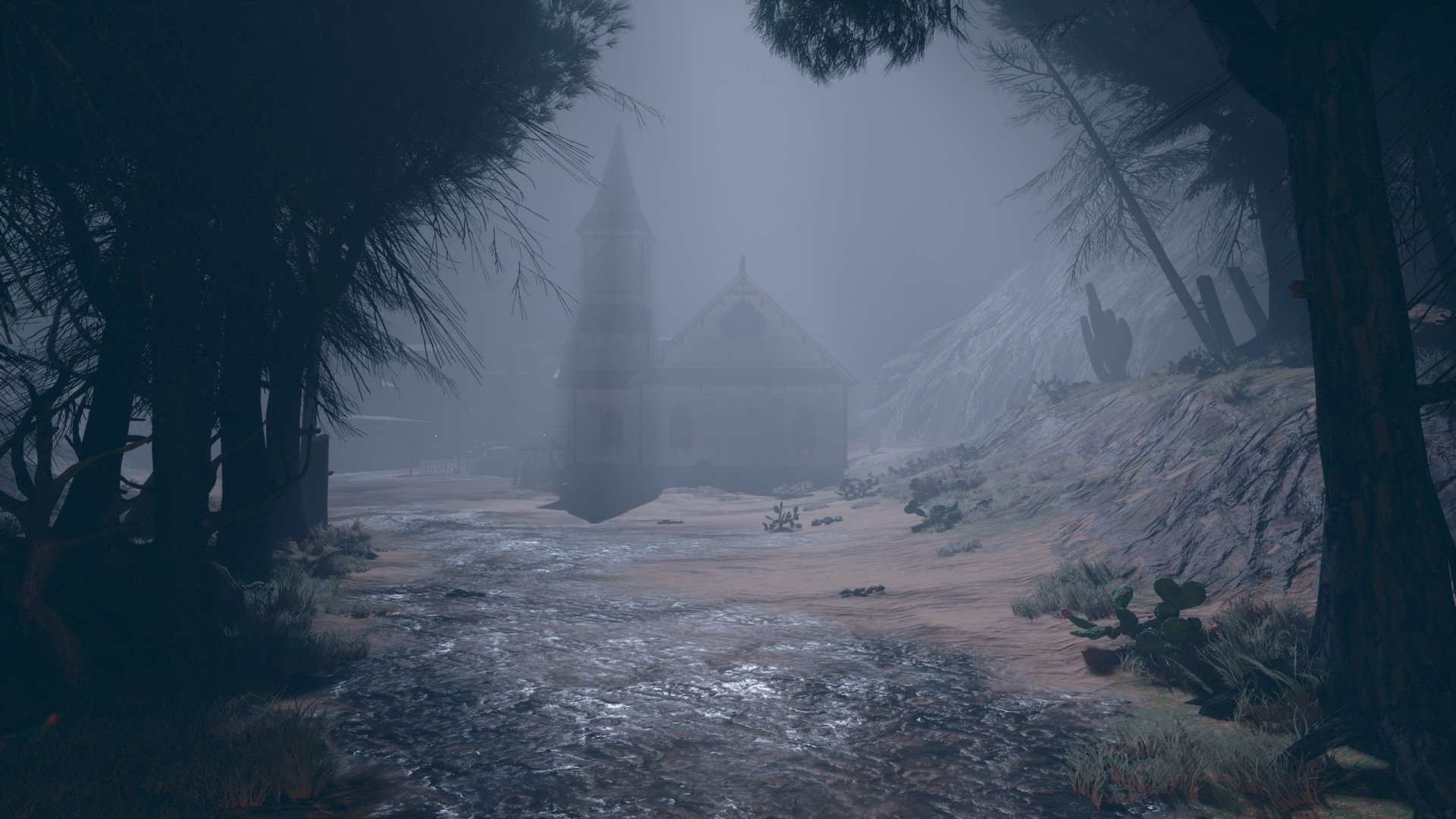
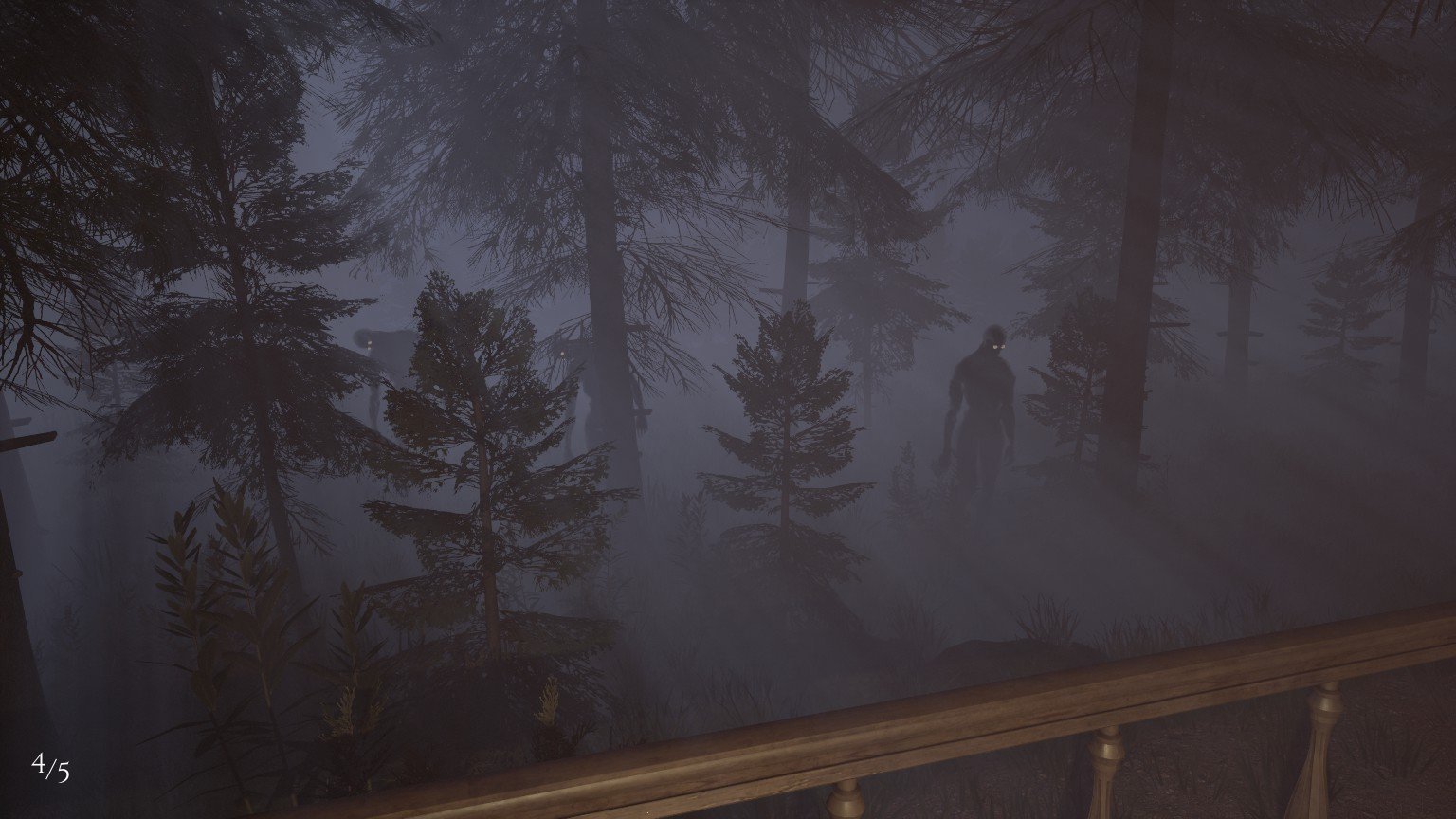
Inner Voice consists of four chapters, beginning with a long forest path leading to the now-deserted town of Brightstone in the dark of night. There’s nothing to do on this path besides walk and take in the scenery: the muddy path under your feet, the dilapidated carriages carelessly left in ditches, dark trees surrounding you. Excellent use of fog and lightning shroud this nightmare world in even more mystery. A murder of crows, unseen, is startled by your presence and takes cawing flight, giving you your first little startle of many. You move from lantern pole to lantern pole, but you always carry a candle that can illuminate your immediate surroundings with the click of a button. This candle is often extinguished during your travels, blown out by gusts of wind or mysterious presences, but can easily be relit.
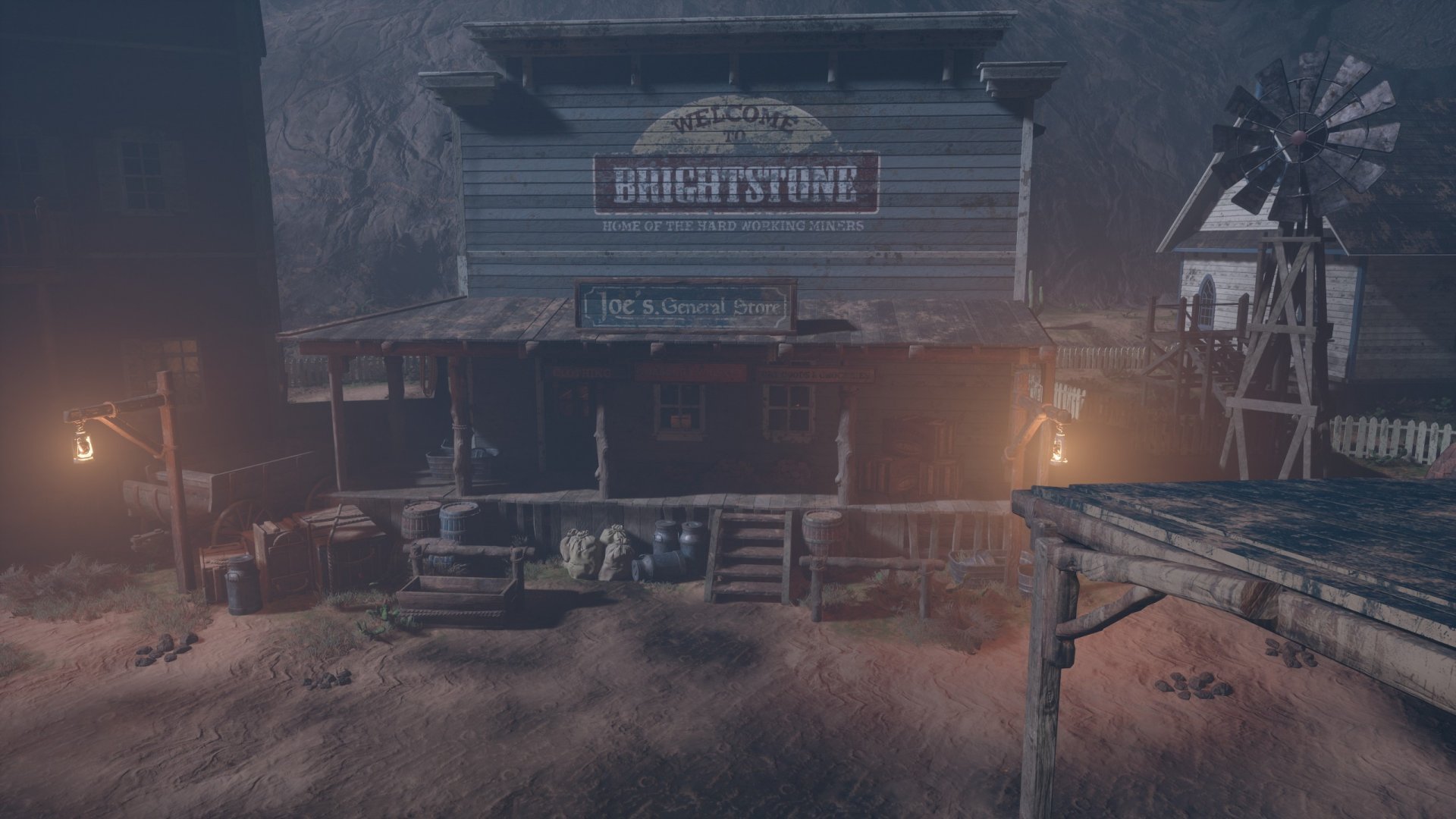
Brightstone consists of a typical old American Midwest-style main street flanked by wooden buildings like a saloon, a general store, a jail, and some regular houses which you can explore. Many doors will open, with a cursor appearing in the center of the screen on top of any object you can manipulate. Other doors are closed, however. Some still show the enter/exit cursor but remain locked, indicating there’s probably a key to be found somewhere, or more likely they will only open after you’ve interacted with everything there is to see and hear in that area.
The game’s dreamlike nature is especially apparent in chapter transitions. The opening chapter leads you into some abandoned mines, where you will reach a doorway into chapter two, taking place in a Victorian mansion. When you find your way out of there, chapter three transports you to a larger village than Brightstone, with sturdier buildings. Finally, chapter four takes you to an island in the middle of a lake. There seems to be a sort of temple or sanctuary here, but in truth this place is a reflection of Booker’s guilty imagination, with mazes and recurring elements from the previous chapters. Ultimately you will have to choose Booker’s destiny out of a handful of possible endings based on a couple of consecutive decisions.
Inner Voice

| Genre: | Horror |
|---|---|
| Presentation: | Realtime 3D |
| Theme: | Psychological |
| Perspective: | First-Person |
| Graphic Style: | Photorealism |
| Gameplay: | Walking simulator, Exploration |
| Control: | Direct Control |
| Game Length: | Short (1-5 hours) |
| Difficulty: | Low |
Controlled with the WASD keys and the mouse to look around, Inner Voice is mostly a game to be experienced rather than played. Primarily you are just walking around; sometimes you’re scavenging for keys or other items needed before a door or a mist-shrouded path magically opens up. Objectives are shown in the top left corner of the screen, telling you without any doubt where you are supposed to go or what you are supposed to do next. Sometimes this leads to backtracking, since there’s a linearity to these goals and they will only appear once you have satisfied the necessary conditions, which could simply be to walk into a particular location.
In the Brightstone chapter, you are expected to follow different sounds from one place to the next. There may be ghostly whispers to track, or the racket of a drunken crowd, or even radios playing somewhere. I highly suggest using headphones in order to better hear which direction these noises are coming from. Even then it’s possible to be fooled. I went into a building searching for a radio, but I couldn’t find it, even though the sound was very close by. Then I realized I needed to go to the upper floor, which couldn’t be reached from the room I was in. I had to go back outside and look for a set of stairs along the side of the building to gain access to the radio.
These audio effects, and others, add a lot to the overall atmosphere, making this dream world feel very much alive. Along with those cawing crows at the start, there are also crickets, the eerie sounds of mannequins and shadows as they stalk you, the occasional clap of thunder, and many squeaky hinges. The music is very fitting as well, with haunting string instruments and piano tracks further setting the mood of this horrific journey.
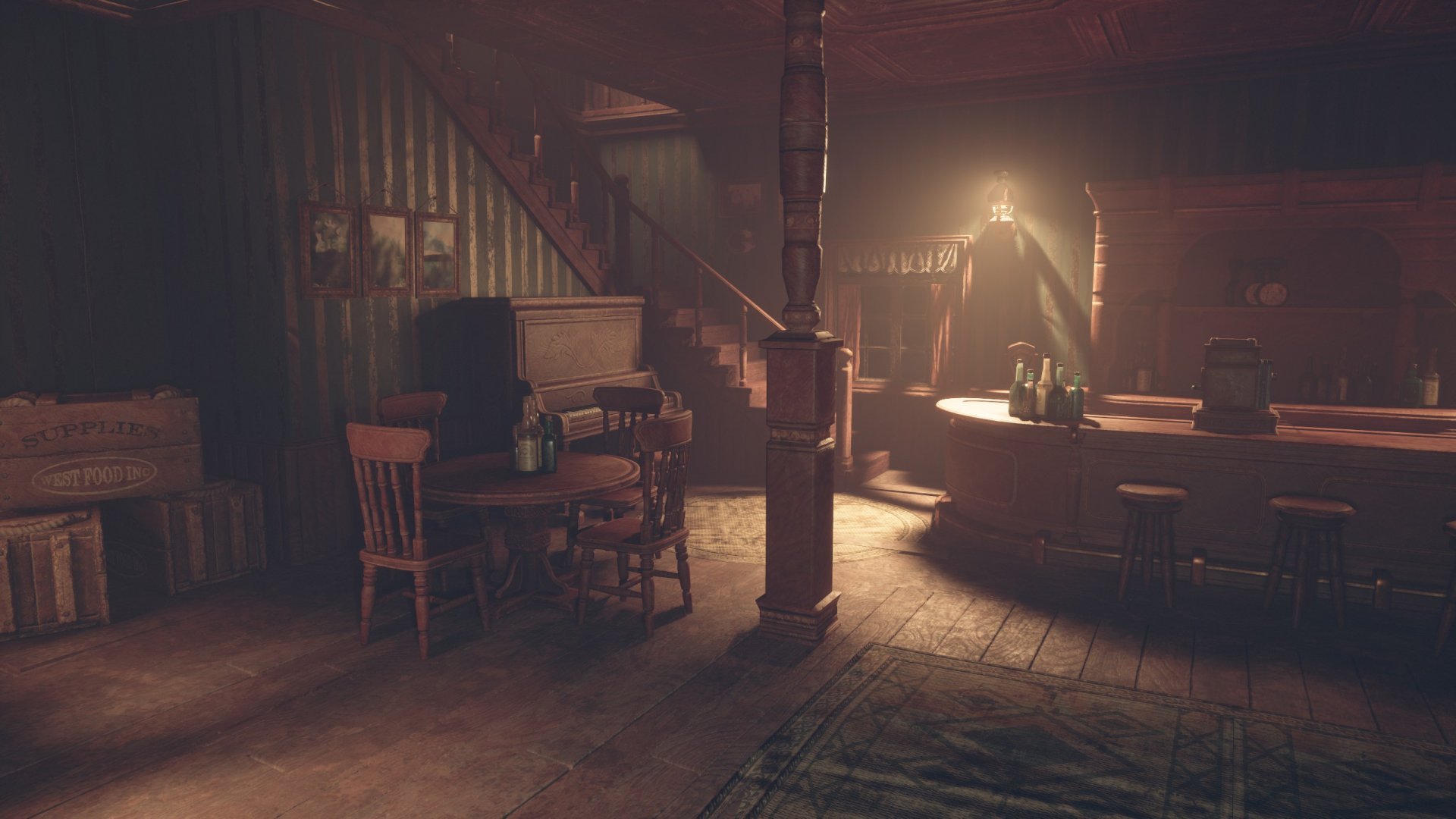
The visual detail of each 3D location is amazing: in every floor, wall, piece of furniture and accessory, the developer has created a very realistic and authentic-feeling, period-appropriate world. But while there is a lot to see and take in, interactive elements are sparse, easily identified by a brighter, almost glowing outline. Most things don’t serve any functional purpose besides triggering a comment from the narrator, or as an arbitrary means for the next blocked-off region to open up. Some items you can manipulate on the spot, like a radio or a lantern you can turn on or off. Other things you can take with you, like keys, a mug or a tray in the saloon, though there’s no active inventory to control. Booker will automatically utilize these tools when needed, so you won’t face any real inventory puzzles, though at times you will need to collect multiple items to complete a particular quest.
There is one puzzle that tripped me up, involving lighting a certain number of candles. You need to figure out how many are required by investigating your surroundings, but it’s harder than it seems because there’s also some misdirection involved.
Often when you enter a new place, Marcus’s narration will provide some small tidbit of information about it, referencing the previous residents. However, Brightstone is a ghost town in Booker’s dream, so you won’t meet any other characters, nor in any of the other locations in later chapters. But something else haunts this realm, and these entities kept scaring the bejesus out of me.
You can’t be harmed in Inner Voice. (It is possible to fall off pathways, but you’ll immediately respawn at the start of said pathway.) Yet the creatures you encounter are just so creepy and responsible for so many jump scares that there is a constant fear of being watched, and possibly even attacked. But these frights are far from cheap tactics. There’s a certain creativity to how they show up and behave, and no two encounters are ever the same. They will run at you in a hallway, or chase you up some stairs, or scuttle erratically across the floor in the distance, or stand completely frozen until you’re close enough.
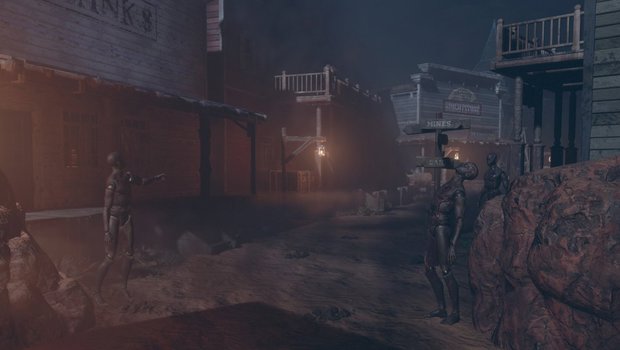
The brown, human-looking mannequins reminded me a lot of the Silent Hill games. Most of the time they just stand there. Often they will even helpfully point you in the right direction. Sometimes, though, they will suddenly move threateningly, walking towards you or changing postures like one of those human statue street performers. Many times you will find them in horrific scenes where they seem to be injured, torn to pieces, or falling to their death. There’s one puzzle in which they are scattered throughout a series of rooms, and you have to pick them up and place them in new positions to create particular setups. I interpreted these mannequins to be victims of the incident that befell the town and harmed Diana, heavily distressed and behaving erratically as a result.
The second type of creature is the more terrifying. Also with a humanoid form, they are black shadows made of very dark, thick smoke, except with a set of strange, solid eyeballs that seem to stare straight into your soul. They are angry beings, constantly spying on you through windows or from behind trees, and are often so fed up with your presence they will run towards you in full force, screaming like banshees, then disappear into thin air as they pass through you. The adrenaline rush I felt whenever they showed up – at regular intervals, with enough time between to make you forget they are there – at times even physically affected me with a case of nausea.
Initially upon release, Inner Voice only autosaved at the start of each new chapter. Thankfully, in response to player feedback, the developer added a bunch of checkpoints within each chapter for a more manageable playthrough. There are still no manual saves possible, however, and there are easily ten minutes between checkpoints – depending on how efficiently you explore your surroundings, of course.
Final Verdict
With a total play time of four hours, this jump-scare-filled horror game about a man stuck in a reconstruction of his past is effectively creepy without being dangerous, the only risk being its nightmare creatures threatening to scare the living daylights out of you. With only a handful of puzzles, most of your time will be spent walking around with limited interaction, taking in the sights and sounds, and listening to the narrator slowly unfolding the story of the tortured protagonist’s past and the incident involving his wife. As you piece together what actually happened to this tragic, turn-of-the-twentieth-century midwestern couple, perhaps you’ll help Booker find that redemption is finally possible – or maybe not, depending on which ending you get. Either way, Inner Voice is a short but absorbing journey through a realistic-looking yet strange and desolate dream world that fans of games like Silent Hill (without the combat) or Layers of Fear should enjoy.
Hot take
Plenty of jump scares make up for the limited interaction of Inner Voice’s environmentally detailed, nightmarish first-person exploration of an early 1900s family tragedy.
Pros
- Creative jump scares get the adrenaline pumping
- Highly atmospheric setting makes excellent use of fog and lighting
- Eerie sound effects and haunting music
Cons
- Fragmented story can be hard to follow
- Audible clues sometimes hard to pinpoint
- Limited interactivity and puzzles
Johnny played Inner Voice on PC using a review code provided by the game’s publisher.

- Advertisement
- Help support AGH by advertising with us







0 Comments
Want to join the discussion? Leave a comment as guest, sign in or register in our forums.
Leave a comment