
Dyer Expedition review

- 0 Comments
Lovecraftian Antarctic adventure is short and lifeless and reaches the end before you know it
For decades, conspiracy theories mixed with urban legends and many works of fiction have fueled the idea that somewhere under the silent Antarctic ice, beyond the edge of human understanding, something waits that mankind was never meant to see. From hidden alien civilizations and buried spacecraft to secret Nazi bases still functioning more than 80 years after the end of WWII, this remote land has been transformed into a symbol of the unknown, a place where isolation, unexplored terrain and ancient mysteries blur the line between science fiction and paranoia.
Based on H.P. Lovecraft’s novella At the Mountains of Madness, Monkeys With Jobs’ Dyer Expedition is one such story. This game follows a nameless man arriving at a base camp in Antarctica to investigate what happened to the titular team after it stopped communicating several weeks earlier. What begins as a routine search-and-rescue operation soon shifts into something far more unsettling as the man ventures deeper into the frozen continent, uncovering abandoned facilities, strange geological anomalies, and mounting evidence that the original expedition uncovered much more than it had bargained for. Unfortunately for players, while this solitary adventure has its eerie moments, the trek is an extremely short one that delivers much less than they’ll surely hope for.
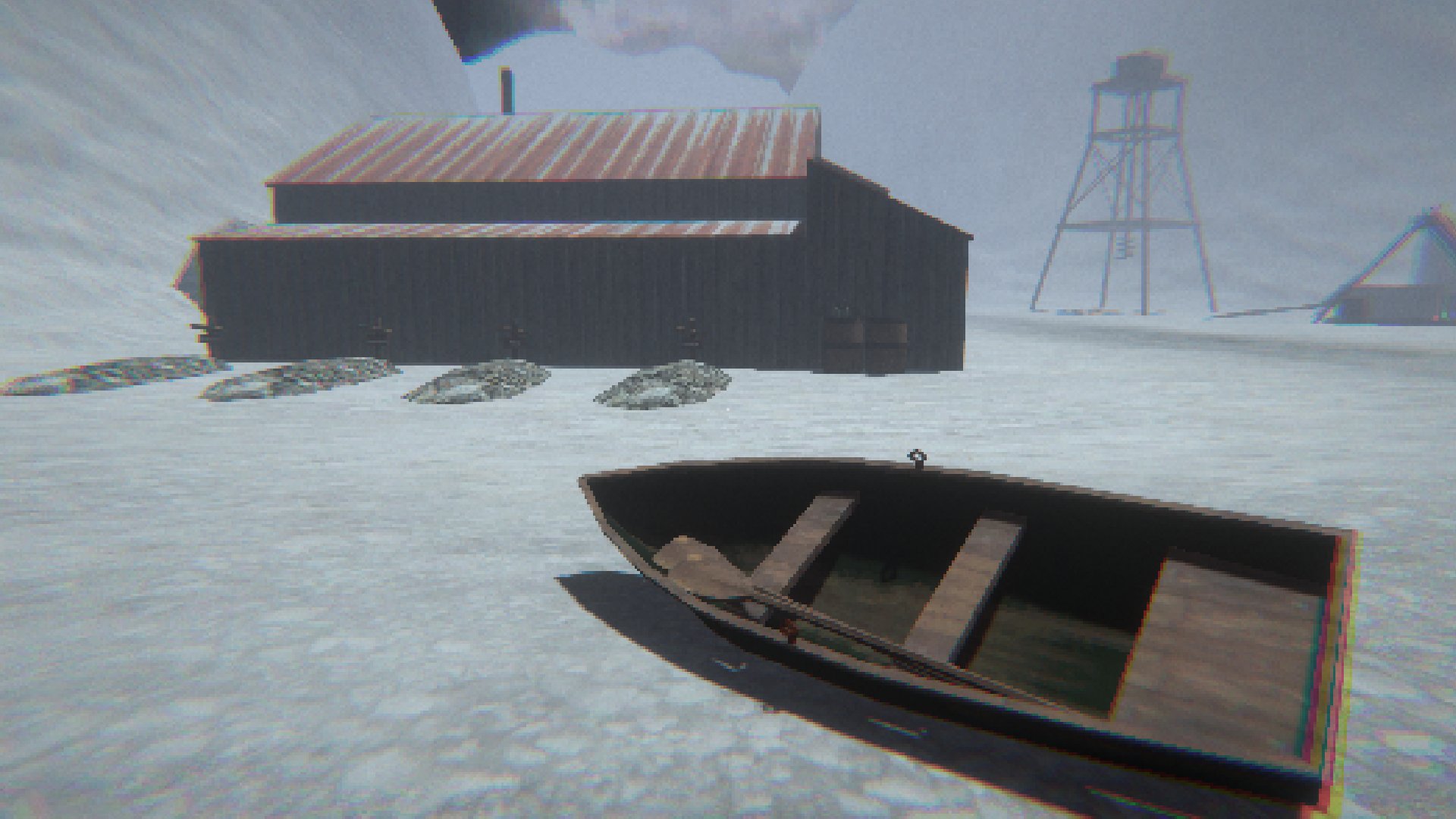
Stepping directly into the nameless man’s shoes, you find four marked graves next to a cabin, and a drilling mechanism on the harsh, cold, windswept shore, surrounded by ominous-looking ice-covered mountains. Everything is presented in low-res 3D graphics, with a “pixelization” option to make things look as blocky as you wish. There isn’t an option to make the graphics clearer, however, which is a pity since the aesthetic here fails to capture the grandeur of the Antarctic vista, or the true scale and, in some instances, the beauty of some vast underground halls and passages you will soon be traversing.
Your only accompaniment is an atmospheric soundscape that does a pretty good job of blending abstract music with weather and environmental effects like ocean waves, wind, and dripping water. They feel like an integral part of each location, as if they were somehow embedded within them, effectively conveying a sense of both curiosity and dread. When you go underground, there is almost always the ambient noise of a hidden mechanism at work. Stone doors not only look heavy, they actually sound like they weigh several tons when they slide open. Metal bars sound appropriately massive and sharp when lowered into the ground, and laser beams emit a highly charged and energetic buzz.
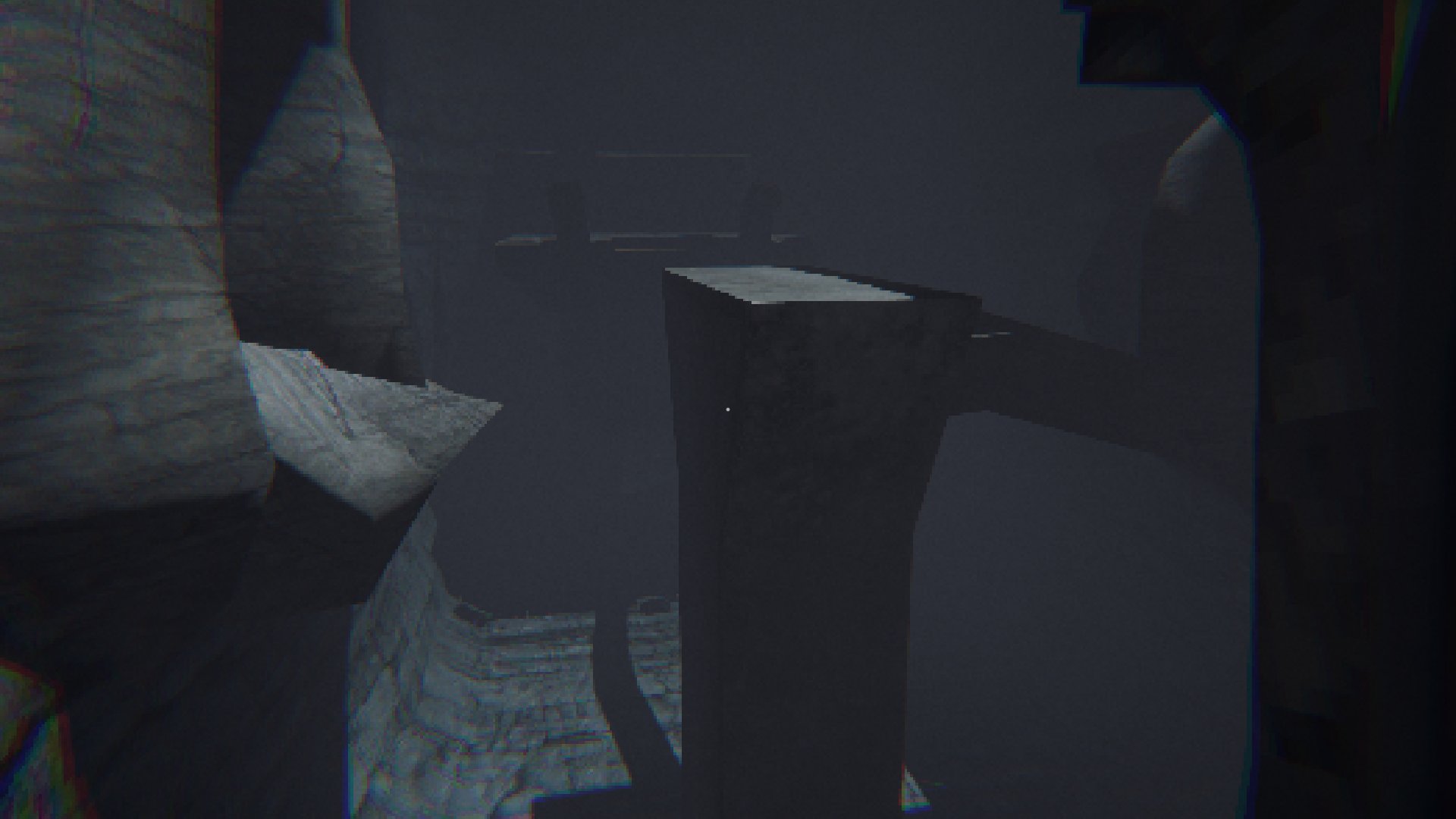
You’re able to move freely through Dyer Expedition in first person using either gamepad thumbsticks or the standard WASD/mouse control scheme. Either works just fine for the minimal demands here, but I chose the keyboard, with “E” used to open doors, press buttons, rotate dials and perform other interactions.
The misfortune that befell the doomed expedition is told through notes found in various spots along the way, from a deserted cabin to the final location deep underground. They were written by the expedition’s foreman at the command of its leader, Dyer. Apart from this, the story is almost non-existent. There is no discernible plot, apart from the motivation to keep moving onward to learn about the expedition’s fate.
Dyer Expedition

| Genre: | Mystery |
|---|---|
| Presentation: | Realtime 3D |
| Perspective: | First-Person |
| Gameplay: | Puzzle, Exploration |
| Control: | Direct Control |
| Game Length: | Short (1-5 hours) |
| Difficulty: | Medium |
| Theme: | Missing persons, Lovecraftian |
| Graphic Style: | Simulated realism |
Nor is there any character development to convey a growing sense of concern in the protagonist. There is virtually no voice acting in the game, except for one instance, though revealing it would spoil the ending. Players are clearly expected to project themselves into the role, as without ever commenting, the nameless protagonist seems devoid of any emotion. If he feels anything about the tragedy he uncovers, he does not share it with us, talk about it, or reflect on it internally. He shows no signs of sadness, fear, hope, regret, hunger, wonder, or curiosity—not one of the many emotions you might expect to feel when stranded alone in such a remote and forbidding place, tasked with a daunting mission.
There are not too many puzzles to solve, but they are varied and well-integrated into the different locations, left behind as remnants of an ancient alien civilization with a technology different from our own. There are logical inventory puzzles, like using a ladder as a bridge over multiple crevasses, or fitting the required item into a recess to lower metal bars. You can only carry one item at a time, to be used nearby, so these obstacles are not difficult to overcome. Other puzzles are more challenging, including rotating dials to open a hidden door, or matching alien sounds and scripts to activate laser beams. There are also one or two lever puzzles, and that’s about it.
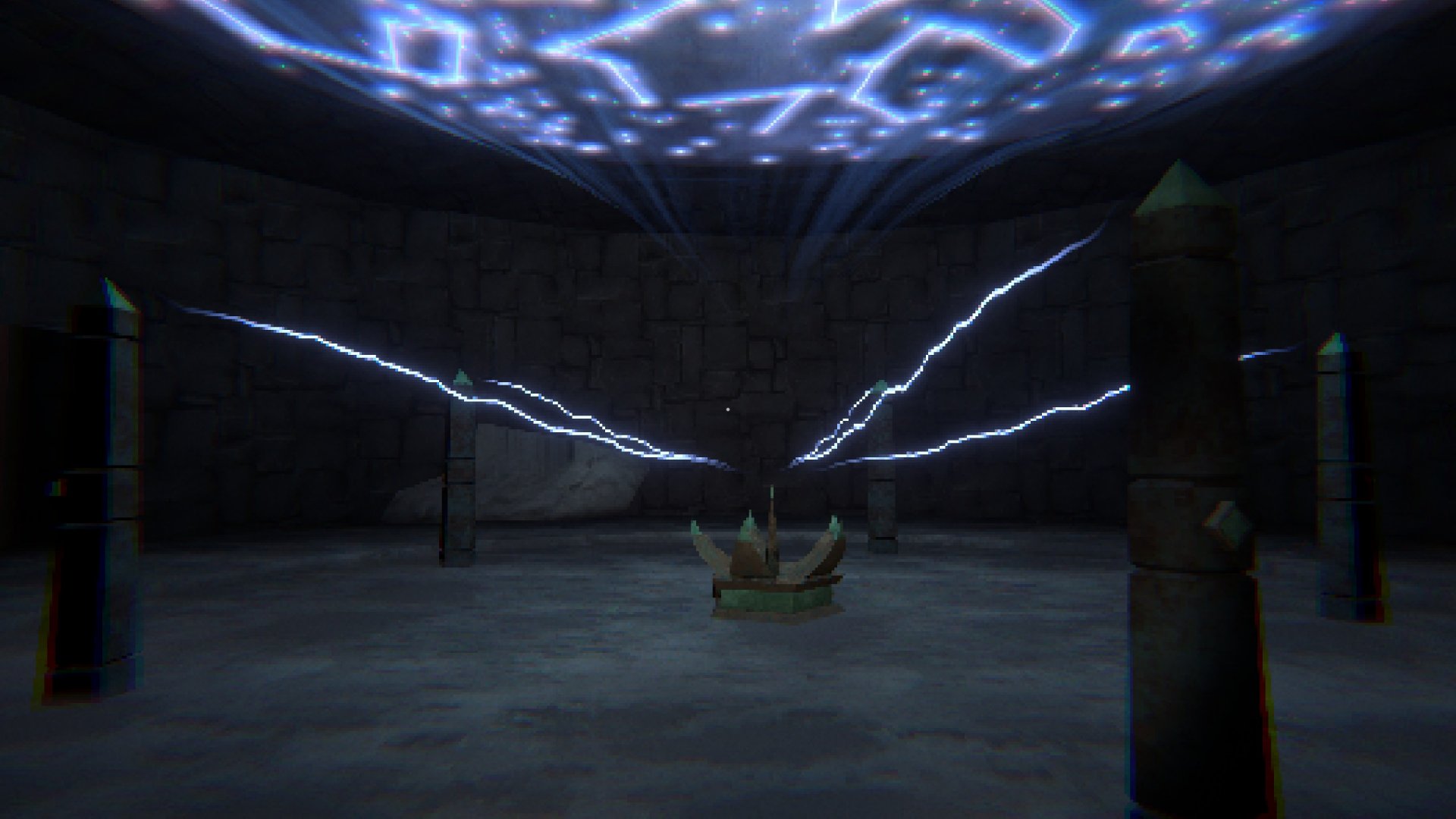
I would have expected more puzzles given the secret location and its alien influence, and indeed there are wasted opportunities to include some additional obstructions. For example, you will find large stone reliefs detailing the encounters of humans with ancient civilizations. Impressive as they are, the reliefs are just...there. They do flesh out the backstory a bit, but there is nothing to move or match, no hidden compartments to open or cryptic writings to decipher. There are some candles you can light along the way, but they do not serve any apparent purpose, especially since you carry an old-fashioned electric torch. Snuffing them out did not affect anything, at least in any apparent way.
As it is, you just move from one location to another in Dyer Expedition, read a note here and there, solve an occasional puzzle, and before you know it the game is finished, the journey ends, and you are left sixpence none the richer—emotionally, philosophically, or otherwise. The ending itself is very short (a bit less than thirty seconds) and rather unceremonious. It does bring the story to a close, but it is low-key, not very exciting, and overall quite predictable.
The game isn’t very scary, either, though it does draw heavily from Lovecraftian cosmic horror. Like many of the author’s own protagonists, the character you play here is a lone explorer uncovering truths that make humanity seem small and insignificant. Other elements reveal themselves as well, such as The Elder Thing mythology, which deals with an ancient alien race that once inhabited Earth and built vast cities—even creating life before eventually falling into ruin. Lovecraft fans will recognise familiar details from his stories, like the recurring character Professor Dyer. There is also the role of the location itself as a mood enhancer: the frozen isolation of Antarctica, where remote ruins and buried structures slowly build an eerie sense of discovery and unease. As you descend deeper into underground complexes, crossing stone bridges and exploring impossible architecture, reality begins to feel unstable, with surreal moments like a walkway transforming into an ethereal path through a galaxy toward a distant, looming portal.
By contrast, however, the gameplay experience plays more like a short puzzle-driven walking simulator than a true horror experience. There is little sustained tension or fear, and although it captures the surface aesthetics of Lovecraft’s mythos, it falls short of delivering the oppressive atmosphere and existential dread found in other adaptations in books, movies or games.
Final Verdict
Dyer Expedition had the potential to be a decent Myst-style adventure, centred on uncovering a mysterious alien civilization in the far south, perhaps even contacting the aliens themselves. It’s too bad, then, that the game does not fully live up to its potential. Its eerie environments do elicit a sense of awe and genuine exploration at times, but these qualities are undermined by a weak graphical presentation and the lack of any real plot, fear or emotional involvement that would do its Lovecraftian influence justice. Add to that an extremely short playtime and you can’t help but be left feeling like it’s a bit of a wasted trip.
Hot take
Dyer Expedition is a very short game that hints at something richer beneath the surface, but in the end feels more like an unfinished sketch than a fully realized journey.
Pros
- The search for an ancient non-human civilization makes for an intriguing premise
- Remote location deep underground provides a strong sense of uncharted exploration
- Puzzles are well-integrated as alien technology
Cons
- Low-res graphics do little to showcase the Antarctic environs
- No actual plot and too few puzzles
- Short, disappointing ending
- Very short play time at less than an hour
Eran played Dyer Expedition on PC using a review code provided by the game's publisher.

- Advertisement
- Help support AGH by advertising with us







0 Comments
Want to join the discussion? Leave a comment as guest, sign in or register in our forums.
Leave a comment