
Apopia: Sugar Coated Tale review
- 0 Comments

Beneath the cartoon eye candy is a darker but rich blend of mini-games and classic adventuring goodness
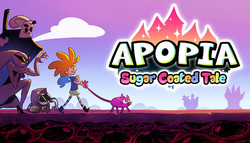
Alice in Wonderland. The Wizard of Oz. The Chronicles of Narnia. These stories tell tales of children who end up in magical lands full of whimsy and wonder. It’s a very popular fantasy trope, and for good reason, as escaping from the mundane real world is a dream many people have, young and old alike. Usually, though, such dreams tend to come with an undercurrent of nightmare. Apopia: Sugar Coated Tale is just such a story, a charming adventure game that has our intrepid heroine navigating syrupy sweet environs to get home. But although suitable for all ages, there’s more to this cartoony romp than first meets the eye. It’s mostly fun and games in this seemingly idyllic kingdom, but not always. In exploring darker themes as well as light, this is a game that not only evokes the nostalgic fantasy of the classic titles that preceded it, but adds its own abundant charm as well.
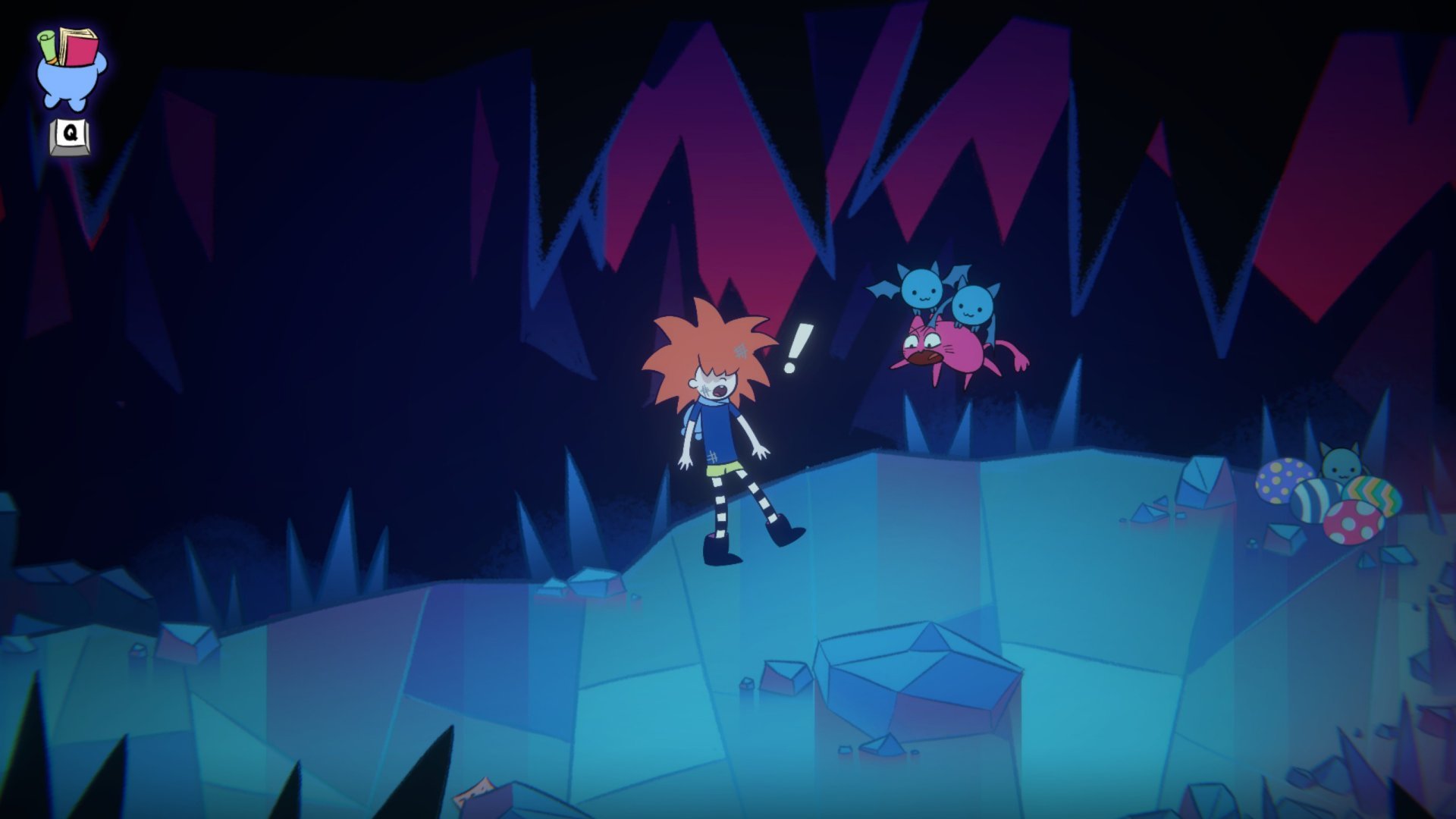
Apopia follows a young girl named Mai as she gets separated from her mother while hiking a mountain trail and literally falls into the land of Yogurt. (Yes, that’s the name of the fairy tale realm.) Immediately she has to escape the collapse of a cave filled with clingy, Easter-egg-hoarding bats, picking up or ignoring a cute but sort of weird-looking pink cat along the way. This is a timed side-scrolling sequence and it took me a couple tries to get to the end, but it shouldn’t be too hard for anyone to get through once you learn the layout of the paths. It’s certainly an early indicator, however, that this won’t be an entirely traditional adventure.
After her harrowing ordeal, Mai and the cat (whom she names Nico) enter the land of Yogurt proper. There they meet many eccentric and whimsical characters, all of whom are rabbits of varying shapes, sizes, and colors. The first encounter is with a blind hulking figure cloaked in black, who tells Mai that cats are forbidden. (In fact, non-rabbits of all kinds are.) Of course, Mai is human and Nico is a cat, so even after lying her way out of this early predicament, Mai needs to be careful as she and her companion traverse the land.
A trio of some of the most adorable rabbit children you’ll come across are encountered soon after, all dressed up in costume, and it’s up to Mai to retrieve their various “swords” so they can help her cross a chasm, based solely on cryptic clues they provide. Moly’s Musketeers, as they call themselves, are defenders of their group’s namesake princess and are more than willing to help Mai over a chasm in exchange for her assistance. They, along with Princess Moly herself, continue to be instrumental in the young heroine’s attempt to find her way home. Or not, depending on which ending you get as there are multiple ways to finish the game.
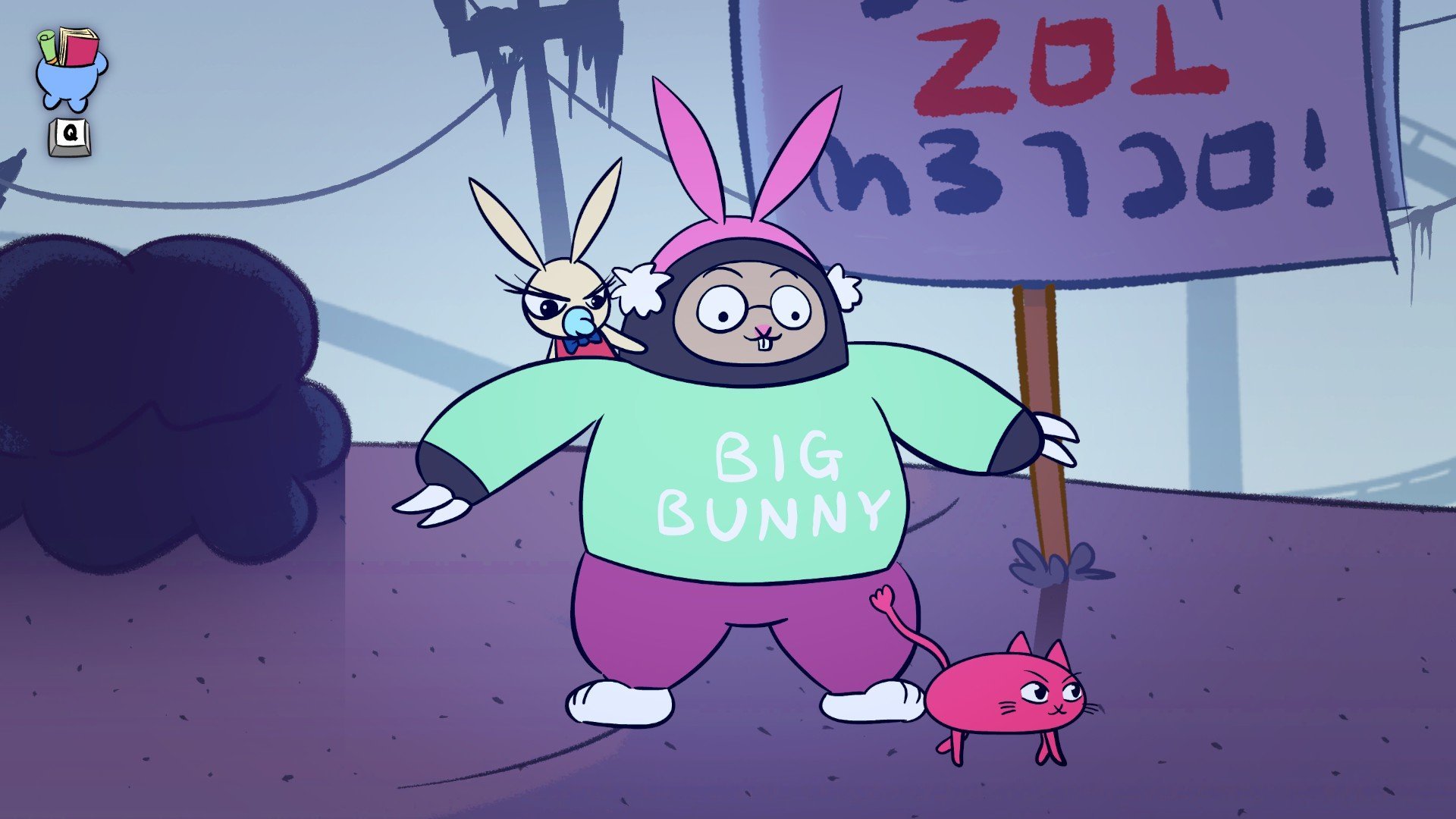
The three take Mai to the Big House, guarded by the huge, brutish Bigg Bunny and the mouthy yet small Littoo. They block her way, and even try to grab her to take her to the nefarious Boss, whom we never meet until the last chapter but has become the dictator of Yogurt after kicking the princess out of the castle. The Boss has three rules: no non-bunnies allowed, no entering or exiting Yogurt, and absolutely no crying. Breaking any of these commandments is punishable by the ruling three: Leo, captain of the Black Guard; Nana, the former lead singer of the Royal Choir; and Mikki, the tech genius. They represent the strong arm of Boss, but they also used to be great friends with Moly, which makes their betrayal of Moly’s trust hurt her badly.
With the aid of her newfound friends, Mai and Nico disguise themselves as rabbits to better blend in. Escape, however, is easier said than done as the exit out of the land is barred by a locked gate. The middle act of Apopia deals with getting three CD-Keys that act as a passcode to get through the gate leading out of Yogurt, but that’s just a small chunk of the fun our heroes have before they reach their goal.
Along the way, Mai decides to help Moly regain the throne, and in doing so makes even more friends throughout her journey, such as a blacksmith and several fans of the talented Nana. Not everyone is happy to see or help you, but whether friend or foe it’s an interesting, eclectic cast, including a rabbit that can fix anything (and I mean anything), a juggling clown that hates being interrupted, and a Dungeons & Dragons role-playing group that needs a new six-sided die.
You’ll usually play as Mai, but there’s a short stint where you play as the talking pink cat himself. Unlike the ever-upbeat Mai, Nico is a bit of a jerk. He’s sarcastic, and quick to toss one-liners out at others. Which, to an extent, makes him a bit endearing but can wear out pretty quickly, so it’s a good thing that his playable segment isn’t long, especially since there’s very little difference in the play style of the two protagonists. Once they’re reunited, the game reverts back to Mai until the end, and Nico does ultimately prove to be a stalwart ally.
In many ways Apopia is a classic-styled adventure game, and yet there are quite a few elements that are not. The controls, for example, use the keyboard (or a gamepad) almost exclusively. You’ll move around using either the WASD or arrow keys, pressing the Shift key to run, and interact with people and objects in the world (as indicated by popup icons that appear when you get close) by pressing either F or the Spacebar. In close-up screens, you can use the mouse to move the cursor around, but for the most part it’s back to keyboard. I used the WASD/Space combo as I’m used to playing games with my left hand, but I like that the game gives options.
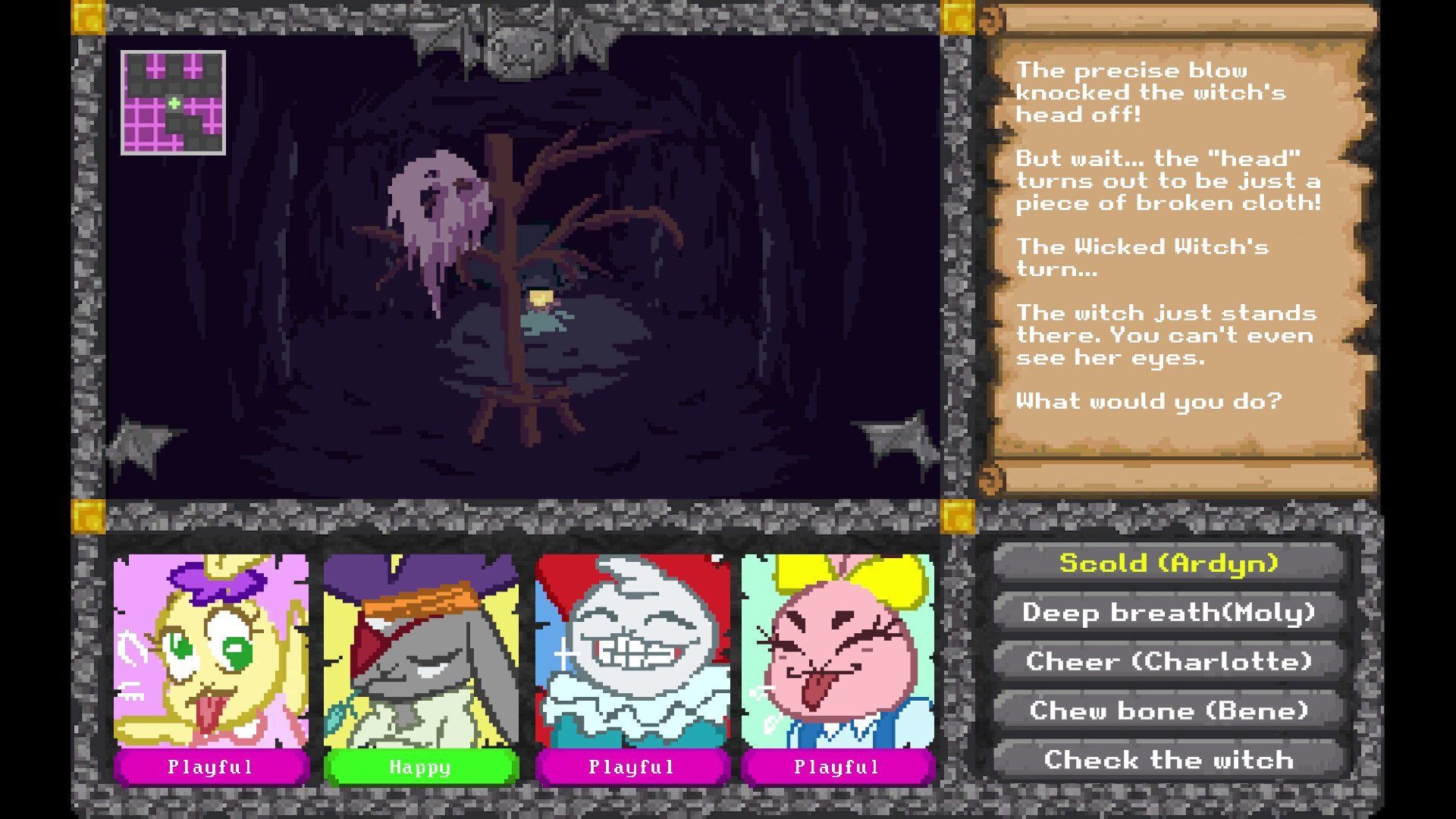
Presumably the reason Apopia doesn’t use the mouse is that it’s filled with mini-games. From rhythm-based activities (one of my favorites) to a sort of Flappy Bird homage and beyond, there’s plenty of variety here. Another one I like is a first-person dungeon crawl reminiscent of old titles like Dungeon Master, complete with enemy encounters that may or may not require the use of combat. (Rest assured, all of the cave encounters where battle occurs are purely turn-based to let you take your time figuring out which option to choose.)
Apopia: Sugar Coated Tale
| Genre: | Fantasy |
|---|---|
| Presentation: | 2D or 2.5D, Side-scroller |
| Theme: | Other worlds/dimensions, Journey, Lost |
| Perspective: | Third-Person |
| Gameplay: | Puzzle, Quest |
| Control: | Direct Control |
| Action: | Arcade, Rhythm, Timed events |
| Graphic Style: | Cartoon |
While some mini-games need a bit of dexterity and a few required several attempts for me to complete, in general they are pretty easy to get through. I’m normally not one to argue against the inclusion of mini-games in my adventures anyway, but one thing I really liked about the extensive use of them here is that there is little repetition. There’s enough variety to keep things fresh, and they’re nicely incorporated in ways that make sense within the narrative. One example has you running from a mobile machine that’s an obvious Star Wars AT-AT reference, which doubles as the arcade wherein you need to do battle with Mikki in a virtual baseball game challenge that’ll reward you with a prize for defeating her.
Of course, mini-games are not the only type of challenge in Apopia. There are a number of fetch quests and inventory puzzles you’ll have to solve to proceed further along in your adventure. Finding the Musketeers’ swords involves several steps, such as pairing a verbal hint with rhyming roses, repairing a broken vending machine using color-coded clues sprinkled throughout the area, and some very simple button-mashing to pry the third one out from under an obstruction, twinkling brightly to indicate its presence.
There is an inventory you can freely open up, but you never actively use the items you’ve collected on anything. When someone or something requires the use of one, you’re automatically given the opportunity to use it then and there if it’s already in your possession. It’s pretty much automatic, so there’s no need to combine items or even to figure out how to use them ahead of time, though the solutions are so straightforward that I had worked them out on my own anyway.
The synthesized music accompanying your adventure is often either whimsical or emotional, depending on which area Mai is in, and is so good that I bought the soundtrack to listen to on its own. There is no voice-over for any of the characters; in place of actual language is a sort of Peanuts-style sound effect that can get a little tiresome. Fortunately the volume slider for it can be turned down, even all the way to just follow the subtitles instead.
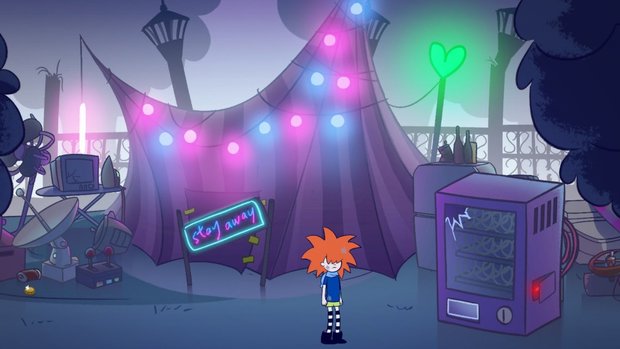
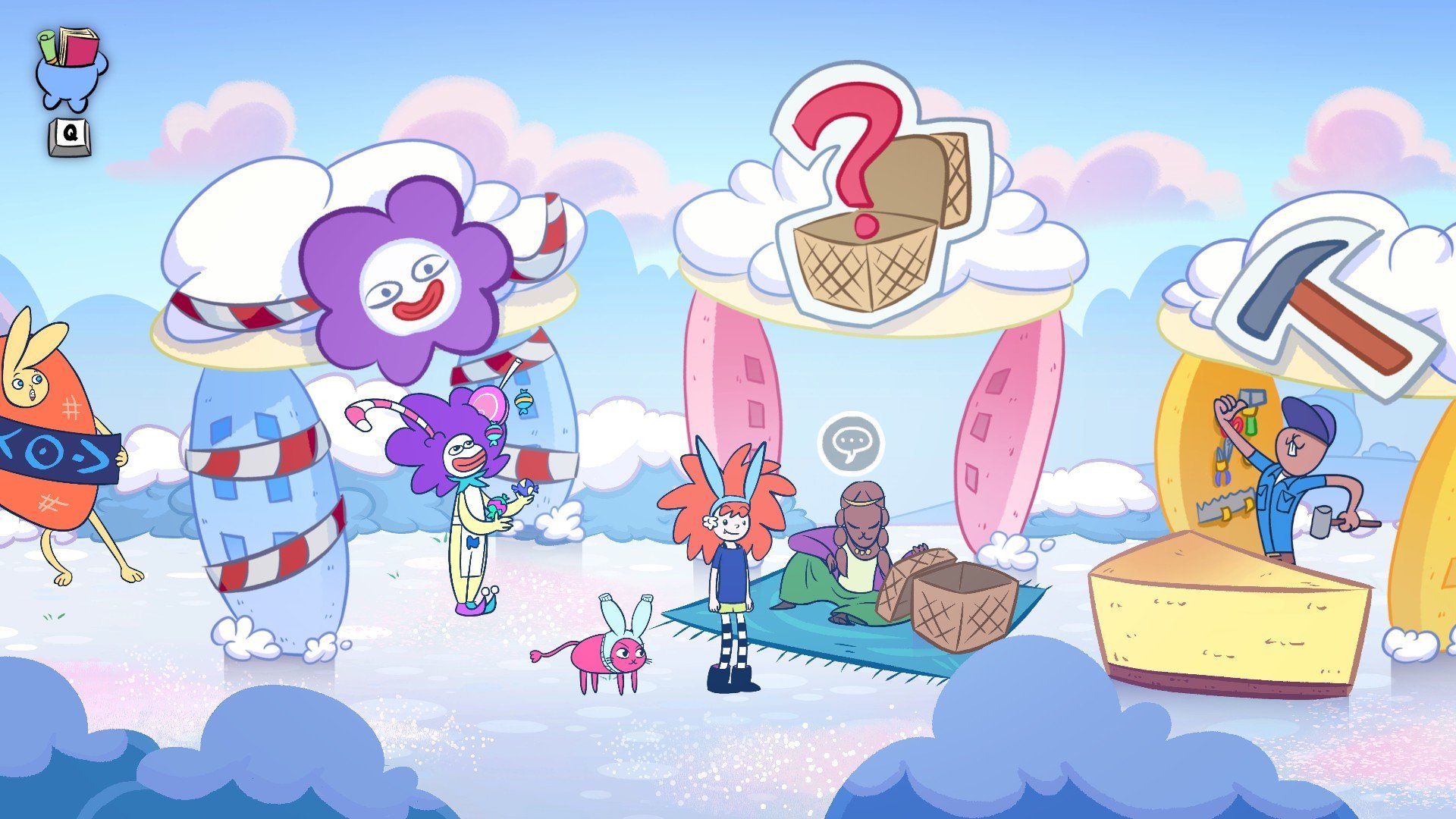
The look of Apopia is usually one of distinctly drawn and charming critters and environments. There is a distinctly cartoonish vibe to the land of Yogurt, and it shows not just in the bright, vivid colors of the hand-drawn artwork, but in the animations as well. The design here is well done and conveys the essence of a classic animated film. I very much enjoyed the whimsical look of the fairgrounds scene in particular. It is filled with unique and interesting characters and displays, the ground layered with an almost cloudy dusting of snow, feeling like a wintery wonderland. As a gamer, I also really liked the arcade backdrop, which is packed with game machines, including a big display where two rabbits battle each other for the pleasure of others. It even has an energy drink dispenser, which is a must for anyone who wants to spend hours playing.
But as fun as the backgrounds are to look at, it’s the closeups and animations that really pop. The reveal that Moly has most assuredly not skipped arm day gives off a Popeye vibe as her muscles flex and strain. Animations have an almost choppy feel, but they work here. A good example is when Moly and her Musketeers ride an improvised rail cart into the cavern system. This leads to a cartoony sequence as the cart picks up speed and our intrepid heroes’ bodies rubber-band backwards from the g-force.
This game is so intentionally sickly sweet to start that I felt like I developed several cavities while playing the first several hours of the nearly seven it took me to reach the end. However, the last hour or so really turns the narrative on its head to deal with themes of loss and trauma. These can be rather heavy concepts, but I feel it really adds to the humanity of Mai and Moly as more than two-dimensional caricatures.
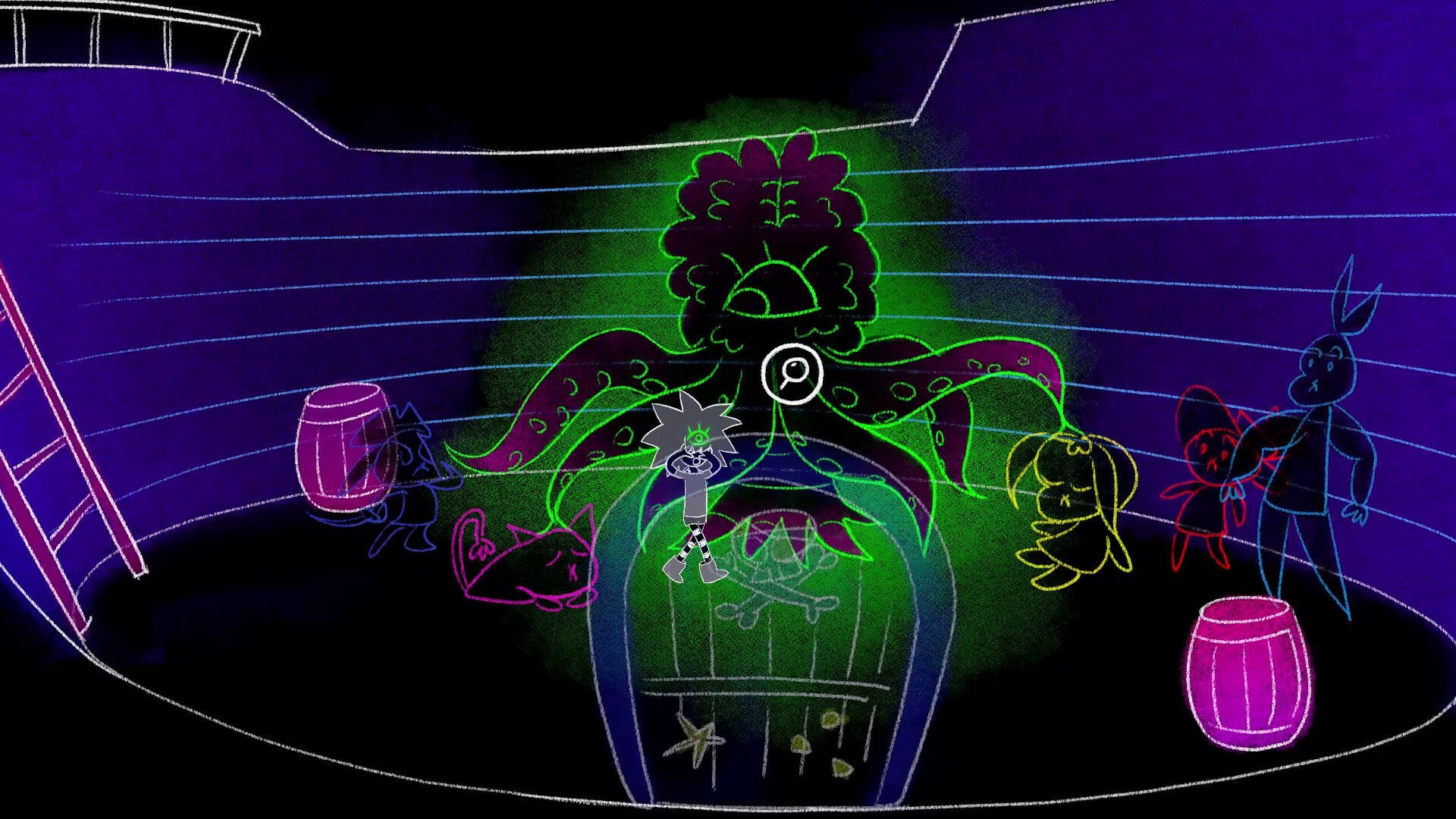
In addition to the land of Yogurt, there is an alternate world Mai can visit called the Dark World. Mai discovers that she has the ability to enter others’ minds, where she experiences the physical manifestations of their psyches. When she first develops this ability, she has to physically touch the person she shares this personal world with, but eventually she can even do it from a distance. There are several instances in which you have to see a person’s pain first-hand in order to try to sort it out for them.
I really enjoyed this contrast between the “real world” and the internal one. The artwork here contrasts sharply with the “waking world,” as the background is entirely black and the drawings have a chalkier outline. Even Mai’s subconscious persona is drawn in this unique style. These segments are often surreal and unworldly, reflecting the state of mind of the person Mai is currently tapped into, and really help you see how the others are viewing the world around themselves.
Final Verdict
For the most part, though, Apopia: Sugar Coated Tale is a whimsical romp through a wonderland of unique and interesting rabbits and locales. This is a game that can easily be enjoyed by the young and young at heart alike, though given its darker last act, I would highly recommend it for a family with little ones to sit down and play together. The cute cartoonish artwork, combined with puzzles and mini-games that are easy to both understand and master, plus a respectable play length for an adventure game, and you’ve got all the makings of a few nights of relaxation and fun in this entertaining journey down the, pardon the pun, rabbit hole.
Hot take
Its emphasis on mini-games over traditional puzzles may not appeal to everyone, but Apopia: Sugar Coated Tale is a delightful and surprisingly poignant journey of self-discovery that isn’t always as sweet as it looks.
Pros
- Cute and cuddly cartoon world can be enjoyed by players of all ages
- Wonderful soundtrack successfully conveys a dream-like fantasy feel
- Huge variety of easy-to-grasp addictive mini-games add to the charm
- Inclusion of a darker “mindscape” provides a welcome contrast
Cons
- No voice acting, and the talking sound effects can be distracting if left on
- Auto-solving inventory-based puzzles take away the challenge of solving them
Serena played Apopia: Sugar Coated Tale on PC using a review code provided by the game's publisher.

- Advertisement
- Help support AGH by advertising with us


0 Comments
Want to join the discussion? Leave a comment as guest, sign in or register in our forums.
Leave a comment