
Call of the Elder Gods review
- 0 Comments

Set thirty years later, the Lovecraftian sequel is older but even wiser than its acclaimed predecessor
H.P. Lovecraft is renowned for his dark stories of the supernatural and unseen terrors from beyond the stars, and his works have influenced many artists over the decades since his death. Out of the Blue Games’ puzzle-adventure Call of the Sea was an excellent new piece of Lovecraftian legacy when it launched in 2020, but its sequel, Call of the Elder Gods, proves to be even better and a worthy addition to this subgenre of eldritch horror. While its predecessor was a fun romp, this one builds upon what came before and adds its own flair, with many new challenges and an atmospheric fear of the unknown that sneaks up on you and occasionally hits you over the head with a lead pipe.
[Unavoidable spoiler warning for Call of the Sea] The first game followed Norah Everhart, an ill woman who went looking for her missing husband Harrison in the South Pacific in 1934, only to feel the pull of her destiny under the waves. [end spoiler] Decades later, Call of the Elder Gods brings together Harrison Everhart, now dean of archaeology at Miskatonic University, and young physics student Evangeline Drayton. Evie has been plagued by dreams involving otherworldly vistas and a voice speaking a strange alien language to her. She contacts Harrison for help in understanding what it all means.
But there’s more to this tale, for you see, there’s a bond between the two playable protagonists beyond their shared world of academia. Evie’s father was part of Harrison’s original expedition to find a cure for Norah, and his fate on the island in the previous game still weighs heavily on them both. Harrison himself is haunted by visions of dark ichor, the same ooze that afflicted his expedition, which can be used as a sort of propulsion system but wreaks havoc on organic material. I can’t say more than this, as it would ruin the fun of finding out what, and whom, this shadowy substance relates to, but suffice it to say that the revelation had me smiling once I found out.
Call of the Elder Gods’ first full chapter has Evie going to the dean’s house to talk to him about her dreams, but she can’t find him anywhere. Cue the first major puzzle involving unlocking several doors and turning busts in the right directions, after which she finds herself in the basement behind a rotating fireplace. Here she meets the unconscious professor, and when roused he shouts at her not to touch a statuette that has been a part of her nightmares for what seems like forever. They eventually talk and he agrees to help her, setting the two of them off on a globe-trotting adventure seeking answers together.
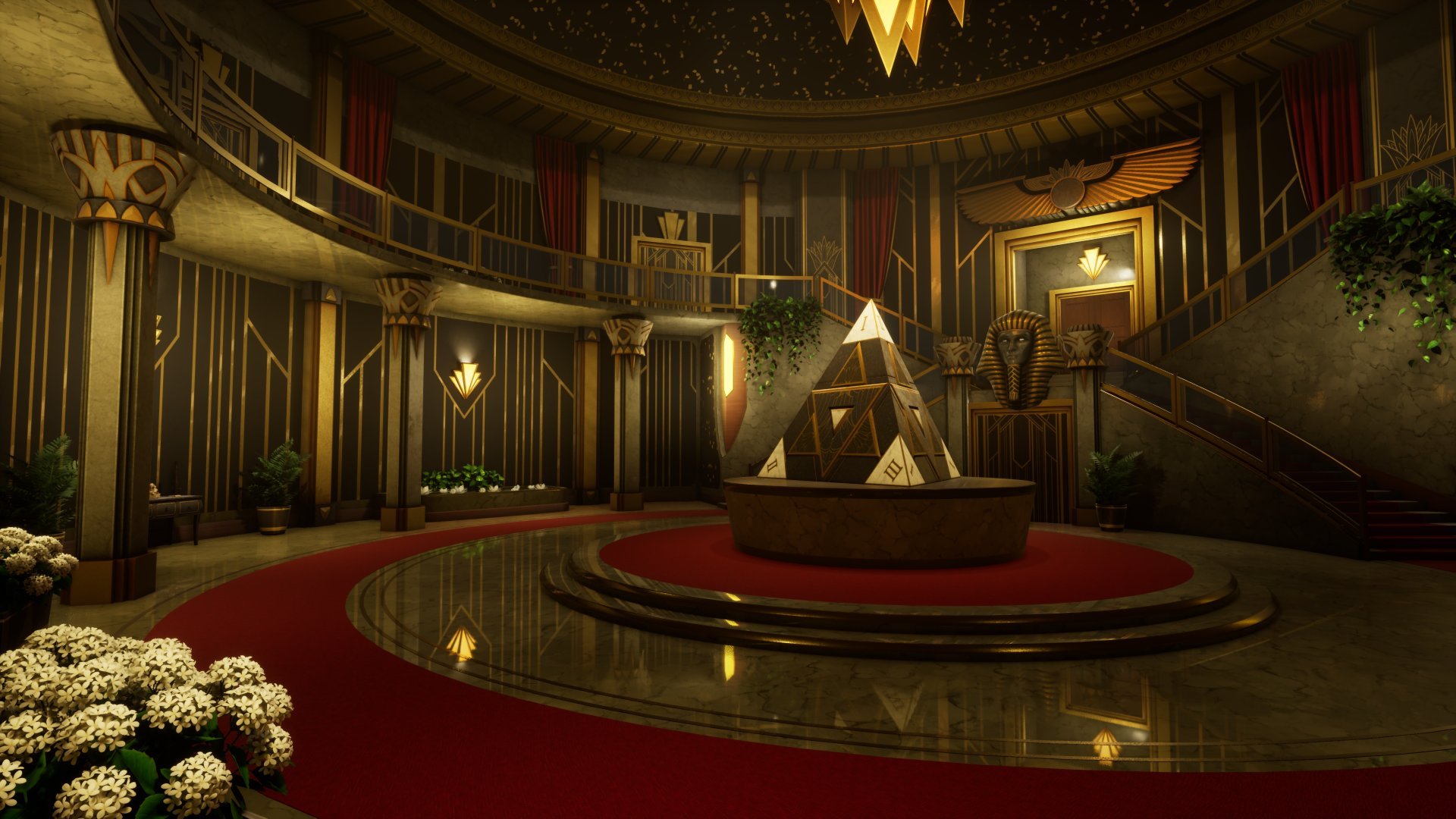
Their journey eventually leads our two protagonists to the lair of a secret occult society in Arkham that has patterned itself around the ancient Egyptian pantheon, including mention of a “Dark Pharaoh.” (Anyone who knows Lovecraft’s tales should get this reference easily, but for those who don’t know the author’s Egyptian influences, just think of a dark god of mischief.) When Evie gets kidnapped by this group, it’s up to Harrison to rescue her. This is easier said than done, involving solving another brainteaser, but eventually the two manage to escape. A connection to Nazi Germany quickly unfolds from there, and a clue to fly to Scandinavian lands leads them to a World War II-era communications tower.
It’s here that I found perhaps my favorite puzzle in the game. A flashback sees Harrison working for American intelligence during the war, tasked with decrypting messages using the famed Enigma Machine. I’m a fan of deciphering hidden messages, but figuring out how it worked and setting the right dials and code words was as much fun for me as actually getting the message unscrambled. And then you get to do it again in the present. The steps for doing so are spelled out for you, but you’ve got keys to help you figure out which dial and number to use where on the device.
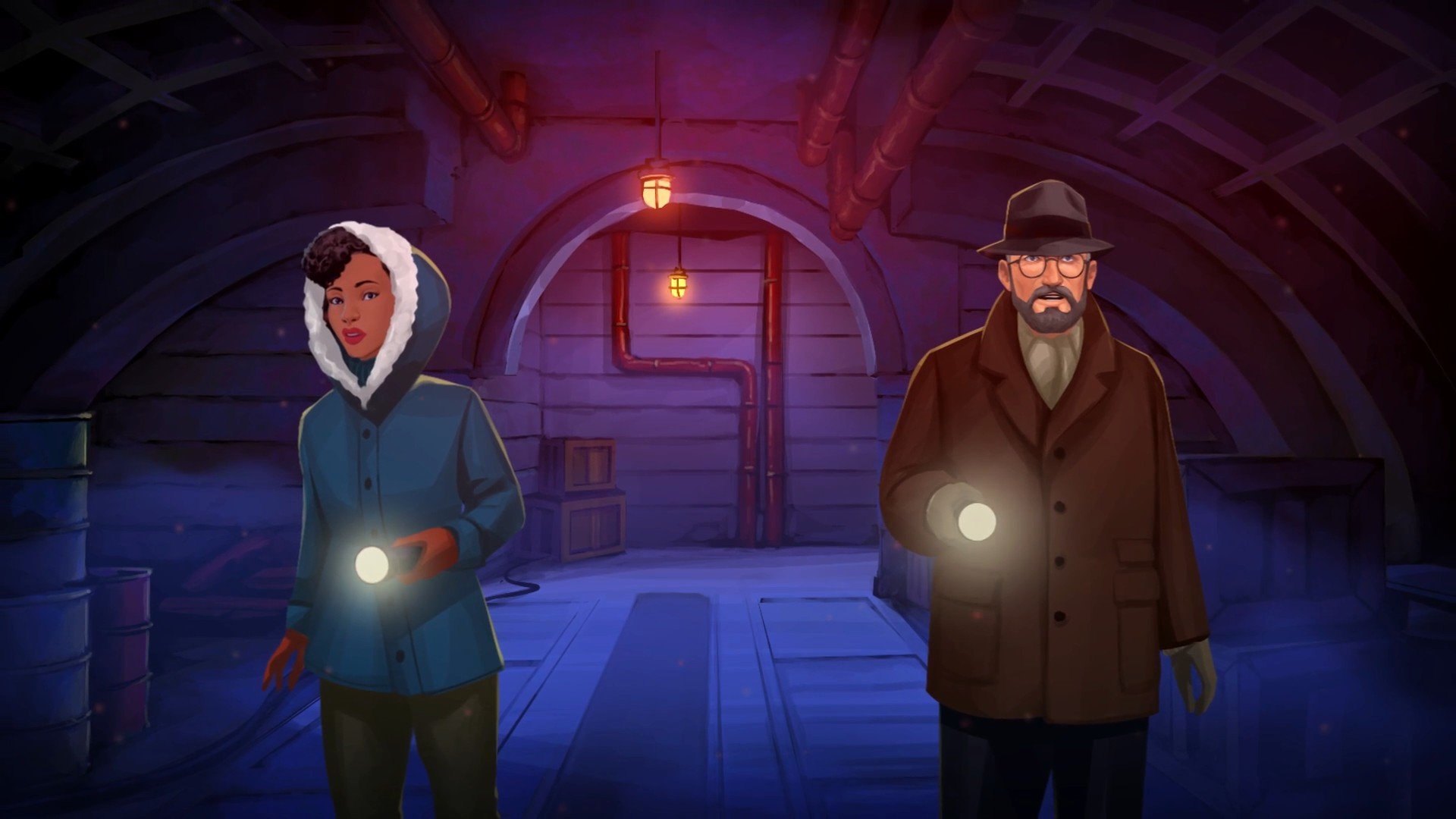
After venturing underground, you come face to face with the black substance that everyone seems to fear, and it’s up to our intrepid heroes to get past it by messing around with door controls and trapping it so that it’s safe for them to go through. Finally, we are confronted with the overwhelming truth behind Evie’s dreams, and a threat to the fate of mankind should a former Nazi occultist get his way. This then leads to a quick flight to an island in the Pacific (which shows signs of temporary human encampments but is not the same island as in the previous game). This ends up in a great climax that is well worth playing through the five or so hours it takes to get there.
The puzzles in Call of the Elder Gods are a bit of a mixed bag in terms of complexity. A lot of them are either easy to figure out or can be logically pieced together by clues littered around each chapter. Others, such as the one in the Egyptian cult hideout, had me scratching my head in confusion and almost pulling my hair out in frustration. That said, there is a welcome hint system built into the menu that either helps you through the more difficult puzzles or even spells out what you need to do. Thankfully, I only really needed to use it for the one puzzle, but it’s nice to know it’s there if you do get stuck.
Call of the Elder Gods
| Genre: | Mystery, Science Fiction |
|---|---|
| Presentation: | Realtime 3D |
| Perspective: | First-Person |
| Gameplay: | Puzzle, Quest |
| Control: | Direct Control |
| Game Length: | Short (1-5 hours) |
| Difficulty: | Medium |
| Theme: | Lost Civilization, Missing persons, Lovecraftian |
| Graphic Style: | Simulated realism |
There are points in the game where you control both Evie and Harrison, letting you switch back and forth between them to solve a tandem puzzle. Of these, my favorite was trying to get power back to the Nazi base by flipping switches as Harrison and rerouting power in a fuse box as Evie. Our heroine is not just a physicist, but as her father was a mechanic she’s learned more than a few tricks about engineering as well.
As with its predecessor, Call of the Elder Gods is a free-roaming first-person adventure game that is played with keyboard and mouse, using the WASD keys to move and the mouse to rotate the camera. You can interact with certain objects close up, with a small circle filling in when a hotspot is visible. Clicking on one of these either prompts commentary from the current playable character or a note pops up on the screen. Many of the latter are added to a journal that can be opened up at any time, and most include clues to the various puzzles throughout the game that make it easier to suss out answers than having to backtrack.
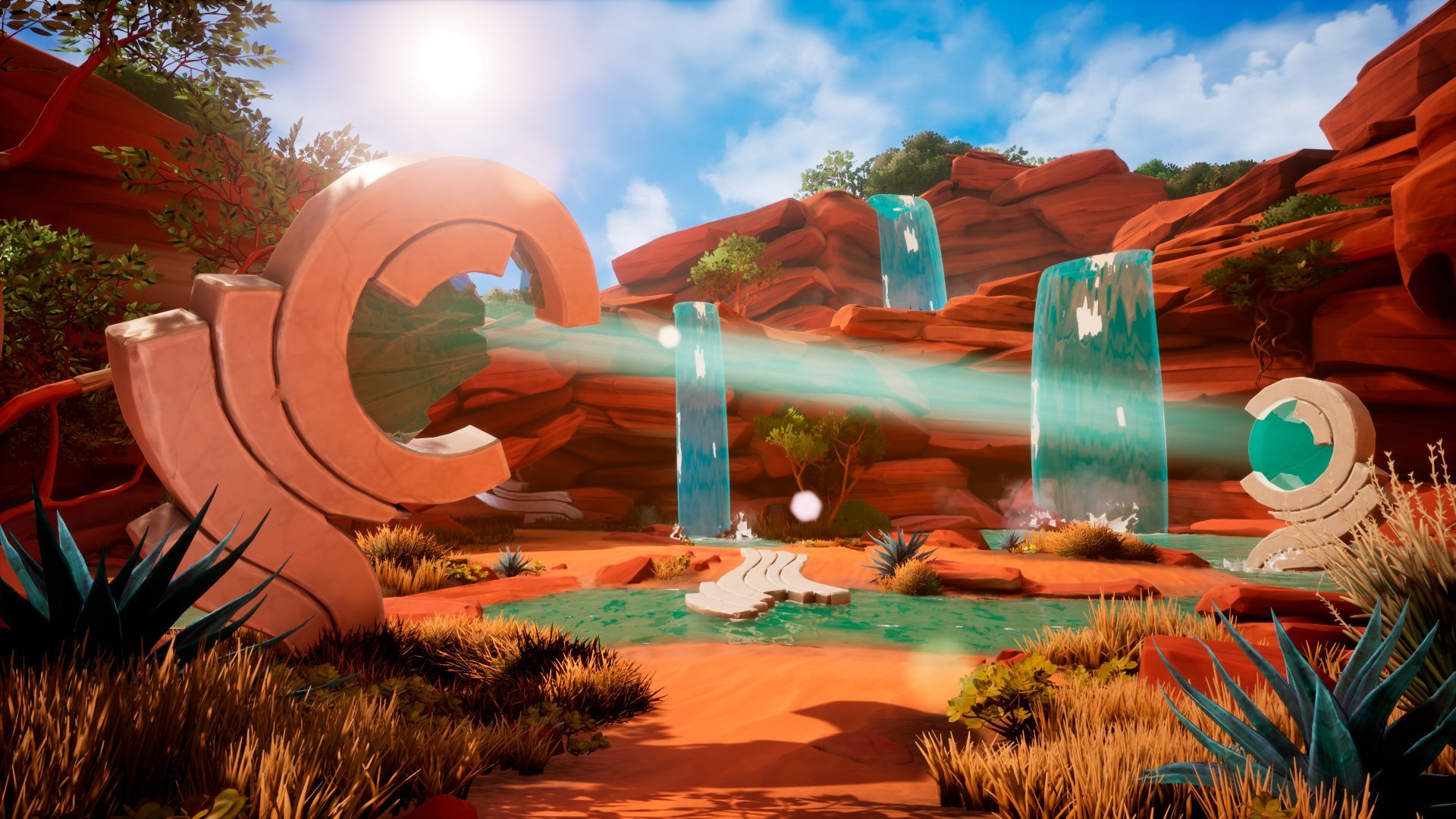
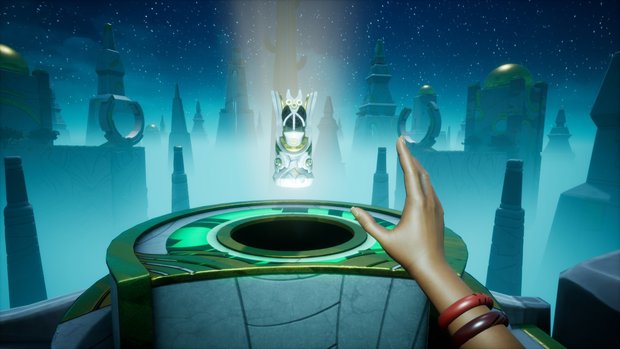
The game looks beautiful, occupying the same sort of middle ground between cartoony and realistic as Call of the Sea. The characters, and especially the environment, are a treat for the eyes in presenting a mystery that literally spans decades. From the 1950s current-day setting to flashbacks and even brief flashforwards through some supernatural trickery to a 2000s-era laboratory, each chapter breathes life into new locales for Harrison and Evie to visit.
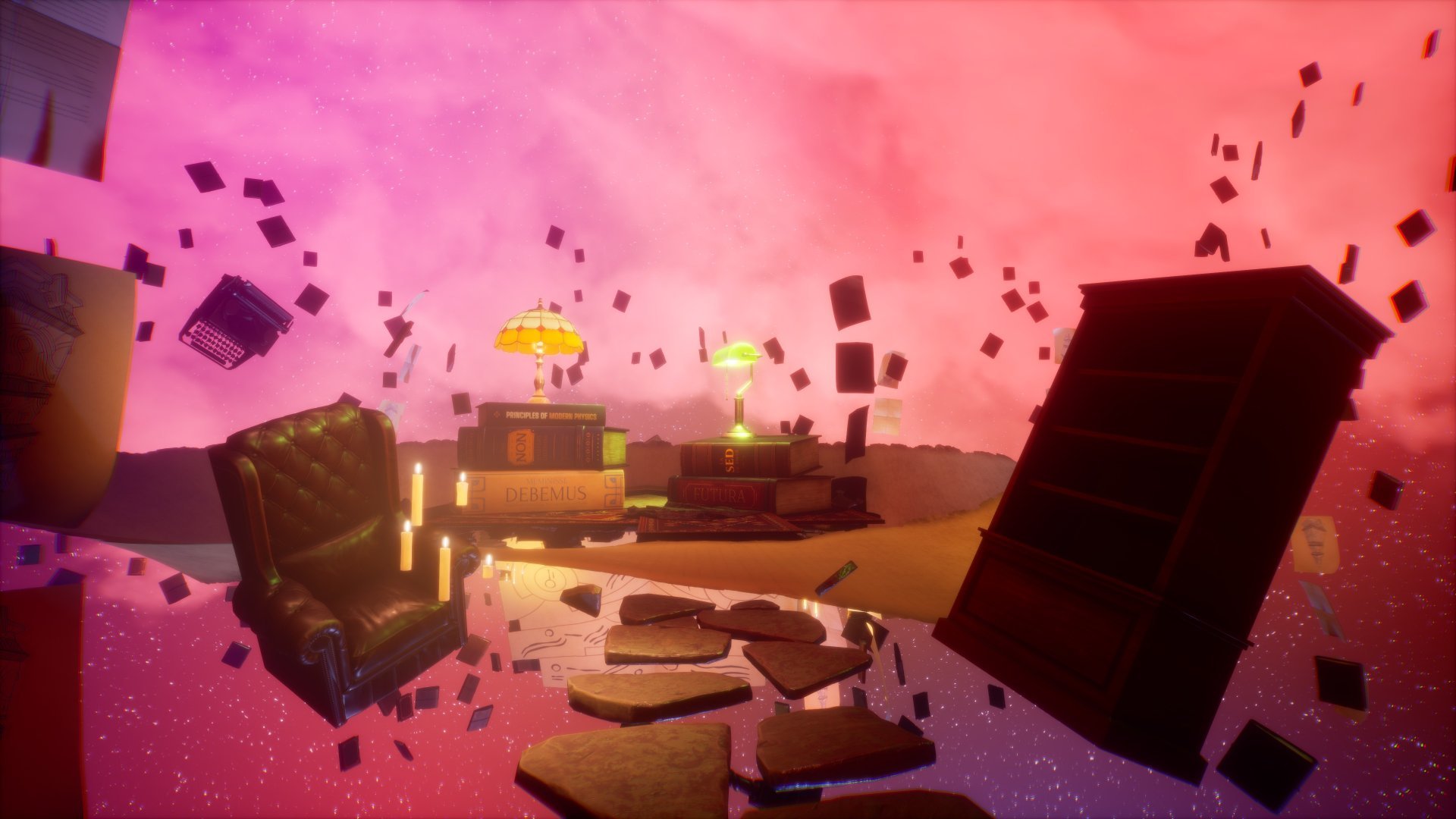
I particularly enjoyed the very different later-game environs of the frozen north and the tropical island. One scene has Evie diving under the water to a beautifully rendered cave full of alien murals, and while walking along the bottom of the lake we get glimpses of impressive ancient architecture and strange glowing polyps. There is also a surreal landscape within the protagonists’ minds whose trippy vistas defy both gravity and common sense.
These environments feel somewhat alive, from trees blowing in the frigid wind to the rippling of glowing rays of light and swirling black smoke. The in-game character animations are fluid and natural, including moving up and down ladders as we see the protagonists’ hands grip at each step. My favorite part of the graphics, though, would have to be the cutscenes. These play out as a sort of slideshow of what appears to be hand-drawn illustrations. It’s a bit jarring to go from one art style to the other, but it really works here.
The audio in Call of the Elder Gods also enhances the mood and atmosphere. The music is a blend of otherworldly notes and melodies, and is just unobtrusive enough that it tugs at the back of your mind throughout this journey of discovery. The sound effects, from sloshing through underwater ruins to varied footfall on snow and metal, add to the sense of isolation in mostly abandoned locations, while elsewhere the complete absence of ambient noise puts you on edge.
But the real highlight here is the voice work. The game is fully voiced, including narration by Norah (performed by Cissy Jones, who reprises her role from the first game), and the lead actors do a great job conveying their growing sense of dread. Even the deranged Nazi cultist is memorable, despite his very limited screen time, especially when wailing at the protagonists on the verge of complete madness, his deep voice becoming almost shrill.
Lovecraft is well known for putting his lead characters in peril, both physically and mentally. Here, however, they aren’t in any real danger (at least until the end, and even then there isn’t any real risk of failure). This game feels more like a pulp story from the early-to-mid twentieth century. There is little in the way of “action” but Harrison acts like Indiana Jones without the bullwhip and fisticuffs, while Evie is most certainly not a damsel in distress and can hold her own throughout this globetrotting adventure.
There isn’t much in the way of sanity-eroding otherworldly horrors, either, but as its title suggests, there’s still plenty of Lovecraftian influence on display. There are indeed eldritch beings and their presence is felt throughout, from Evie’s dreams of otherworldly landscapes to Harrison’s nightmare visions of the black ooze. We continually hear voices in the Pnakotic tongue (the language used by the Great Race of Yith), and we do see a member of this ancient race of beings temporarily frozen in ice, but rarely is there any interaction. There are world-ending stakes at play here, but mostly from human hands and not from beings from beyond the stars.
The game is pretty linear and hard to get lost in, but it doesn’t feel like you’re being railroaded along. In fact, I found this one to be much better paced than the developer’s previous outing. The payoff is well worth the price of admission on its own, just to reach the revelations about the fate of the world. There are two very similar finales that only slightly deviate based on a choice Harrison has to make at the very end. Thankfully, after seeing the first you can restart from the last checkpoint (there are no manual saves here) and get the other ending. Aside from some differing dialogue, though, they end the same way regardless of which you pick. If I had one real complaint here, it’s that there are no real stakes involved in making that final decision.
Final Verdict
Call of the Elder Gods is both a worthy successor to Call of the Sea and a great addition to the mythos first laid out by H.P. Lovecraft. I certainly felt more involved and interested here, because while pulpy this game feels more Lovecraftian than the first game’s lure of the waves. The sequel is every bit as beautiful and well acted as its predecessor, and the addition of a second playable character added a welcome new dynamic, while the puzzles are mostly fun to solve, feeling like an archaeologist’s dream of deciphering the past. Overall, it certainly ranks high on my list of titles with a major supernatural bent, and any fans of the developer’s first game are sure to enjoy this follow-up just as much if not more than the original.
Hot take
Call of the Elder Gods is an arguably even better follow-up to Call of the Sea, continuing the saga with plenty more puzzles and a tighter story that fleshes out its Lovecraftian tale of eldritch horror and destiny.
Pros
- Engaging tale of eldritch horrors and pulp adventure that spans the globe
- Well-voiced characters with moody and atmospheric audio
- Nicely designed puzzles are easily solvable with a hint system for the more difficult challenges
- Beautiful 3D graphics complemented by hand-painted still frame cutscenes
Cons
- Similarly short playtime to its predecessor
- The two choice-driven endings have virtually the same outcome
Serena played Call of the Elder Gods on PC using a review code provided by the game's publisher.

- Advertisement
- Help support AGH by advertising with us






0 Comments
Want to join the discussion? Leave a comment as guest, sign in or register in our forums.
Leave a comment