
Thief's Shelter review
- 0 Comments

Psychological point-and-click horror game is home to some entertaining puzzles but locks off a bit too much free exploration
I’ve long been fond of psychological horror games with the environment changing around me, and I enjoy searching abandoned buildings for ghosts. Thief’s Shelter, by Geo Games, tries to combine these elements and gives them a spin by exchanging the genre’s usual free-roaming 3D controls for a (mostly) point-and-click interface. As you navigate realistic environments that behave in a decidedly unnatural way, searching for clues to solve challenging puzzles, you slowly uncover the mythology behind the Red Order, a special organisation battling criminality in Birmingham, England before falling victim to corruption.
Or do you? Developer Dimitris Georgantis has created his game in such a way that a single playthrough won’t reveal all its secrets. Depending not only on how you act, but also when you act, and how much exploring you do beyond fulfilling your immediate objectives, you will (or won’t) see snippets of optional backstory, diary entries and visions that all contribute to successfully making sense of the whole. Which is a shame, really, because with its great visuals and captivating soundtrack, Thief’s Shelter pulled me in completely, eager to solve its mysteries, yet sometimes I felt a bit lost trying to make sense of things. Nor is the exploration angle fully fleshed out, as the lack of complete freedom to investigate can feel limiting, with no demands to actually solve the mystery yourself.
As the game loads – both at the start and when you switch locations – you can read information about the Red Order, as well as various gangs in a way that will feel familiar to people who have seen the show Peaky Blinders. You will also learn “facts” about demonic possession, hinting that there might be a supernatural element at work here. At first these things don’t seem to have anything to do with the case you’re working on, but as you progress in your investigation, more and more connections become very personal to the game’s protagonist.
You play as detective James Georga, seeing the world directly through his eyes, which soon becomes a bit of a problem. The game starts with a close-up of a mysterious, sensual yet strangely yellow-eyed woman seemingly hovering in a field of stars. Her attention is suddenly drawn by a doorway appearing in midair, which leads us into James’s house as he arrives home. The woman follows James inside to his living room, but disappears when he addresses her. She is replaced by a group of dancing people who disintegrate before his eyes a few moments later as well.
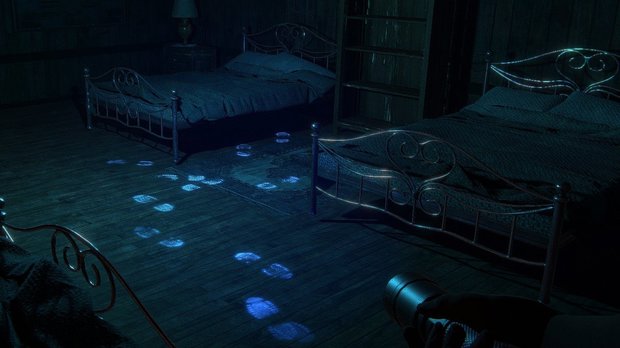
This is only a foretaste of the strange things James will see – or thinks he sees – over the course of the game. James suffers from a form of dementia that causes him to hallucinate, and to view reality in distorted ways, a condition he tries to control with pills. Doors and hallways that were open in one scene will suddenly be blocked in another, sometimes by furniture, other times replaced entirely by walls. Whole rooms as well can change their appearance, and some doorways seem to work like portals into completely different and scary-looking red sky realms, which sometimes even seem to bleed into the real world. James’s perceptions come under scrutiny this way: is he just imagining things, or simply misremembering? Is his brain playing tricks on him, or is there an external force at work? Perhaps it’s all of the above.
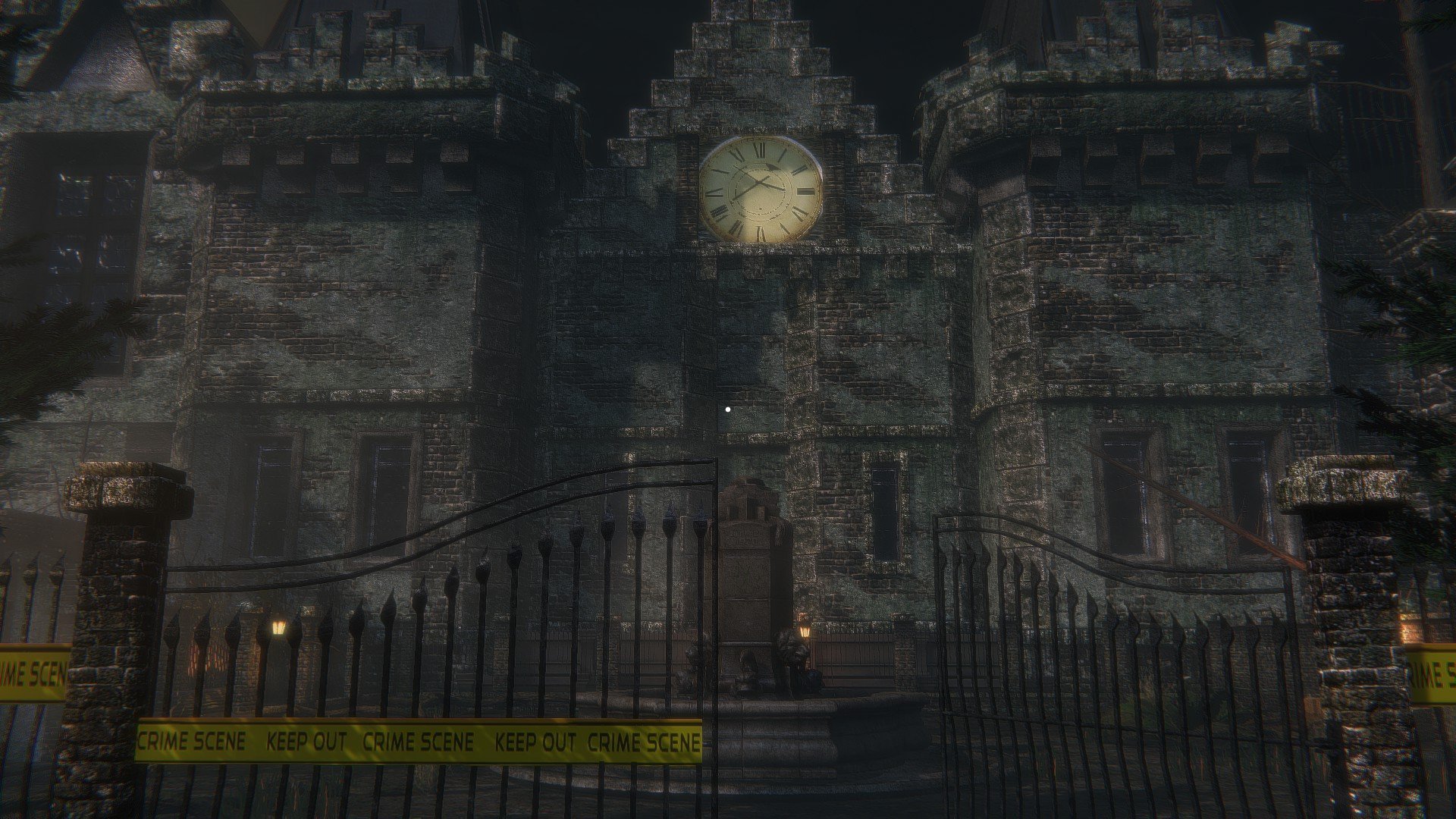
One evening when James is chilling at home, he sees a news report about the body of one Thomas Malcott found outside a huge mansion on Highburn Street. Malcott was involved with the many gangs in this region, but it’s unclear how and why he died. When the police still haven’t closed the case five months after his death, Chief Matthew Dimi calls James to help out with the investigation, since James has always had a knack for seeing things others can’t and making deductions where others are stumped by riddles in pursuit of the truth.
For a game that takes place in England, the accents of the voice actors sounded totally out of place to me, with a tinge of Eastern European, Asian and American; nothing that comes close to British. Of course, that’s perfectly plausible in this diverse world, but I had a hard time finding the actors believable. At certain points, James begins suffering from his illness so badly that he starts to mumble. This happens without warning, and he sounds more drunk than sick. The first time it happened, I thought I had missed a cutscene where James drank an entire bottle of scotch.
James blames himself for forgetting his pills when his illness overtakes him, which is strange because my very first objective was getting them for him, and I never noticed him dropping them after that. Thief’s Shelter starts with a couple of simple tasks, first at James’s house where you have to find those pills, and then at his office where he’ll pick up his flashlight. You are given directions on how to accomplish these tasks through simple tutorial messages. There’s more stuff to do at both locations, but it’s all optional. You’re always given clear objectives on where to go and what to do, but if you only do those you’ll miss out on lots of extra content.
Unlike in most games of this type, you don’t control James directly. Instead, you click on available waypoints shining bright blue like ghostly fire or twirling currents of air to move through the 3D environment. Changing positions isn’t a static animation, however, as you can still pan the camera around and view your surroundings as James automatically walks across the room. I quite enjoyed this functionality, if only for the sneak peeks around corners while James is still in motion instead of waiting for him to stop and only then look around. From each standing position, you can take in your entire surroundings in full 360 degrees.
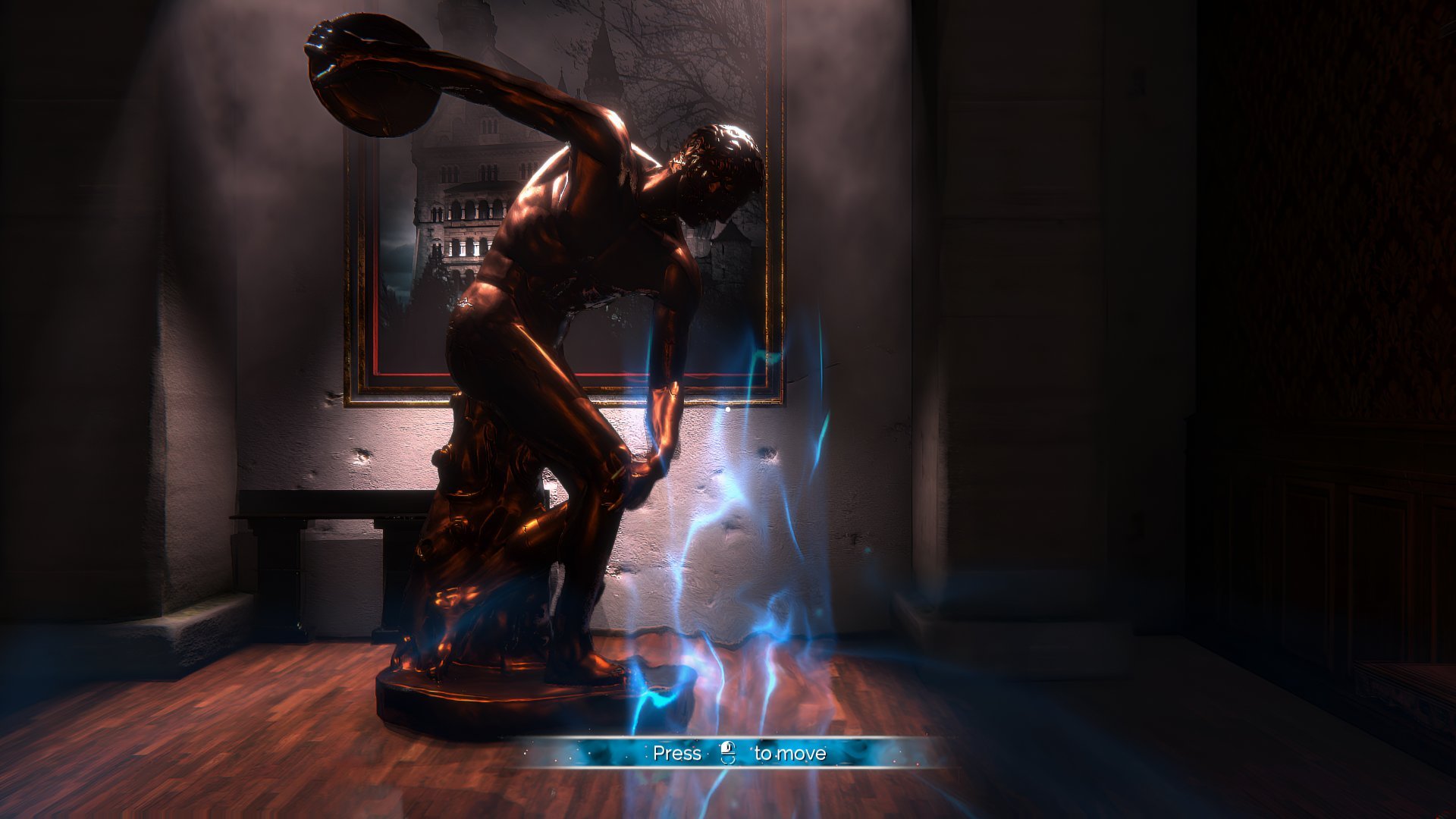
You can click on objects to examine them closer, but where intuitively you would right-click to zoom back out, here you need to hit the ESC key. You’ll use the keyboard as well to activate the tools you carry, like your flashlight or a digital camera, and to open your backpack. The latter brings up a menu at the bottom left of the screen, granting access to James’s journal and the option to manually save your game, examine collectibles in the form of hidden masks, and refer to the Help function detailing every part of the gameplay and interface.
Opening the journal displays your notes and clues about the investigation, objectives that get crossed out once you complete them, memories and random thoughts James jots down, plus his inventory of tools, keys, special artifacts needed to finish the game, and tapes (another form of collectible). This inventory can only be viewed; you can’t actively select the items you’re carrying. Instead you will use them automatically when the opportunity to do so presents itself.
Thief's Shelter

| Genre: | Horror, Mystery |
|---|---|
| Presentation: | Realtime 3D |
| Theme: | Psychological, Whodunit |
| Perspective: | First-Person |
| Graphic Style: | Photorealism |
| Gameplay: | Puzzle, Exploration |
| Control: | Point-and-click |
| Game Length: | Short (1-5 hours) |
| Difficulty: | Medium |
When James writes something down, a message is flashed in the top left corner and you can read it when you hit TAB. Do so fast enough and James will give an extra vocal reaction to what he has written. If the message disappears, you can’t access it directly anymore and will have to look up the new entry in the journal, with no additional voice-over commentary. This happened to me often, since many times James would still be talking when the indicator appeared, so I waited for him to stop first. But by the time he finished speaking the TAB message would have already vanished, which I didn’t think was fair.
Making matters worse, James’s journal can be quite difficult to understand sometimes. When he’s suffering from his illness, his writing will become very hard to read, almost childlike, with lines scribbled in an attempt to form words. James comments on everything, but he doesn’t explain what he means and sometimes it’s not that obvious what exactly he’s saying. Often it seems he’s just talking to himself, but you’re only getting half the conversation. It’s up to you as the player to try to interpret his words (possibly in vain), or you could just leave things hanging and move on.
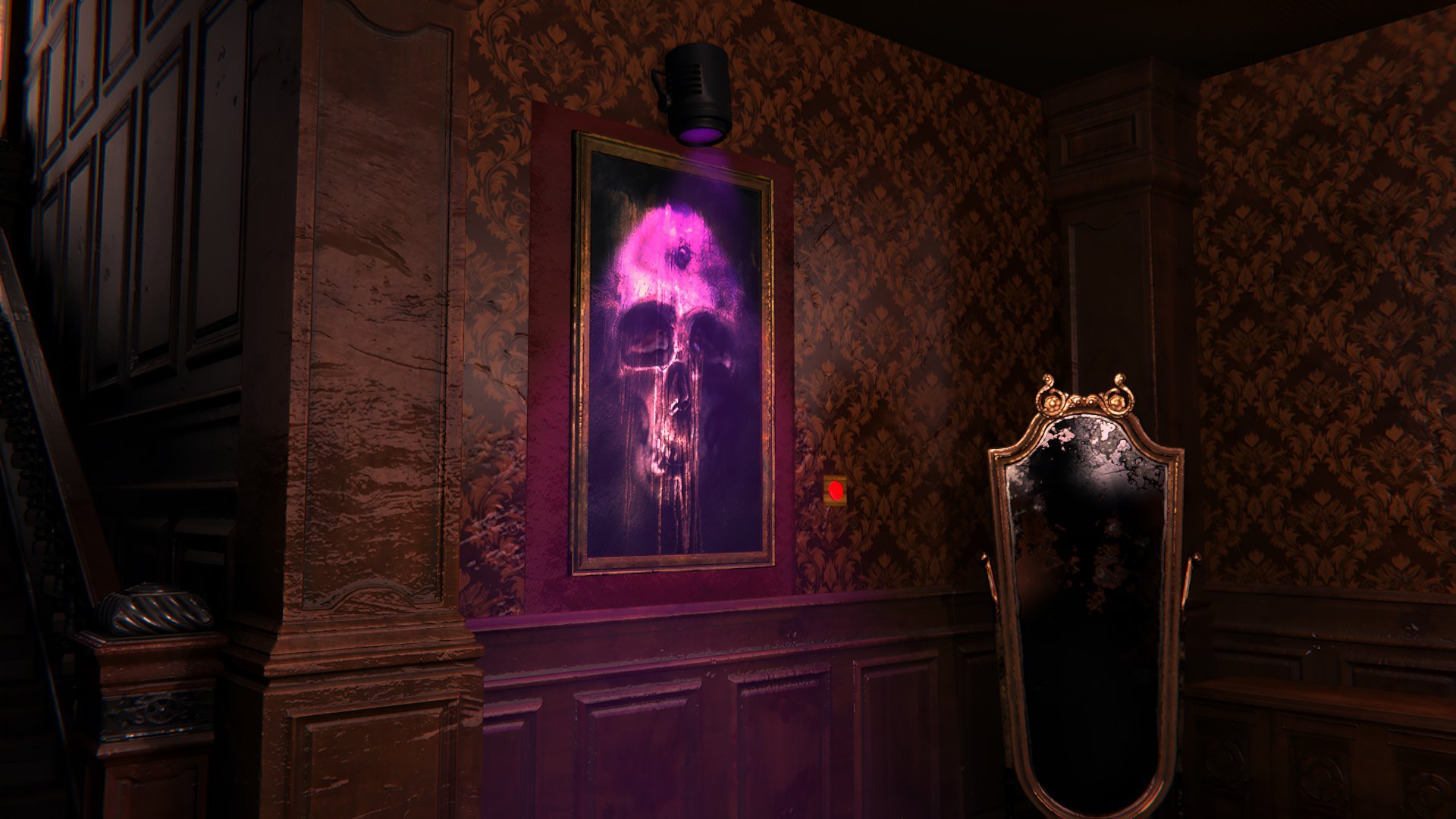
There’s a limit to what objects you can take a closer look at. Frequently I would see something interesting, like pieces of paper, drawers or cabinets, yet they weren’t all active hotspots glowing lightly blue when you hover your cursor over them. For a game that seems designed to encourage you to explore, this is a shame. Even pathways are often limited: an open hallway, staircase or door won’t be clickable for some reason, turning the game into a far more linear experience than it advertises itself. Particularly when examining desks, this is very strange. The one in James’s office has seven drawers in total, yet you can only check four, without any explanation of why the other three are off limits. His apartment, too, has extra doors I could never open, or even elicit a comment from James to say why they weren’t interesting enough to bother with.
This is no ordinary crime scene, as your main objective is to return four special artifacts to a display case in the mansion’s library. Above this case hangs a painting with the word “TRUTH” spelled out in huge letters. When James contacts Chief Dimi on the radio, the Chief tells him those things weren’t there when the first team investigated. James concludes that the display case and painting have been put there especially for him, and he takes the message very literally as his only chance to find out what happened here.
The artifacts are scattered across all corners of the mansion, behind locked doors whose keys you will find in a very straightforward fashion. Every door holds its own secrets to uncover and puzzles to solve, usually involving putting things in the right order, or matching them up correctly. Your path will also be blocked by keypads and gear boxes, amongst other obstacles. Clues to bypass them can be found by closely examining your surroundings, either with the flashlight outfitted with a UV filter, or the digital camera which similarly shows things invisible to the naked eye. There are only a handful of these puzzles, but I found them quite challenging as well as fun to solve.
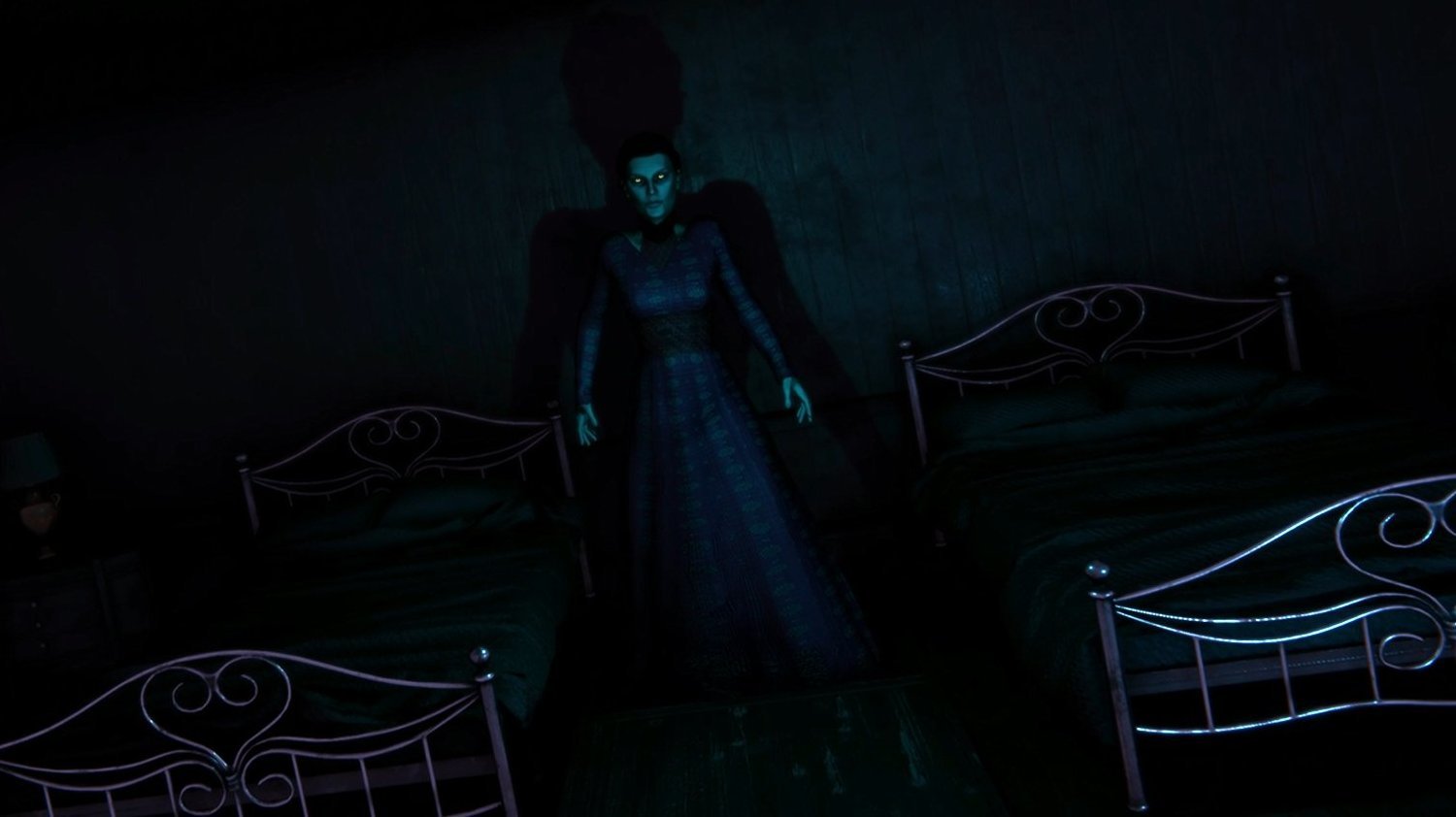
There’s an element of danger in Thief’s Shelter which I didn’t expect, and I was quite surprised to discover that a certain sequence of discoveries can lead to an early (bad) ending. There is a manual save function, and the game also autosaves at regular intervals, as well as when you quit playing. However, when you reload you don’t restart from the exact same point you left the game. Instead, you return to that location’s starting point. For instance, I would close the game in an upstairs bedroom, then when I returned I’d find myself back in the ground floor entrance hall. There’s only ever one save file during a playthrough, so everything you do is immediately set in stone.
There are several collectibles to scour the place for along the way. James has a fascination with exotic masks, and there are ten of them hidden all over (I only found two during my playthrough). You can also discover four old VHS tapes, each labeled with a particular date (I missed one of these as well). It takes a while until you stumble upon how, but there is a way to watch them, providing more evidence of the strange events surrounding the Red Order. There are counters keeping track of the clues you uncover with the UV light and camera, along with a target number to reach, and again I was far from finding all of them. Lastly, the game keeps track of whether you have discovered some special interactions and secrets; they were ticked off in my list, though I have no clue what they were exactly. Once you have finished the game, you can return to the mansion and try to find any items or clues you have missed.
There are actually quite a few narrative details to piece together, both about the mystery and the protagonist himself. Early on, Chief Dimi informs James that Malcott’s wife was murdered a decade earlier in another case that was never solved, and that their child went missing years before that. The deeper you delve into this case, the more strange elements surface. All these tidbits are fed to you little by little as you go along, while I would expect a detective to be fully informed before he is put on the case. While the story is interesting and I was thoroughly intrigued to find out what exactly was going on, I never really felt like a detective. In fact, the more I played, the more it became apparent that James wasn’t fit to be a detective at all, with his troubling personal mental health issues. As the story draws to a close, the truth is laid bare not by superior investigative skills but in a more deus ex machina fashion, raising more questions about his being there in the first place.
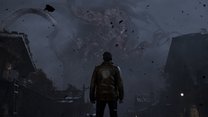
Thief’s Shelter doesn’t go overboard with jump scares, though you will encounter a couple. Its flavor of horror is more psychological, trying to creep you out with strange visions and hallucinations, like a previously normal corridor suddenly changed into a red, upcurving, biological mess with arms sticking out and flailing around, or entire rooms suddenly being enveloped in a mysterious fog, or spouting tentacles with burning eyeballs, as you might expect in a Silent Hill game. One particular favorite sequence of mine was clearly inspired by P.T. – a looping corner hallway that changes slightly each time it turns around on itself until eventually it leads you to that wing of the mansion’s big puzzle. Disturbing close-ups of both the yellow-eyed woman and haunted-eyed James himself often flash on-screen as well. These chills all stem less from constantly fearing for your safety and more from questioning your own sanity, and frankly, that’s way creepier than some monster chasing you around. A real monster you can escape from, but when it’s residing in your own head, where do you hide?
My first playthrough took me a little over four hours, but since the developer claims that only multiple playthroughs unlock all pieces of the story, I whipped out my flashlight again to shed further light on any secrets I might have missed the first time around. There were still lots of collectibles left unearthed, and even though I thought I had a good grasp on the plot, some things were still a bit hazy. Three more hours took me from 52 to 65 percent completion, but to be honest the experience felt extremely similar, so I have no idea where any significant differences may lie.
Final Verdict
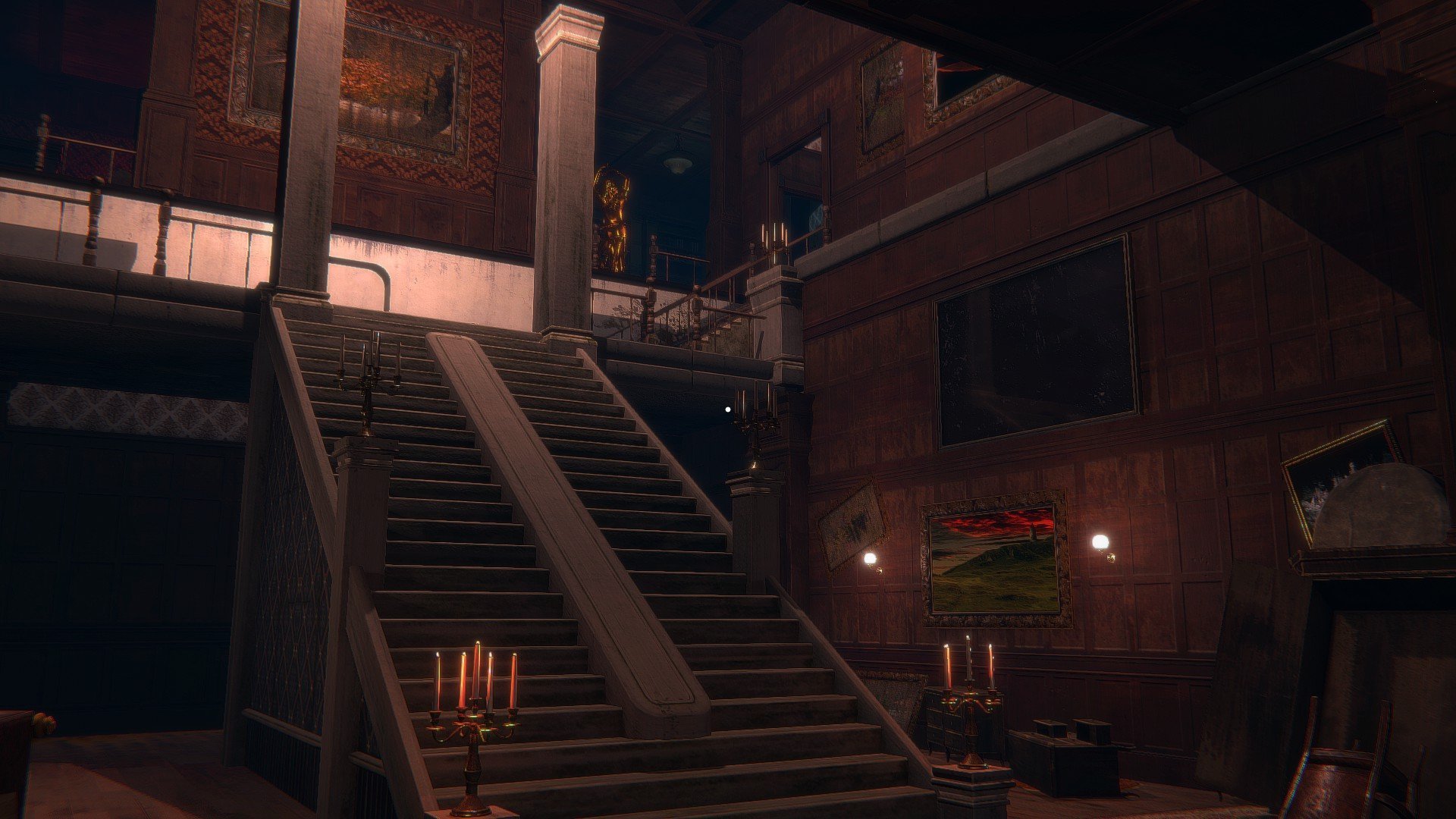
The unusual point-and-click interface doesn’t take long to get used to; it’s the game design itself that limits the experience. Many times I wanted to go places I couldn’t or look at items I couldn’t pick up for no apparent reason. And that’s a shame, because the story here is intriguing enough to keep you going, and the old mansion environments look excellent in the dim, eerie lighting. I had a lot of fun figuring out the puzzles and only wish there were more of them. At times I felt like a real sleuth searching for clues to solve the mystery behind Thomas Malcott’s death and its connection to the mysterious Red Order seemingly behind it all, though I never really had to put two and two together myself in solving the actual mystery. It seems there are still some secrets left hidden on Highburn Street, but while Thief’s Shelter is a solidly enjoyable game, after two playthroughs I’ll leave it to more persistent completionists to seek further shelter at this feverish Birmingham mansion.
Hot take
Thief’s Shelter pulls you into a beautifully eerie mansion to investigate a strange, supernatural mystery full of fun puzzles, yet its limited freedom of exploration to solve the case yourself can be a bit frustrating.
Pros
- Immersively realistic graphics of an old haunted(?) mansion
- Challenging, entertaining puzzles
- Fun use of UV light and camera to reveal secrets
Cons
- Perfectly accessible areas are arbitrarily off limits
- User interface could use some fine-tuning
- Terribly accented voice acting
Johnny played Thief’s Shelter on PC using a review code provided by the game’s publisher.

- Advertisement
- Help support AGH by advertising with us




0 Comments
Want to join the discussion? Leave a comment as guest, sign in or register in our forums.
Leave a comment