
Fragile review
- 0 Comments

Powerful message about child trafficking breaks down due to scattershot gameplay and technical issues
Indie games are uniquely situated in the marketplace to shine a light on unusual, even uncomfortable, topics. I’ve picked up a few in the past that rewarded me with some of the most emotional experiences I could hope for. Fragile definitely tackles some incredibly serious issues over the course of its short campaign. From human trafficking to sexual exploitation of adults as well as children, to black market body organ harvesting, I have never seen a game dare to broach topics like these. There’s probably an argument waiting to be made about whether a story revolving around such concepts even qualifies as entertainment. Regardless of one’s thoughts on that particular issue, the experience is quite an eye-opener. But while the subject matter is unquestionably important, it’s a real shame that the product itself isn’t backed up by a better designed, more technically competent game that does it any kind of justice.
The game takes places in Mongolia’s capital, Ulaanbaatar, and casts players in the role of a nameless young girl heading home from school. As our protagonist slowly makes her way down a decaying industrial city street, we get a preliminary sense of the kind of dreary, oppressive atmosphere the game is going for. The street is drenched by falling rain and lit sporadically by dim streetlamps that flicker on and off. Despite there being plenty of other people around, there is an evident sense of isolation: the figures of passersby and workers are often only shown in silhouette, heads downcast and eyes averted. In an empty lot, a weeping child desperately tries to shake the unconscious (or worse) body of their parent back to wakefulness, to no avail, and still nobody bats an eye. Flyers on walls and wooden fences morbidly proclaim the devastating effects of air pollution on the local population, and posters of missing children paint a disquieting picture of the city’s lawless underbelly. Unfortunately, it only gets more morose from here on in.
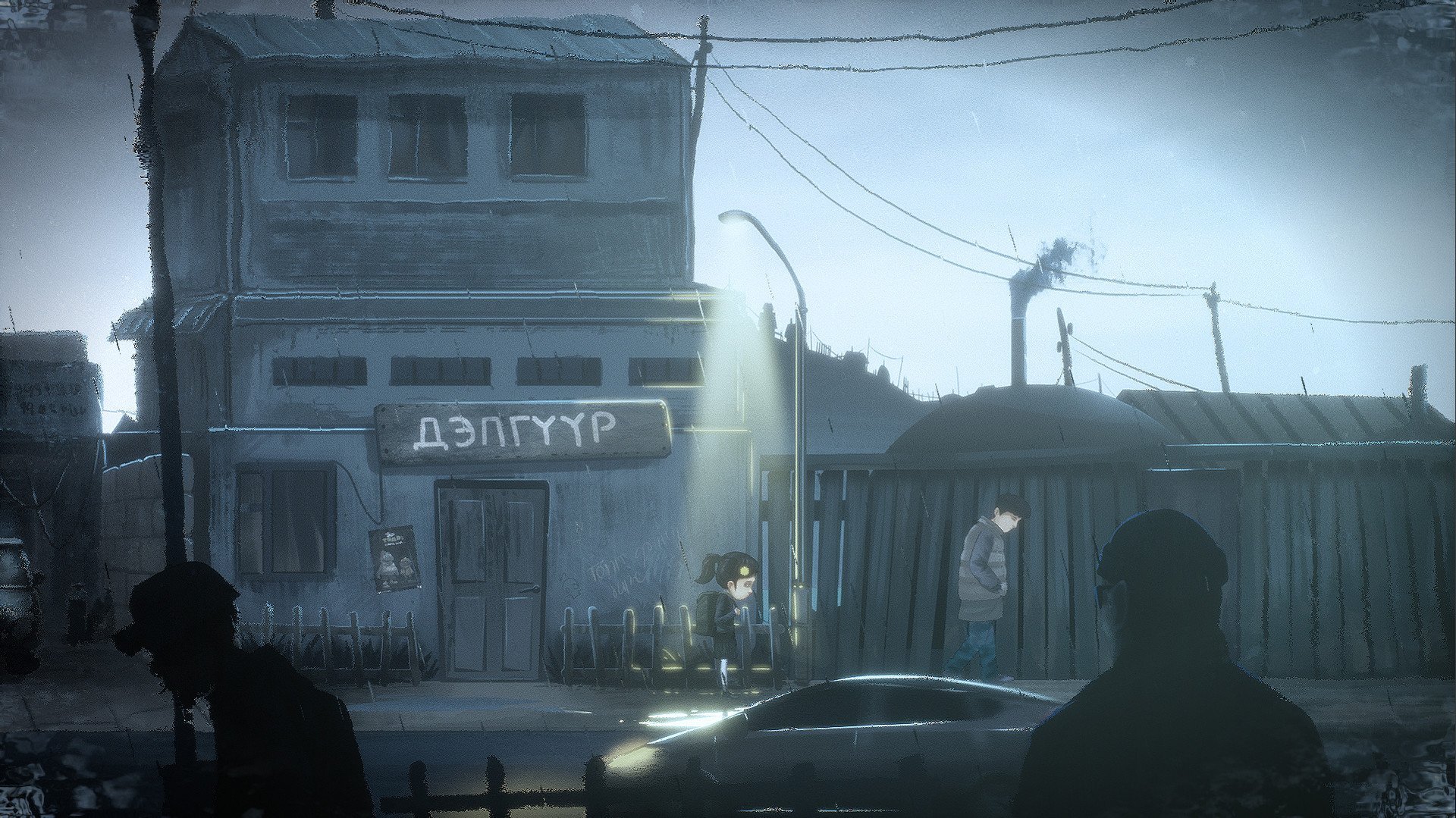
After following Fragile’s side-scrolling sidewalk for a bit, our path takes us off the main roadway, down to a drainage canal. Here, away from the limited bustle of the main thoroughfare, figures stand silently in the shadows. As the little girl approaches, she is surrounded and restrained by the strangers, who immediately cover her mouth to keep her from screaming. She’s being abducted! The scene ends as the game’s title flashes across a black screen. It’s clear we’re in for a sobering experience.
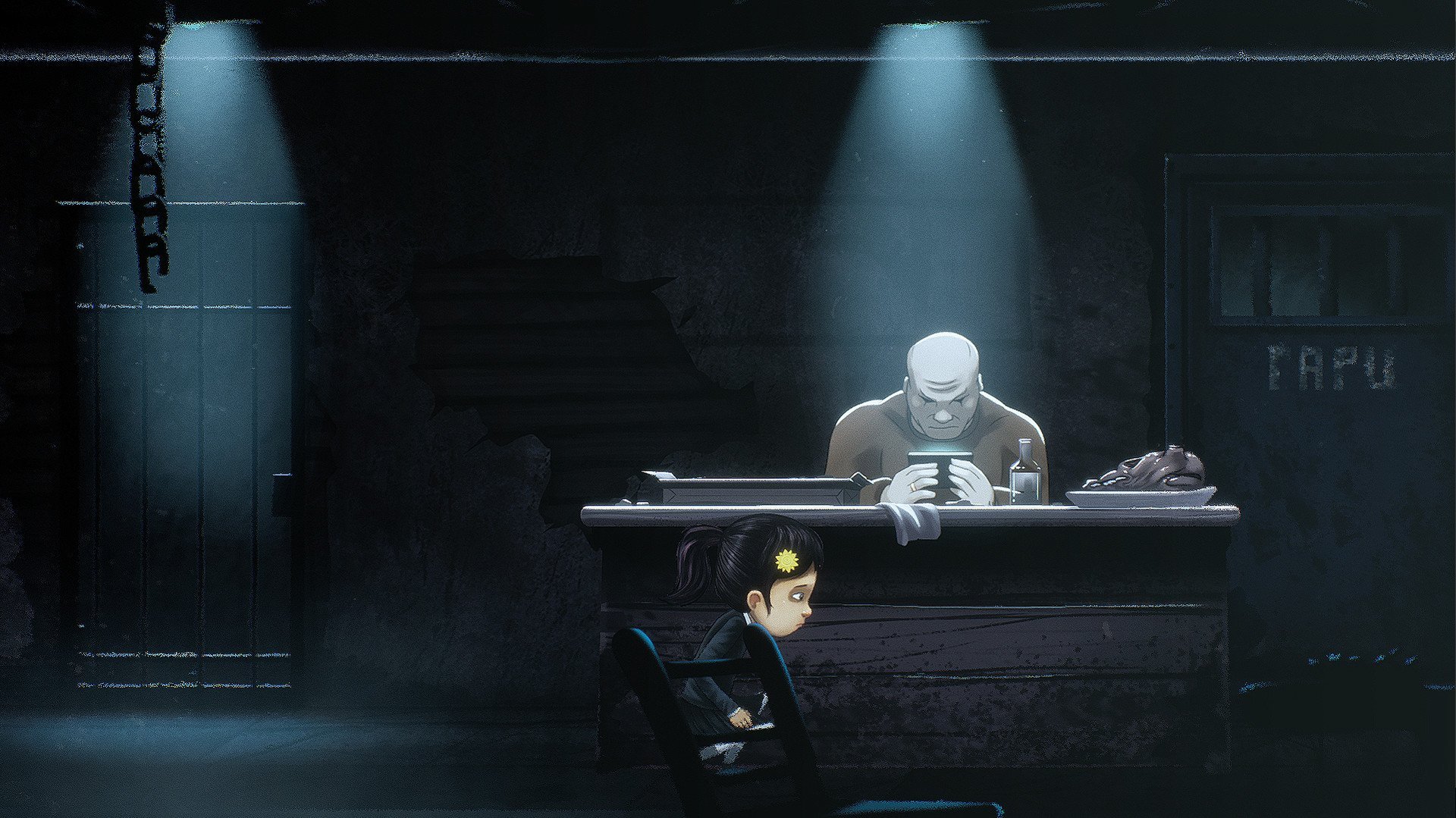
When next the child awakens, she is locked in a kind of underground cell, with no windows and a barred door. From here, each scene presents you with an objective to help the little girl survive and hopefully escape – generally keep out of sight, progress forward, solve a puzzle or two, or pass a bunch of quick time events to make your way to the next area. You’ll even get the chance to interact and team up with some of the other young captives, whose fate is equally as tenebrous as yours. The game is devoid of dialog, so in each scene it is up to you to intuit what you’re meant to do to progress, though what needs to be done is always rather obvious (and on-screen directions are at least provided for the couple of mini-games).
The problem is more the scattershot mentality of the constantly changing types of gameplay, veering from stealth to puzzle-based machinery to reaction-heavy side-scroller. Even more troublesome is the fact that most of it is not very fun to play, which is frustratingly pushed to the forefront during the mini-game sections, which see you competing against another captive in a couple of traditional Mongolian games. One is a game of chance where you’re asked to guess the total number of ankle bones the two of you are holding in your fists, and the other a race to the finish where you only get to move ahead one spot at a time on a game board by spinning a wheel and landing on a particular section. At worst, these mini-games can seem unfair and drag on and on, and it feels excessively punishing to be sent to a game-over screen and back to the beginning of the scene if you fail to win.
But even elsewhere, issues rear their ugly heads. Stealth segments see you slinking between shadows to stay concealed, but a late-game iteration of this shakes things up by putting the hiding places in constant motion, making it more of a skill-based challenge with a razor-thin margin for error that results in an immediate fail state as soon as you make the tiniest mistake. Another late-game chase sequence replaces QTE prompts with on-screen hazards – barbed tentacles flung your way by your monstrous pursuers – that must be avoided while slowly climbing a structure. This feels like a bad platforming sequence that demands careful precision of movement in a game that isn’t designed for it, and doesn’t require this level of skill at any other point. (Fragile claims to be best suited for play with a gamepad, though keyboard controls not only work fine but, in my experience, were actually more reliable.)
Fragile

| Genre: | Thriller |
|---|---|
| Presentation: | 2D or 2.5D |
| Theme: | Escape, Abduction |
| Perspective: | Third-Person |
| Graphic Style: | Illustrated realism |
| Gameplay: | Puzzle, Exploration, Minigames |
| Control: | Point-and-click |
| Game Length: | Short (1-5 hours) |
| Action: | Quick Time Events, Stealth, Chase |
| Difficulty: | Low |
The times when the game was most enjoyable were the handful of actual, bona fide puzzles I needed to solve while enjoying a breather away from any pursuing baddies. One occurs early on, in your cell, where you must work out how to resupply power to an electrical box in order to shed some light on your surroundings. Another, and by far my favorite, shows up much later, and involves you having to not only deduce the combination to a safe is but also work out how to properly input it. Unfortunately, these two instances comprise the bulk of puzzles the game offers, with the other scenes switching up their gameplay.
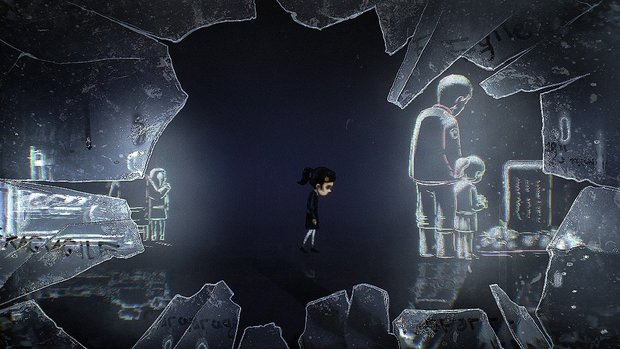
While none of this precisely sets the world on fire, I have to admit that Fragile does have an interesting, if not particularly flashy, hand-drawn aesthetic that could even be considered pretty if used in a more light-hearted title. After being abducted from the already dour-looking city streets, our main character finds herself escaping through a series of dingy, inhospitable spaces, including complexes where the other children are kept locked up, the slave traders’ run-down living quarters, filthy surgical theaters used for unspeakable acts, and even more vile and horrid locales as the game reaches its climax. In a clever move, the little girl’s present-day horror is occasionally brought into stark contrast through the use of lush and vibrantly colorful memories, reminding our protagonist of the life she once had, the family she was a part of, and giving us a tangible goal to fight towards. Throughout, however, the diminutive heroine’s grip on sanity is sorely tested, and as she sees and experiences more of man’s inhumanity, the screen overlay – our lens into her world, essentially – begins to show telltale signs of distress, eventually evidencing cracks in the “glass” just as her fragile spirit begins to falter, laying bare the game’s namesake.
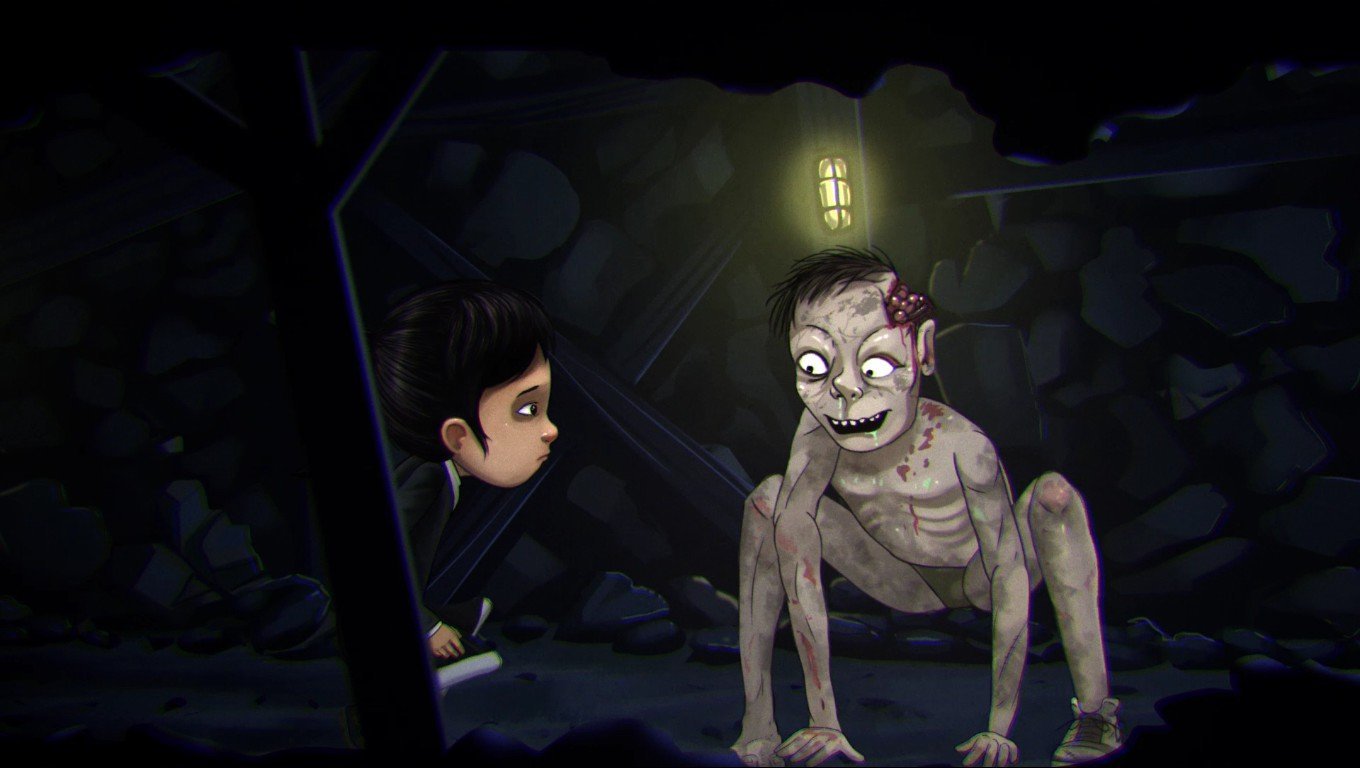
This fragility also makes her something of an unreliable narrator, as the girl’s tormentors frequently change shape right before our eyes, morphing into bizarre and grotesque horror monsters as they chase her. The designers fully lean into this idea, presenting nightmare-fuel body horror creature designs that mirror their dark and twisted souls, like the scalpel-wielding surgeons who turn into morbid creatures propelling themselves menacingly forward via their blade-shaped arms. Other enemies are reimagined by our heroine as hulking, eyeless monstrosities with cleavers and sickles surgically grafted onto their extremities. Despite being relatively short, Fragile features fully animated cinematics for transitions and major plot points, and the animation adds a good visual pop.
Audio is a case of quality over quantity, as what little there is suits the game’s mood well. The small amount of music often takes the form of something creepy that befits the current surroundings, such as a chilling music box tune playing while you tiptoe quietly past one of your snoring captors. Most of the time, however, silence reigns, giving way to the kind of background ambience one would expect to hear in a hell-hole made to torture and abuse lost souls.
What doesn’t work nearly as well is how terribly optimized the game is. Loading screens between scenes can take upwards of several minutes, while waiting for a cinematic to play can make the game freeze and stutter horribly, and that’s if it doesn’t outright crash back to the desktop. Worst of all, gameplay is frequently affected by these technical shortcomings, throwing you into QTE scenes you’ll automatically fail due to terrible stuttering that makes even seeing the button prompts – never mind actually activating them in time – impossible. And, of course, failing one sends you back to another interminably long loading screen followed by another attempt at the borked quick time scene, trapping you in a vicious cycle of punishment. There’s a reason my playtime for this two-to-three-hour game was easily triple that, spread over days and weeks where I just couldn’t force myself to boot it back up.
Final Verdict
When the credits roll at the end of Fragile, the game presents you with some frightening, sobering statistics about global-scale human trafficking, particularly where it concerns the underage sex trade. This is the game’s real heart, the message worth hearing, the newfound awareness worth taking with you into your daily life. This, more than the actual game itself, is what deserves attention, and the reason I’m reviewing it even several years after the fact despite the low score I’m forced to give it. I can’t recommend actually playing it for any reason, but I can wholeheartedly get behind what it’s trying to say. (And perhaps in reading this, you’ll be interested enough to bypass the game and research the topic yourself.) As a means of raising public awareness, it receives high marks for good intentions. But as a game meant for an entertaining, if frightfully dark, session or two of gut-punch gaming, it sadly cracks under its own pressure.
Hot take
Fragile is a technical mess with a few decent ideas and one heck of a message behind it, but its execution is so frustrating you’re better served just reading up on the social issues it raises.
Pros
- An incredibly poignant, if uncomfortable, message
- A monstrous world powerfully portrayed through the eyes of a traumatized little girl
Cons
- Mishmash of gameplay styles, none of which particularly stand out
- Optimization so poor, it literally makes the game impossible to play at times
- Tedious luck-based mini-games required for progression
Pascal played his own copy of Fragile on PC.








0 Comments
Want to join the discussion? Leave a comment as guest, sign in or register in our forums.
Leave a comment