
The Last Case of John Morley review
- 0 Comments

It’s a jarring transition from film noir to psychological horror, but this first-person thriller will leave you wanting to see where it ends
The Last Case of John Morley follows the titular private investigator as he takes on one final mystery in 1940s London. After months of recuperating from a terrible accident in his previous assignment, John is released from the hospital and returns to his office where he’s soon greeted by an elderly countess who asks him to find the murderer of her daughter Elody decades after the fact. As cold cases go, this one has been locked in the freezer, but after twenty years Lady Margaret Fordside wants to reopen the investigation. However, not all is as it seems – for the protagonist or for players – in what turns out to be a rather passive game where the focus shifts from actual detective work to the horrors of figuring out the workings of the human mind.
The first place to start is to head to the family home of Bloomsbury Manor, a dark, abandoned abode that stands as testament to a fallen dynasty. It is up to John to piece together what happened that fateful night so many years earlier and to hopefully uncover the killer and bring them to justice. Clues can be found throughout the mansion, and rooms are unlocked just by finding the right item. There is no inventory to speak of, as any key picked up is automatically used once the right door is accessed.
The Fordside family was clearly hiding a secret, and as you go through the ancestral estate, you’ll discover that poor Elody had been wracked with dark thoughts. This can be seen throughout the home in her macabre paintings. The family, at least father and daughter, were artists that could put to canvas or sculpture any disturbing images wrought from demented minds.
The case later takes John beyond the hallowed halls of Bloomsbury straight into the Westland Asylum. Now closed, this former hospital for the mentally ill once housed Elody, as well as her eventual suitor Walter Brandon. Their story unfolds through flashbacks and notes left behind in plain sight. The further John wades into the case, the deeper down the rabbit hole he goes. This place of madness and pain can do a number on one’s psyche.
Indeed, while The Last Case of John Morley starts out as a traditional noir-style detective tale, it quickly takes a rather dramatic left turn into psychological horror. As you begin piecing together the deranged minds of Elody and a mysterious aggressive man known only as Patient B-03, it can be a bit jarring to see just how macabre the tale gets before you reach the surprising end.
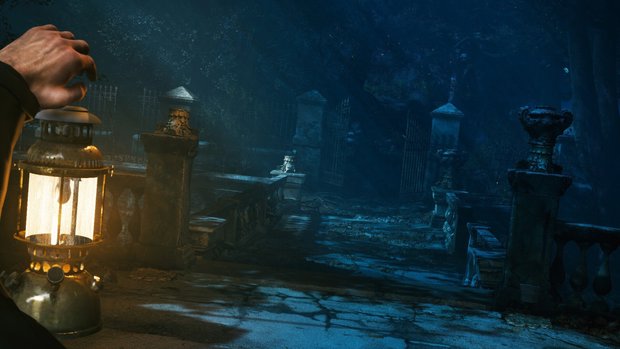
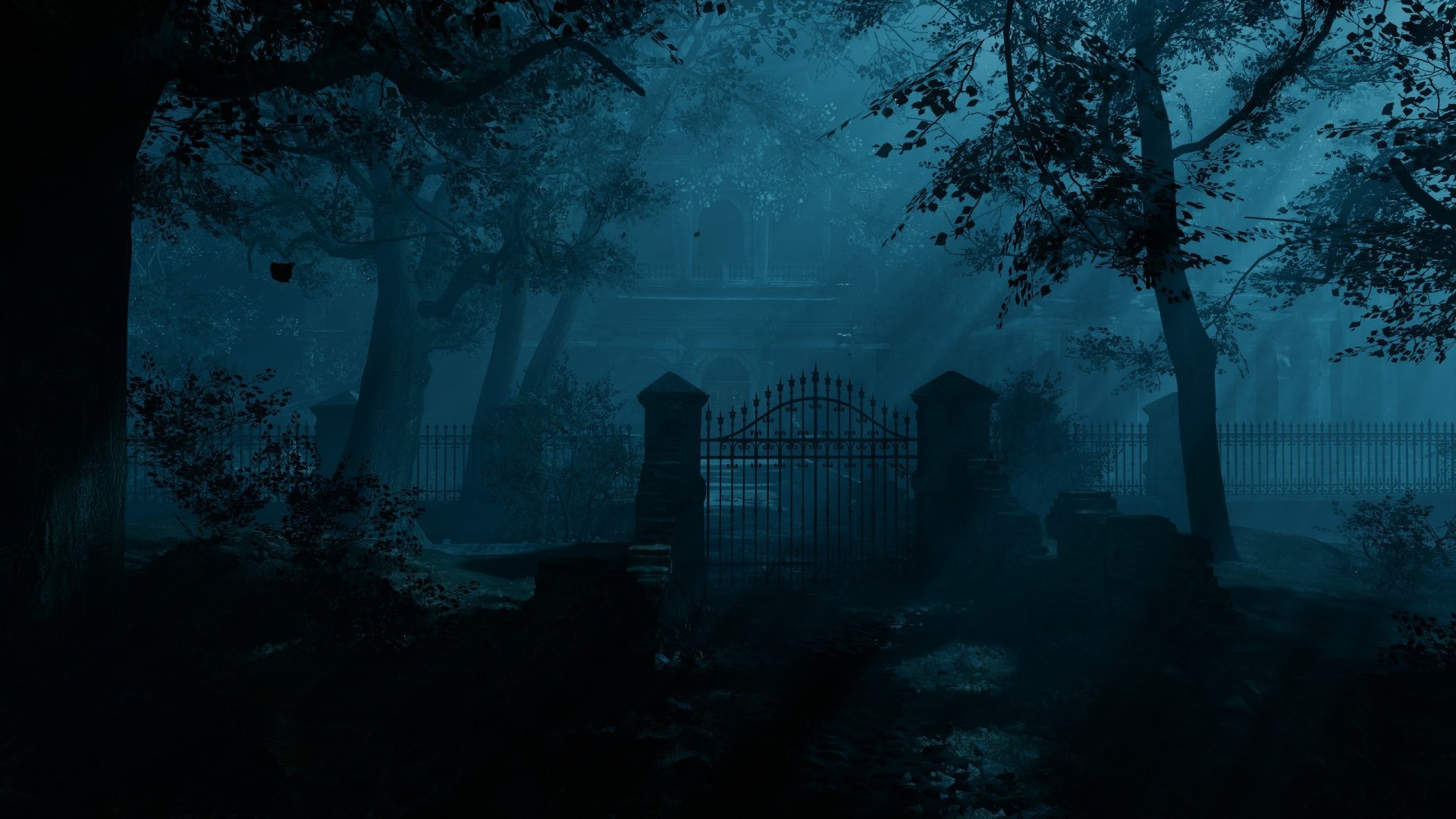
The atmosphere throughout the game is one of darkness. I mean this in both the lighting sense as well as subject matter. Thankfully, at least early on you have a trusty lantern you can use to brighten up some of the shadowy gloom. In fact, you’ll have to use it at times because a lot of Bloomsbury Manor is hard to see without it. Unfortunately, you lose this source of illumination once you get to the sanitorium, though at least the areas are better lit there. Almost like you were expected. The rather sparse outside areas have a nice eerie blue glow coming from the blue moon, which not only offers a bit of brightness but also adds to the atmosphere.
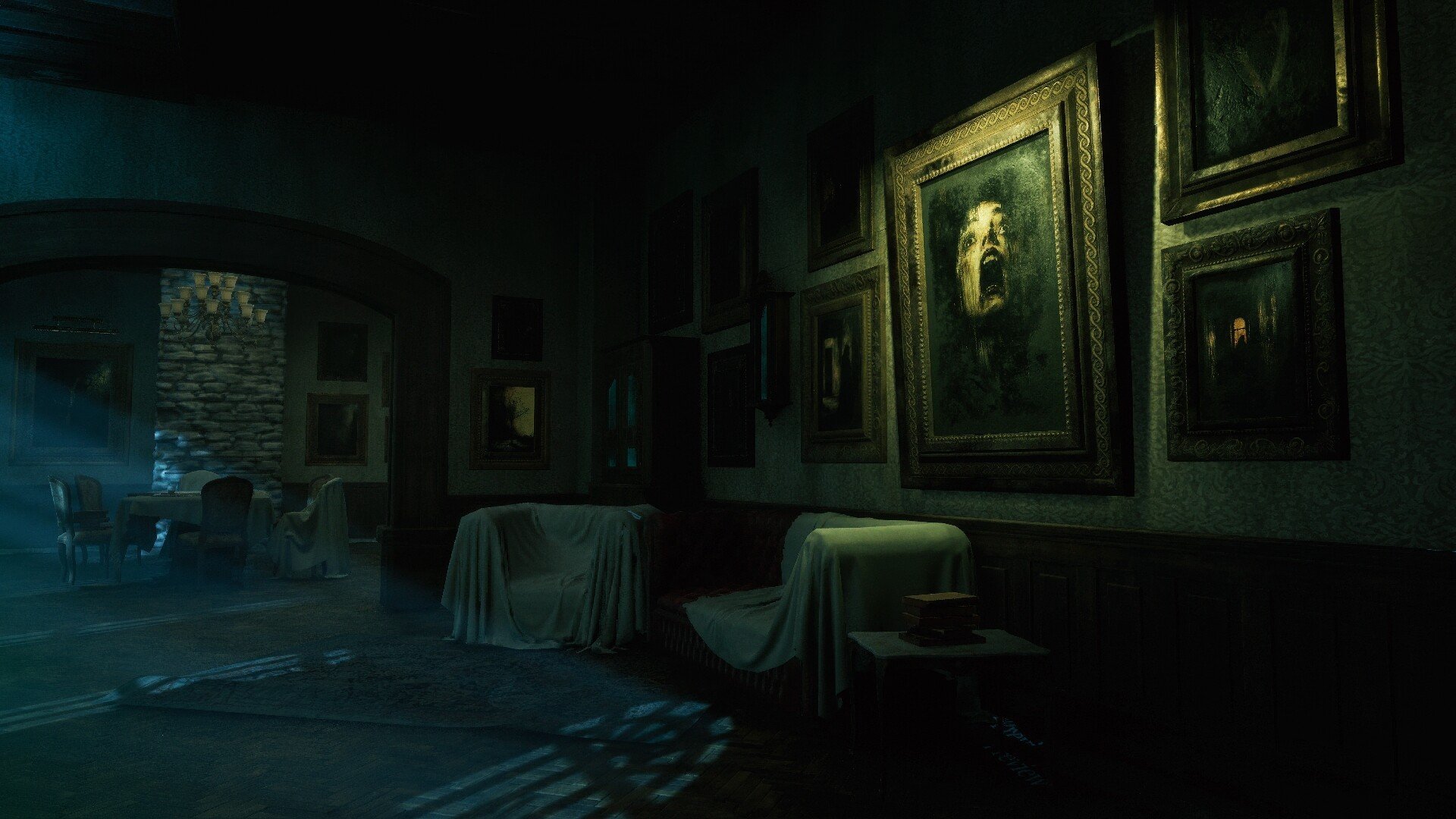
Despite being so dark and foreboding, both the manor and sanitorium are beautifully rendered in a relatively realistic art style. But while they are tied together via the overall story of Elody Fordside, both locations are quite different thematically. The manor, while deserted, still looks well lived-in with nothing out of place since Margaret left. The asylum is run-down, with plenty of fallen debris that blocks passage to parts of the hospital, befitting the documents you uncover describing how Westland was closed and left to rot.
The sound work really enhances the eerie atmosphere of both locales. The creaking of floorboards, the occasional crash of something falling, or even footfalls other than John’s own had me tense throughout the game. A haunting soundtrack also adds to the oppressive mood, tickling at the back of your mind. Sure, it starts out with traditional 1940s detective music but that quickly dies away once the game proper starts. With both the manor and asylum emptied of all but their proverbial ghosts, their piano and string melodies need to be more subdued and left to linger in the background. This leaves one with the profound feeling of being alone in the world, not just the building you’re investigating.
The Last Case of John Morley
| Genre: | Horror, Mystery |
|---|---|
| Presentation: | Realtime 3D |
| Theme: | Psychological, Missing persons |
| Perspective: | First-Person |
| Graphic Style: | Photorealism |
| Gameplay: | Walking simulator, Exploration |
| Control: | Direct Control |
| Game Length: | Short (1-5 hours) |
| Difficulty: | Low |
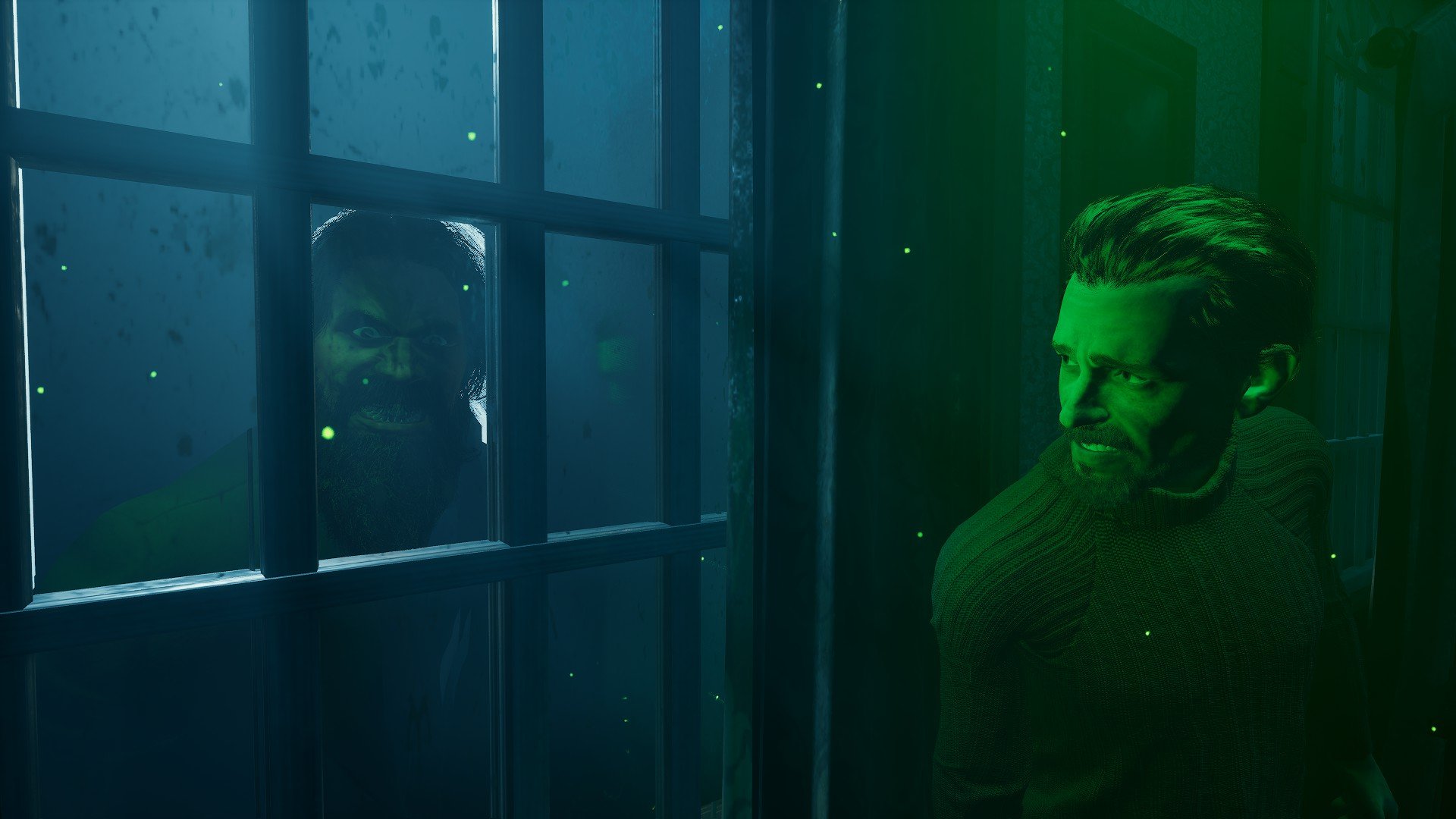
When I say that there’s a psychological horror aspect to this game, I mean that the vast majority of the unease and tension lies within the mind of John Morley himself. It’s not a survival game with stalking terrors to avoid. Rather, as the story progresses, it becomes apparent that there’s more to him and his background than we’re initially led to believe. Whilst the bulk of the narrative lies in finding out who killed Elody, the previous inhabitants of the mansion and hospital seem to haunt John personally, right down to imagining the doctors and patients, all of whom are voiced in a sort of flashback. The green glow surrounding the silhouettes of the people John perceives just adds to the creepiness of the environment.
The Last Case of John Morley is a first-person, free-roaming 3D adventure, controlled with a combination of keyboard and mouse. You never really get to see what John looks like, as any mirrors that you come across are grimy and non-reflective. Both locations are somewhat expansive, but you’re limited by where you can go at the start of each chapter. You can run by pressing the Shift key, but it’s more immersive if you take it slow.
There are a couple proper puzzles to solve, such as turning stone busts to open the door to the mansion’s study and operating power boxes to access the electroshock therapy chamber in the asylum. However, the majority of your investigative work lies in looking at pieces of the environment or reading through documents.
Within the manor, special hotspots light up with that same sickly green glow. Clicking on these activates a memory, or at least a fragment of fateful events as deduced by John Morley himself. More often than not, these are unlocked in sequential order and he automatically provides the solution of what happened in each room rather than letting you deduce it for yourself. Once in the mental hospital, only a few last areas have this neat little trick.
Outside of pieced-together memories, the only other person you interact with after being discharged from the hospital is the poor countess, and that’s only at the beginning of the game. The rest is just you, accompanied by no one but the narration of John’s voice actor. Any little piece of information you come across, he’ll comment on. He sounds like a grizzled gumshoe without the chain-smoking grittiness sometimes associated with the genre, conveyed with a proper British accent. Sometimes a narrator deadpans everything the protagonist sees, but not here. I really enjoyed listening to him describe every little detail I clicked on.
My biggest disappointment with the game is the lack of any real deduction required. The mystery surrounding the murder of Elody Fordside is always at the forefront, and as you progress in the investigation John will piece together just what happened leading up to her death. But the key word there is John does the piecing together, not the player, and it comes off a bit out of order as you discover how unstable Elody’s mind was, and what she did to warrant such a tragic end. However, in becoming more of a psychological thriller than a detective game in the end, the troubled story of the deceased woman twenty years after her death reveals a lot about the ramifications of mental health in the 1940s, and how it affected not just the afflicted but those around them as well.
Final Verdict
The Last Case of John Morley tries to blend two narrative styles into one cohesive story, and it manages to do so for the most part. The case of Elody Fordside’s murder may well be the protagonist’s final one, but the horrifying consequences of what he finds while investigating will most certainly last a long time. With very little challenge, this is a rather short game, taking me only about three hours to finish. You’ll probably prefer to do more actual investigative work yourself, rather than passively sitting by while the protagonist does it for you, but this is still a compelling, richly atmospheric mystery that will easily draw you into its narrative, anxious to find out how and why the tortured young victim died – and why the detective would never take another case when it's over.
Hot take
The Last Case of John Morley transitions from a film-noir mystery into a psychological horror that reveals just how fragile the human psyche is, prioritizing atmosphere over detective work in its short run time.
Pros
- Darkly atmospheric setting with haunting audio
- A gripping case of murder and madness
- A surprise ending worth staying for
Cons
- Lack of any deductive reasoning puzzles, with the solution spelled out for you
- Can be finished without difficulty in only a few hours
Serena played her own copy of The Last Case of John Morley on PC.

- Advertisement
- Help support AGH by advertising with us








0 Comments
Want to join the discussion? Leave a comment as guest, sign in or register in our forums.
Leave a comment