
Among the Whispers: Provocation review
- 0 Comments

Lengthy, randomized ghost hunting procedural sure to elicit strong reactions, most of them positive
While I don’t really believe in ghosts, I do believe the concept of ghost hunting can make for very exciting and excellent adventure material. I spent almost forty hours on D&A Studios’ first game, Conrad Stevenson’s Paranormal P.I., after all. When I heard this indie developer was working on a new game based in the same universe, I was almost dying with anticipation to grab my EMF meter and parabolic microphone once again. And now that it’s here, I am even more impressed by a game that surpasses its predecessor in every relevant way, even adding some fun deduction elements to make the entire experience more interactive.
While the equipment and the procedures are similar, Among the Whispers: Provocation shakes up the gameplay enough to no longer make you feel like a simple observer looking for signs of previously documented spirits. Here it’s up to you to determine where in a huge mansion the dead are hiding, who the deceased actually are by provoking them with the right questions, and finally figure out a way to get them to move on. It’s this deduction-type gameplay element in particular that really stirred up my inner (paranormal) investigator. The focus still lies heavily on ghost hunting, but over the course of five chapters you will also search for documents that help you solve the odd puzzle and slowly unravel the mystery of the mansion.
This time you play as Stephanie, an apprentice of Conrad who has now gone out on her own. You set up base camp in the entrance hall of a huge manor on Magnificent Drive in the town of New Eidolon (somewhere in North America). This mansion has a lot of history: throughout the years it has been a central hub for the town’s elite – something like Gatsby’s house in Fitzgerald’s famous novel. Except that here, both residents and guests alike tend to die tragic deaths, from stupid accidents to unexpected suicides and brutal murders.
Instead of several different locations like in Paranormal P.I., in Provocation your investigation is limited to one place. However, “limited” might be the wrong word, since Magnificent Drive – as Stephanie starts calling the building itself – is a huge, almost labyrinthine mansion with three floors and lots of different rooms: bedrooms, tower rooms, a library, a museum, an indoor pool, kitchen and laundry room, a game room with a billiard table, an art room, a performance hall, and of course all the hallways and staircases connecting them, as well as a basement, an enormous attic, and even the exterior grounds.
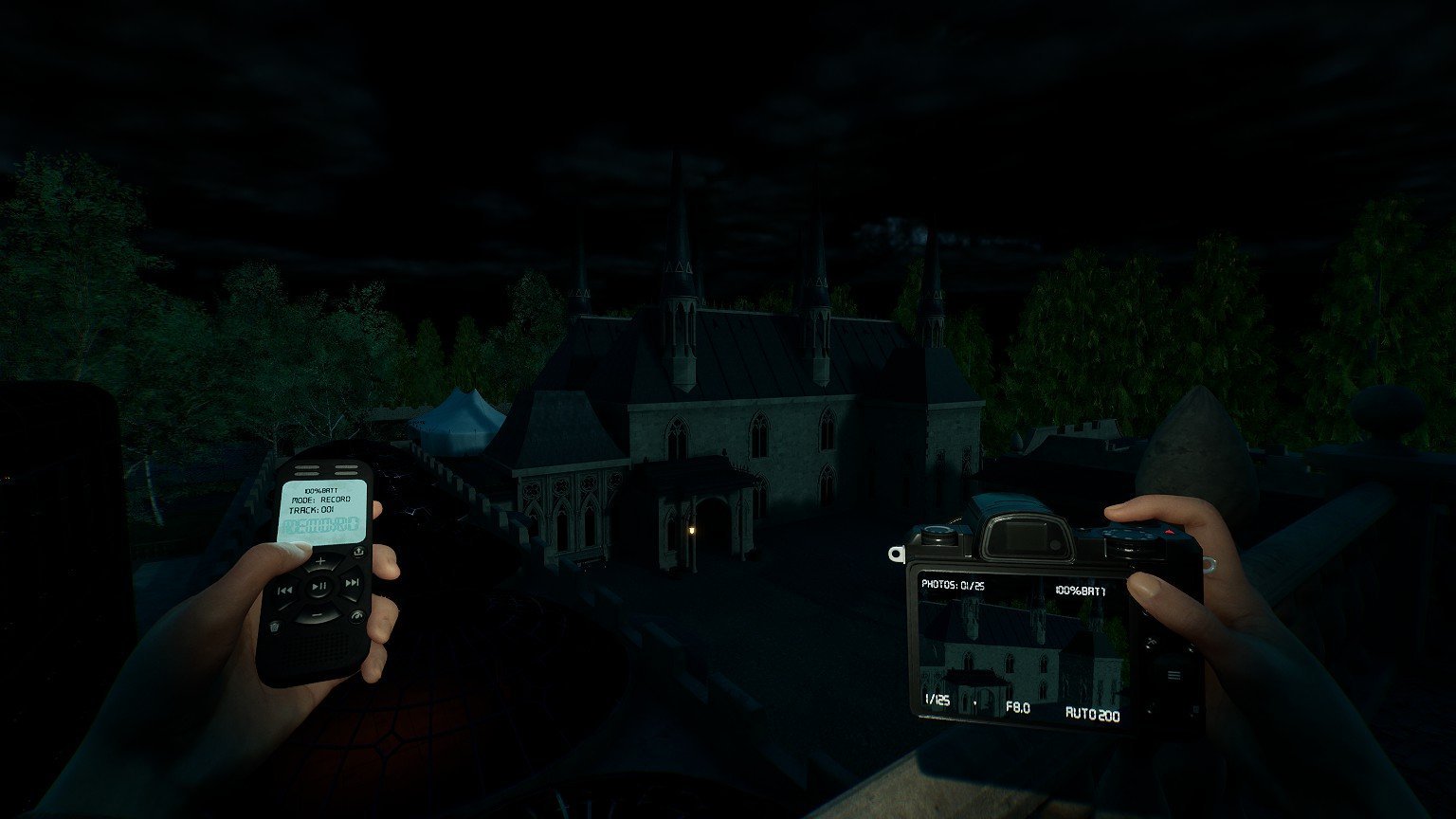
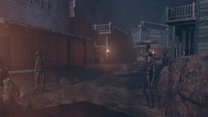
There’s a high level of 3D realism to this estate as you freely roam around in first-person perspective. The night sky features a constant full moon shining its light through the windows. All rooms are heavily furnished, almost every wall has bookcases or paintings (many a portrait or statue gave me a jump as I turned a corner and thought it was a ghost), and the place is strewn with little ornaments like framed photos, plants, decorative items, gramophones, and the deceased’s personal relics. Over time, as it became more and more familiar, Magnificent Drive began to feel like a real place to me. As I discovered the stories of its previous inhabitants, I could imagine them conducting their business in those rooms – and eventually, I really DID get to see them!
There’s an in-game map that lets you check where all the rooms are located in relation to each other, but its design leaves the passageways, doors and staircases difficult to discern, sometimes making it hard to get where you want to go. Or should I say harder. Perhaps there’s a rule that haunted houses need to have strange architects, as I often felt I had to take the long way around to get anywhere. For instance, when I wanted to go from the west wing to the east wing, where an extra doorway would have been logical, instead I had to go down or up a floor, traverse to the other side and then take another staircase back to the level I was on originally. At first it wasn’t clear where I was on the map, but sometime during my 30-ish hour playthrough, I was surprised to see that the developer had updated the game with an icon of Stephanie’s face, indicating her exact location in the mansion, making navigation a bit easier.
Fortunately it’s fun to walk around, as Provocation not only astonishes with all the graphical details, but also the natural sounds of an old house. Creaking wood; the heating system acting up; the elevator’s motion sensor suddenly activating the pulley system as you are walking by; the chitter of rats in the kitchen, attic and cellar; and even Stephanie’s own footsteps are all designed to fool you into thinking you are hearing evidence of ghosts. At one point I found my way onto an elevated patio when a mighty screech almost blew me off my seat, only to realize it was an owl swooping overhead. (I haven’t trusted owls since Twin Peaks.)
There’s a lot to this game, so it’s a good thing it starts off with a tutorial explaining all the steps in this ghost-hunting procedural. First of all, you log onto your laptop for your client’s email, stating which rooms are haunted. Then you can browse the “Fallen Apple” app with a complete family tree and records of who died under which circumstances. You can ignore the people who have a normal death notice or eulogy in their file, but once you see a newspaper headline, you know something bad happened. You can upload suspected ghosts to your tablet so you don’t have to return to your laptop each time you want to check something. Then it’s off to the haunted room!
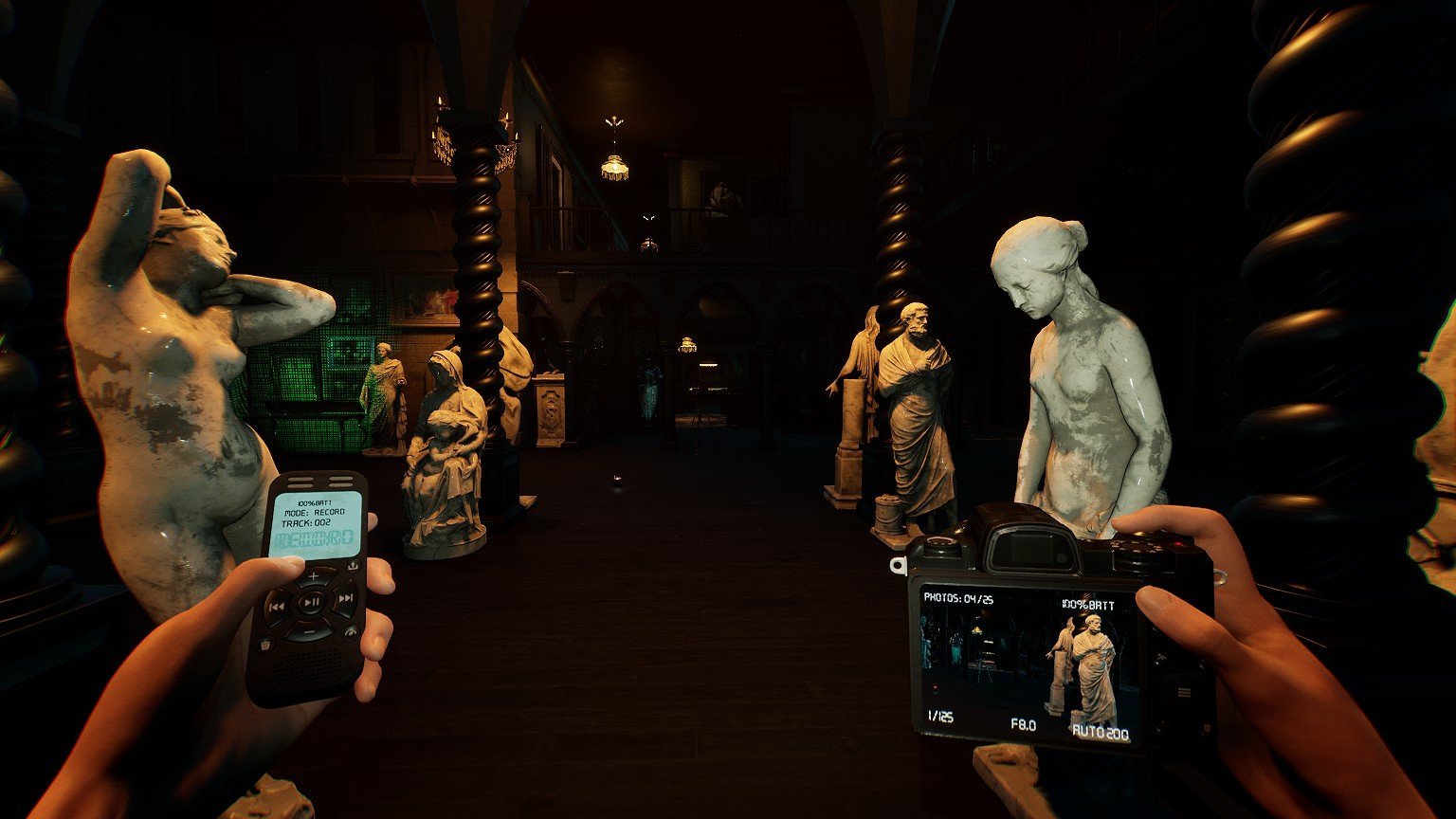
Hunting ghosts is a step-by-step process. At first it seems quite cumbersome, and you might question whether some things are really necessary. However, the objective is to provoke the ghosts into revealing themselves, which happens not only by detecting temperature and energy fluctuations, but also by talking to them and gradually raising their spirit levels, giving them the needed power to manifest visually or audibly. This part of the gameplay is similar to Paranormal P.I., but if you’re new to it you’ll get better and faster at it over time. I’ve never gone ghost hunting outside of games like these, but Provocation feels like a very realistic representation of what it must be like, except here you don’t need to possess a fisherman’s patience.
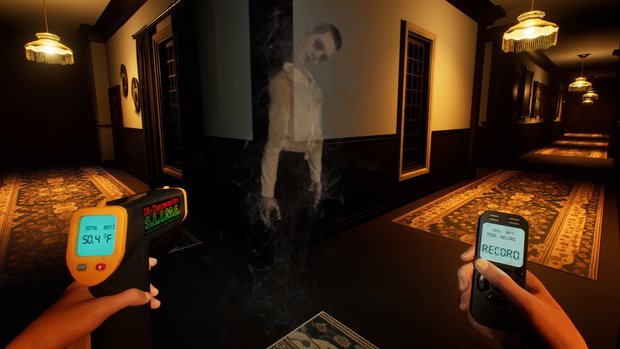
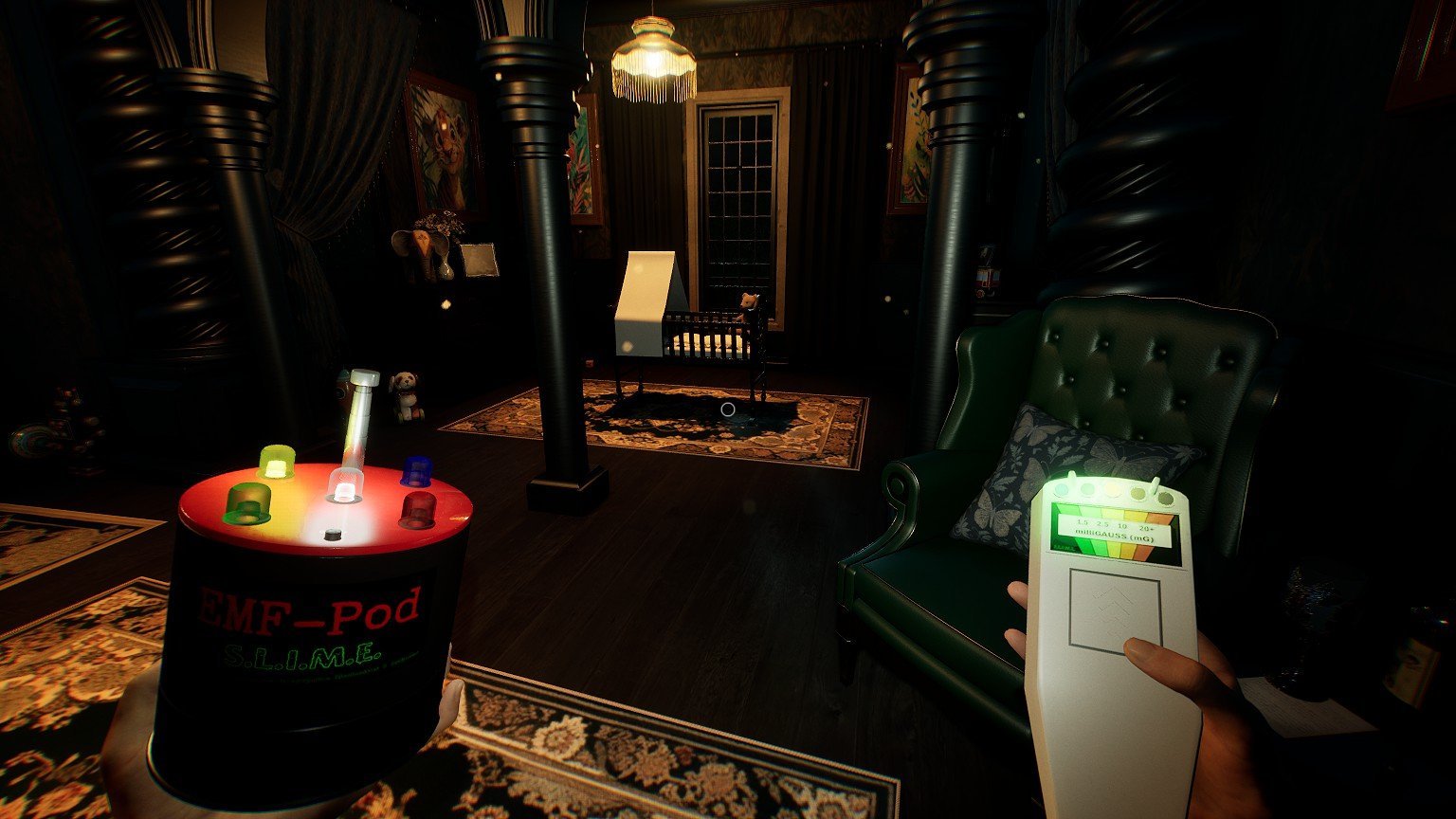
First you’ll need to check which electrical circuits in the room set off the EMF meter, and where the natural hot and cold spots are with the thermometer. Then you’ll go around the room to find a couple of abnormal readings that can’t be explained logically, proving there’s a paranormal presence in the vicinity. The more evidence you gather, the more active the ghost gets. Set up the laser pen and the EMF pod – the first will glow yellow instead of green when a ghost passes through, the latter will strike the alarm when a spirit comes near – and put the camcorder in a corner to automatically record any visual apparitions (note that it can only record five clips), then explore with a voice recorder and a camera to capture all the spectral proof you can. Once you upload all evidence to your tablet’s deduction board, you can start figuring out the identity of the ghost.
The deduction board is mainly a helpful tool to keep track of things. You don’t have to use it if you don’t want to; once the evidence is collected by your equipment, that’s enough to raise the spirit levels. The board might be handy later on, though, when there are five ghosts haunting the mansion simultaneously and you need to sort through which piece of evidence belongs to which ghost by flagging them with unique symbols, which are automatically connected to the rooms mentioned in the email. The deduction board also states how many ghosts you can actually release each night. The client email might include an extra room the owner thinks is haunted but isn’t, which you then have to flag as a false positive, literally by using a red herring symbol.
It sounds fairly routine, but all that evidence won’t just be handed to you on a platter. You have to work for it by provoking the spirits, then asking them relevant questions in the categories of who, what, where, when and why. Some questions will lead to audio evidence, others to visual, but you can also trigger telekinetic energy – objects levitating or thrown through the room, light switches being flicked or light bulbs blown out – or keep forcing the ghost level to rise, which makes them more active and less transparent.
Examples of questions you can ask are “Can you show yourself,” “Tell me when you died,” and “Were you murdered?” Each category only allows for three questions per ghost in the field, but your laptop has longer lists from which you can choose the three you want to ask. It’s possible to switch questions for each of your expeditions, but after a couple of tries I seemed to have found ones that worked efficiently enough throughout the game, and I never went back to change them.
A big and very welcome improvement since Paranormal P.I. is that Provocation allows you to use two pieces of equipment at the same time. You can search for temperature fluctuations and energy spikes simultaneously, or record voices and take pictures side by side, effectively speeding up the necessary steps of an investigation. Some items can only be held in your right hand, like the cameras, but for others Stephanie is ambidextrous enough. Another major improvement is that you carry ALL your equipment with you in a backpack, and you can switch things out at will, where in the last game you always had to return to your van to do that. I’m really glad to see the developer listened to feedback on this and was able to implement a more user-friendly method here.
Among the Whispers: Provocation

| Genre: | Horror, Mystery |
|---|---|
| Presentation: | Realtime 3D |
| Theme: | Paranormal |
| Perspective: | First-Person |
| Graphic Style: | Photorealism |
| Gameplay: | Simulation, Exploration |
| Control: | Direct Control |
| Game Length: | Long (more than 10 hours) |
| Difficulty: | Medium |
The spirit level rises automatically as you gather evidence, making the ghosts less and less transparent, up to the point when you hear chimes. This is when the ghost can be released, so hopefully you’ll have also deduced its identity by then. Usually they manifest in a way that you can tell whether they’re male or female early on, eliminating half of your suspect list right away. You can then further narrow things down by watching a spirit reenact the moment of their demise (you might see someone shooting themselves in the head, or hanging in mid-air with a crooked neck) or by matching something they are saying to the information in their archived profile.
Sometimes this is easy. For instance, the first sound file I recorded in searching for a particular ghost was that of splashing waves, so I knew it was the family member who had drowned. More often than not, though, it’s hard to discern what the ghosts are actually saying. As was the case in Paranormal P.I., there is some subtitling, such as when Stephanie is talking to herself or addresses the ghosts, but not for the non-corporeal voices you need to pick up on yourself. Very rarely do they speak clearly, saying something about what they loved to do in life or how they died, but mostly it sounds like gibberish, and you really have to compare what you’re hearing to the personal quotes written in their files. Your voice recorder has an option to slow down the playback, but in my experience this always made the voices sound worse instead of better, so I don’t really know why that option was added.
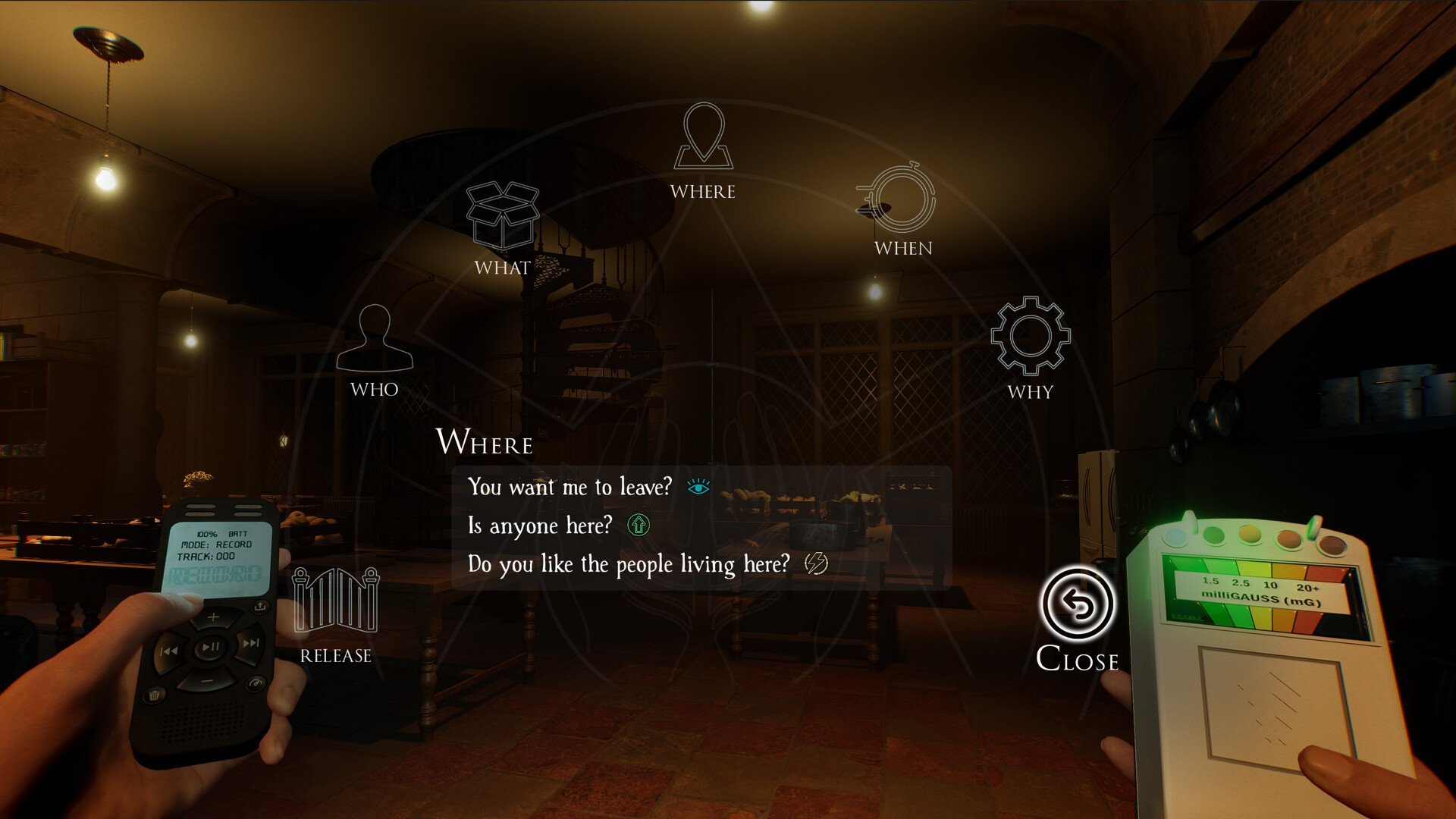
Once you are sure who you are dealing with, you can check their file, which contains a written statement about which room they practiced their hobby of choice in and even a close-up photo of their “relic,” a favorite item that binds them to the earthly realm. It can be anything: a hat, a book, a spatula, a coin or butterfly collection, always connected to what they were most passionate about in life. You will have to go in search of the room with the relic, then bring it back to the haunted room. With the appropriate relic in hand – the mansion is filled with relics, so make sure you pick the right one! – you whip out Jacob’s Ladder, a device with two antennas through which an electric current runs and starts sparking when the spirit is near. Then you engage the ghost in conversation again and this time call out their name, their hobby and the way they died. Stephanie will address the spirit automatically with the necessary words to get them to move on, demonstrating some very empathic writing in this game.
You will encounter three different ghost types. Intelligent ghosts are benign, aware of your presence, easily discernible, and they will more easily engage in direct conversation with you. Shadow ghosts are their more malevolent counterparts. Their dark, oily forms make it harder to identify them. They move faster and will even jump out at you screaming, and may try to attack you by throwing objects. They scared me the most. The intelligent ghosts might rush at you as well and scream “Save me!” or “Help me!” once in a while, but at least they don’t flail their arms wildly or keep chasing you around. Lastly, you have the residual forms. They start off as nothing more than smoke or vapor, but solidify as you take photos or record sound. They aren’t aware of your presence and just move about their business. All three ghost types have a different setting on the Jacob’s Ladder for it to work, and residual ghosts also require you holding a lit smudge stick to capture their attention when you try to release them.
Each chapter contains a number of documents scattered across the haunted rooms you’re investigating. These can be letters, notes, newspaper articles, legal documents, calendar pages, etc. Stephanie will automatically notice them when you move her nearby, but it’s up to you to take a photo of them and upload them to the deduction board. There you can inspect them in more detail by zooming in, panning them, and actually read what they contain.
These documents aren’t directly connected to the ghosts you are releasing, but rather reveal more of the overall story of the mansion throughout history. Some of them are related to puzzles you encounter, so you will need them in order to progress. For instance, at one point you will find a diagram of a room showing a secret compartment behind a bookcase. The symbols on the books might remind you of another document, so then it’s up to you to put two and two together. Another puzzle has you searching for a combination to a keypad lock. I very much appreciated the integration of these more interactive puzzles to break up the repetitive nature of ghost hunting; so much, in fact, that I wish there had been a couple more.
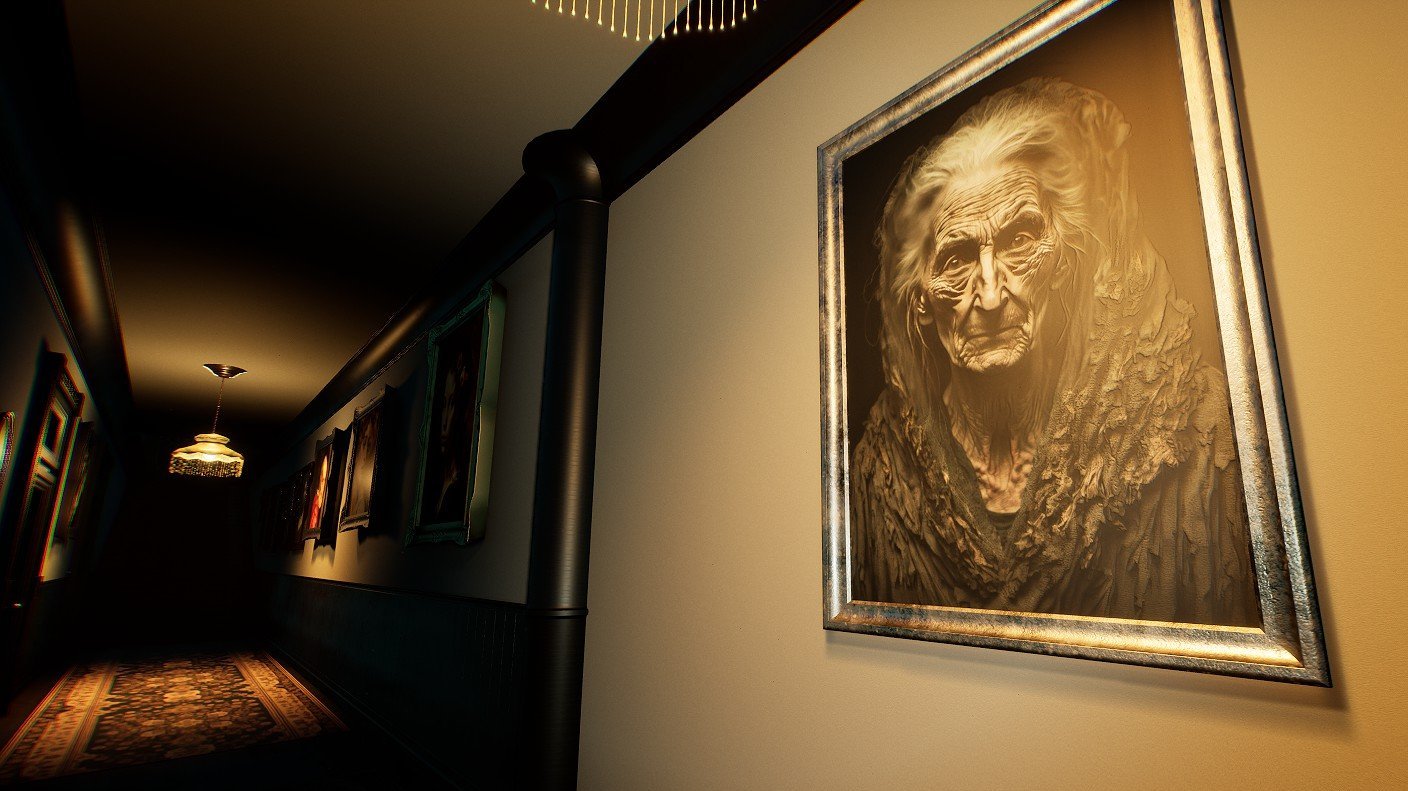
Most documents are purely for flavor, but your discoveries will eventually force you to make the game’s final decision, leading to one of three possible endings. Not that an ending has to mean the end, as you can keep hunting for ghosts indefinitely if you dare. Either way, the unveiling of the mansion’s secrets – constantly hinted at in the archive documents I found – totally blew me away when I finally saw the evidence of all those horrors for myself. The payoff was definitely worth all those hours of roaming the rooms.
To get to that point, you can keep track of your progress in the “summary” screen after a night’s investigation. Each new chapter is unlocked after you have released ghosts in a certain number of unique rooms. (Releasing a ghost in a room where you already set one free during a previous investigation, won’t be counted as further progress.) The summary also lists how many ghosts you’ve released and how much evidence you have found, both for that particular night and throughout the entire game, which will impact your Steam achievements. So even if you have “finished” the game, completionists might want to return and keep playing to unlock more.
What I sorely missed was a manual save function. The game only records your progress when you call it a night, leave the mansion and view such a summary screen. It doesn’t even save when you quit while you’re still investigating. You may have released two of four ghosts but just don’t have any time left for the others. A night at Magnificent Drive can easily take a couple of hours, especially when you’re still learning the ropes, and sometimes I had to stop after an hour without having released any ghosts at all, meaning I had to completely redo those same nights when I returned – albeit with different ghosts, due to the randomization system – and finish everything in one sitting.
Technically this doesn’t matter much, since you can progress by releasing only a single ghost each time. It will just take you many more in-game nights to reach the necessary quota to unlock the next chapter, and you’ll lose time going through the email and the family tree again. Mostly, though, it just didn’t feel right to me, as if I was giving up on the investigation and abandoning the ghosts needing my help. A better save system wouldn’t have left such a bad taste in my mouth on those occasions when I had to stop short of my goal.
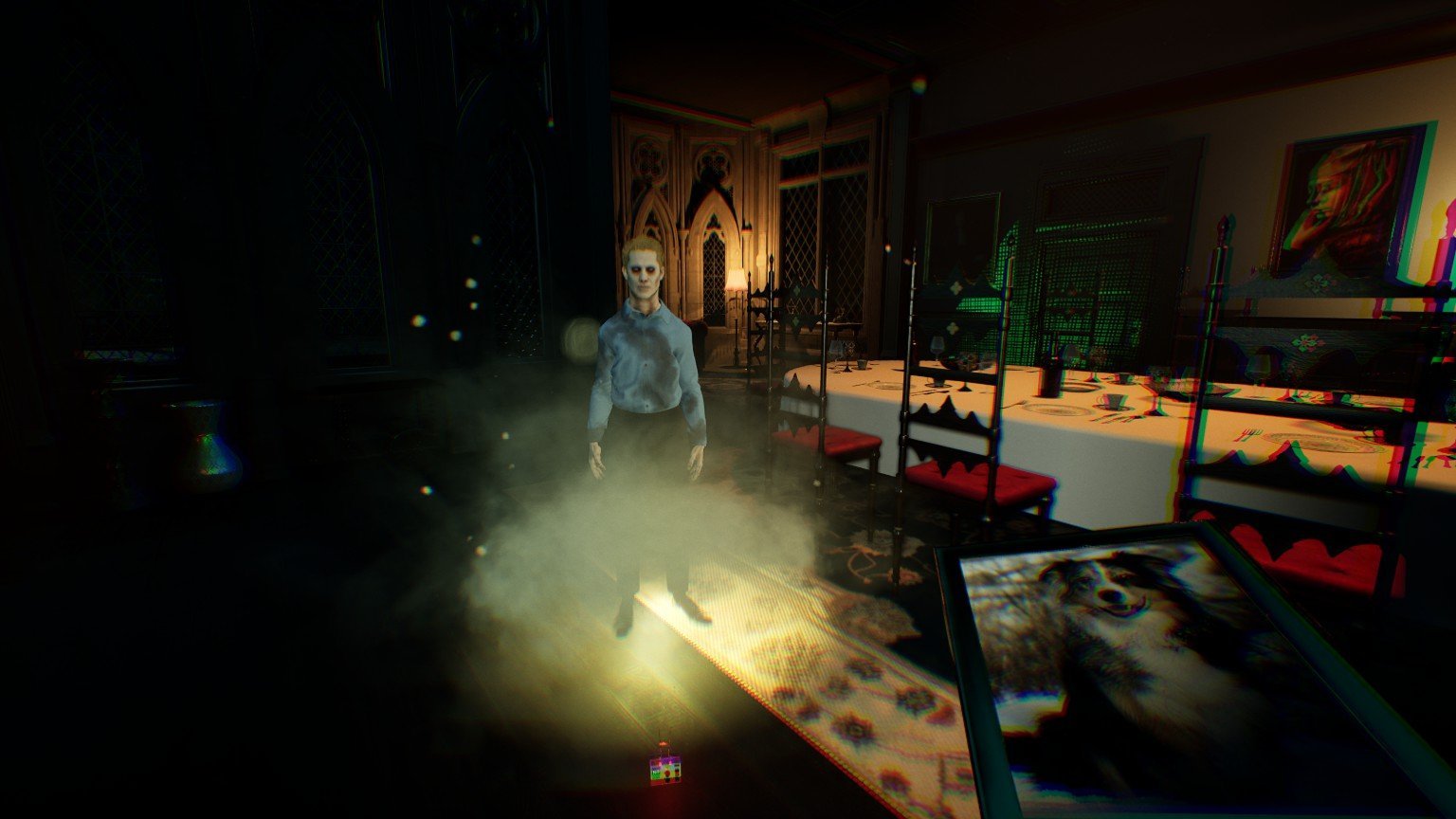
The ghosts aren’t the only strange things in the world of Provocation. Each night Stephanie enters the mansion, the family tree of previous inhabitants always changes with new names. I thought this was weird, but it’s part of the game’s randomization: their names; how many of them died tragically or due to natural causes; whether their deaths were labeled an accident, murder or suicide; what their hobbies were and thus which specific relic will release them; and the rooms they are haunting. It’s like each night, the mansion’s history resets. And the more you progress through the chapters, more and more spirits will be present during a single night. This is fun when you look at the game only as a ghost-hunting simulator, giving it plenty of replay value, but from a narrative standpoint I would have preferred a single family more connected to the overall mystery surrounding the mansion.
If you like a challenge, the game features an optional time limit to make things a bit more difficult. You can keep track of time using all the grandfather clocks scattered throughout the rooms. Ghosts will stop their hauntings at 5 a.m., and then Stephanie will call it a night. It adds realism, of course, but from a gaming point of view it’s very frustrating when you’re finally getting some visual evidence of a ghost only to have the clock chime five and all activity stops right when you are about to make progress. Then all you can do is finish the night and have the mansion reset again. After that happened to me once, I turned off the time limit so I had one less thing to worry about.
Another difficulty setting is the “nerve” system. If Stephanie witnesses more and more ghost signs but you fail to capture them as evidence – whether because you were too slow or didn’t even realize something was happening (maybe you were busy looking at the deduction board or rummaging through your backpack) – or when she gets attacked by one of those pesky screaming shadow ghosts, she gets more and more frightened. Her heartbeat will become audible and start beating faster and faster, her vision will start to blur, she will drop any equipment she’s holding, and eventually, if you don’t run away, she will faint and wake up all the way back at base camp.
Stephanie wears a watch you can check to see the status of her condition. The level starts at 100 but will drop down towards zero as she gets agitated, so you’ll have to leave the haunted room to find a quiet spot and wait for the level to gradually rise again – or head back to base camp, where it will replenish much faster. But just like the time limit, you can turn the nerve setting off and enjoy fearless nights of investigation. I decided to keep this setting active, because I enjoyed this type of human behavior of the main character after the more stoic Conrad Stevenson in the previous game. It certainly instills a greater feeling of danger; here every ghost has the potential to make you faint, while in Paranormal P.I. you only ever had to fear the demons.
Another reason for keeping that nerve setting active is the wonderful voice acting for Stephanie, performed by the development team’s own assistant storyteller Kris Merryman. She voiced a couple of ghosts in Paranormal P.I. but was handed the lead this time, which was an excellent choice! When she’s panicking, she sounds so realistically terrified you can almost feel her shivers as she tries to calm herself down. When she’s more relaxed, she has a lovely voice to listen to, going from all business-like when trying to provoke the ghosts, to lively and cheery during a release when she tries to lure them by showing interest in their personal passions, and finally to very empathetic and sad, almost in tears as she comments on how they died and that it’s okay for them to move on.
Conrad Stevenson himself has a short cameo when he phones Stephanie to offer further advice after the tutorial. I thought it was a missed opportunity not to have him call more often, as a kind of interlude to make it more obvious when you were going from one chapter to the next, or even just to compare notes as fellow ghost hunters facing extraordinary circumstances. I believe it would have added a lot to the overall narrative experience.
Final Verdict
Not only does it provide another hauntingly eerie environment to explore, Among the Whispers: Provocation is a more active game than Conrad Stevenson’s Paranormal P.I. and I can only applaud that development. While patience is still a factor, and you might get frustrated when a ghost spouts unintelligible gibberish in your quest to find out who they are, it’s a much faster-paced title that also adds puzzle elements to the gameplay. And while the general setting is the same throughout this game, each night is different thanks to its randomization. Coupled with slowly unlocking more rooms, more tragic deaths and more ghost hobbies, and the historical mystery of the Magnificent Drive mansion to uncover through all kinds of collectible documents, what might otherwise have been a repetitive procedural is elevated into a fun, exciting and mysterious story as well, which will no doubt give even the bravest of ghost hunters some sleepless nights.
Hot take
Among the Whispers: Provocation took the issues of its predecessor and improved on all of them to deliver a lengthy, scary and highly realistic ghost-hunting simulator with more active gameplay in solving puzzles and figuring out the spirits’ identities.
Pros
- Handy tutorials for the ghost-hunting process
- Inventory is now unlimited
- Frighteningly eerie realistic setting filled with creepy sounds
- Light puzzle solving complements the ghost hunting
- Time limit and nerve system can be disabled
Cons
- No saving during lengthy investigations
- In-game map not as useful as it could be
- Changing family tree each night feels strange
Johnny played Among the Whispers: Provocation using a review code provided by the game's publisher.

- Advertisement
- Help support AGH by advertising with us






0 Comments
Want to join the discussion? Leave a comment as guest, sign in or register in our forums.
Leave a comment