
REANIMAL review
- 0 Comments

A new Little Nightmares installment in everything but name, Tarsier’s spiritual successor makes a strong case for being the series GOAT
If it looks like Little Nightmares, swims like Little Nightmares II, and quacks like the combined Little Nightmares DLC, then it must be… REANIMAL?! Yes, whatever the legal behind-the-scenes machinations that saw Tarsier Studios’ creation handed off to another developer for the latest official sequel, make no mistake: REANIMAL is very much a spiritual successor to the indie Swedish studio’s acclaimed genre-mutant horror series. It’s got all the franchise hallmarks: gorgeously dark and dreary environments, (mostly) helpless child protagonists, disgusting monsters, and a variety of decrepit, gut-churning environments requiring a bit of light stealth, problem-solving and frantically running away to survive. The odd unfortunate weakness returns as well, but those are easily forgiven in light of a few fun new wrinkles in the old familiar formula. It isn’t quite as outright scary as I remember its predecessors to be, and the gameplay is perhaps even more streamlined, but it’s every bit as sadistically horrific as ever, and this time you can share the torment (or not) with a friend.
The less I say about the story, the better, both because REANIMAL is a game that benefits from knowing as little as possible going in, and because I have no clue what it’s about. In fact, I’m not sure it’s about anything. There is a broad premise, of course: two children (apparently an orphaned brother and sister) return to a hellish island by boat, hoping to save their friends and live to tell the tale. There’s even a bit of barely whispered dialogue to convey it for the first time in three games. And… that’s really as far as it goes. Any other info remains elusive throughout, left totally open to interpretation. What happened to this world to make it so corrupted and malign? Why do the children all wear disturbing masks? Who – and what – are the grotesque creatures and other denizens of this place that seek to capture (or just eat) our fearless protagonists? Why is there a major war apparently going on, at times placing us right on the frontlines? Why is the little girl so sick? (Well, that one is sort of explained, in the most bewildering way possible that raises more questions than it answers.)
Normally I prefer game stories to be a little more revealing, if only conveyed through environmental details as you go along, but REANIMAL is very much in the vein of modern puzzle-platformers that take the principle of “show don’t tell” to the extreme. And it works here because it’s not a bug, it’s a feature of a series that has always reveled more in its “nightmare” fuel than narrative coherence. It’s like a terrifying dream you can’t wake up from, with vaguely mundane backdrops, yet twisted and distorted in ways you wouldn’t dare consciously imagine – and just when you think you’re getting a handle on what to expect, it morphs again into something entirely new and equally confounding and frightful.
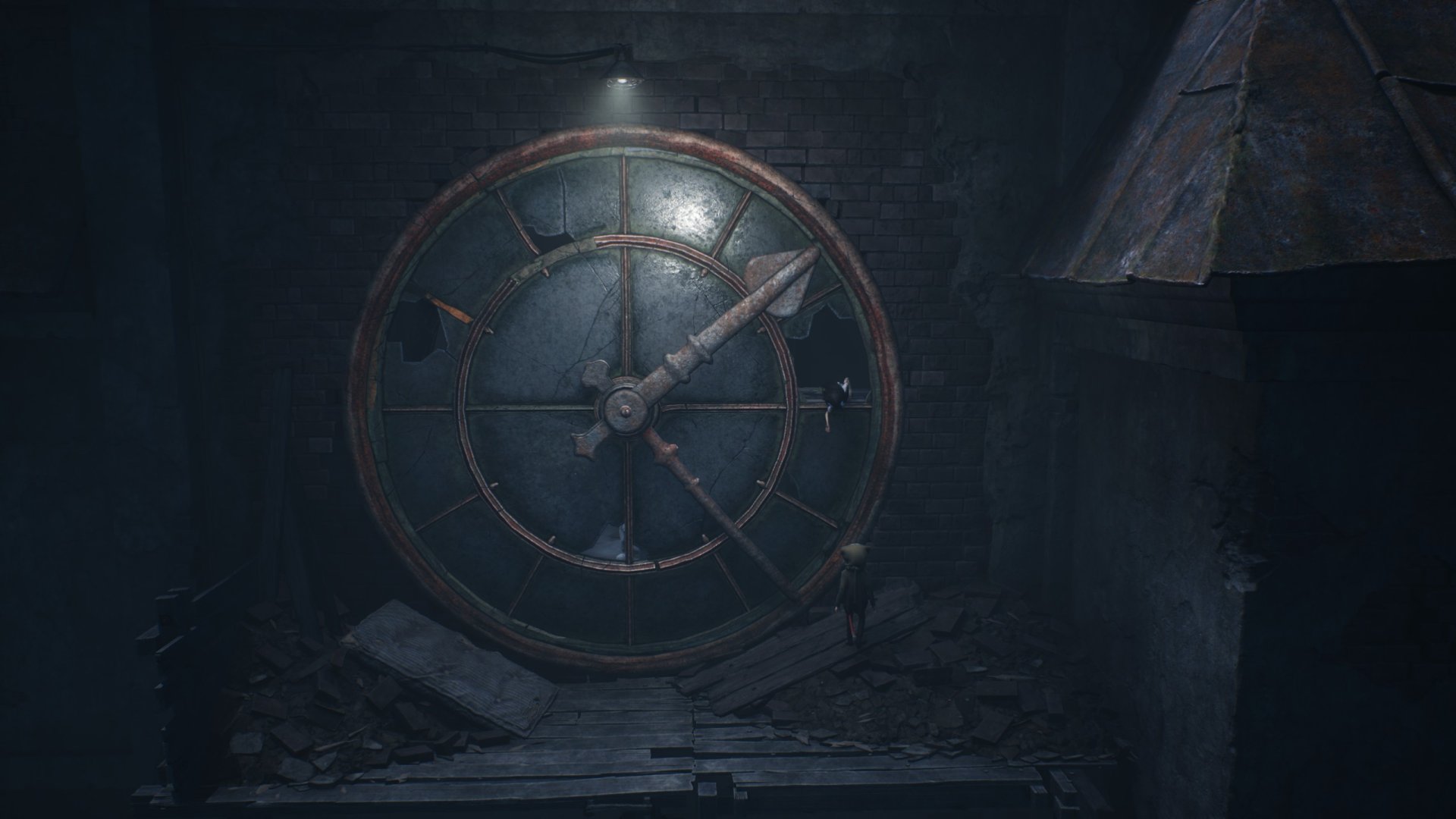
Throughout the course of the game, you’ll make your way through a number of wretched half-destroyed locales, all in the dead of night. (Or does the sun not exist here? It certainly seems like a place that hasn’t seen one in centuries, with all the psychological ramifications that would entail.) You’ll traverse them all not just horizontally but vertically as well, from the top of a crumbling lighthouse to the husk of a once-great city to the sewers and bowels of industrial ruins, underground tunnels, and even a brief descent in an atmospheric diving suit to the pressurized ocean floor, scaling scaffolding or climbing rickety, impossibly long ladders up steep cliff faces or riding lifts and elevators to get around on land.
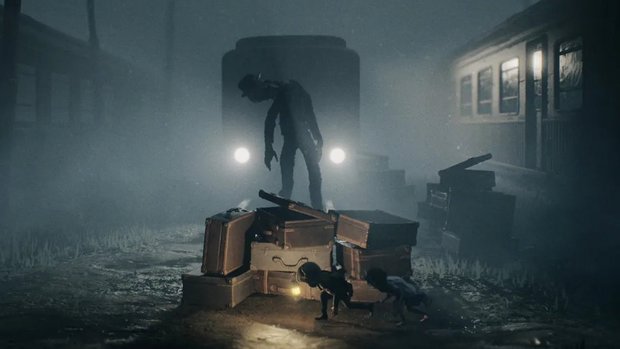
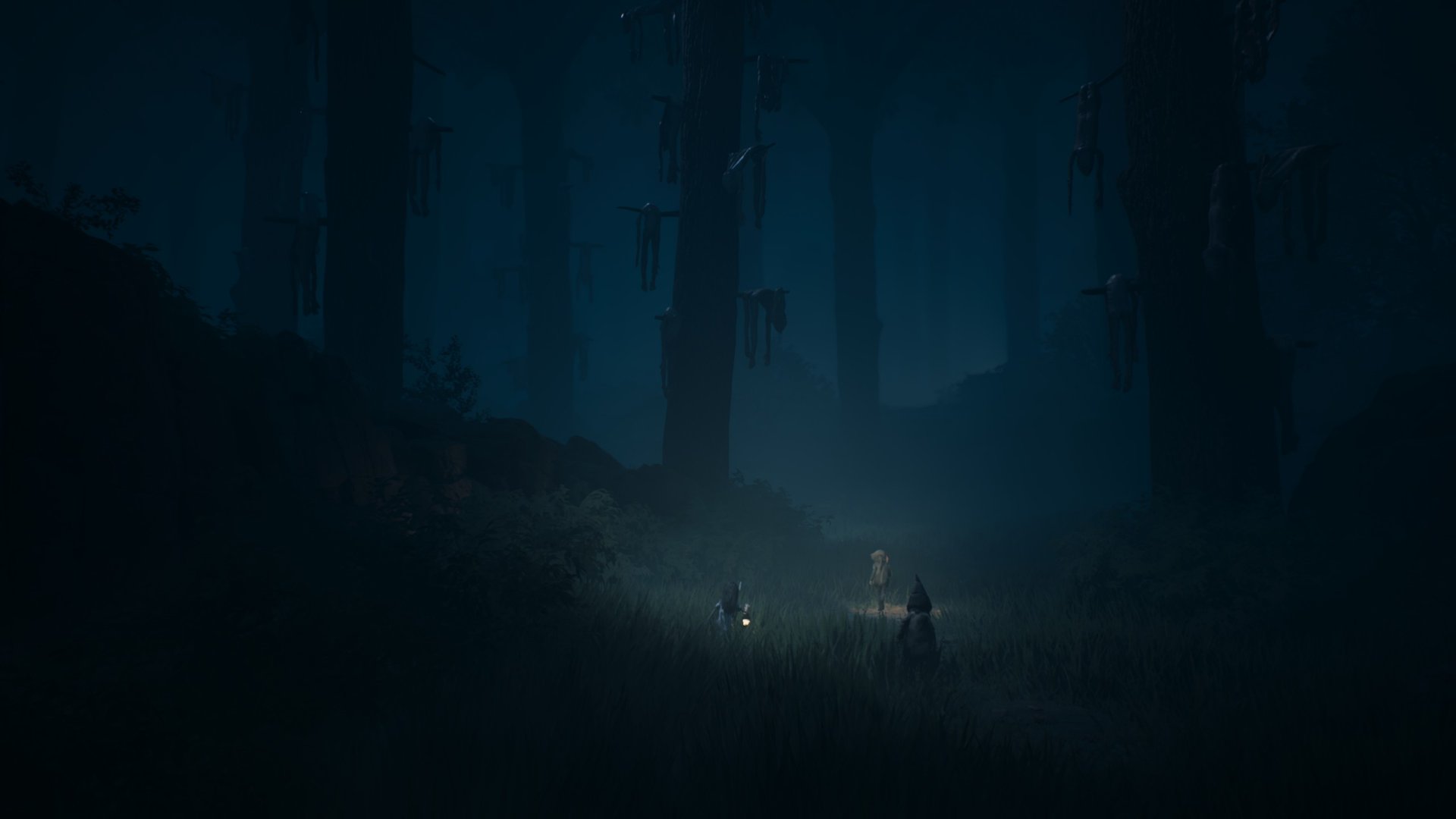
Each scene is packed with wonderfully macabre details: a demolished theater is still playing a psychotic black-and-white film for a lifeless audience; a corpse lies hidden under a sheet in a hospital’s long-abandoned operating room; dusty apartments are filled with eerily posed child sculptures; a massive whale-like creature with a missing eye blocks passage through a giant derelict ship. Oh, and then there’s the skins. Human skins. Or something akin to that, anyway, like the molted remains of snakes, left lying around everywhere – hanging from ceilings and trees, seated like passengers on derailed train cars; they’re everywhere. And that’s just scratching the surface of the many horrendous sights to be found in REANIMAL. I don’t dare spoil the best surprises, but let’s just say you’d best be advised not to eat a big meal before playing.
If only we could see this beautifully disgusting world better. It’s not so much a complaint as a resigned lament that it’s all so very DARK. The darkness works wonders in creating an almost suffocatingly oppressive environment in which you never know what might be around the next corner. At times I was literally straining my eyes to see what depraved deformity might be lurking ahead of me in the murky fog, my path lit almost exclusively by the boy’s lighter and the girl’s lantern (which thankfully never run out of fuel). To their credit, the designers have made fantastic use of lighting to stage particular set pieces: silhouettes almost dance in the flickering of faulty fluorescents, and lightning in the background offers just a terrifying momentary glimpse of a giant creature lying in wait. Whenever (slightly) better illumination is offered oh so briefly, it feels like a gulp of fresh air before plunging back into the relentless black and blue.
Sound, too, is handled in an awfully wonderful way – or is that wonderfully awful? I’m not sure if it’s true that the loss of one sense sharpens the others, but with visibility often so limited, you’ll be acutely attuned to any floor creak, groan or growl from the shadows, or – heaven forbid – a deafeningly loud tinkling doorbell with a stalking creature on the prowl. Only rarely did I hear what would traditionally be described as “music,” as the game relies almost exclusively on haunting tonal pieces to heighten the mood, and does so brilliantly for maximum tension-raising immersion.
Curiously, as creeped out as I continually was, I rarely felt the same level of abject fear as I did in Tarsier’s previous two games. The series was never about jump scares, and isn’t here either – though there are some incredible ones, generally just when you think it’s safe to breathe again. However, my constant sense of dread was somewhat mitigated by having company this time around. While Little Nightmares II included an occasional companion, often you were split up and spent most of your time on your own anyway. In REANIMAL, not only are the two siblings continually together – at one point even physically bound – you’ll be joined at times by any other children you manage to help free. At one point I had five in my party, all told. There’s no chitchat – only at designated rest points is there any conversation at all, and even that is kept to a minimum – and the rescued kids are never any help in a fight, but even so, their presence alone made the experience feel less desperately isolated. The flipside is that their safety then became my concern, which… let’s say, could occasionally raise its own emotionally devastating complications. ’Nuff said.
REANIMAL

| Genre: | Horror |
|---|---|
| Presentation: | Realtime 3D |
| Theme: | Monsters, Team-up |
| Perspective: | Third-Person |
| Gameplay: | Co-op, Environmental puzzler, Survival |
| Control: | Direct Control |
| Game Length: | Short (1-5 hours) |
| Action: | Combat, Platforming, Stealth, Timed events, Chase, Driving |
| Difficulty: | Low |
| Graphic Style: | Simulated realism |
A second protagonist isn’t just for emotional support, of course, as the game has been designed for two-person co-op, either locally or remotely, with the added bonus that only one player needs to own the game. Both players share the same camera angle following along as you traverse the 3D environments, so no split-screen, no separating to go your own way. You can’t even wander too far from each other before the screen starts to impenetrably darken. Not that there’s ever much call to head in opposite directions, as most scenes are nicely self-contained. I had fun playing with a partner, but there aren’t a lot of opportunities for crazy shenanigans, or even experimenting. You’ll sometimes need to coordinate motion controls for equipment like a crosscut saw or rail cart, but for the most part the need for two players is few and far between, reserved mainly for times when one person must bypass an obstacle before making a way for the other to follow.
Rest assured, however, that if you’d like to play alone, you can do so. You’ll play as the boy, with the computer controlling the girl and filling in more than capably, jumping in automatically to help when lifting a heavy grate or pushing a car is a two-person job. When a little more guidance is needed, a simple button or key press (you CAN play using a keyboard/mouse combo, but a gamepad is recommended and much more intuitive) on the relevant hotspot will direct the girl’s attention where you need her. Only one sequence, involving getting both children across a series of collapsing ledges, proved a bit of a pain on my own, as the girl had a maddening tendency to go where the game wanted her to go, not where I did. (Which, to be fair, was probably a blatant clue that I was doing something dumb, which I was too stubborn to recognize right away.)
That’s not the only time that the correct solution to a problem isn’t easily discernible except through trial and error. Perhaps my biggest beef with all three Tarsier horror games is their reliance on learning by dying. Death is only ever a minor setback, as you’re revived nearby after a short animation, but it’s still unfair to meet a grisly demise in the same sequence over and over again for reasons you couldn’t have anticipated. It doesn’t happen too often in REANIMAL, but enough to remain a bugaboo. Another gripe, if a fairly minor one, is that when throwing projectiles such as harpoons at oncoming enemies or floating mines, it sometimes felt like a coin flip whether the hotspot indicator would actually mark a target, resulting in a handful of other abrupt ends.
Then again, such loosely responsive controls help to emphasize that you are anything but a warrior. And by and large, this is not an action game that requires you to be one. Instead, as before, you are just a child – slow, weak, and incapable of jumping more than short distances, even at a run. Still, it’s a stretch to call this much of a platformer, as the protagonists will simply scramble over most smaller hurdles, and use of brother-sister hoist-and-pulls for larger obstacles is done simply by interacting with the appropriate hotspots. You’ll need to get close to identify them, though, as REANIMAL does not hold your hand. No yellow markers showing the way here, though the environments are linear enough that it’s rarely a problem, and even in the more open areas, subtle indicators draw you along. Several times I wondered if I was going the right way (or at the right time), and in each case it turned out I was, without the game ever banging me over the head with directions. (After the initial pop-up tutorial tips, anyway.) That’s great design.
You can fight on occasion, once you’ve acquired the necessary crowbar or other weapon, but combat is infrequent and far from quick-twitch stuff. It’s intentionally plodding and clumsy, if anything, which means you’re best advised only to pick on someone your own size. In fact, you have to, as you become instant finger food for any of the hulking, monstrous “bosses” that are teasingly foreshadowed long before an encounter occurs. Some are human(ish), like the badly deformed “tailor” washing and ironing and sewing those aforementioned skins in a dingy laundromat; while many are massive, hideous creatures that seem like sick animal mutations that went wrong many times over. Whenever possible, you’ll want to sneak quietly when an opening presents itself, ducking for cover and hiding when necessary. These scenes are always tense, in part because it’s never really clear when you’re undetectable or what a stalker will do next.
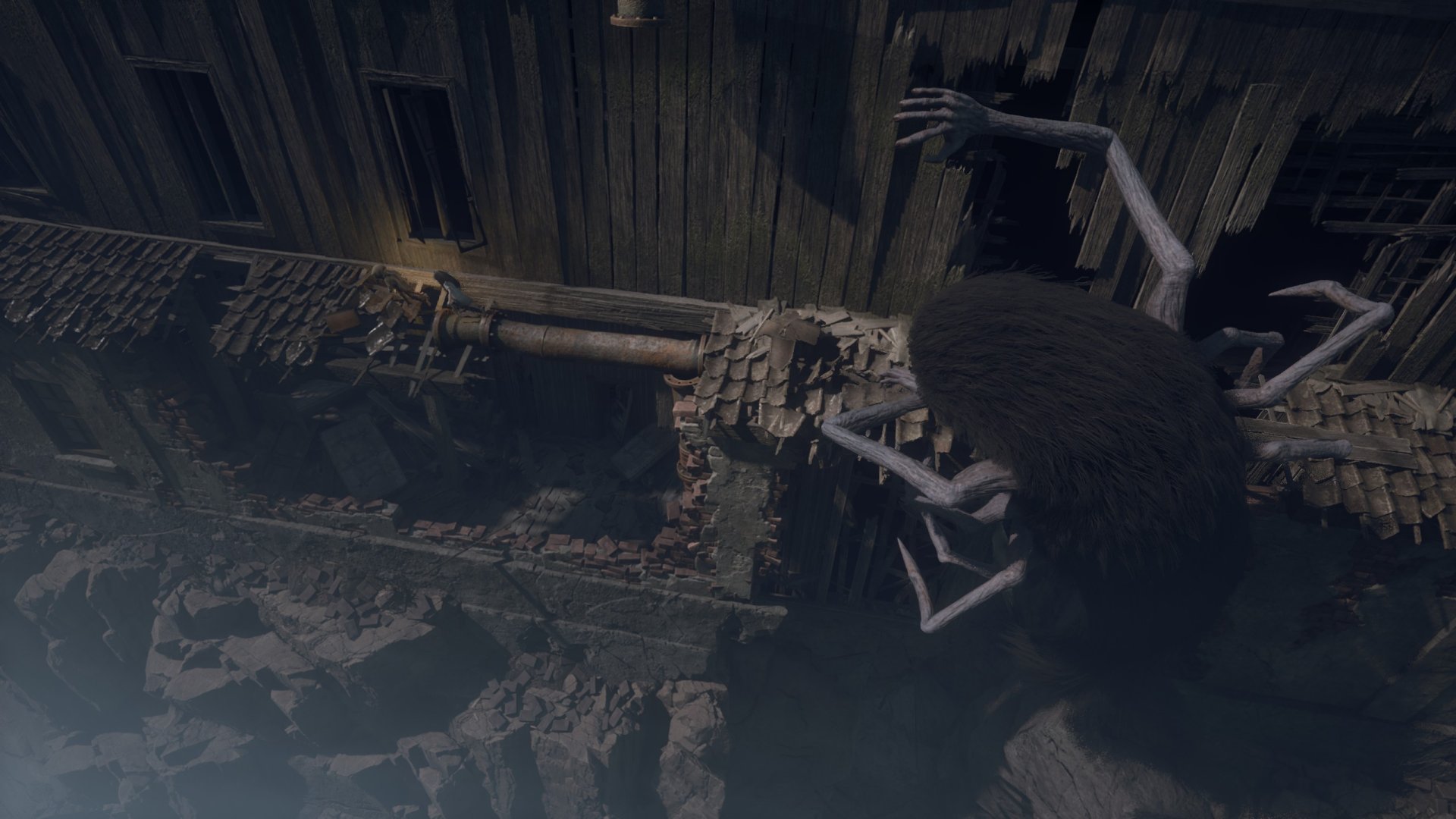
On very rare occasions, you’ll have to stand your ground and confront a foe, face-to-abominable-face, but these aren’t so much battles as cleverly orchestrated set pieces in which the game provides exactly what you need once all the circumstances are met. Perhaps a giant turret could help clear a canyon from the guardian protecting it. If only it worked. Hmmm. Most of the time, though, you have no choice but to tuck tail and RUN! The chase sequences in REANIMAL are perhaps its best. Certainly they’re the most exciting and cinematic. Often running toward the camera, you’ll have to dodge rubble and other obstacles with walls tumbling down, bombs exploding, or bridges collapsing as all hell breaks loose around you. They’re quite forgiving and never too long, but they’re fun to fail once just to see your gruesome (but never bloody) end. One particularly ingenious sequence has you fighting AND fleeing, but I’ll say no more about it.
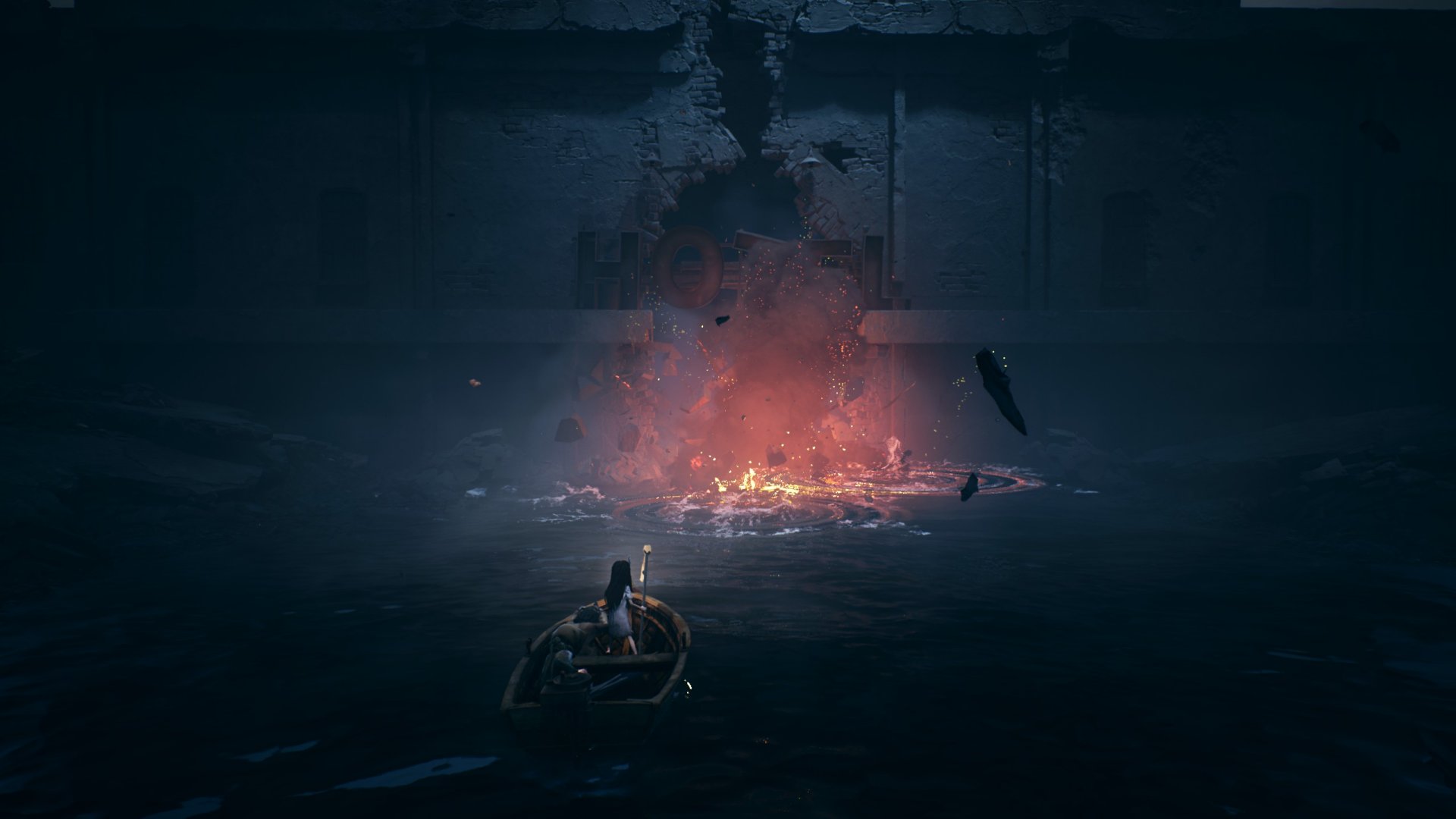
All this is very Little Nightmares, but where the game starts to separate itself is with the addition of vehicles. At one point you’ll be able to hop in an ice cream truck to escape imminent danger, and another time you’ll wreak havoc in a much sturdier vehicle, but much of your driving occurs on the water. From the moment the game opens, you’ll have access to a small motorboat, and you’ll continually return to it from your forays on dry land to continue your pursuit. This is critical in a world that’s suffered a heavy flood, as you’ll trawl not only natural waterways but unnatural ones as well, like half-submerged highways or the hallways of a former grand hotel. Controlling these vehicles poses no challenge at all, but they’re a welcome change of pace and injection of variety.
Tarsier’s games have always been light on puzzles, and REANIMAL may be the lightest of all. It’s best not to even think of them as “puzzles” but rather organic problems to be solved (my favourite kind). Only once is there any kind of code required, and even then the solution is provided right when you need it. Otherwise it’s simply a matter of figuring out how best to deal with impediments. Gaps in the floor of an old tenement building? Find an alternate route. Power needed to operate equipment? Locate and start up a generator. For better or worse, there’s rarely anything more complicated here than finding needed items for repair. It’s perhaps an odd choice in a game with co-op available, since two heads are often better than one at noodling around possible solutions. But it’s ideal for players who just want to keep moving, never lingering long in any one place. There are optional areas and collectibles to encourage exploration off the beaten track, including bizarre – sometimes ghoulish – masks you can equip. (Who hasn’t wanted to wear a head wrap made of clumped human intestines?)
While the game doesn’t waste time on cohesive world-building, it does touch on some interesting themes throughout its five-hour (single player) play time. Animals, of course – or whatever still qualifies as such – are a major factor, from farming super-pigs to lighting lamb shrines. So too is war; as if the many evils of this place weren’t nightmarish enough, perhaps the most harrowing environments are those that revisit the horrors of World War I, whether in its trenches, bunkers, or barb-wired no man’s land. The final sequence is spectacular, in every sense of the word, before the developers deliver an absolute gut punch of a denouement that will upend any sense you thought you were making of things. Tarsier strikes again.
Final Verdict
After a bit of a slow start, REANIMAL manages to find its footing – ironically considering you spend so much time in vehicles – in plenty of time to become a worthy spiritual successor to Little Nightmares. It might not have you trembling in fear, but many sights will repulse you and make your skin crawl (in the best way), while its clever world design will keep compelling you forward, whether to protect the children or just to stay fully immersed in seeing whatever aberrant, unhinged horror comes next. Tarsier fans should gobble up its familiar mix of survival, stealth and light adventuring, which offers more of the same… but a bit different. It’s perhaps easier than its predecessors, but this keeps the pace brisk whether you’re playing on your own or with a co-op partner at your side. The ending (including post-credits epilogue) clearly leaves room for all sorts of DLC, and indeed the developer has already announced three upcoming "Expanded World" expansions. I'm all for it, as I look forward to seeing (and not seeing) even more of this dark, gorgeous, utterly abhorrent world. Like its predecessors, REANIMAL is certainly not a pure adventure, but new name or not, it combines enough of the right strains to make a winning genre hybrid once again.
Hot take
Tarsier’s REANIMAL isn’t just Little Nightmares reskinned, with a new start, a new name, and a few welcome surprises added to an already winning horror adventure formula.
Pros
- Gorgeously macabre environments
- Seamless action and cutscenes are wonderfully cinematic
- Haunting tonal score adds to eerie atmosphere
- Vehicular sequences add welcome variety
- Playable solo or two-player co-op
Cons
- Occasional over-reliance on learning by dying
- Controls can be a bit finicky
- Relentless darkness can get to be a little much
Jack played REANIMAL on PC using a review code provided by the game's publisher.

- Advertisement
- Help support AGH by advertising with us








0 Comments
Want to join the discussion? Leave a comment as guest, sign in or register in our forums.
Leave a comment