
s.p.l.i.t review
- 0 Comments

A short but compellingly atmospheric hacking thriller, though its steep learning curve and programming focus may divide players
In most games, a weapon is easily recognizable as something that allows you to do physical harm to someone, like a knife, a firearm, or even a rock. Rarely have I looked down at the piece of hardware I use to access these virtual worlds and identified it as an equally destructive device. But the computer keyboard is an amazing piece of equipment – and potentially dangerous in the hands of a hacker. Mike Klubnika’s s.p.l.i.t celebrates the joy (and frustration) of typing via an incredibly satisfying, albeit crushingly oppressive, near-future adventure, giving the phrase “text-based” a whole new meaning. It’ll leave you with both a deep sense of unease and reverence for the computer, exploring cyberspace line by line as you and your online companions break into a remote network.
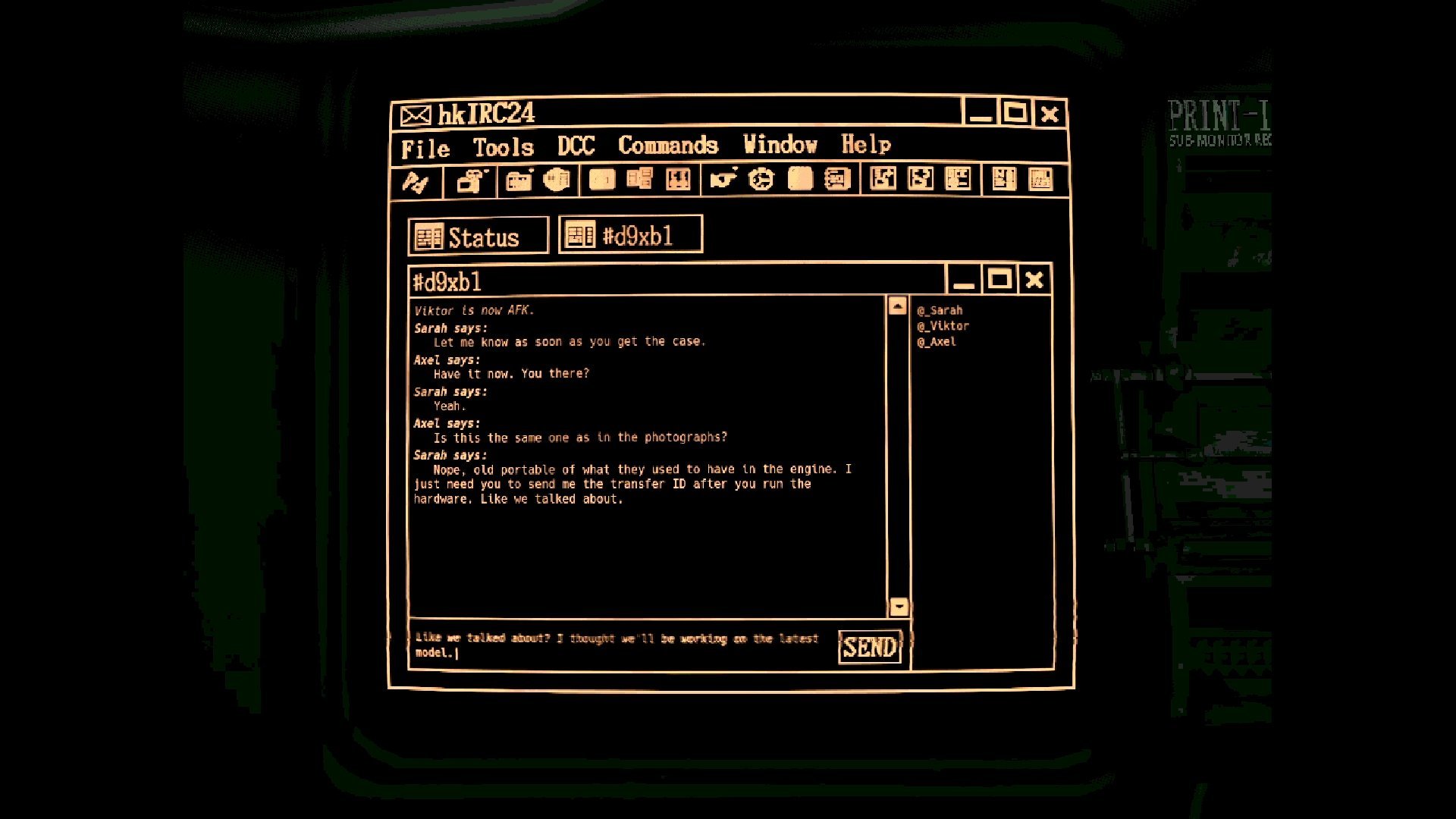
The game begins with a retro log-in screen to something called KeskOS displayed on a monochrome monitor. Your name is Axel, and you’re prompted to input a password for the user axel10948, though what you type out is ultimately inconsequential. After signing in, a dialogue box appears, dropping you into a virtual chat room with someone named Sarah to continue an obviously ongoing conversation. No context is given as to what the two of you have been talking about, but you’re required to type a response to Sarah via the faint flashing of the messaging box. You don’t decide what to say, simply hitting keys on your own keyboard, with Axel inputting his own predetermined responses on-screen at the pace of your typing.
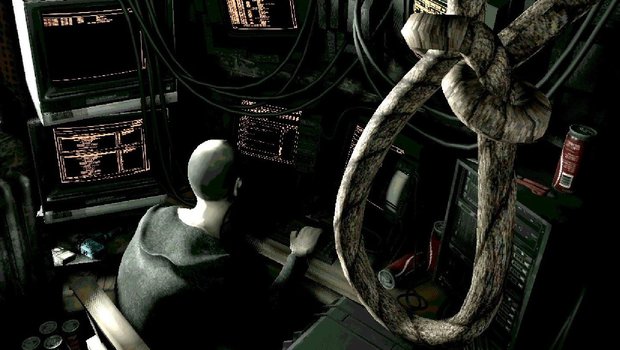
Shortly thereafter, another character named Viktor enters the chat and the group begin discussing their mission, ensuring they all have a “way out.” Then the game backs away from the computer screen to reveal Axel’s dwelling: a one-room cabin with his multi-monitor computer setup, a guitar beside the window (with a view of a cloud-covered forest landscape outside) and, disturbingly, a noose hanging from the ceiling – Axel’s “way out.”
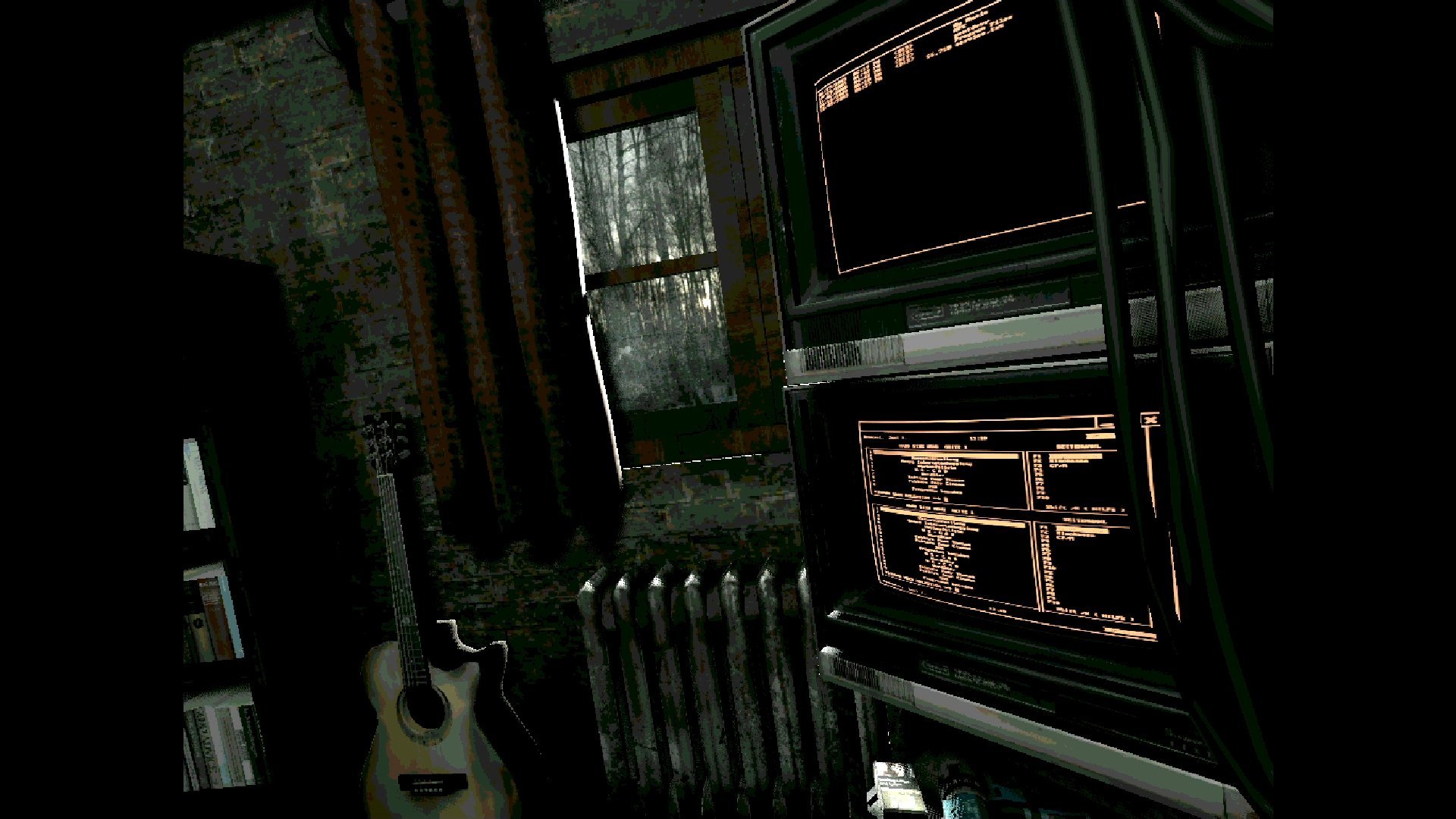
Through prompting the chat onward at the preset intervals, it becomes clear that Sarah, Axel, and Viktor are attempting to hack into something, somewhere, using a special “kit.” This electronic field kit, sitting next to Axel, is the first of only a few objects you get to interact with other than the computer. After the initial chat session, you are shown instructions on how to back away from the screen. By holding Shift and then pressing A or D, you can turn to your other computer, look out the window behind your hardware, or open the mysterious kit. Facing the kit prompts a sort of typing game, where several words or sentences appear and you simply need to type the letters displayed (as you would in a typing training program) in order to open it.
It’s a simple but effective beginning, forcing you to focus all of your attention onto the in-game screen and keyboard (the mouse is not used at all). However, from here s.p.l.i.t becomes a more challenging endeavor. Sarah tells you that you need to find and copy a set of files from the kit before she and Viktor can get to work on their end. You must then switch to the alternate computer screen from the chat room to start this process. What follows is a DOS-like interface that lets you generate directories of both the computer and kit, accessing them via commands like “open,” “list,” “copy,” etc. Typing “help” into the prompt will show all available commands at any time, and Page Up/Down allows you to scroll the screen, should you need to. Axel’s computer is also equipped with a scrolling tape printer, allowing you to note important numbers or clues as you open and search through files.
Though I am old enough to remember using DOS, I found myself struggling here. The task was just to add the kit to my list of trusted devices so that I could begin the file copying process, but the number of text commands seemed overwhelming, and I didn’t intuitively know which command was required to access the various folders and files that needed searching. It was challenging to figure out, and I explored just about every possible dead end before breaking about twenty minutes in. A walkthrough helped me begin to get comfortable with the command structure on my own from that point on (though I did have to check back with the walkthrough for one of the latter puzzles). Fortunately there is no time limit for taking as long as you want in searching unrelated files or folders, and the initial task makes for a good training session to KeskOS. There’s no penalty if you make a mistake, just error messages informing you that you have input an invalid request.
After this task, you switch back to the chat room with Sarah and Viktor. More vague hints follow as to what the three of you are up to before you are asked to complete another job with the kit. This gameplay cycle repeats several more times before the end. You’ll chat with your co-conspirators to get instructions on what needs to be done next, disappear into your computer to search for answers, and then return to the chat for further directions and another round of banter.
s.p.l.i.t
| Genre: | Horror, Science Fiction |
|---|---|
| Presentation: | 2D or 2.5D, Slideshow |
| Theme: | Conspiracy, Technology |
| Perspective: | First-Person |
| Gameplay: | Hacking |
| Game Length: | Short (1-5 hours) |
| Difficulty: | High |
| Graphic Style: | Simulated realism |
Though I steadily became more comfortable with KeskOS, the puzzles become considerably more involved as you progress, tasking you with trying to decipher graphics and code structures rather than just copying files. In one instance, you’ll search for a server address in the complex you discover the group is trying to penetrate (still for unclear reasons, however), while in another you’re attempting to compile a fake authentication key, and must gather personnel information from various files. I found myself using the “Print” function liberally, which allows you to manually print a line of text on a strip of paper next to the in-game computer monitor, keeping note of important numbers and directories I discovered. The game certainly made me feel like a rogue hacker by the end, even though I’m far from it in real life. Unlocking something new and having the screen fill with important scrolling text is a surprisingly exciting experience, instilling a sense of power and accomplishment.
While the computer interface adheres to a monochrome black and orange palette, s.p.l.i.t’s graphical depiction of Axel and his dwelling is done in a low-poly, low-resolution style, with muted greys covering everything from Axel’s shaved head and clothing to his dark, decrepit room. It works well in maintaining tension through the pixelated “noise” and the fact that you don’t see Axel’s face (at least until very late, depending on the ending you get), makes his confined, claustrophobic world feel unnerving, that ominous noose dangling ever nearby. Audio feedback mostly comes from the clicking keyboard and blips and whirs of the computer systems, though music does come into play at several points as well, usually when you solve a puzzle and prompt the story to move forward. It’s all grating, pulsating, electronic tones in tense moments, while calmer ones summon trance-style drum and bass tracks.
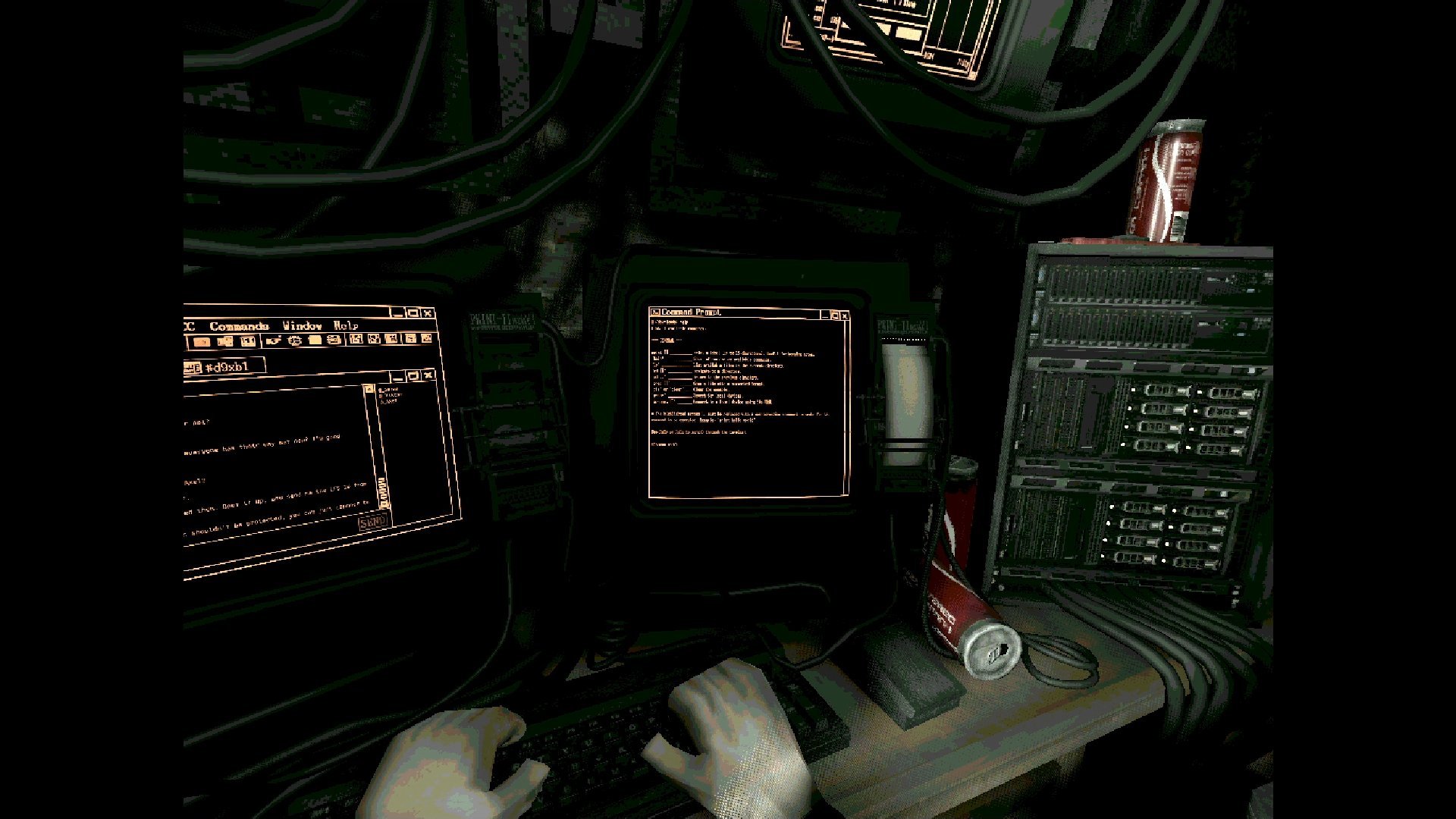
Suspense is built effectively throughout, the chat box being the primary means to push the narrative forward. There are several points where the first-person perspective is used in a more cinematic manner, like when the camera zooms in on the chat as the trio’s plans begin to unfold. It’s incredible how using only subtle camera motion, music, and the text readouts of a computer conversation with colleagues can create such a deep sense of drama as the consequence of the group’s actions become clear. The increased urgency of Sarah and Viktor’s circumstances as Axel scrabbles to get the information they need, coupled with the unnerving (optional) ability to look over your shoulder and out the window – could someone be out there spying on you? – keeps you on edge the whole time.
Progress is recorded at predetermined points, usually after you acquire information needed for Sarah and Viktor, but you can probably finish s.p.l.i.t in one sitting. It’s a short game at only about an hour long – even shorter for those more adept at command-based computer systems, no doubt – with two different endings illuminating the broader world Axel and his online companions inhabit. Which ending you get comes down to the final screen of the game, meaning you can select "continue" from the main menu after finishing the game in order to quickly see the alternate ending.
The game shuffles the numbers needed as codes each time you play, but there are no choices or branching pathways in the core experience itself. It would have been interesting to have different methods for solving some of the puzzles, or perhaps some personal input in dialogue as to how to move forward, affecting how you interact with your teammates and the computer system itself. That said, as a strictly linear experience, perhaps the game is more impactful this way, with Axel locked into his fate.
If it seems I’m being vague about narrative details, it’s partly to avoid spoilers and partly because the game itself relies on abstraction. The story does hint as to what Sarah, Axel, and Viktor’s task has been all along, but s.p.l.i.t ultimately leaves players without any concrete answers, only ever confirming that the year 2082 is a scary, dystopian place. Both outcomes are dramatic, even shocking in their boldness, in a way that is sure to linger long after you’re done.
Final Verdict
The gameplay experience here is best suited to those who like computer gaming in its purest, most basic form. It’s got a brilliant concept, with well-adapted input controls to immerse players in a dangerous dystopian world, but it’s viewed only from a single room and mostly through an archaic computer monitor. The learning curve is steep, but well worth the climb once you begin to get the hang of it. It won’t last long and lacks much replay value, but the impression s.p.l.i.t leaves is sure to be a lasting one. It’s anything but a traditional adventure, but it’s so unique and smartly executed that fans of programming or old IRC chat rooms should enjoy their brief time as a hacker.
Hot take
Everything works effectively to build tension over the course of s.p.l.i.t’s grim hour-long campaign, though the learning curve in the role of a rogue hacker may be a bit much to ask for some gamers.
Pros
- Excellent storytelling and atmospheric tension achieved solely via computer interface
- Archaic OS convincingly immerses you in the role of a hacker
- Effective use of text-based format to create a variety of challenges
Cons
- Little choice in how matters resolve aside from the ending
- Might be a little too hard for gamers with no programming experience
Drew played s.p.l.i.t on PC using a review code provided by the game's publisher.

- Advertisement
- Help support AGH by advertising with us






0 Comments
Want to join the discussion? Leave a comment as guest, sign in or register in our forums.
Leave a comment