
Occulto hands-on preview
- 0 Comments

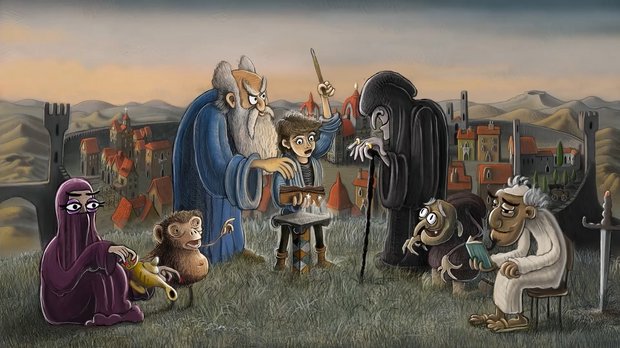
The first title by Italian independent studio Sirio Art Games is Occulto, which was successfully Kickstarted in 2025. This game can only be described as a passion project, with the two-man team working on the game after hours from their full-time jobs, with every character and background painstakingly hand-drawn as part of their commitment to quality. It’s not finished yet but the early access version is out, comprising nearly half of what’s planned for the full game. There’s a lot of potential already, and a boost in quality-of-life features before it’s done could take it from an already good to great one.
When apprentice wizard Eliot shows up for his scheduled lesson to find his teacher’s door locked and his study ransacked, the young student smells a plot brewing and embarks on a journey to track down and rescue his master. His first stop is the town cathedral where a monk claims to know about the missing teacher’s whereabouts, but there’s something off about this clergyman that Eliot can’t quite put his finger on. With hints that the monk may be working with a wider cabal of enemies of the teacher, but no knowledge of why they captured him in the first place, Eliot can only chase after the next lead and hopefully find his master.
The entire game is designed to be non-verbal, with characters “speaking” only briefly in an Italian-flavoured Simlish. Puzzle clues, story beats, and directions on next steps are all conveyed through speech and thought bubbles with simple diagrams that do an effective job of making it clear how to progress and what’s happening in the story. One feature I’d like to see added, however, is a journal to serve as a reminder for what to do if you forget in between play sessions.
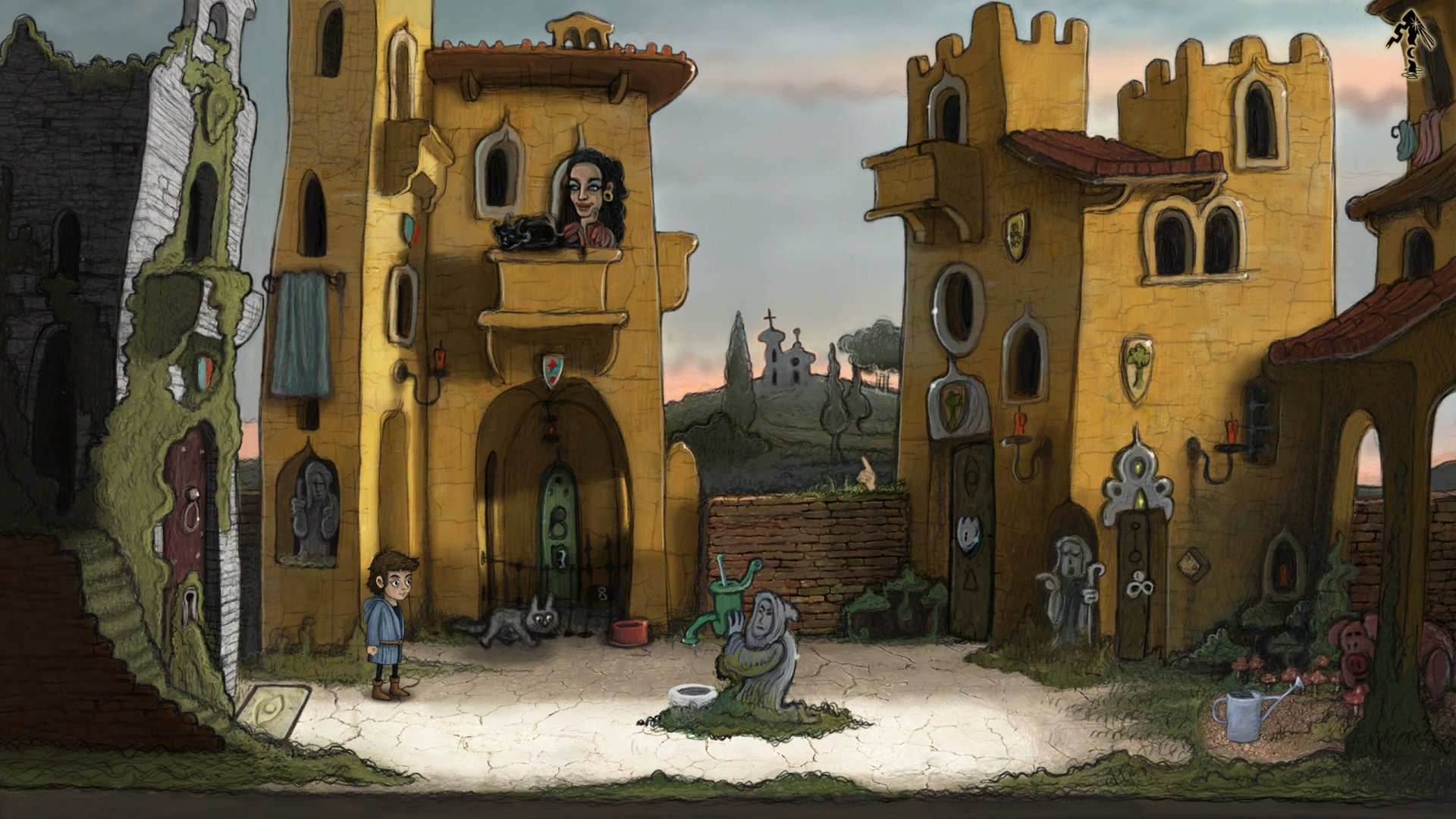
The point-and-click control scheme is as simple as they come; left-click for everything. The mouse cursor will change into specific icons, such as a mouth to signify a character to talk to or gears for something that can be interacted with when mousing over the scene, though hotspots may not appear until they’re needed. Items you collect are stored in a hidden inventory bar at the top of the screen.
The puzzles themselves are a mix of minigames and classic point-and-click puzzles, with a lot of variety thrown in for good measure. There’s of course the tried-and-true inventory combination and usage puzzles that Eliot undertakes to progress through each scene, but there are also a wide range of smaller-scale minigames sprinkled in as part of obtaining important items for his larger quest progression. Some of these include rearranging jigsaw pieces to create a key, variants on the Tower of Hanoi and Blackjack, and even some code-cracking challenges. With no spoken or written instructions, some experimentation is required to learn the rules at the start of each minigame, but they’ve been designed in a way that makes it easy to understand the aim, either with clever colour coding or small diagrams in the minigame interface.
The diversity of Occulto's puzzles keeps the gameplay experience fresh, though there is a segment when Eliot is traveling between areas that involves navigating some impossible Escher-esque geometry, which started to overstay its welcome a tiny bit for me. The minigames themselves could do with some additional user-friendly features like a snap-on function when assembling puzzle pieces, which would have been particularly useful in my initial attempt to recreate a key. I had unknowingly started assembling the puzzle without adequate room for the entire key to fit, and had to slowly move every single piece over to the left slightly.
Another noticeable area where the gameplay could do with a helpful boost is in the Tower of Hanoi puzzle. This has a pretty specific series of steps in the middle to solve it, but there isn’t anything like an undo feature, at least on the easier difficulties, so a full reset was the only possible path I could take when the puzzle inevitably bricked itself without following the correct order. There’s also a noticeable lack of double-clicking to travel faster through a scene, which becomes a minor pain in areas where the slow-walking Eliot traverses up and down vertical levels. These are all relatively small things, but with the game still being in development, they’re things that may yet be added before launch.
Difficulty levels are rare in adventure games, and tend to consist of just two when they occur. Here there are four different difficulty levels that cater to all types of players. Starting from Relaxed, which enables puzzle skips, hints, and hotspot highlights, each subsequent difficulty level removes available gaming aids. The hardest Purist level even prevents the cursor from changing when mousing over an interaction point, which adds a whole extra layer of challenge.
I played at the Expert difficulty, which kept the smart cursor, as without that I found it too much of a challenge to discern hotspots from what was just part of the detailed backgrounds themselves. Every puzzle is adequately clued without hints, but I went back after finishing and dropped the difficulty for a look at what they offered – also in the form of diagrams on scrolls of parchment – and the hints show a good starting point to get the puzzle from which the solution would become more apparent.
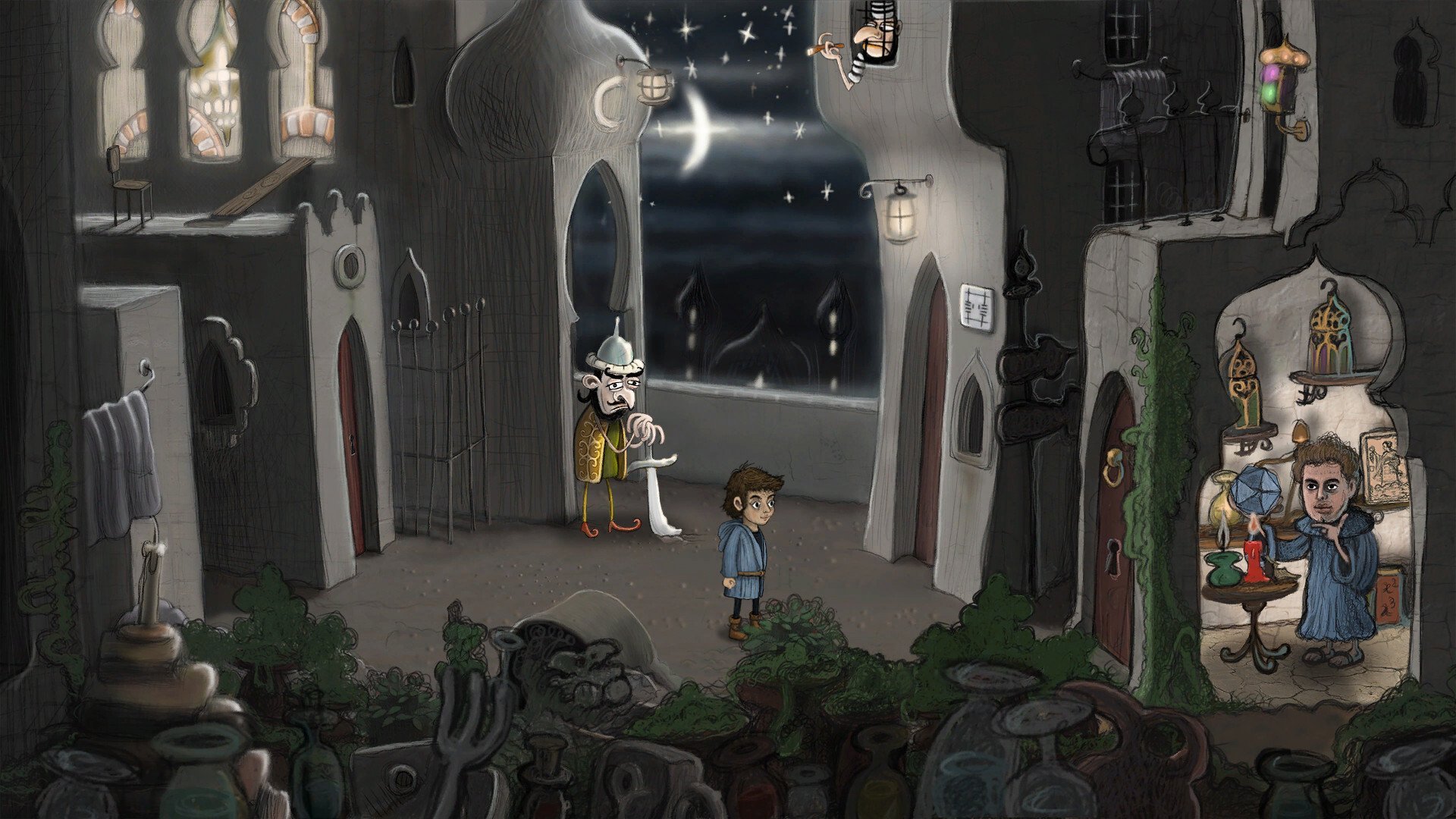
Visually, Occulto is stunning, with characters and backgrounds drawn digitally but coloured in a way that evokes the lighting and style of a traditional painting, with visible brushstrokes and an aesthetic that is whimsical and distinct. Characters are animated in a way that gives the impression of puppetry, with a very exaggerated and cartoonish way of movement and expression to make up for the lack of dialogue. The variety in scenery too is a feast for the eyes, with vastly different colour palettes employed. From the high ceilings and triangular windows of the starting town cathedral, to the ochres and red roofs of the initial village Eliot visits, to the whites and natural greenery of the desert city of Darash, each area stands out as unique while remaining cohesive with the rest.
The soundtrack, composed by jarguna, is equally captivating and evocative as the art style, particularly the main menu theme, which uses a lot of orchestral strings and bells to create a mystical atmosphere. The shift from the starting village and more European influences to the Arabic-inspired Darash is also reflected in the music, with drums and sitars featuring heavily as Eliot makes the journey aboard a merchant’s wagon in his quest to find his teacher.
Overall, Occulto shows incredible potential and is already a fun adventure game in its unfinished state. My playthrough totalled around three hours, with the developers estimating the full game to range from 5-7 hours, depending on how fast the puzzles are solved. Already I’m impressed, and with some additional polish and quality-of-life features, there’s hope for a true gem here. Sirio Art Games have clearly taken their time in crafting this world and its puzzles, and their attention to detail shines through in an incredibly beautiful art style with gameplay that offers a good mix of variety and challenge levels. I look forward to finishing the game when it fully releases, even if the developers do expect it to take nearly two more years to complete.

- Advertisement
- Help support AGH by advertising with us








0 Comments
Want to join the discussion? Leave a comment as guest, sign in or register in our forums.
Leave a comment