
Estória review
- 5 Comments

Short but sweet coming-of-age tale blends simple gameplay with a charming design, fun characters and an ending worthy of your time
In the land of Estória lives a princess named Marcella, who is becoming a young woman and is to soon wed the notorious governor of the island nation, possibly against her wishes. Her parents are nowhere to be seen, and the surrounding area lacks the splendor it once had. This is not her story. Or is it?
Estória is a traditional point-and-click adventure game that can be enjoyed by people of all ages. Developer Jonathan Jahnke states in the closing credits that this came to him in a dream, and what a dream it must have been. This is not just a tale of saving the land from an evil force, but also a coming-of-age tale as the actual heroine of the game learns more about herself and the world around her. While the backdrop of its setting feels like a Renaissance painting, it could easily fit in our current world as well.
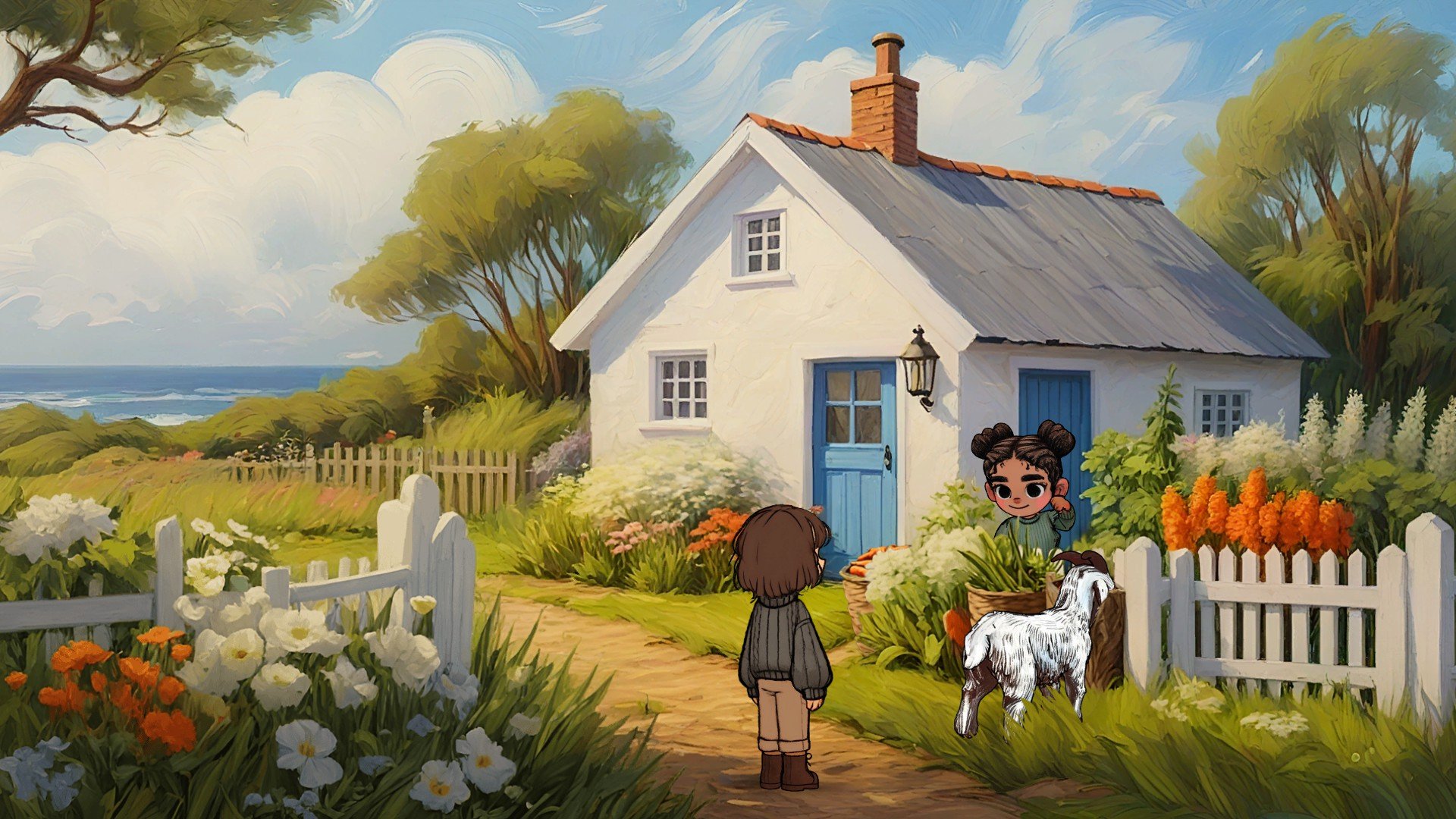
This 2D adventure follows Luna, daughter of the keeper of the nearby lighthouse, as she helps her Poppa out with keeping the beacon lit. She is soon to formally come of age in the grand town ceremony and dreams of being more than just the daughter of a lighthouse keeper. But for now, in going down to the town to find oil to light the lamp, Luna meets interesting villagers she knows well, including Lily the general store owner, Raft the ferryman, and her best friend Lila. Lila has a pet goat named Ghee-Ghee who starts off one of the first easily solved puzzles in the game.
Once you obtain the oil and some mushrooms for supper, you have to light the lamp and keep it shining during a raging storm while Poppa fixes the internal mechanism. This can become frustrating as Luna constantly gets interrupted by the storm extinguishing the light. Thankfully, there are only a couple sequences like this in the entire game, and if you’re fast enough they’re easy to complete.
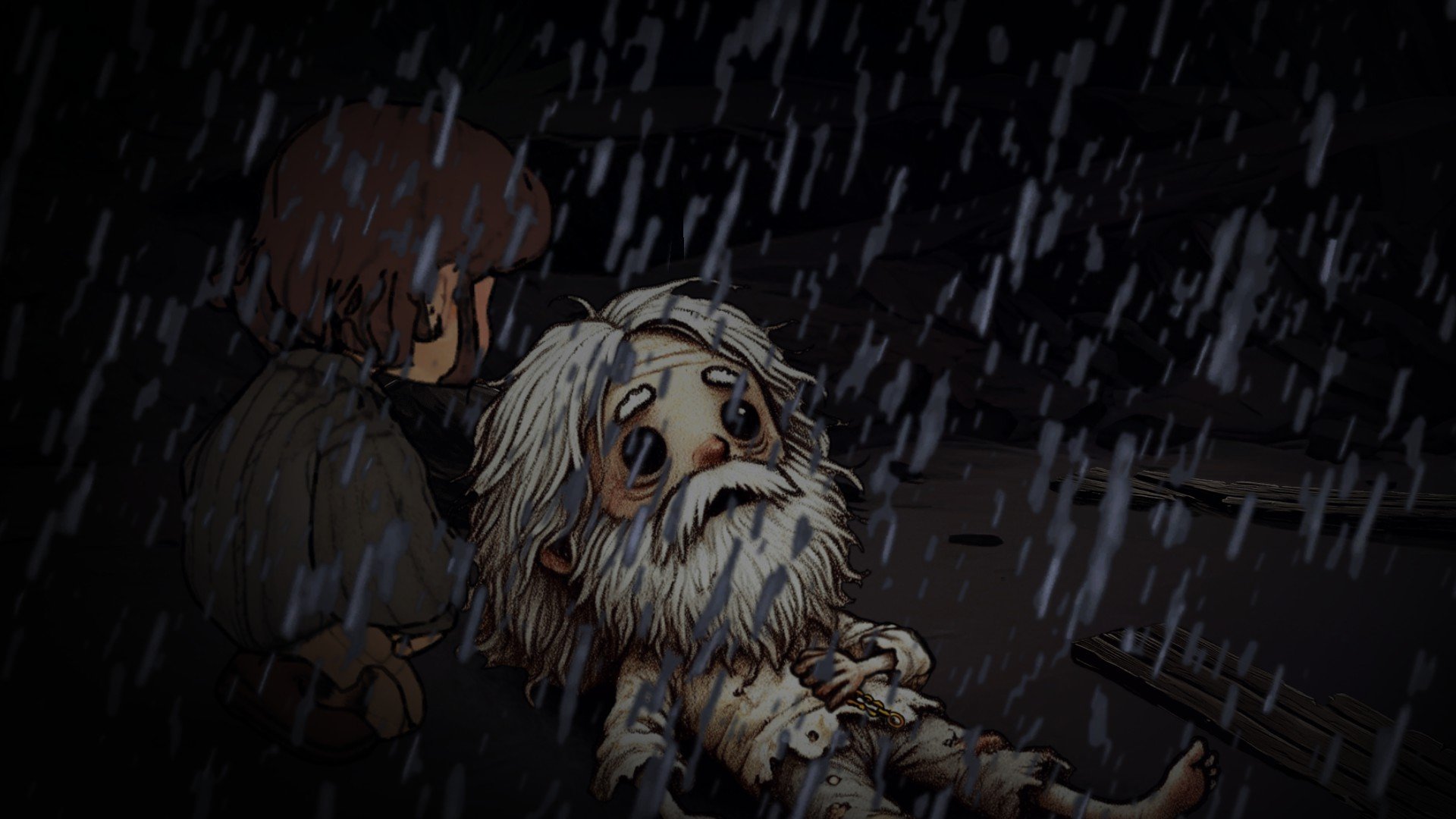
The story then kicks into high gear as an old man named Raul washes ashore and tasks Luna with finding Princess Marcella and breaking a curse placed upon the Isle of Estória. He gives Luna half an amulet, then perishes. It’s now up to Luna to defy her Poppa’s wishes, charter a boat and sail to the main island a few days earlier than she’d planned, with much higher stakes than she ever imagined.
Once at the port, Luna starts her search for Marcella and runs into a number of quirky characters. Some are helpful but the majority just ignore Luna or try to sell her something in the marketplace. In fact, a little bartering occurs between the stalls. As long as you have the items you need to trade, all you have to do is use said item on the merchant and they’ll either give you a different item in return or offer a mini-game to acquire it. To get a fruit, you’ll be playing the shell game. To get something hot, you need to show your fortitude and gobble up as much as you can, becoming progressively faster so you’ll have to be quick on the click. Don’t worry, though, as if you can’t ace these games you’ll still get something that will be useful later on.
Luna hears from the shopkeepers that Princess Marcella is to be married to Governor Kreel in just a couple days. From others she learns – as well as from spying on the governor and his lackey, the captain of the guard Rile, first-hand – that these two are just scum. They’re shady and have nasty plans for the future of the land. Some fictional stories have villains that you just hate from the outset, and these two scream “hate me.”
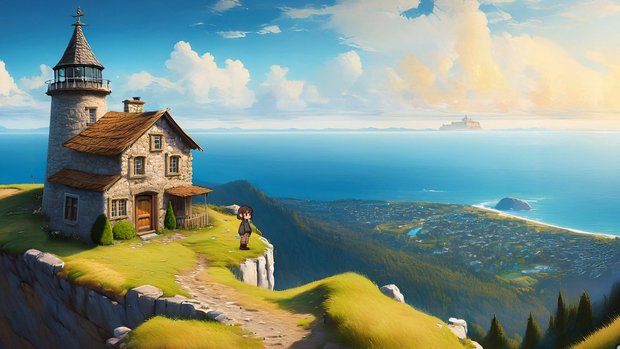
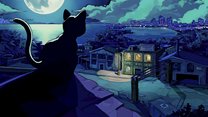
Estória boasts a bright and colorful visual style. The islanders are cute and cartoony, and each one is unique and helps flesh out the world. The backgrounds are beautiful, in an art style reminiscent of hand-drawn cartoons that you might see in a Don Bluth film, though here it’s been created with a little help from AI. There are influences beyond just a Western fantasy setting, as some of the merchants seem to be inspired by Middle Eastern or Indian cultures as well.
Estória
| Genre: | Fantasy, Mystery |
|---|---|
| Presentation: | 2D or 2.5D |
| Theme: | Coming of age |
| Perspective: | Third-Person |
| Gameplay: | Puzzle, Quest |
| Control: | Point-and-click |
| Game Length: | Short (1-5 hours) |
| Difficulty: | Low |
| Graphic Style: | Cartoon |
The dialogue, while not voiced, also adds to the charming story that Jonathan Jahnke tries to tell throughout. Raft has the speech of a seafaring old man bordering on pirate-style language. And while they only have very minor roles, the twins (who are actually triplets) guarding the castle gate add some humor that I enjoyed, making them more memorable than just standard background NPCs.
The music in Estória adds a beautiful backdrop to a world with a plot right out of a child’s fairy tale. It isn’t “in your face” bombastic but rather feels like a natural part of the story. The score ranges from haunting melodies to quaint village fare. Even during the final confrontation, it isn’t what one would consider battle music but it does add a sense of urgency to the scene. There isn’t a whole lot in the way of sound effects but you do hear the pounding of footsteps as Luna and others walk around, and the bustle of the crowd in the marketplace.
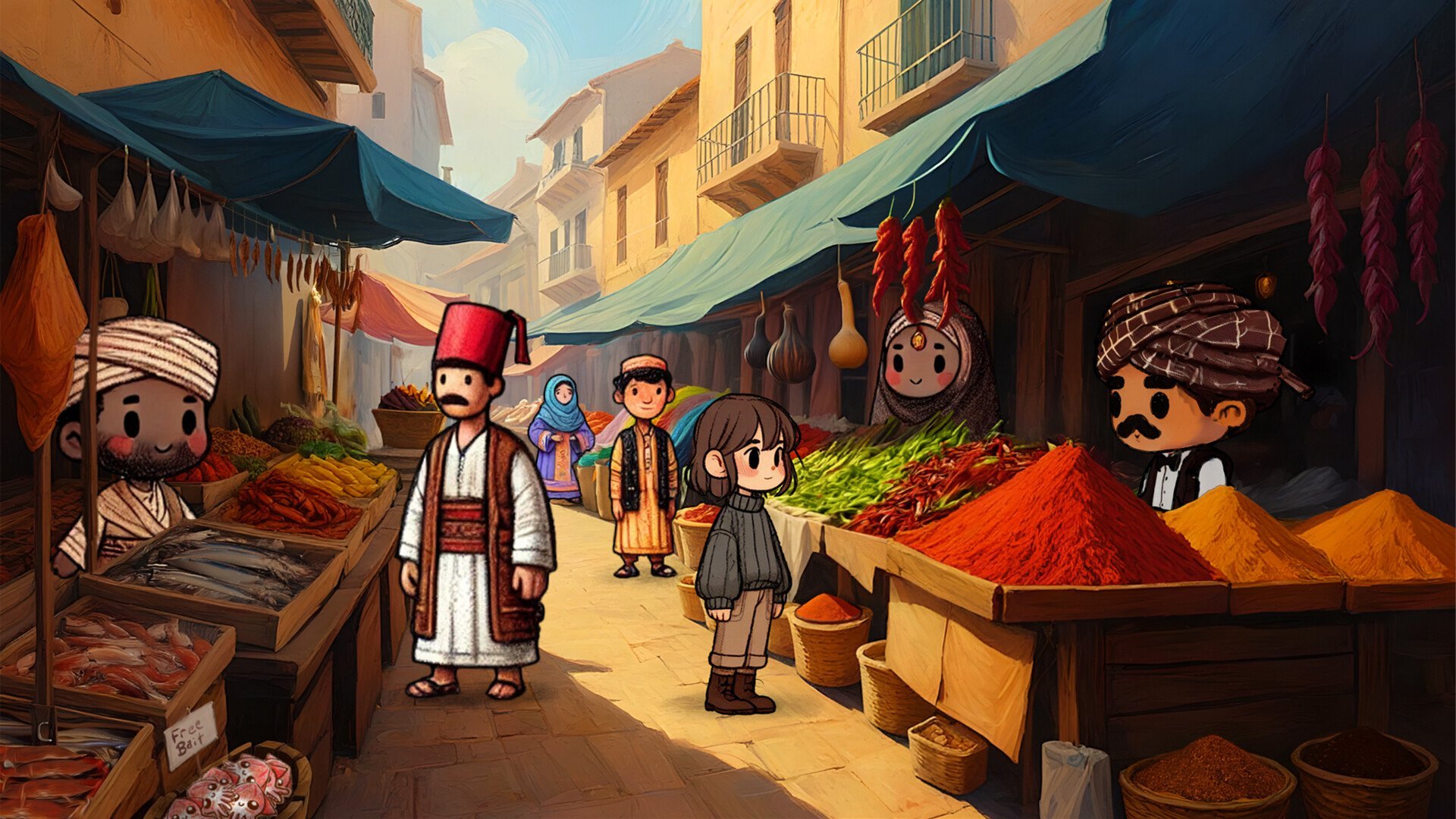
The interface is pretty standard for a point-and-click adventure game. You have a hidden inventory, which can be accessed by moving the cursor to the top of the screen. When clicking hotspots, the contextual icons that pop up for look, talk, and pick up are easy to understand, while the use icon is a gear. If you want to take a closer look at an item you’ve acquired, just use it on Luna and a window appears with a magnifying glass and the option to get a message from our intrepid protagonist.
The puzzles in Estória are, for the most part, pretty simple and self-explanatory. With few exceptions, a little thought and trial-and-error will get you through the majority of them. A good number of these puzzles include using an inventory item directly on another character or a hotspot in the background. However, occasionally object combinations are required before using something, such as making a fire pit.
The trickiest puzzles to solve tend to gravitate towards the end of the game, including finding book titles in the castle’s library and a riddle you need to answer correctly to enter the endgame, involving wordplay that spells out which stones you need to press in what order to open a hidden door. Thankfully, there are no deaths here, so overcoming any obstacle just takes time and patience to reach the conclusion.
The lack of head-scratching mind-benders is just fine with me. I don’t want to constantly look at a walkthrough to reach the end of the game. That said, Estória has a very robust hint system that can be accessed through the main menu. This system covers pretty much every situation you could possibly come across, even those that should be simple to solve. If you're stuck, just open it up, select the “day” you’re on and what scene you’re trying to get past. Do note that these aren’t just hints but the developer literally spelling out the answer for you. This makes it very tempting to read through every possible solution.
There is a manual save feature, which is no longer particularly common in modern adventures, but the game also auto-saves every time Luna enters a new room. This means that if you do something in that scene but then exit the game before leaving, you’d have to redo the actions you took from that point on if you reload the auto-save file.
I enjoy playing adventure games mostly for a good story, and while hardly epic, Estória brings a charm and wit to a tale that could easily be overlooked based solely on its simple premise alone. There’s a lot to love here in young Luna’s journey of self-discovery as she begins learning about the larger world beyond her sheltered life at the lighthouse for the very first time. The best part is the surprise at the end, which is most definitely worth the wait.
Final Verdict
Not that there’s too long to wait, as Estória is a relatively brief experience that should only take about 2-3 hours to reach its exciting and heartwarming conclusion. In all, this is what I call a “short but sweet” tale, as a good story with good pacing and straightforward puzzles doesn’t have to be the length of an epic novel. Luna’s adventure will take you to only a few locales, but her journey is a beautiful, memorable one with more than its fair share of heart along the way.
Hot take
Although seriously limited in scope, Estória takes a tried-and-true adventure formula and makes it its own with memorable characters and a wonderful fairy-tale story. A true coming-of-age tale about what it means to grow up.
Pros
- Cute and colorful cartoonish artwork
- Simple, easy to understand puzzles
- Nice fairy-tale story with a late surprise worth sticking around for
Cons
- Includes mini-games that require quick timing
- Short play time at only a few hours long
Serena played Estória on PC using a review code provided by the game's publisher.

5 Comments
Want to join the discussion? Leave a comment as guest, sign in or register in our forums.
The art style is indeed great. Put it on my wishlist.
Reply
Thank you so much for the review! And thanks, Apex for the wishlist. (You mentioned the guards being triplets... does this mean... you found the Super Secret Mega Max Happy Ending?! They mention it in conversation as a throwaway line, but you get to meet Rup in the Mega Ending)
Reply
Unfortunately, I did not get the super secret ending. However, that throwaway line just had me chuckling that I had to include it in the review.
Reply
Ahhh too bad you didn't get the ending ;-) The line comes across as sarcastic until you see the actual triplet :-) And you get a little more Ghee-Ghee. Thanks again for the review!
Obviously AI-generated. Look for example closely at the windows of the lighttower house, and the balconies in the middle eastern scene. Is this the standard for adventure games now?
Reply
Leave a comment