
The Séance of Blake Manor review
- 2 Comments

Nothing medium about this fantastic nineteenth-century gothic deduction mystery from the creators of The Darkside Detective
Declan Ward, an honorable and steadfast investigator, travels from Dublin to the west of Ireland during Samhain in 1897 after receiving a letter detailing the disturbing disappearance of a Ms. Evelyn Deane from Blake Manor in Connemara. Curiously, it seems that everyone at the manor has carried on as if nothing has happened. The letter includes payment for his services and a promise of additional reward if Evelyn is found alive, stating clearly that it is most important for this task that Ward is a godly man.
The Séance of Blake Manor by Spooky Doorway is a moody and magical deep dive into a tangled web of mystery in a detective’s shoes. As Ward, players are tasked with uncovering the truth of the disappearance of Evelyn Deane as the clock ticks down to the titular séance, the souls within the mysterious manor hanging in a precarious balance. Distinct from the whimsical comedy of the developer’s Darkside Detective series while still delving into supernatural themes, this game embodies the art of subdued suspense in a thrilling gothic case steeped in Irish history.
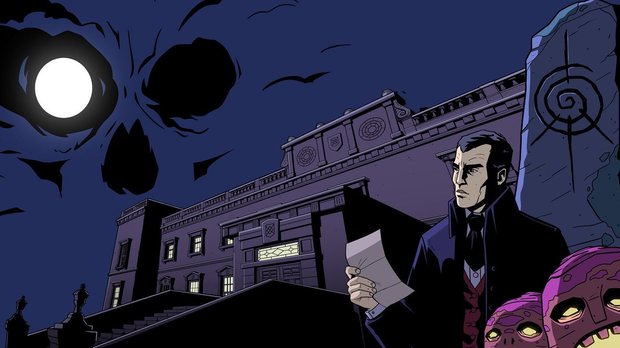
The manor is now under the leadership of Lord Jonathan Blake, Marquess of Doon, and has been converted to a hotel. Ward arrives late at night, approaching the looming mansion through the desolate courtyard. A mysterious figure momentarily appears, washing a shawl in the fountain before dissolving into a cloud of cawing crows. This is just the first of a smattering of supernatural hauntings that will plague Ward’s visit to this unusual place.

The séance is to be conducted in three days by famed practitioner Carmela Mantovani. Mysteriously, there is a strange energy about the manor, infesting the guests as they prepare for the event, making them act with dramatic, and sometimes violent, intent. Subtle unexplained incidents occur throughout, whether a forlorn ghost gazing down from a balcony, or stony statues mysteriously rotating once you turn your back to them. This is not a horror game filled with jump scares, but with an underscoring of ambient, creepy musical compositions and a life-or-death race against the clock, it is enough to make your (and Ward’s) heart beat a little faster.
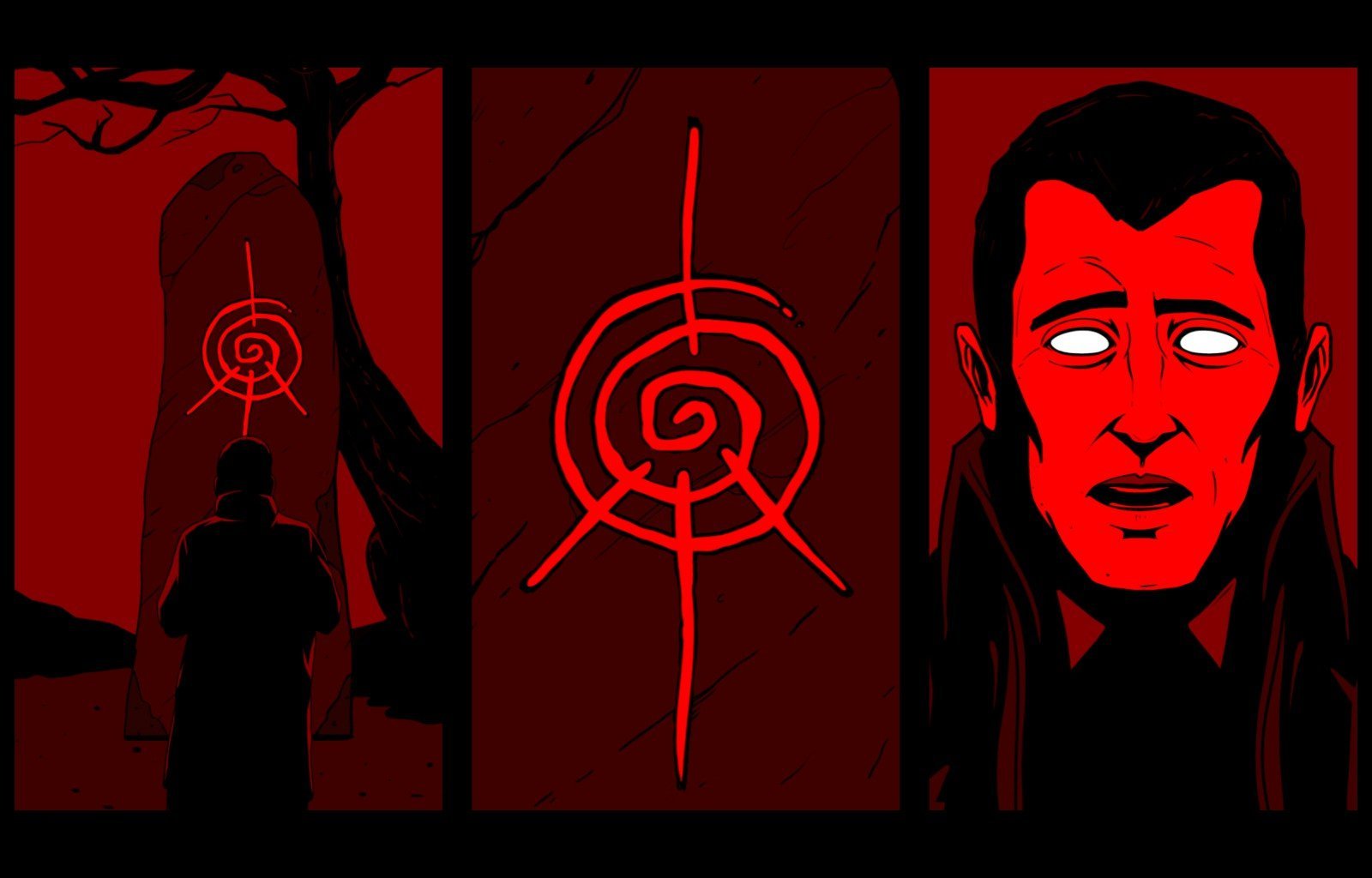
Within the first sixty minutes of simulated in-game time, you must determine the nature of Evelyn’s disappearance: whether she truly left the manor of her own volition as the hotel manager Vincent Varley insists, or something more sinister is at play. Nearing midnight, as Varley escorts Ward to his room, the grand atrium is revealed in all its eerie beauty, flanked by imposing Blake family portraits and massive glass ceiling panes. The manager’s watchful eye limits how much you can explore before heading to your room to sleep, but it sets the scene for the game with a wonderfully gothic cinematic gravitas, instilling an underlying layer of fear of the building itself and the dark history it hides. There is no refuge from it even in sleep; tucked into your stately bed, soon you are swept into a disturbing dream filled with eerie sigils and hungry hands rasping at windows in endless manor corridors.
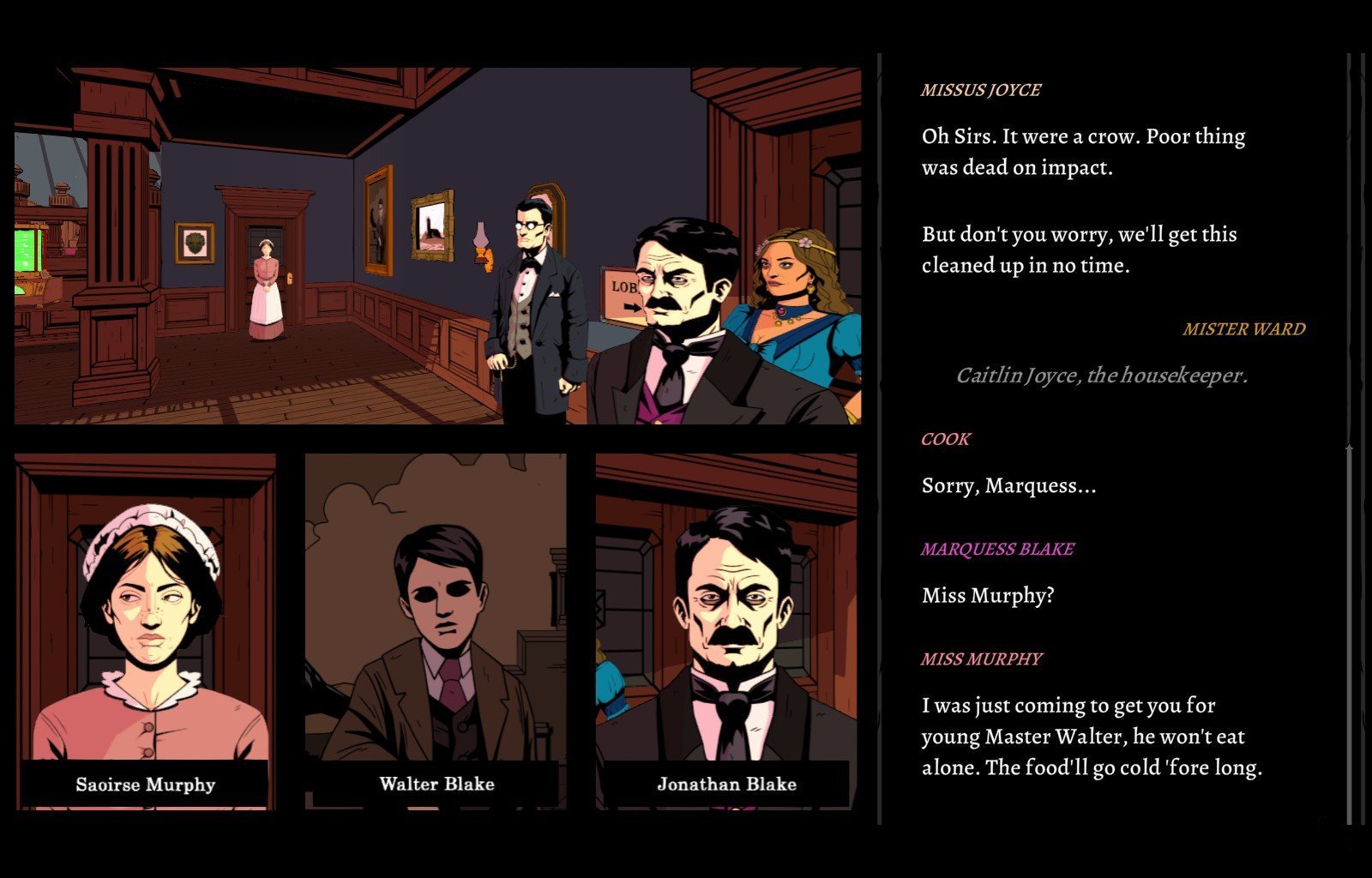
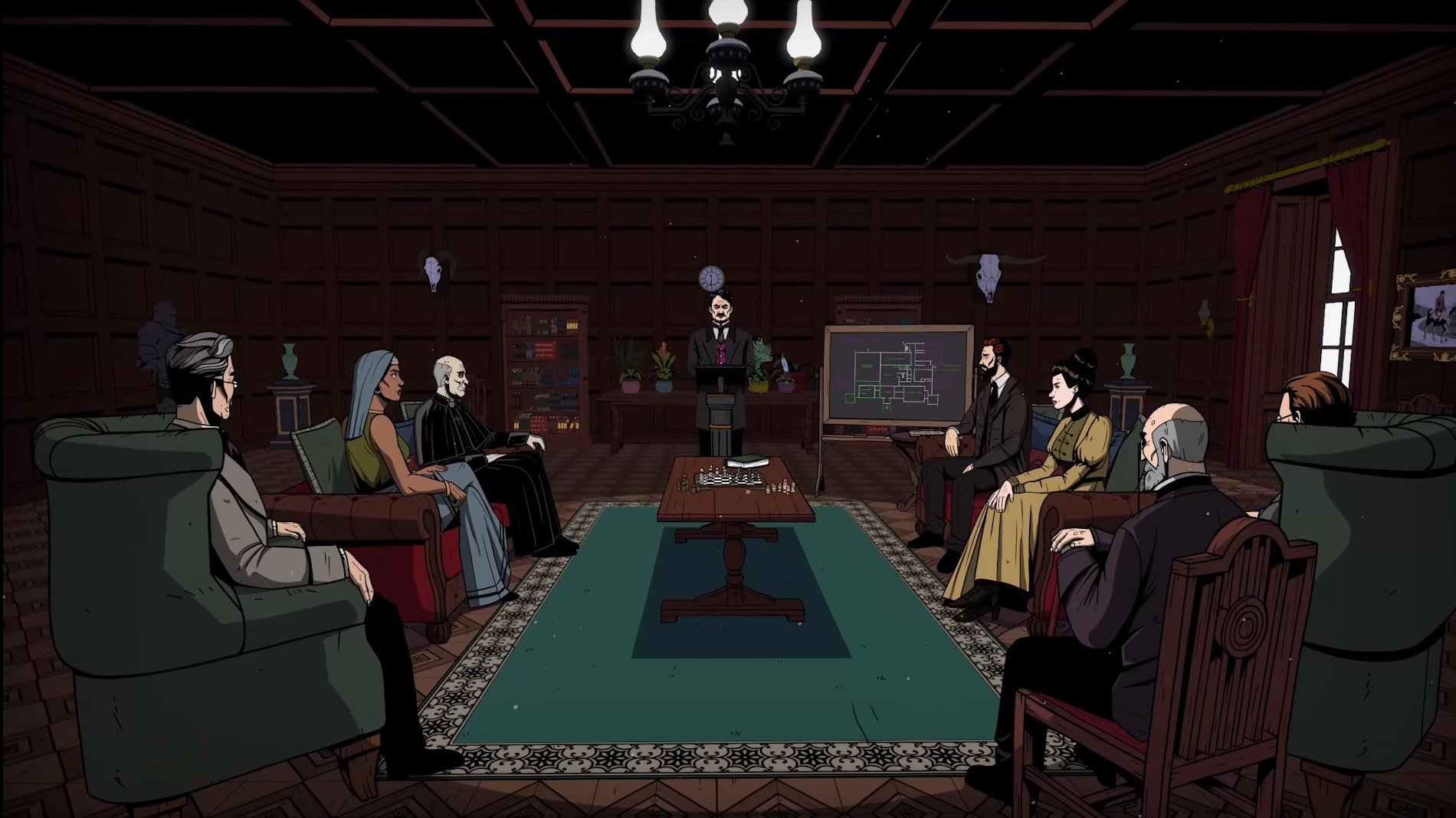
The next morning, a crow (of the foreshadowing variety) smashes through a window, the loud crash drawing everyone out to see what happened, sparking a cinematic cutscene in a moody, comic-strip-inspired style that introduces the full cast. Each character’s initial presentation gives a glimpse into their personality, and they are all rather interesting. I naturally was drawn to certain people over others, but I appreciated that everyone, including Ward himself, had compelling secrets to uncover and their own mysteries to solve, which can be unlocked through conversation and investigation.
The large cast is well-developed, each character building upon the story with their own expertise and backgrounds. Many of their stories will leave you feeling something too, with themes exploring grief, faith, and historical memory, to name a few that really stuck with me. Some of my favorites were the wealthy, haunted widow Olivia D'Arcy; kind New Orleanian undertaker Lloyd Dupré; intensely driven poet Corentine Quinn; protective silver fox stableman Darragh Hunter; and the disinterested and shaky porter Doyle.
Cutscenes are fully voiced, but the game itself is only partially voiced. The acting is excellent when it occurs; each person sounds unique, with strong personality and flavor coming through, along with a variety of dialects showing the wide range of guests the séance has attracted. However, the voice-overs are rather limited when compared to the volume of written dialogue. Most voiced lines occur during character introductions, confrontations, case conclusions, and optional end-of-mystery reflections, demarcating key moments for each. It is a bit jarring when you get started, but once you delve deeper into the game, you get used to it. Given the extent of the cast and a limited development budget, it makes sense to cut back on voice implementation, even if it would have been great to have more in a perfect world.
Irish folklore, history, religion, the supernatural, and magic all play key roles in this tale, and many of the characters add to Ward’s knowledge of these areas. Much of the world of Séance is colored by a deep understanding of Irish culture, which is handled with care and deference throughout the game. Both the in-game and real-world history and folklore can be researched further in the manor library, beyond what can be gleaned from conversations.
Once the full cast of over twenty suspects is introduced, the game opens up massively with access to a sprawling gothic manor full of salacious hidden secrets. The setting continues to conjure a cloud of foreboding as you wind Ward through empty hallways and eerie towers. Inside Blake Manor, I particularly enjoyed the library with its seemingly endless shelves of antique tomes and leather-bound literature, and the drawing room, with its inviting velvet couches for guests in attendance listening to the lectures held there, which happen at select scheduled times during your visit. Outside in the surrounding grounds, you can explore the stables, courtyards, hedge maze, and cemetery.
Séance’s art style combines 2D illustrations and 3D graphics with a heavy wash of ink-blotted darkness, bold line work, and high-contrast shadows. The subdued lighting makes the environments feel imposing and encourages careful observation, drawing you in to closely investigate each dusty, quiet corner of the manor. The character models are designed with unique Victorian fashions and rely on naturalistic expressions and basic mouth movements during voiced conversation. They turn toward Ward with a distinctively sharp swivel animation, adding some extra drama to the dialogue-driven tasks. Cutscenes shift into a flat graphic novel style that allows for sharper emotional expression with an eerie pop art tinge. Outdoor locations use visual cues like changes in light, weather, and wind to signal the passage of time and emphasize the manor’s gloomy mood.
The Séance of Blake Manor
| Genre: | Drama, Horror, Mystery |
|---|---|
| Presentation: | Realtime 3D |
| Theme: | Paranormal, Missing persons |
| Perspective: | First-Person |
| Graphic Style: | Illustrated realism |
| Gameplay: | Investigative, Puzzle, Deduction |
| Control: | Direct Control |
| Game Length: | Long (more than 10 hours) |
| Difficulty: | Medium |
The gameplay of Séance involves solving its many individual mysteries, the central one being the disappearance of Evelyn. As you progress, the web of interconnected cases expands, represented in Ward’s casebook, ever updating with new evidence from your detailed exploration of the manor, conversations with residents and fellow guests, and research in the manor library. However, each action costs you precious time in your investigation, which must be completed before the séance on the third day of Ward’s visit.
Through snooping and puzzle-solving, you will learn that every action, search, conversation, and misstep costs precious time. The game saves automatically every hour and at key moments, in addition to having sufficient space to record your progress manually. Even with the ability to rewind to the start of each hour if necessary, however, I relied on over-saving just in case I put Ward in a less-than-ideal time management situation, which is certainly possible if you do not plan accordingly.
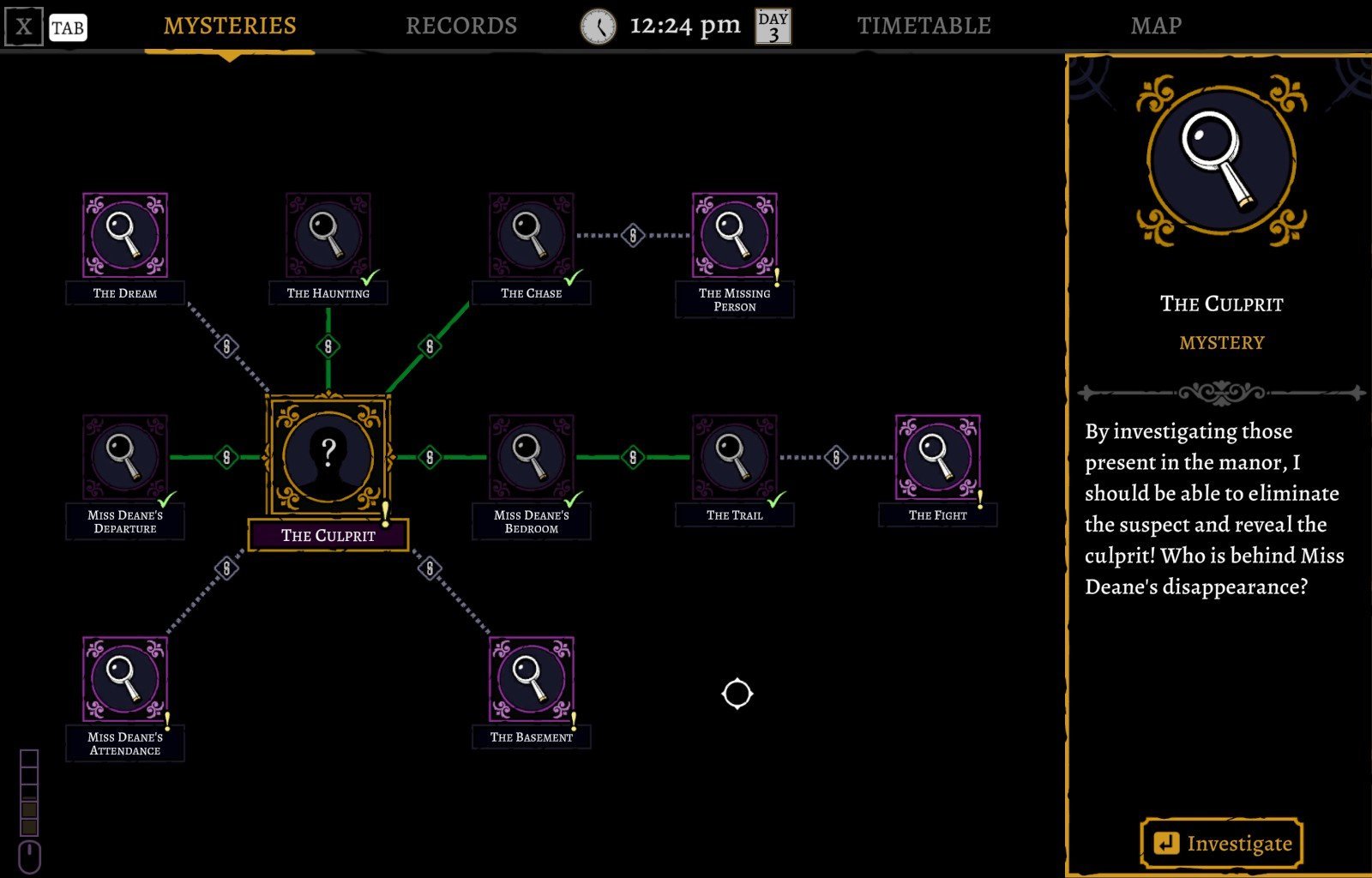
Ward is navigated around the estate using either WASD or arrow keys, plus the option to hold Shift to sprint. At all times, the top center of the screen displays the time and day along with a quick-look bubble that can be opened to show current actions that need to be taken. Number keys toggle open the full case file, each one mapped to mysteries, records, timetable, and map, respectively, allowing for fast and easy access to information via keyboard or clicking with the mouse. It is also possible to use a gamepad to achieve the same controls.
Like all the best mystery games, snooping is central to your investigation. It is crucial to find a way into each guest’s hotel room and various other locked rooms throughout the manor. Each search takes time and every drawer or cupboard has the potential to reveal central evidence. Most individual character mysteries hinge on what is uncovered in the hidden corners of their rooms. While these tasks could feel repetitive, Séance keeps them interesting with search-instigated discoveries opening up more of the story and rounding out the characters dramatically as the evidence comes together. It can be easy to miss an item here and there, but if you need to revisit them, hotel bedrooms are generally open after you unlock them unless the guest is inside. (And yes, I totally on purpose confirmed they do not take nicely to Ward barging in on them.)
Fortunately, the “Focus” system serves as an in-game hint feature that helps keep the mystery moving. For example, if you overlooked a piece of evidence in Room 5, your focus might read: “Investigate Room 5.” Sometimes, though, the hints are more general like: “Profile Mr. Toussaint,” which demands more trust in your own investigative instincts. I enjoyed this extra challenge that made the detective work feel more independent.
While there is no fast travel, the map and timetable offer useful information for finding and locating characters throughout the game. There is a live indicator of Ward’s location, plus points of interest, NPCs, and color-coded doors that show whether something is unlocked, unlockable or locked. This map updates in real time as you progress. The timetable shows locations of the characters as discovered either through conversation or their schedules and other ephemera. The timetable includes useful filters for residents and guests and an alphabetization system. Not all times will be filled in, meaning sometimes you may need to speak with someone if you are able to hunt them down (possibly unsuccessfully.)
After you have gathered enough information on a suspect, a hypothesis becomes available. This system streamlines previously collected clues into a deduction-style word bank, familiar to me from the Golden Idol series. The incorrect options are often plausible rather than thrown in for filler, and while some hypotheses become more obvious, others genuinely gave me pause and required a thorough review of my evidence and the connections in the mystery maps. It is possible to enter the wrong answer, but Ward will say it does not sound right and will not let you progress until you land on the correct hypothesis.
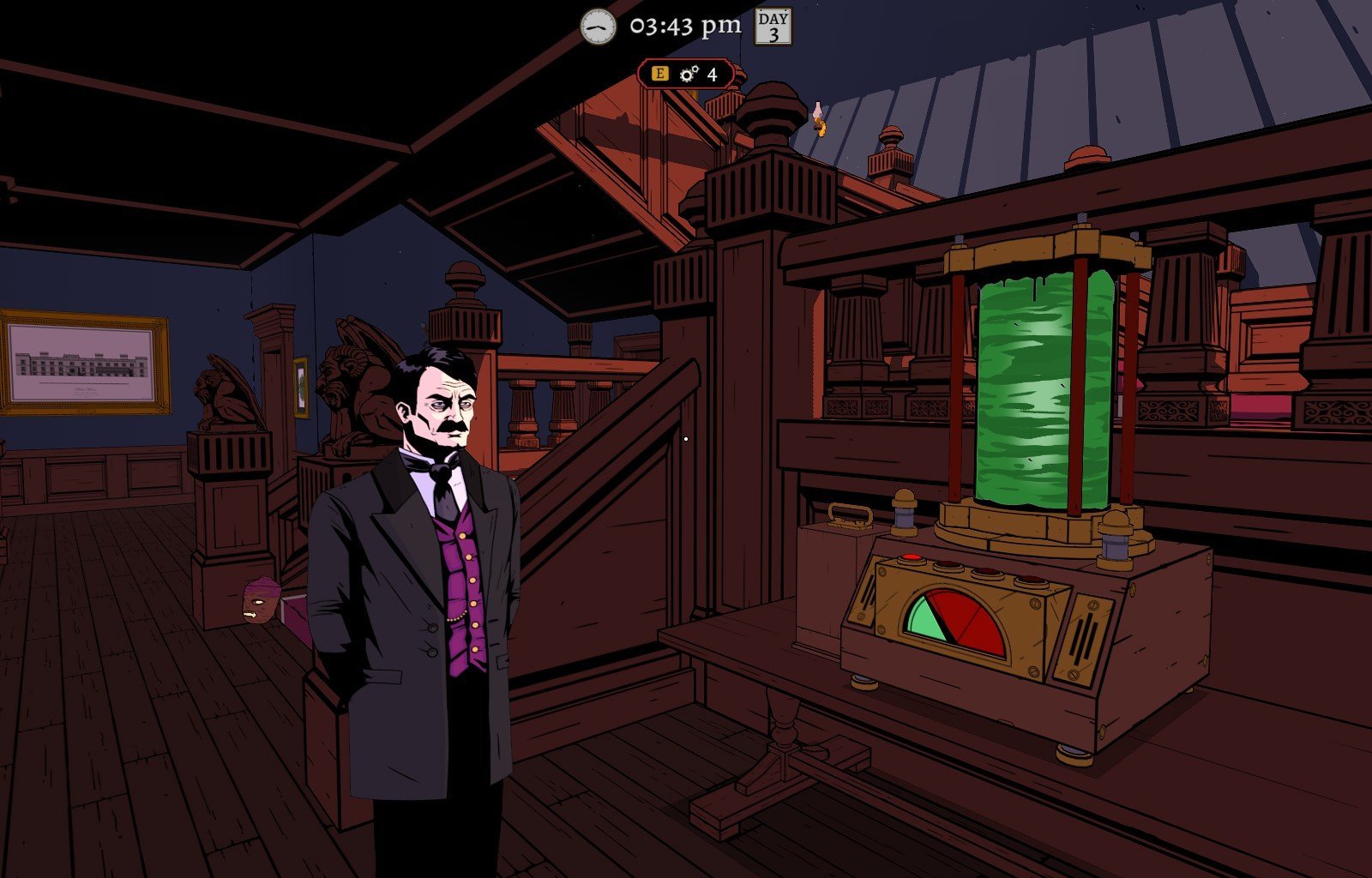
Doing so leads to a confrontation with that character, followed by a specific action Ward must carry out. For example, for the tutorial character Etienne Toussaint, a Frenchman interested in a revelation of paranormal fraudulence, the correct hypothesis results in Ward having to investigate a particular guest for fraud. After completing the required task for an individual’s mystery, they will make a decision about their attendance of the séance. These conclusions affect a mysterious, glowing machine in the atrium with a green-tinged meter at the bottom ticking down, indicating measurable progress.
The sheer volume of information, suspects, and interconnected stories gives you a sense of your own limitations, and a feeling that you could be too late when someone’s life is at stake. The ambitious scope can also make staying on task challenging, but in my view, this is a feature of the game that adds to the expertly engineered feeling of suspense and being on edge that permeates the manor.
Overall, the gameplay mechanics may be more extensive than your typical adventure game, but they start to feel natural after spending a few hours traipsing through the manor. Séance’s complex gameplay presents an initial challenge that builds into a delectable detective’s delight that is layered with tools to help you jump back in and solve roadblocks. It helps that the timeline is actually quite generous. Ward arrives late on Friday with the final countdown ending on Sunday evening, leading into the séance. This provides enough time that it would be difficult to valiantly attempt most mysteries and still leave many of them unsolved.
I was anxious on the final day of investigation, though, double- and triple-checking whether I should spend my precious time profiling more characters. But despite my worries, I finished up all of the remaining mysteries with about four in-game hours to spare thanks to the intertwining nature of many of them. Those extra hours let me circle back, ask additional questions, and revisit questions I had intentionally rushed through earlier. When you are ready to proceed, in-game hourglasses on tables throughout the manor allow you to advance the time, an addition helpful for story pacing.
The game’s ambitious scale caused a bit of early-game continuity confusion about what information my character had genuinely discovered, with Ward seemingly aware of information I had not yet researched. I also encountered a bug that prevented progress at one point, but the development team was highly responsive to my issue. Not only were they able to quickly resolve it, they continue to assist players and roll out updates as needed.
The final act, at the end of a substantial 20-25 hours of play time, satisfyingly ties together everything you have discovered into a dramatic, consequence-driven culmination. At least, it did for me. Depending on your success at solving the web of mysteries around Evelyn’s disappearance, you may encounter one of a series of different endings.
Final Verdict
The Séance of Blake Manor’s intricate web of mysteries is smart, eerie, and heartfelt. Its rich cast of characters, satisfying investigative gameplay, and moody gothic ambiance make for a complex and highly rewarding detective game experience with a real sense of consequence. If you are searching for a standout detective mystery, this is a must-play. For me, this game easily ranks among the best this year and beyond.
Hot take
Draped in darkness and gothic Irish trappings, The Séance of Blake Manor makes the most of its eerie atmosphere and mysterious cast of characters in this detective's race against the clock with satisfyingly smart gameplay.
Pros
- Huge investigative scope with a rich variety of backstories, motives and relationships to uncover
- Time pressure adds urgency, making choices feel meaningful
- Hypothesis system encourages player engagement
- Beautiful, moody art direction
- Great insights into Irish history, culture, folklore, and religion
- Meaningful writing explores themes like grief, faith, and historical memory
Cons
- Voice acting is limited, though excellent
- Occasional early-game continuity issues regarding what information has already been discovered
Jenna played her own copy of The Séance of Blake Manor on PC.

- Advertisement
- Help support AGH by advertising with us








2 Comments
Want to join the discussion? Leave a comment as guest, sign in or register in our forums.
Ooh this sounds cool—I like mechanics in my mysteries. I also appreciate how this review gives a lot of info without feeling spoilery!
Reply
A fantastic review of a fantastic game. Bravo.
Reply
Leave a comment