
Golden Idol Investigations: The Age of Restraint (DLC) review
- 0 Comments

The third DLC expansion for The Rise of the Golden Idol is still fun but could have shown better moderation of its punishing difficulty
The Age of Restraint is a game of contradictions... and not just of the kind that spills from the lying lips of its untrustworthy rogues' gallery.
Canonically, it's the oldest chapter in the whole Golden Idol saga thus far, taking place hundreds (or maybe thousands) of years before the first game, yet its technological utopia setting on a faraway continent makes it feel the most futuristic of the lot by far. It's got some of the most fun and inventive mystery setups of the whole series (including a daring and betrayal-laden heist that goes spectacularly sideways), but delivers brutally obtuse challenges to the point that it robs some of the joy. And tragically, while it follows two full-length games and four other pieces of exemplary DLC made prior to it, The Age of Restraint feels more like an early outing where the developers were still trying to find the right formula.
Yes, this is the most flawed Golden Idol outing we've had – and the only part of the series I'm not so enthusiastic about, which is a bit of a bummer. I’m happy to report though, that the drop of quality is really only noticeable when comparing it to the high-water mark of what came before. Taken on its own merits, it’s still a largely great experience that wannabe detectives can sink their teeth into and get loads of entertainment out of, though its high difficulty makes it something I’d recommend to only the most veteran players of the series.

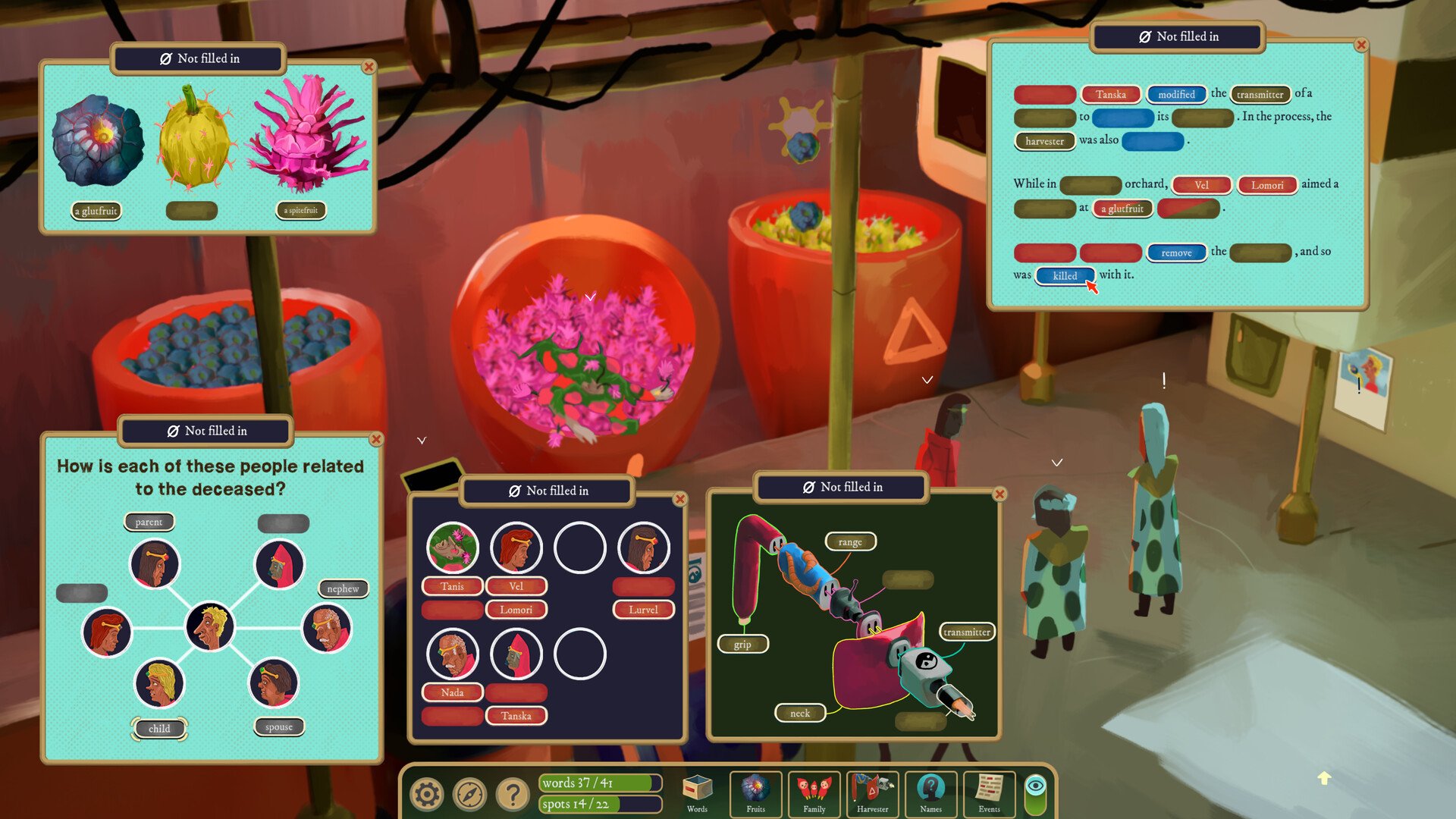
Opening on a strange case involving a fatal teleportation “accident” in a high-tech fruit orchard, The Age of Restraint delivers the same type of gameplay we've been accustomed to, although with a few interesting wrinkles that definitely set it apart from its forebears. The Golden Idol formula is so enjoyable that I wouldn't have minded if it were merely more of the same here, but Color Gray decided to admirably go the extra mile and mix it up a little with the addition of lie detecting.
In the prior games, finding out if someone was lying was often a whole puzzle in itself. Here, the sci-fi society of ancient Lemuria has attempted to do away with humanity’s predilection for deception, all thanks to the presence of lie detecting gems embedded in the foreheads of its principal cast, called “veridolas.” Thanks to these bizarre contraptions, we can tell straight away whether one of their statements is true or false, with the in-game dialogue text colored either bright green or magenta to help distinguish fact from fiction. The fun comes from finding out why their statement is classified as a truth or lie, and whether it's really true or only labeled as such due to a tricksy phrasing loophole you need to suss out.
Golden Idol Investigations: The Age of Restraint (DLC)
| Genre: | Mystery |
|---|---|
| Presentation: | 2D or 2.5D |
| Theme: | Crime solving |
| Perspective: | First-Person |
| Graphic Style: | Stylized |
| Gameplay: | Investigative, Puzzle, Deduction |
| Control: | Point-and-click |
| Game Length: | Medium (5-10 hours) |
| Difficulty: | High |
If you read that and thought "Oh man, and I bet characters will find a way to mess with their gems and make the truth even less reliable," you'd be one smart cookie. You'd also be well-positioned to (hopefully) solve some of this chapter's baffling mysteries in the latter half, which frequently ask the player to be one step ahead of the clues it doles out and jump to some far-fetched conclusions that feel like more than a bit of a reach for the average human to arrive at.
As I mentioned, this DLC is difficult. Dare I say, extremely difficult. Not only did its final two cases cause me to use every single hint on offer from the in-game help system, the hints were wildly insufficient in pushing me in the right direction. For some reason, the game insists on only giving hints for some of the less-difficult portions of the cases, so for the areas I was actually struggling with, I had to resort to an online guide – which always feels like a downer with an adventure game, but particularly so with this series. And when finally getting the solution spelled out for me, it never resulted in the wonderful "ah-has" these games usually deliver, but more of the "Oh, I guess that makes sense, but how in the heck was I ever going to figure that out on my own" variety. As you can probably imagine, that’s… not quite as satisfying.
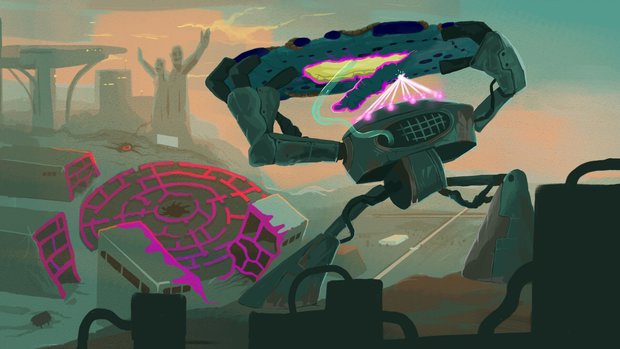
Another area that leaves a little to be desired is its setting. To give props where they're due, it's absolutely a unique chapter that shakes up what we've become used to with The Rise of the Golden Idol's 20th century trappings, instead delivering a bona fide sci-fi fantasy that prior installments have only hinted at. There are still series staples like secret societies and fiendish plots involving the titular idol, but this time you can expect giant mechs, spaceships, robots, teleportation and ray guns galore thrown into the mix. It’s kind of like Flash Gordon merged with a Neal Stephenson techno-thriller. Part of this alienness inherently adds to the mystery – so much of this society's tech has no real-world equivalent, so a good chunk of the challenge comes from unravelling the logic of how it all works, which can be really quite fun. But ultimately, the backdrop for these cases left me yearning for the 18th century Old World flavor the series started with. The Case of the Golden Idol was a lovely classic whodunnit from front to back... and we're barely even in the same dimension here.
Still, the artistry on display is at the same high standard we've come to expect, maintaining consistency with the art direction established in Rise, albeit with a more futuristic flavor. The characters are well-designed and, like it or love it, hit that gloriously weird mix of being just vaguely gruesome enough to be intentionally off-putting in the way these games love to revel in. The environments are detailed and well-rendered, from the fruit fields of Lemuria to the spaceship home base of the authoritarian “Sentinels” that call the shots, and the moody ambient background music once again adds a generous amount of terrific atmosphere.
Perhaps most importantly, despite the high difficulty spikes that bring the narrative flow to a bit of a frustrating halt at times, the story itself is quite a good one, with an (almost) entirely new cast of characters conspiring to shape the society of Lemuria to achieve their own ends, some with flawed but good intentions, and some just devilishly power-hungry. As a standalone prequel, it wraps things up in a satisfying way that still manages to set the stage for some of the plot threads we already know are to come.
Final Verdict
I liked The Age of Restraint, but it slightly pains me to play a Golden Idol game that isn't hitting the outstanding level of design that this series consistently achieves. With the sheer volume of content that's come out every year since its 2022 debut, perhaps that was bound to happen eventually. But, even as the closest thing this series has ever had to a stumble, there's still plenty to genuinely love here. The bulk of the problem-solving is still just as good and addicting as ever; it's just brought down a bit by the way it asks far too much of the player this time around, while offering very little assistance from the hint system to make up for it. Hopefully the fourth and final chapter of the Golden Idol Investigations DLC fares better, and with a return to the 18th century confirmed for its setting, I absolutely can’t wait.
Hot take
After two stellar Golden Idol Investigations spinoff DLC chapters, The Age of Restraint falters a bit under the weight of its complicated conspiracies, though it still manages to mostly deliver the goods. If only it wasn't so blisteringly hard to deduce its secrets.
Pros
- Inventive new lie detector mechanic brings a fresh approach to each case
- Art and music just as good as ever
- Scenarios are bursting with inventiveness
Cons
- Final two cases are WAY too obtuse, tragically derailing the fun
- In-game hint system is insufficient just when you need it most
- Totally alien setting may not connect with players
Sean played The Age of Restraint on PC using a review code provided by the game's publisher.

- Advertisement
- Help support AGH by advertising with us









0 Comments
Want to join the discussion? Leave a comment as guest, sign in or register in our forums.
Leave a comment