
Wednesdays review
- 0 Comments

Short but powerful exploration of dealing with sexual abuse takes players on an emotional roller coaster
Adventure game fans are used to diving into fantastical tales, immersing themselves in their stories and worlds. You definitely won’t want to do that in Wednesdays – not because the game isn’t good (it is), but because it’s such an uncomfortable account of familial child sexual abuse. Which perhaps makes it all the more important that we engage with its ideas nonetheless, as it’s an emotionally powerful narrative that’s as much about hope and healing as it is the struggle of living through (and with) trauma. Written by Pierre Corbinais (Bury me, my Love; The Wreck), Wednesdays is one of those games that will continue to occupy space in your mind long after the credits roll, for obvious reasons. It is incredibly poignant and harrowing in equal measure, and coupled with two distinctive art styles, it is a tale of two halves. There’s a lot here for visual novel fans to ‘enjoy’ but the game also includes a simple theme park building mechanic, so it’s not just moving methodically through an emotionally heavy story.
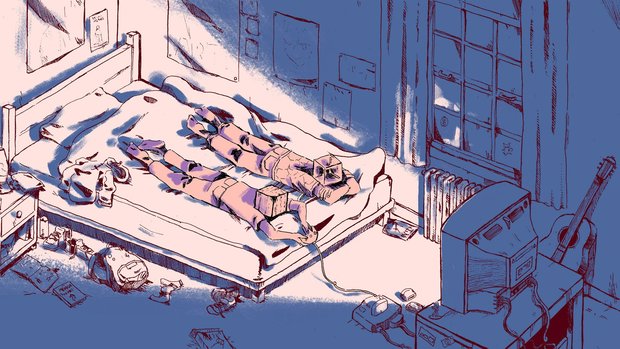
After an accessibility screen and a robust content warning, the game starts with beautiful hand-drawn artwork. Sitting at the computer is a man with a box on his head in front of an on-screen prompt that simply says ‘Run Orco Park.’ Orco Park is an amusement park management game, reminiscent of 90s retro construction games, with Orco the whale as the in-game advisor. Orco asks for the man’s name, and when told it’s Timothée he suddenly remembers him, as if Orco was a sentient character lying dormant until then. It turns out that it’s been twenty years since the game was last booted up, so Orco reminds Timothée how to play. This serves as a useful tutorial for the player, but it’s as simple as clicking a ride from a short list available, spending the appropriate amount of shell currency, and placing it in a free grid location. Orco tells Timothée that each ride has a memory attached, which will activate when the ride is built. And with that, Timothée builds his first ride, Orco leaves the screen, and Timothée is transported into his first memory.
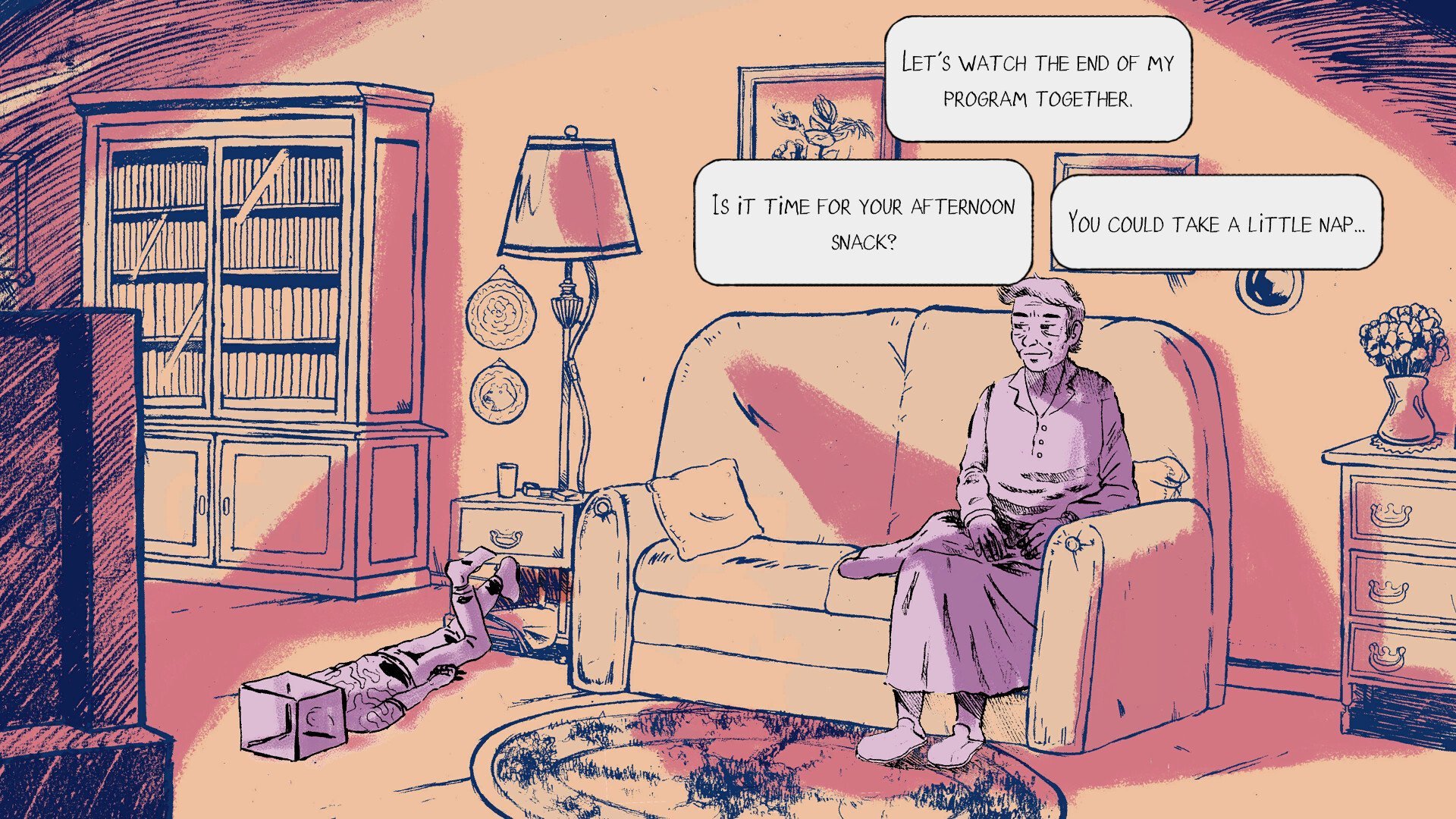
This initial flashback vignette is utterly charming, with a young Timothée at his grandmother’s house, her snoozing on the couch while he watches a drama on television. You can choose what happens in the TV show by choosing one of three options that appear as speech bubbles, which will then be spoken by the characters on-screen. The plot is over-the-top and nonsensical, and the dialogue options I chose made it even more incoherent, which made me smile. Timothée’s grandmother wakes up and after a back-and-forth with the boy, who loudly complains of boredom and dismisses all her activity ideas, she finally grants his request. All Timothée wants to do is to go see his older cousin Giovanni, who lives next door, and he runs off excitedly. With that the memory is over, and the same image of adult Timothée from the beginning is back in front of the computer. This time the prompt says ‘Back to the park.’
This is how Wednesdays progresses: build a new ride at Orco Park, play through a memory, then back to the computer to build the next ride and manage the park’s resources. Memories aren’t chronological, Orco explains, so it really doesn’t matter in which order Timothée choses to build the rides. This felt like a subtle nod to the nature of the recollection of trauma, potentially fragmented, jumbled, often not about the actual acts themselves, more the circumstances surrounding them.
Obviously, not all memories are nearly as pleasant as the first one with Timothée’s grandmother. Orco explains the ‘badge’ system as Timothée returns to the game. Each ride (and by extension its associated memory) is graded, for want of a better word, in terms of how distressing it could potentially be. A single exclamation mark means that the memory may address sensitive topics. Three exclamation marks mean that the topic is addressed explicitly, and a question mark means – in Orco’s words – ‘no cause for alarm.’ Clicking on the symbol gives a brief summary of what recollection Timothée will be accessing, with the option to provide a full detailed description.
This is just one example of how sensitively Wednesdays handles what a player may or may not wish to see. Understanding that this game explores certain painful triggers is one thing, but being confronted with them is completely different, and Orco refers to being forewarned being forearmed. I felt trepidation when I was about to access a three exclamation mark memory. I knew it was going to address something traumatic, and my anxiety was not unfounded. It is important to note that there are no graphic depictions of abuse, but that doesn’t make it any less distressing. If things do start to feel overwhelming, there is also the option to skip the current scene from the pause menu at any point, and although I viewed all of the game’s memories in their entirety, there were a couple of moments that I was tempted to utilise the skip based on how uncomfortable I was.
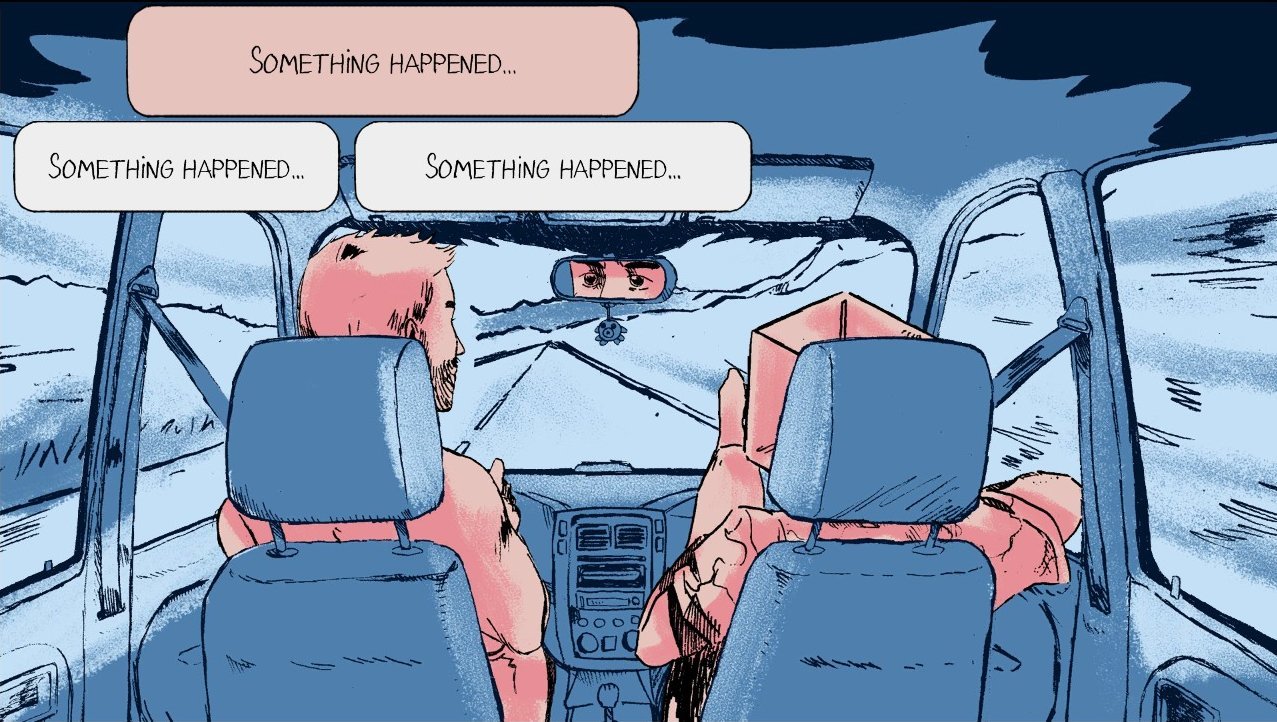
Memories introduce players to various characters who reveal themselves through conversation, the nature of their exact relationship with Timothée uncovered organically rather than being laid out from the start. If you get confused or need a refresher, a simple journal entry about each person is available. Unlike in most games, here you do not control Timothée’s dialogue, only the secondary character’s. This felt strange at first, but it’s extremely powerful. This is Timothée’s story – his thoughts, his feelings and his actions – and it's important that it be told as he remembers it rather than it deviating based on the player’s interactions. The secondary character always has three dialogue choices, and they don’t affect the main narrative at all, just Timothée’s reactions. Some options are dismissive, sympathetic or uncomfortable, among other reactions, highlighting the difficulty people can genuinely have in navigating this sort of conversation or scenario.
In one memory, fifteen-year-old Timothée is talking with school friend Cyrielle about his relationship with twenty-year-old Laetitia, in which he reveals that for a time he thought he might be gay. Cyrielle’s responses are mostly playful, as a young person of the same age, but when Timothée’s demeanour changes, Cyrielle doesn’t change tack and she continues the same line of teasing questions. The scene depicts Timothée struggling to making sense of the abuse he has suffered and attempting to communicate this, but either Cyrielle doesn’t notice or is not equipped to address the situation sensitively. This is where the main message of the game comes to the foreground: speaking out isn’t necessarily the problem, being heard is.
Wednesdays

| Genre: | Drama |
|---|---|
| Presentation: | 2D or 2.5D, Slideshow |
| Perspective: | Third-Person |
| Graphic Style: | Stylized |
| Gameplay: | Visual novel, Minigames |
| Control: | Point-and-click |
| Game Length: | Short (1-5 hours) |
| Difficulty: | Low |
| Theme: | Self-discovery, Memories |
This is further compounded in a later memory, where Timothée is on the telephone with a cousin of his, Angelo. Timothée has sent an email to Angelo (after ten years of estrangement) asking if he had ever been the victim of familial sexual abuse. Timothée attempts to downplay this as something he’d seen on social media and was curious about, but Angelo sees straight through what Timothée really wanted to know. I won’t spoil the rest of this scene, but the game then turns the spotlight on unseen victims. Angelo asks, ‘Who was it?’ and instead of Timothée answering immediately, the player sees the list of other people affected by abuse. This part absolutely floored me. It is devastating and extremely moving, and when Angelo asks Timothée ‘Who did you tell?’ and the screen is filled with speech bubbles all saying the same thing – ‘No one’ – I felt almost inconsolable.
After this particular memory, I was desperate to return to Orco Park and decompress. I don’t doubt this is why the developers added the secondary mechanic, and it works very well. Other than building the rides to access memories, you can also clean up the beach your park is built on. Clicking on the trash that accumulates on the shoreline gives you more of the shell currency you generate by having visitors use your attractions. I was grateful for this downtime as I processed what I had just experienced and steeled myself to unlock another memory. You can also place decorations selected from the building menu to generate income, and click on various things to see a little animation, such as a seagull flying overhead and a wave lapping against the rocks.
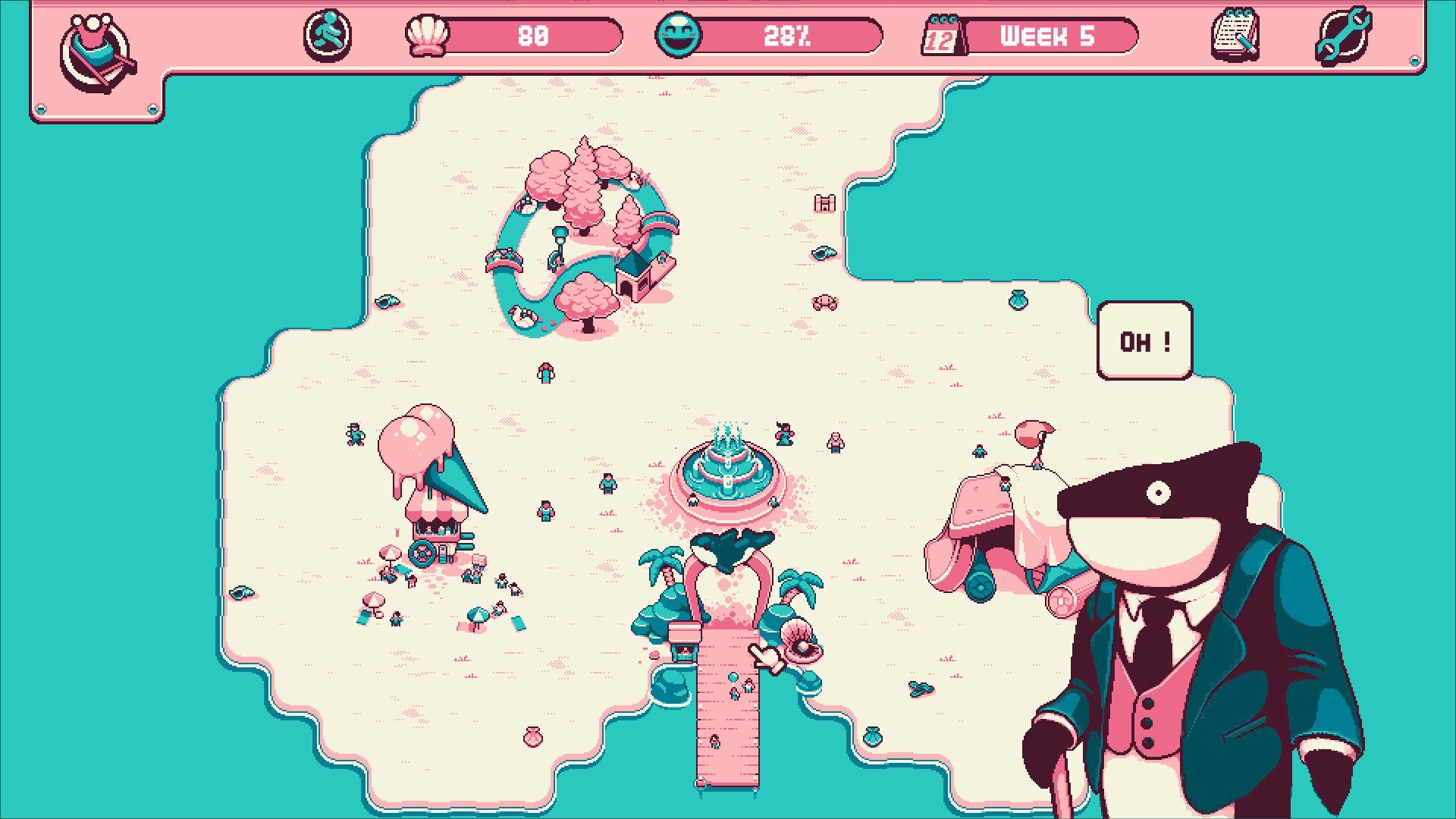
Orco Park runs like an idle game for the most part, with increasing numbers of visitors excitedly buzzing around your creation and a happiness meter shown at the top of the screen. Happiness increases with each ride or decoration placed, and with every new attraction more shell currency is generated. The happiness meter doesn’t seem to do much to affect the game, and the shell currency accumulating in the background was always enough for me to add a new ride or decorations upon each return to the park. Still, it’s a cozy, welcome respite from the emotionally gruelling memories, and it's enjoyable to place things like trees and outhouses in the smaller grids available and watch the happiness meter fill up, or experience a feeling of accomplishment that all the trash was cleared.
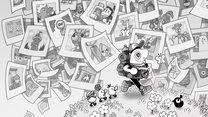
As mentioned previously, Wednesdays has two distinct visual styles. The memory segments are in a hand-drawn comic style by Exaheva (Still Heroes), featuring beautiful pencil work with depth and heart. This art style really highlights the rawness of the subject matter and incorporates a muted palette, with most scenes only having a couple of colours. Text here is displayed in speech bubbles, much like in a comic book, and the print is capitalised and clear. The animation in these scenes isn’t fluid but rather intentionally staggered with still frames to click through like a graphic novel, which felt more impactful for taking in each scene before moving onto the next.
Conversely, while also having only a handful of colours, the overhead design of Orco Park by Nico Nowak (There Is No Game: Wrong Dimension) is a pixel paradise of bubble gum pink and turquoise shades. The park has a lot of movement and animation, with plenty of things to see and click on, and feels brighter and less serious than the memory art. These two contrasting aesthetics work well together, with the more vibrant Orco Park feeling like a mental reset after the solemnness of the sketched vignettes.
Sound design in Wednesdays is subtle. Many of the memory segments are without music, focussing instead more on ambience such as a bird singing or a gentle breeze through the trees. There’s no voice acting or voice ‘noise’ typically heard in visual novels, only a quiet click of what sounds like a typewriter key being pressed and occasionally the sound of a scribble on paper when clicking through dialogue. The music at Orco Park is joyful and melodic but still understated. When adding rides and enjoying the noises of happy park-goers, there is a more cheerful, soft, guitar-led song that feels calming and positive. When a new ride is built, a short construction animation is shown, complete with familiar building noises followed by a quick sound effect to reflect the type of ride that has been added, like a chiptune ditty for the arcade.
Final Verdict
Even with these theme park interludes, Wednesdays definitely won’t be for everyone. The powerful and thought-provoking narrative offers enough for visual novel fans, but with limited actual gameplay and a short ninety-minute-ish run time, it often feels more like an experience than a game. And yet it’s an important piece of work, highlighting the often unreported tragedy of sexual abuse and the devastating effect it has on its silent victims. It sounds depressing, and it’s certainly heartbreaking to contemplate, but crucially, the end message here is one of hope for those who dare to speak out about their abuse, even if it’s a struggle to be heard. There’s no sugarcoating the deep and discouraging subject matter explored here, but with its two distinct yet equally beautiful art styles, hard-hitting but sensitive narrative portrayal of abuse, and snippets of light-hearted fun in making a theme park nestled in between, this game is well worth your attention.
Hot take
Wednesdays is a short, beautifully designed, thoughtful treatment of a heart-wrenching subject that is anything but a simple walk in the park.
Pros
- High-quality contrasting artwork styles
- Compelling, impactful, but sensitive storytelling
- Theme park minigame a welcome respite from the heavier themes
- Weaves an attitude of hope into an inherently discouraging topic
Cons
- No voice acting
- Limited gameplay and very short run time
Victoria played Wednesdays on PC via Steam Deck using a review code provided by the game's publisher.

- Advertisement
- Help support AGH by advertising with us




0 Comments
Want to join the discussion? Leave a comment as guest, sign in or register in our forums.
Leave a comment